

By Sean O’Kane
July 24, 2026
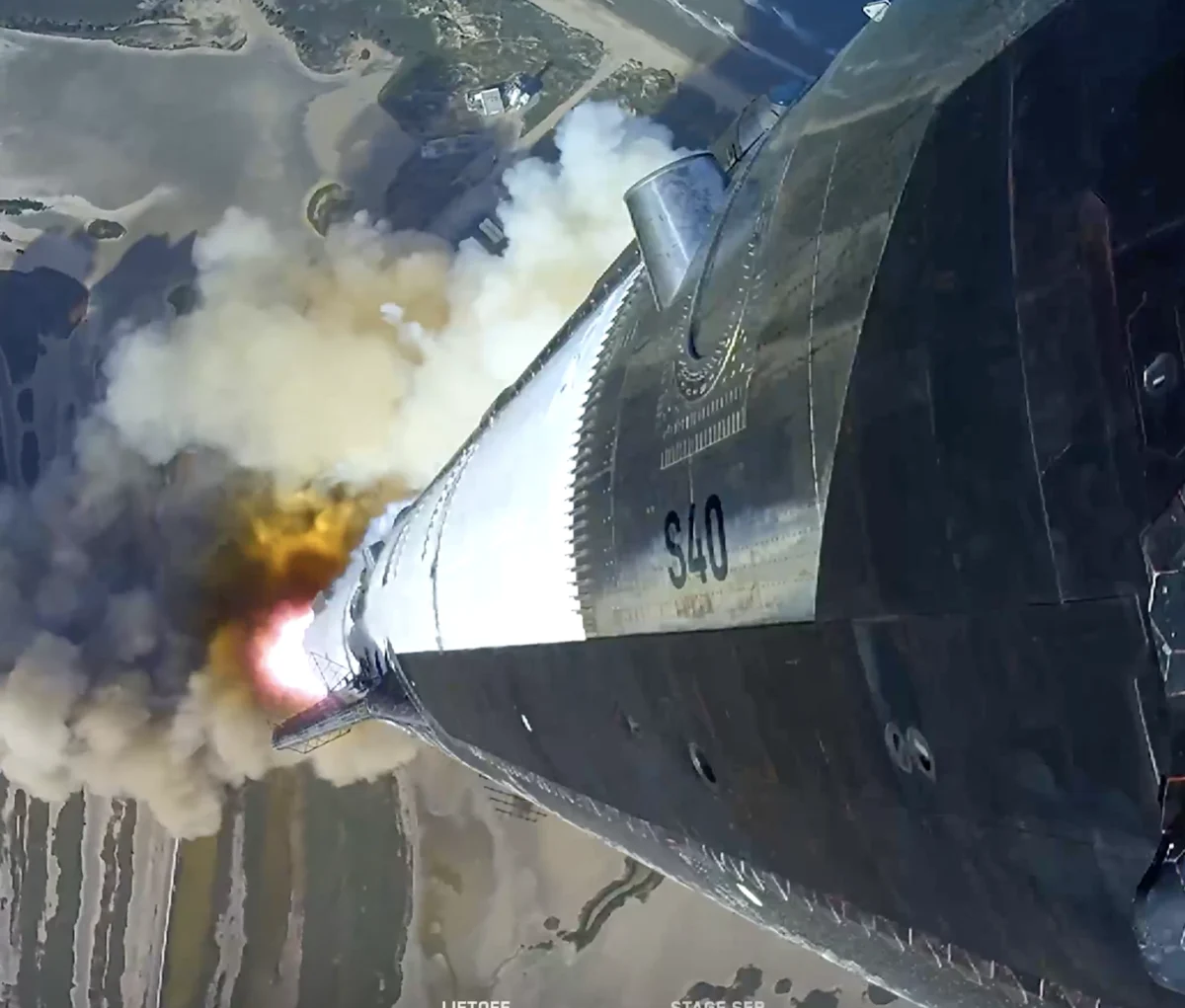
SpaceX successfully executed the deployment of its first third-generation Starlink satellites this past Friday, marking a significant, albeit uneven, milestone in the company’s ambitious Starship development program. The flight, the 13th in the vehicle’s history, served as a high-stakes stress test for the upgraded V3 prototype. However, the triumph of the upper stage was overshadowed by a recurring technical vulnerability: the destruction of the Super Heavy booster during a simulated landing maneuver in the Gulf of Mexico.
This latest mission, which took place just over a week after a last-second launch abort, highlights the persistent challenges SpaceX faces as it balances its signature "fly, fail, fix" engineering philosophy with the newfound pressures of being a publicly traded company.
The Chronology: From Abort to Impact
The journey to Friday’s flight began on July 16, when SpaceX attempted the second Starship V3 test launch. That effort was scrubbed seconds after ignition due to a cascade of engine anomalies. The setback forced a week-long delay, during which engineers conducted a high-intensity repair operation, ultimately replacing six engines on the Super Heavy booster to address the suspected root causes of the ignition failure.
When the rocket finally cleared the pad on Friday, the performance of the Super Heavy booster initially appeared promising. It successfully cleared the launch tower and executed its ascent, pushing deeper into its flight profile than in previous iterations. However, as the booster transitioned into its descent phase for the simulated landing burn, it failed to ignite the necessary complement of engines required to stabilize the craft.
Data from the telemetry stream indicated that the booster suffered a catastrophic failure upon impact with the Gulf of Mexico, resulting in a total loss of the vehicle. Despite this, the Starship upper stage performed admirably. Unlike the first V3 flight in May, which saw the loss of an engine during ascent, the upper stage functioned flawlessly, achieving its target trajectory and successfully deploying the third-generation Starlink constellation. As per mission parameters, these satellites began their deorbit process shortly after deployment, as the current Starship configuration remains incapable of sustained Earth orbit.
Technical Analysis: The V3 Vulnerability
The recurrence of booster issues in the V3 series is a point of concern for aerospace analysts. In the maiden V3 flight last May, the Super Heavy booster failed during the separation sequence, causing the loss of the vehicle. Friday’s failure, which occurred much later in the flight profile, suggests that while SpaceX has improved the separation mechanics, the landing burn sequence—the most complex aspect of the rocket’s reusability—remains a critical hurdle.
The "fly, fail, fix" methodology has served SpaceX well in the past, allowing for rapid iteration of the Falcon 9 and the early Starship prototypes. However, the scale of the Starship V3—a massive, complex vehicle requiring the synchronized ignition of dozens of Raptor engines—introduces a level of operational fragility that is difficult to iron out without losing hardware. The challenge lies in ensuring that the engine relight sequences are robust enough to withstand the extreme thermal and mechanical stresses of high-speed re-entry.
Market Implications: Navigating the Public Markets
This mission was of particular interest to Wall Street, as it marked the first Starship launch since SpaceX’s historic IPO last June. As the largest initial public offering in history, the company has had to reconcile its daring, experimental culture with the expectations of retail and institutional investors.
The markets have not been forgiving. Following the launch abort on July 16, SpaceX stock experienced a sharp decline. This downward trend has persisted since the IPO, with shares dropping from a peak of $200 to a closing price of $115 on the day of the Friday launch. Following the news of the booster’s destruction, shares dipped an additional 2% in after-hours trading before stabilizing slightly.
The volatility reflects a growing tension: investors are eager for SpaceX to demonstrate the commercial viability of Starship, which is essential for launching the next generation of Starlink satellites and, eventually, lunar and Martian cargo. The company’s ability to "fail forward" is being tested not just in the Gulf of Mexico, but in the halls of financial institutions that are less accustomed to the inherent risks of space exploration.
Supporting Data: The Road to Reusability
To understand the stakes, one must look at the specific engineering requirements of the V3 program. The transition from V2 to V3 involved significant upgrades to the structural integrity of the booster, the thermal protection system (TPS), and the efficiency of the Raptor 3 engines.
- Engine Reliability: Replacing six engines in a single week is a testament to SpaceX’s manufacturing prowess, yet it underscores a lack of reliability in the current batch of engines.
- Flight Duration: The booster’s ability to survive further into the flight profile represents a marginal improvement in "Time-to-Failure," a metric often used by the company to gauge incremental progress.
- Payload Deployment: The successful deployment of the third-generation Starlink satellites confirms that the upper stage—the "Starship" itself—is nearing operational maturity for heavy-lift delivery.
While the loss of the booster is a financial setback, the data gathered during the descent is invaluable. SpaceX engineers are currently analyzing the telemetry to determine why the landing burn did not initiate correctly, with the goal of implementing a software or hardware patch before the next test window opens.
Official Responses and Future Outlook
SpaceX has remained characteristically lean in its official commentary, emphasizing the successes of the mission over the failures of the booster. In a brief statement issued shortly after the flight, the company noted that the "primary mission objectives for the Starship upper stage were met," and confirmed that the team is "already working on the next set of upgrades for the Super Heavy booster."
Industry observers note that the company’s leadership, including Elon Musk, continues to prioritize long-term goals over short-term stock performance. However, the pressure to demonstrate a "soft splashdown"—and eventually a return-to-launch-site (RTLS) landing—is mounting.
The path forward involves at least two more planned tests for the V3 series before the end of the year. If SpaceX can achieve a successful booster recovery by the 15th flight, it would likely quell investor fears and prove that the Starship system is on the verge of replacing the legacy Falcon 9 fleet.
Conclusion: A High-Stakes Balancing Act
SpaceX finds itself at a unique juncture in its history. It is no longer just a private disruptor; it is a public entity whose engineering failures now have immediate, tangible consequences for its valuation. The loss of a Super Heavy booster is, in the vacuum of engineering, a necessary step in the learning process. In the context of a public market, it is a liability.
The success of the Starship upper stage on Friday proves that the core of the vehicle is becoming increasingly reliable. The challenge for the coming months will be for SpaceX to prove that the "booster problem" is merely a final engineering hurdle rather than a systemic design flaw. As the company continues its march toward orbit, the world watches—not just for the spectacle of the launch, but for the stability of the enterprise behind it.
This is a developing story. Check back for updates on the investigation into the Super Heavy booster failure and the projected timeline for the next test flight.
 rifanmuazin
 Nana Muazin
