

The passing of legendary actor Tim Curry at the age of 80 has sent shockwaves through the entertainment industry, prompting a profound outpouring of grief and reflection from costars, collaborators, and fans worldwide. Best known for his transformative performance as the sweet transvestite from Transylvania, Dr. Frank-N-Furter, Curry’s influence transcends his most iconic role. Following his death on August 25, attributed to complications from coronary artery disease, the industry has turned its collective gaze toward the immense, genre-defying legacy he left behind.
A Poignant Connection: Luke Evans and the Final Tribute
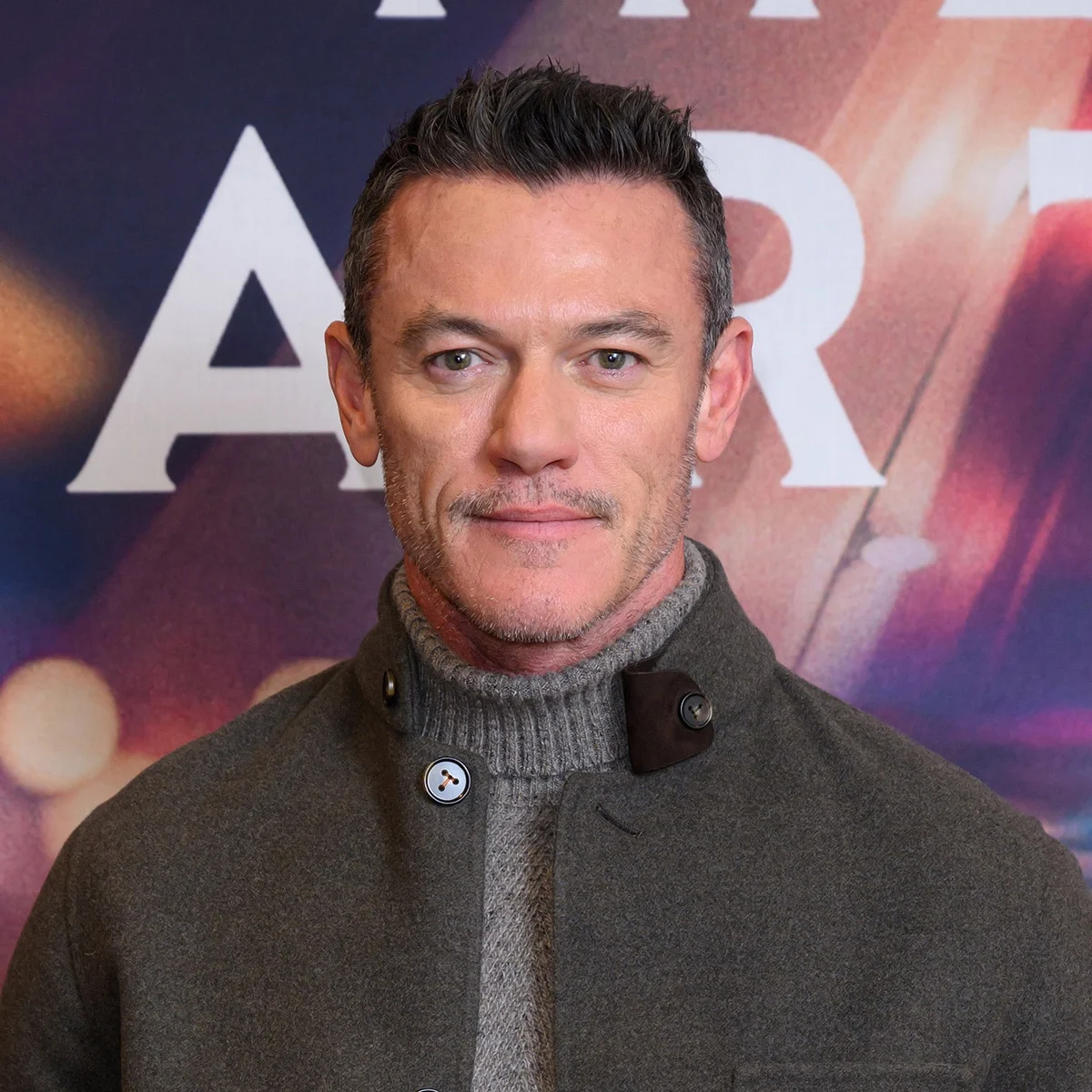
Perhaps no one felt the weight of this loss as uniquely as actor Luke Evans. Having recently concluded a celebrated five-month run as Dr. Frank-N-Furter on Broadway—the very role that defined Curry’s career—Evans found himself in a surreal, bittersweet position.
In an interview with Entertainment Weekly published on September 11, Evans revealed that he had reached out to the icon with a heartfelt letter shortly before Curry’s death. "He was very appreciative," Evans shared. "I think he was very sick when he got the letter—he was struggling a lot."
Evans, who learned of the gravity of Curry’s condition from the actor’s publisher, described the interaction with a deep sense of humility. "He struggled to speak and talk, so I think he was really in a bad place, but what a legacy." For Evans, the timing was uncanny. The news of Curry’s death arrived just as his own tenure as Frank-N-Furter was ending. "It was a strange, beautiful, tragic way to end my New York experience," Evans noted. "I’ll never forget it."
The Chronology of an Icon: From Royal Court to Global Phenomenon
Tim Curry’s journey to stardom was anything but conventional. He first introduced the world to the corset-clad, mad scientist Dr. Frank-N-Furter at London’s Royal Court Theatre. When the stage show was slated for a film adaptation, the transition was far from guaranteed.
The Near-Misses and Creative Hurdles
History might have looked very different had the studio’s initial impulses prevailed. It has been revealed that several high-profile stars were considered for the role of Frank-N-Furter. Notably, rock legend Mick Jagger expressed a fervent desire to play the part. Curry recounted to the Los Angeles Times in 2025 that director Jim Sharman stood firm in his vision. "Mick Jagger wanted to play it and he would’ve done a great job," Curry recalled. "But Jim said he wanted me to do it. I don’t think the studio was happy that he turned down Mick."
The production itself was a grueling affair, often described by cast members as a "miserable shoot." Filmed in just five weeks on a shoestring budget of $1 million at Bray Studios—a site formerly home to Hammer Horror films—the set lacked basic amenities. Susan Sarandon, who played the iconic role of Janet Weiss, later recalled the freezing, roofless studio conditions that led to her contracting pneumonia. "I think, ‘God, we must have had so much fun,’" Sarandon told Entertainment Tonight. "But actually, it was quite difficult."
The Birth of a Midnight Cult
Despite the grueling nature of the shoot and the film’s lackluster performance upon its initial U.S. release in September 1975, its trajectory shifted dramatically in April 1976. The Waverly Theater in Greenwich Village began midnight screenings that transformed the film into a participatory, communal experience.
Curry, who lived a mere block away from the theater, witnessed the phenomenon firsthand. In a 2005 interview with NPR’s Fresh Air, he recalled attempting to buy a ticket, only to be turned away by an usher who accused him of being an imposter. The audience participation—shouting back at the screen, throwing toast, and dressing in costume—eventually became the heartbeat of the franchise, though some original cast members have expressed mixed feelings about the volume of the interaction in modern screenings.
Behind the Scenes: The Economics and Realities of 1975
The "cult" status of The Rocky Horror Picture Show often obscures the humble realities of its production. Financial records and oral histories reveal a project operating on the fringes of the mainstream.
- Disparate Paychecks: In the documentary SANE INSIDE INSANITY, Barry Bostwick (Brad Majors) disclosed the stark financial reality of the shoot. "Susan made $5,000 more than me," he noted. "I think I made $15,000 and she made $20,000."
- The "Domestic" Struggle: Patricia Quinn, who portrayed Magenta, recalled receiving a weekly wage of $300. Casting director Celestia Fox defended these figures as "the going rate" for a project that many in the industry viewed as "insane."
- Creative Choices: The aesthetic of the film was a deliberate departure from the stage. Curry, who had previously handled his own "trashier" makeup, saw his character elevated to a more "glamorous" look under the direction of makeup artist Pierre La Roche.
Official Responses and Industry Reflections
The industry’s response to Curry’s death has been a testament to his versatility. Beyond Rocky Horror, Curry’s resume spanned from the sinister clown Pennywise in It to the butler Wadsworth in Clue.
Director Jim Sharman, reflecting on their collaboration, characterized the film’s creation as a whirlwind that left little room for leisure. "The reason we don’t have great anecdotes from the shoot is we didn’t have time for anecdotes," Sharman noted. "We didn’t have time to party."
This dedication to craft is what peers point to when discussing his lasting impact. While the film’s 1981 "sequel," Shock Treatment, failed to capture the same lightning in a bottle—a sentiment echoed by writer Richard O’Brien, who expressed disappointment in the project—the original film remains a prophetic piece of cinema. Sharman noted that their depiction of an America enslaved by reality television, while dismissed at the time, has proven to be a chillingly accurate prediction of the future.
Implications: A Legacy That Defies Time
The death of Tim Curry does not mark the end of the Rocky Horror story, but rather cements its place in the pantheon of cultural history. The film has survived for 50 years, evolving from a low-budget flop to a multi-generational phenomenon.
For actors like Luke Evans, Curry’s influence is a living entity. The "deep connection" Evans felt, despite never meeting the man, is a sentiment shared by millions of fans who found their own sense of liberation in the character of Frank-N-Furter. As Sarandon aptly put it, the film is fundamentally "about saying yes, to life and to everything."
As we look back at the career of Tim Curry, we are reminded that true icons do not simply occupy a screen; they create a space where audiences can find themselves. While the "sweet transvestite" has left the building, the echoes of his performance—the red lips, the sharp wit, and the defiance of societal norms—will continue to resonate in theaters and living rooms for decades to come.
The story of Tim Curry is not just a biography of an actor; it is a testament to the power of artistic conviction. Whether in the freezing, leaky studios of 1970s England or on the bright lights of a modern Broadway stage, the spirit of his work remains, as he famously sang, "beyond the stars."
 Lina Hope
 Asro
Asro
 Raul Delapena Setiawan
