

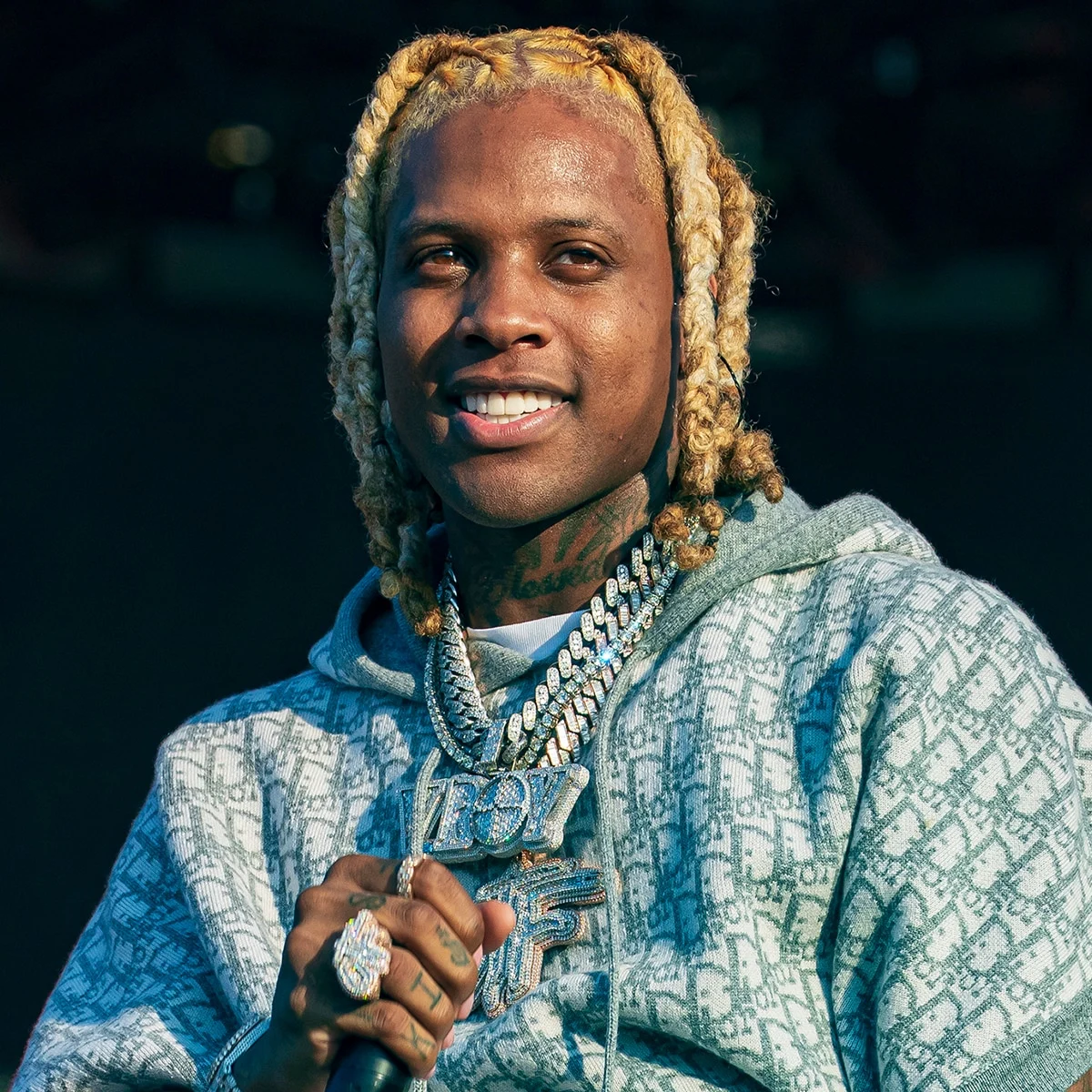
On September 11, the conclusion of a high-stakes legal saga sent shockwaves through the music industry and the criminal justice system. A Los Angeles jury returned a verdict of not guilty for Grammy-winning rapper Lil Durk—born Durk Banks—on all five charges related to the 2022 murder-for-hire case surrounding the fatal shooting of Saviay’a Robinson. The acquittal marks the end of a grueling trial that pitted the state’s theory of retaliatory gang violence against a defense strategy centered on the unreliability of government witnesses.
The Core Verdict: Clearing the Rapper of All Charges
The jury’s decision, delivered after days of deliberation, fully exonerated the 33-year-old Chicago-born artist. Banks had faced five severe charges, including conspiracy to commit murder-for-hire and stalking. The prosecution’s case had centered on the premise that Banks, fueled by grief and a desire for vengeance following the 2020 murder of his close associate and fellow rapper King Von (Dayvon Bennett), orchestrated a hit against rival artist Quando Rondo (Tyquian Bowman).
The acquittal comes as a significant relief to Banks’ defense team, led by attorney Marissa Goldberg, who maintained throughout the trial that the government’s narrative was built upon the desperate testimony of self-interested criminals seeking leniency for their own offenses.
A Chronology of the Conflict: From Atlanta to Los Angeles
To understand the weight of the trial, one must look at the timeline of events that prosecutors argued created the motive for the crime.
The Catalyst: The Death of King Von (2020)
The narrative begins in November 2020, outside a nightclub in Atlanta, Georgia. King Von, a prominent figure in the Chicago drill scene and a protégé of Banks, was fatally shot following an altercation with individuals associated with Quando Rondo. The death of Bennett was a massive blow to the "Only The Family" (OTF) collective, and prosecutors posited that it served as the "original sin" that propelled Banks into a cycle of retribution.
The Targeted Attack: The Beverly Center Shooting (2022)
Fast forward to 2022, when the legal focus shifted to Los Angeles. Prosecutors alleged that Banks utilized "coded language" to coordinate an attack on Quando Rondo near the high-end Beverly Center shopping mall. According to evidence presented in court, gunmen ambushed Rondo’s vehicle at a gas station, discharging at least 18 rounds from multiple weapons, including an automatic firearm.
Tragically, the intended target, Rondo, survived the ambush. However, his cousin, Saviay’a Robinson, who was standing near the vehicle at the time of the shooting, was struck and killed. This act of lethal violence served as the basis for the murder-for-hire charges brought against Banks.
The Legal Proceedings (2024–2026)
Following his arrest, the case dominated headlines for months. The trial, which began in late August 2026, saw a parade of witnesses, forensic evidence, and intense cross-examinations. Throughout the process, the prosecution attempted to weave a web connecting Banks to the shooters via digital communications and third-party associates, while the defense dismantled the credibility of the primary informants.
The Prosecution’s Theory: Revenge and Retribution
The prosecution’s case was anchored in the theory of "consumed revenge." Assistant District Attorneys argued that Banks did not merely want to succeed in the music industry; he wanted to settle the score for King Von.
The state relied heavily on the testimony of Kavon Grant, known as "OTF Vonnie." Grant, who admitted to involvement in a prior shooting targeting Rondo in Georgia in 2021, testified that Banks was the orchestrator behind the scenes. Prosecutors characterized the Beverly Center attack as a calculated military-style operation, arguing that Banks’ status and resources allowed him to direct lethal violence from a distance, insulating himself from the physical act while remaining the moral and operational architect of the tragedy.
The Defense Strategy: Dismantling the Witness Narrative
Marissa Goldberg, representing Banks, countered the prosecution’s narrative with a rigorous defense centered on "the only way out of jail" theory. Goldberg argued that witnesses like Kavon Grant were not providing a window into the truth, but rather a manufactured story designed to secure reduced sentences for their own criminal histories.
"He was not there. He was not connected to it," Goldberg stated in her closing remarks. The defense successfully argued that the prosecution failed to produce a "smoking gun"—no direct evidence of communication or financial transaction that linked Banks to the specific gunmen who committed the 2022 shooting. By isolating the shooters as rogue actors acting on their own vendettas, the defense effectively cast doubt on the existence of a broader, centralized conspiracy directed by the rapper.
Industry Support: High-Profile Backing
The trial became a focal point for the music industry, drawing attention from some of the biggest names in hip-hop and pop. The courtroom became a theater of public support, with several high-profile figures making appearances that garnered significant media attention.
On August 27, Kanye "Ye" West was photographed outside the Los Angeles courthouse, wearing a black T-shirt emblazoned with the words "Free Durk." His presence was not just a gesture of solidarity but a symbolic statement against the prosecution’s characterization of Banks.
Similarly, Machine Gun Kelly (MGK) attended the proceedings from an overflow room, later taking to social media platform X to express his unwavering support. "This been my bro for a decade," MGK wrote. "When he called and asked if I’d pull up and support, I’m there no question." The support from these artists underscored a broader industry sentiment that Banks was being targeted unfairly by a system that often conflates the lyrics and lifestyle of rap artists with criminal conspiracy.
Implications for the Future of Hip-Hop and Law Enforcement
The acquittal of Lil Durk carries profound implications for both the music industry and the legal landscape regarding the prosecution of rappers.
The "Rap-on-Trial" Debate
This case is the latest in a string of legal battles—such as the RICO cases involving YSL and Young Thug—that have sparked a national debate over the use of artistic expression, social media activity, and professional associations as evidence in criminal trials. Critics argue that prosecutors often use the "gangster" aesthetic of drill music to build a narrative of guilt before a jury, creating a bias that is difficult to overcome.
The Burden of Proof in Conspiracy Cases
The outcome of this trial reinforces the high burden of proof required in conspiracy cases. Without direct, undeniable links—such as recorded calls, financial trails, or corroborating physical evidence—convicting high-profile individuals for the actions of their associates remains an uphill battle for the state.
What’s Next for Lil Durk?
For Banks, the verdict is a new beginning. Having spent a significant portion of his prime career under the shadow of these allegations, the rapper is expected to resume his musical output. However, the tragedy of the 2022 shooting remains. The death of Saviay’a Robinson is a stark reminder of the real-world consequences that stem from the violent cycles of the hip-hop underground. While Banks has been cleared of criminal liability, the cultural impact of the trial will likely linger, influencing how rap culture is perceived by the courts and how the industry manages its internal conflicts moving forward.
Conclusion
The not guilty verdict in the Lil Durk trial is a definitive legal conclusion, yet it leaves behind a complex legacy. It serves as a case study in the difficulty of prosecuting conspiracy in the digital age, the power of high-caliber defense law, and the precarious line between artistic persona and criminal reality. As Banks steps back into the spotlight, the music industry will be watching—not just to see what music he releases next, but to see how he navigates a world that has fundamentally changed for him since that fateful day in 2022. The court has spoken, but the conversation surrounding justice, celebrity, and the culture of violence remains as urgent as ever.
 Lina Hope
 Asro
Asro
 Raul Delapena Setiawan
