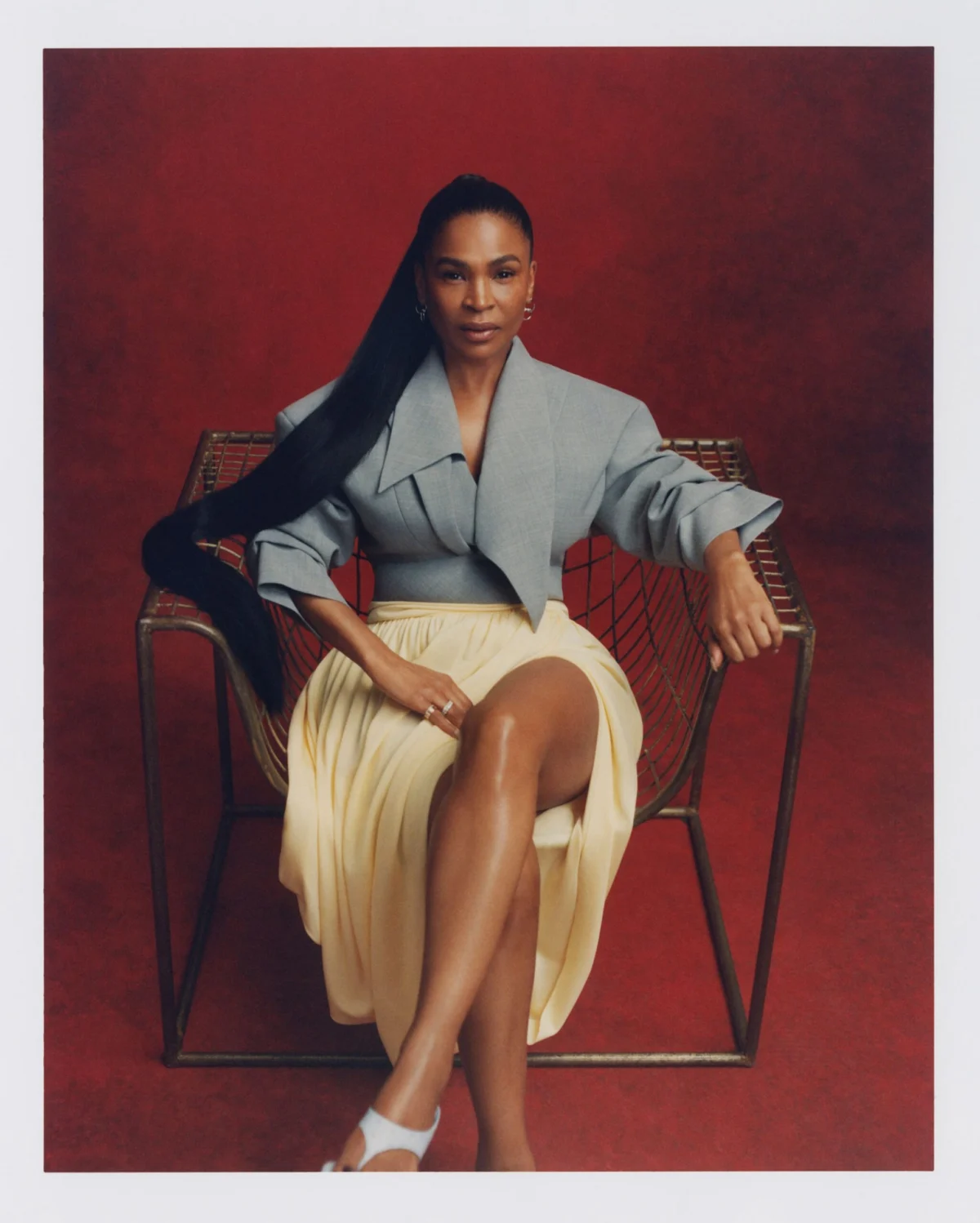
For decades, Nia Long has occupied a rare, foundational space in American cultural memory. To generations of filmgoers, she is the enduring embodiment of "90s Fine"—a title that transcends mere aesthetics, encapsulating a specific cultural vibe, warmth, and effortless grace. From her unforgettable turns in Love Jones and The Best Man to her television tenure on The Fresh Prince of Bel-Air, Long has built a lasting legacy defined by emotional resonance and authenticity.
Now, stepping into a vibrant new chapter at 55, Long is challenging expectations once again. She is stepping into the shoes of music matriarch Katherine Jackson in the upcoming biographical film Michael, slated for an April release. Simultaneously, she is wrapping up a two-year journey writing her deeply anticipated debut memoir, reuniting with Love Jones co-star Larenz Tate in the romantic dramedy Don’t Ever Wonder, and navigating the liberating realities of personal growth, motherhood, and midlife.
Far from resting on the laurels of her cinematic past, Long approaches her life and career with an unflinching commitment to truth, financial independence, and a hard-won philosophy of quiet grace.
Chronology: From Brooklyn Roots to Hollywood Longevity
The Early Years and Formative Disruptions
Long’s journey began in Brooklyn, born into a Trinidadian household within a tightly knit, predominantly Black neighborhood. However, her childhood trajectory shifted when she spent six formative years in Iowa City while her mother pursued higher education. Thrust into a predominantly white Midwestern environment, the young Long experienced a jarring dislocation regarding her racial identity and standards of beauty.
"In writing this memoir, I realized the impact that experience had on my own view of beauty," Long reflects, noting the dissonance between the affirmations she received at home and the messages projected by the outside world. "I thought I was beautiful because my mother said it and my family said it, but the world told me something different." It is a poignant irony, she notes, that she later became a prominent face for Estée Lauder, having initially relied on Black Hollywood to validate her reflection.
Defining an Era in Black Cinema
As Long matured into her acting career, she became a cornerstone of 1990s and 2000s Black cinema. Her performances consistently subverted Hollywood’s historically restrictive tropes for Black women, establishing a new archetype for the modern Black leading lady. Rather than chasing fleeting trends or superficial accolades, Long grounded her career choices in authenticity.
Her strategic focus, she often emphasizes, was never just about fame—it was about building generational wealth and maintaining agency over her image. Whether pushing back against external agendas regarding her hair, makeup, or wardrobe, Long fiercely guarded her artistic integrity.
Navigating Public and Private Storms
In 2022, Long experienced the turbulent intersection of celebrity and public scrutiny when her 13-year relationship ended amidst a heavily publicized cheating scandal. Handled under the relentless glare of the media spotlight, the ordeal tested her resilience. Yet, rather than retreating, Long leaned into deep self-examination and intentional healing. Today, she maintains a healthy co-parenting relationship with her ex-partner, anchored by clear personal boundaries and an unshakeable sense of self-worth.
The Present Renaissance: Michael and Beyond
Entering her mid-fifties, Long is experiencing a powerful professional renaissance. Her portrayal of Katherine Jackson in Michael showcases a masterclass in quiet restraint, acting as a dramatic counterweight to the louder personalities in the film. Off-screen, she is expanding her creative footprint behind the camera as a producer, completing her memoir, and starring in Eugene Ashe’s Don’t Ever Wonder—a mature romantic dramedy exploring the lives of empty nesters.
Supporting Data: Career Milestones and Creative Outputs
To understand Long’s enduring impact, one must look at the breadth and depth of her professional portfolio:
Iconic Film & Television Credits:Love Jones (Nina), The Best Man (Jordan), The Fresh Prince of Bel-Air (Lisa Wilkes), Big Momma’s House, and Boyz n the Hood.
Upcoming Major Projects:
Michael (Biopic scheduled for April release, portraying matriarch Katherine Jackson alongside Colman Domingo and Jaafar Jackson).
Don’t Ever Wonder (Romantic dramedy directed by Eugene Ashe, reuniting with Larenz Tate, alongside Blair Underwood, Susan Kelechi Watson, and Algee Smith).
Literary Endeavor: A forthcoming, highly anticipated debut memoir reflecting on her childhood, her late father (poet Doughtry Long Jr.), and her evolution in the public eye.
Endorsements & Cultural Impact: Serving as a prominent global ambassador for Estée Lauder, challenging monolithic ageism, and redefining the narrative around aging for women in Hollywood.
Official Responses and Reflections: In Her Own Words
Long’s perspective on her career, womanhood, and resilience is marked by radical clarity. Sitting down for interviews, she speaks without pretense, offering profound insights into how she survives and thrives in an inherently fickle industry.
On the Power of Quiet Grace
Discussing her role as Katherine Jackson—a woman who has endured extraordinary highs and profound lows in the public eye—Long returns repeatedly to a singular concept: grace.
"There have been moments in my life where I’ve been required to be more graceful than I’ve ever had to be in the past," Long shares. "And that requires a sense of really being able to dig deep into some sort of self-examination… The only way you thrive and survive is through a tremendous amount of grace. What I think I learned from her is that sometimes grace is really quiet."
On Boundaries and Overcoming Trauma
Reflecting on the public fallout of her personal life in 2022, Long emphasizes the importance of emotional sovereignty and rejecting the burden of outside noise.
"The amount of pouring into myself that I’ve done is strong and mighty and intentional. I’ve now identified the things that I need to work on and the things that I need to heal. But I also identified what is intolerable," she states.
Offering advice on managing personal heartbreak, she adds: "It’s not about another person’s behavior. It’s about your bottom line and the magnitude in which you’re committed to self-love… You don’t have to respond to the noise with the undercurrent of your own trauma."
On Aging and Physical Transformation
Addressing the cliché that "Black don’t crack," Long rejects the unrealistic pressures placed on women to remain static symbols of their youth.
"I’m 55. I got hormonal stuff going. Your body shifts, changes. It’s a whole new body," she says candidly. Refusing to subscribe to restrictive deprivation, she balances wellness with the simple joys of life—whether that means wearing high fashion or enjoying French fries.
Implications: Redefining Midlife and Legacy for Black Women in Hollywood
Nia Long’s current trajectory offers profound implications for the entertainment industry and cultural perceptions of aging, particularly for Black women.
For decades, Hollywood has functioned as an exclusionary space that often discarded women once they aged past traditional sex-symbol status. By embracing her 50s with humor, physical honesty, and renewed professional ambition, Long is actively rewriting the script. Her upcoming memoir and transition into producing signal a shift toward total creative autonomy—moving from the muse to the master storyteller.
Furthermore, Long’s handling of her personal trials provides a masterclass in modern resilience. In an era where social media often demands immediate, reactive performative outrage, Long’s choice of dignified silence, internal healing, and boundary-setting establishes a healthier blueprint for public figures navigating private pain.
Ultimately, Long defines her freedom not by box-office returns, red-carpet appearances, or public applause, but by agency and peace of mind. As she prepares to release Michael and shares her life story through print, Nia Long demonstrates that the most compelling act an artist can perform is to continuously evolve on her own terms.




 Lina Hope
 Asro
Asro
