

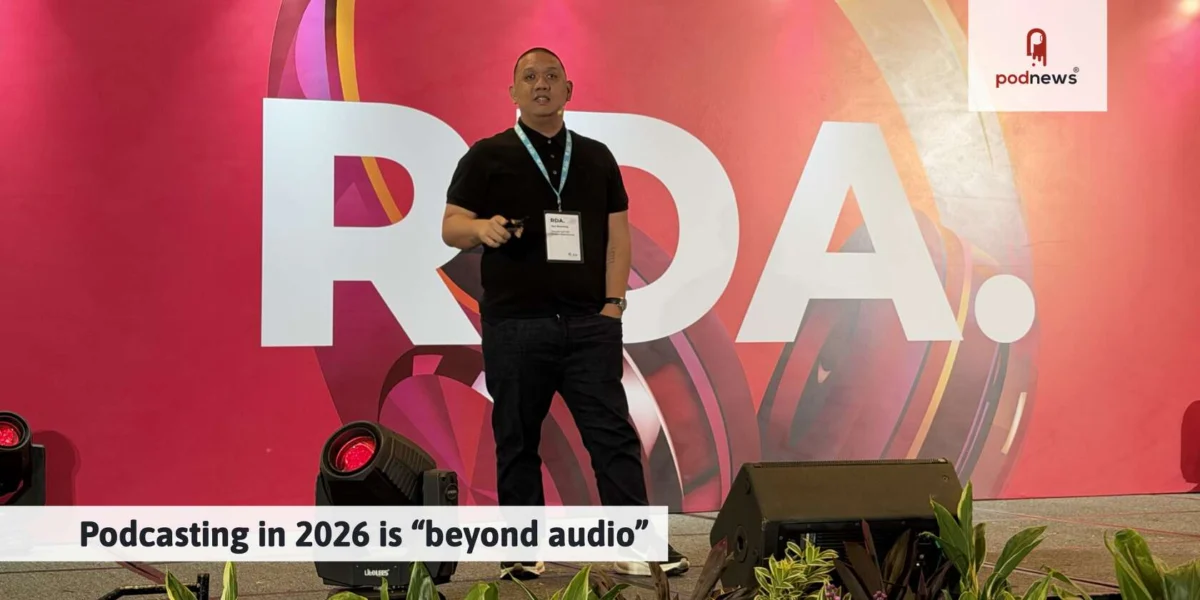
The podcasting landscape continues to evolve at a breakneck pace, bridging the gap between high-stakes investigative journalism, historical analysis, and the avant-garde application of artificial intelligence in creative production. As the industry gathers at events like Podcast Movement NYC, the conversation is shifting from mere survival to the exploration of how technology and narrative craft can redefine listener engagement.
Main Facts: A Diverse Week in Audio
This week’s industry update highlights a broad spectrum of content innovation. From the shadowy world of historical true crime—specifically the baffling 1997 theft of a legendary James Bond Aston Martin—to the existential questions posed by the integration of AI in art, the medium proves once again its capacity for niche, deep-dive storytelling.

Key industry developments include:
- Narrative True Crime: The Great James Bond Car Robbery from Spyscape has captured public imagination by revisiting the 1997 disappearance of the iconic Aston Martin DB5 used in the film Goldfinger.
- Technological Integration: Radiotopia from PRX is set to debut Light Box, a series exploring the intersection of AI and human creativity, hosted by acclaimed composer Mark Henry Phillips.
- Historical Re-evaluation: Dan Snow’s History Hit continues to dominate the educational space, recently offering a definitive account of the Battle of Stamford Bridge.
- Sociopolitical Discourse: World, Interrupted provides a necessary counter-narrative to the "doomscrolling" culture, offering a space for high-level experts to discuss Britain’s role in global geopolitical shifts.
Chronology: From Viking Battles to Digital Futures
The current week in podcasting serves as a microcosm of the medium’s temporal range.

- 1066: The Battle of Stamford Bridge: Dan Snow’s recent episode of History Hit transports listeners to the end of the Viking Age. By analyzing the confrontation between Harold Hadrada and Harold Godwinson, the episode frames this historical moment as the catalyst for the Norman Invasion, emphasizing how audio storytelling can preserve the nuances of British history for a contemporary audience.
- 1997: The Airport Heist: The Great James Bond Car Robbery explores the "impossible" theft of the 007 vehicle from a hangar in Florida. This case serves as a prime example of the "true crime" genre’s evolution, moving away from violent crime toward high-value, mysterious thefts that demand rigorous investigative journalism.
- 2024/2025: The Rise of AI: The announcement of Light Box (debuting September 15) marks a critical point in the industry’s timeline. As AI tools become pervasive in audio editing and generation, creators like Mark Henry Phillips are beginning to document this transition, creating a meta-narrative about the future of the very medium in which they work.
Supporting Data: The Charts and the Numbers
Podcast discovery remains a function of visibility within top-tier platforms like Apple Podcasts and Spotify. Current market data shows a consistent trend toward established "tentpole" programs, while specific sectors see rapid movement.
Market Leaders
- The Daily (NYT): Retains its firm grip on the #1 spot in Apple Podcasts (United States), reinforcing the dominance of daily news-briefing formats.
- The Joe Rogan Experience (Spotify): Continues to command the Spotify ecosystem, demonstrating the enduring power of long-form, personality-driven conversation.
Emerging Growth Areas
Data from the past week highlights significant shifts in niche categories:

- Biotech: Grow Everything Biotech Podcast has seen the largest gain in the Life Sciences category in Ireland, suggesting a growing appetite for scientific communication and "how-to" audio in professional fields.
- Non-Profit: Engineering Greatness debuted as the #1 podcast in the Non-Profit category in Ireland, illustrating how mission-driven organizations are successfully leveraging audio to build community.
- Professional Development: A Bit of Optimism holds the #1 spot in the Careers category (UK), signaling a listener preference for constructive, solution-oriented content amidst global economic uncertainty.
Official Responses and Industry Sentiment
The prevailing sentiment across the industry, particularly as highlighted at conferences like Podcast Movement NYC, is one of "cautious optimism." Producers are increasingly vocal about the need for better discovery tools.
Industry leaders emphasize that while the total number of podcasts continues to grow, the quality of production is becoming the primary differentiator. The success of network-backed shows like those from Radiotopia—which often involve high-caliber talent like Mark Henry Phillips—points toward a professionalization of the medium. There is a concerted effort to move away from low-fidelity content toward "curated" listening experiences that respect the audience’s time and intellectual capacity.

Furthermore, the emergence of shows like Senior PrimeTime—presented by The Foundation for Senior Services—demonstrates a pivot toward serving specific demographics that have been historically underserved by traditional media. By addressing elder care and financial wellness, these podcasts provide a tangible service, moving the industry further into the realm of "utility media."
Implications for the Future
The current trajectory of the podcasting industry suggests several long-term implications for creators, advertisers, and listeners alike.

1. The "AI Paradox" in Production
The launch of Light Box signifies an inevitable confrontation with artificial intelligence. For the industry, the implication is that listeners will soon demand transparency regarding the use of AI in production. Creators who use these tools as a "co-pilot" to enhance storytelling will likely thrive, while those who rely on them to automate content may face a backlash from a more discerning audience.
2. The Move Toward "Slow News"
Shows like World, Interrupted are a direct reaction to the fatigue caused by 24/7 news cycles. The implication here is a market shift toward "slow news"—podcasts that provide historical context, geopolitical framing, and expert interviews rather than reactive, hourly updates. This format is proving to be highly sustainable, as it builds brand loyalty and deep trust, which is highly attractive to premium advertisers.

3. The Specialization of Content
The data from the Life Sciences and Non-Profit categories indicates that the "mass appeal" era of podcasting is giving way to an era of hyper-specialization. Organizations and professionals are finding that by narrowing their focus to specific, high-value topics, they can achieve better engagement metrics than those chasing the general interest market.
4. Community-Centric Monetization
The rise of programs supported by foundations, such as Senior PrimeTime, highlights a shift in how podcasts are funded. Moving beyond standard dynamic ad insertion (DAI), we are seeing an increase in philanthropic and corporate-social-responsibility (CSR) funding. This model provides financial stability that is often decoupled from the volatile swings of the programmatic advertising market.

Conclusion
As we look toward the remainder of the year, the podcasting industry stands at a crossroads. The combination of historical depth, technical innovation, and professional rigor suggests a medium that is maturing rapidly. Whether it is a deep dive into the mystery of a stolen 007 car or a nuanced discussion on the ethics of AI, the podcasts currently finding success are those that treat audio not just as a medium for distribution, but as an essential craft.
For creators, the message is clear: the barrier to entry remains low, but the barrier to excellence is rising. By leveraging data, focusing on niche expertise, and maintaining a high standard of editorial integrity, the next generation of podcasts will continue to reshape the global media landscape. As the industry gathers to share tips, tricks, and strategies, the consensus is that the most exciting stories in audio are, undoubtedly, yet to be told.
 Muslim
 rifanmuazin
 Iffa Jayyana
