

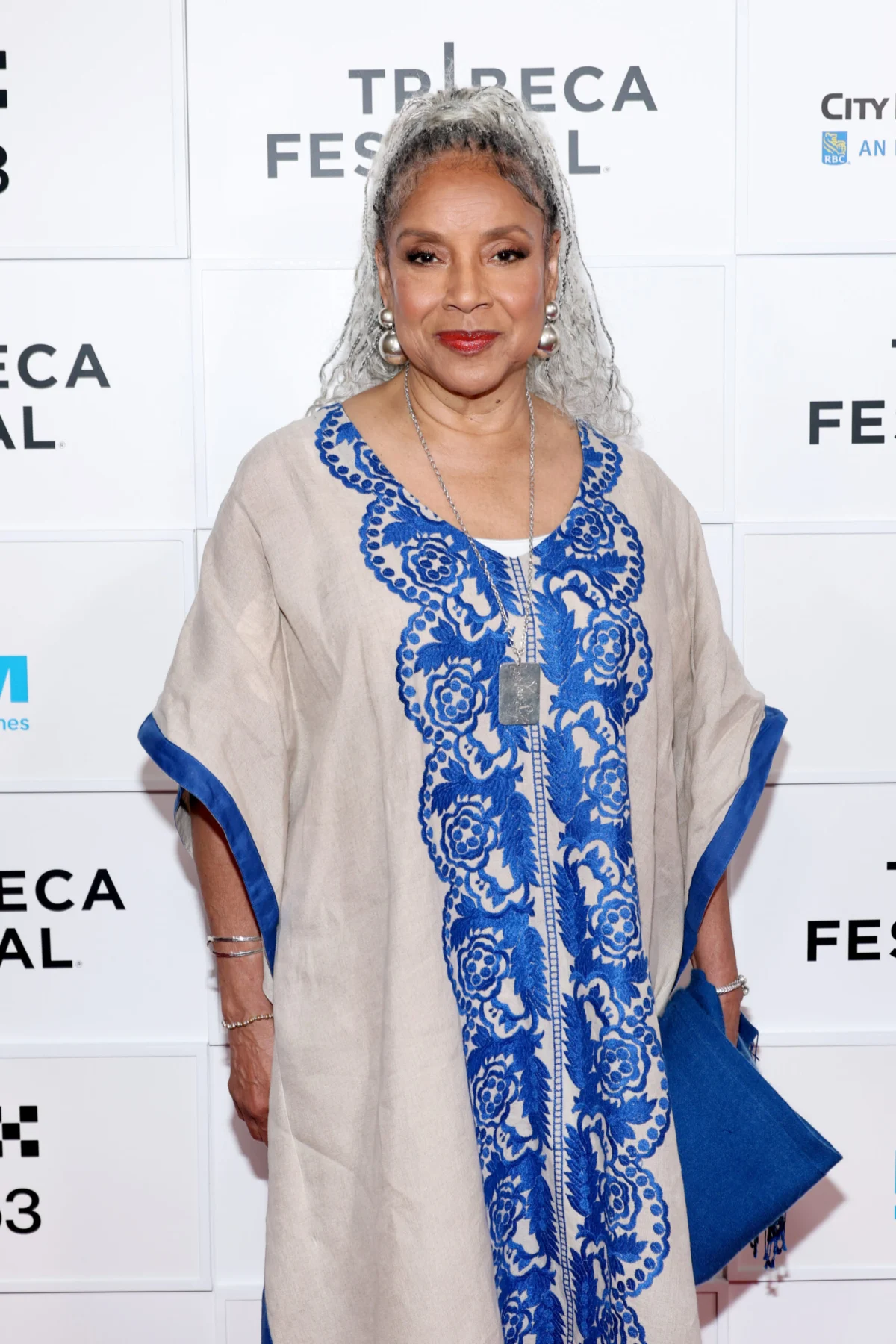
MARTHA’S VINEYARD, Mass. — Under the radiant summer sun of Martha’s Vineyard, amidst a gathering of some of the most formidable minds and leaders in entertainment and business, legendary actress, director, and producer Phylicia Rashad took center stage to deliver a masterclass in grace, resilience, and cultural legacy.
As the guest speaker at the prestigious C-Suite Luncheon during the 24th annual Martha’s Vineyard African American Film Festival (MVAAFF), Rashad captivated a room filled with executives, entrepreneurs, and women leaders of color. The event, a cornerstone of the festival, was founded by Stephanie Tavares-Rance and her husband, Floyd Rance, with a mission to uplift, support, and foster vital connections among executives and business owners of color.
This year’s luncheon, proudly sponsored by AARP, served as a dual celebration: an homage to Rashad’s monumental career—spanning decades of groundbreaking television, film, and theater—and a platform to unveil vital new research regarding the consumption habits and cultural influence of Black audiences in America.
Main Facts: Honoring a Cultural Icon and Unveiling New Data
The centerpiece of the afternoon was a deeply moving fireside chat between Rashad and Dr. Myechia Minter-Jordan, CEO of AARP. The conversation bridged Rashad’s illustrious body of work with empirical data from AARP’s Movies for Grownups initiative.
The discussion brought to light the findings of AARP’s recent landmark study, titled "Bridging the Gap: The Path to More Authentic Portrayals of Black Adults in Movies and TV." The research shatters long-held industry misconceptions by revealing that Black adults consume television, streaming content, and theatrical films at significantly higher rates than the general U.S. population. Furthermore, the study underscored a powerful sociological insight: contemporary audiences view older Black women as towering cultural figures. When these women are authentically showcased on television and film screens, viewers across demographics report feeling notably more positive about the aging process.
For Rashad, whose career has broken barriers and redefined the depiction of Black excellence and familial warmth on screen, the findings validated what she has intuitively known and practiced throughout her career: representation matters, but authenticity and humanity matter most.
Chronology: A Storied Legacy from the Stage to the Screen
To understand the weight of Rashad’s words at the MVAAFF, one must trace a career that has continually shaped the American cultural landscape.
- The Formative Years: Born in Houston, Texas, to a mother who was a Pulitzer Prize-nominated artist and poet (Vivian Ayers Rashad) and a father who was an orthodontist (Andrew Arthur Allen), Rashad was immersed in a rich environment of arts, intellect, and community consciousness from birth.
- The Breakthrough: Rashad achieved global superstardom in the 1980s as Clair Huxtable on NBC’s The Cosby Show. As the sharp-witted, successful attorney and matriarch, she fundamentally transformed the paradigm of the modern Black mother on television, earning multiple Emmy Award nominations.
- The Theater and Directorial Titan: Beyond television, Rashad established herself as a formidable theatrical force. She made history in 2004 as the first Black actress to win the Tony Award for Best Actress in a Play, taking home the prize for her searing portrayal of Lena Younger in A Raisin in the Sun. She has since expanded her footprint into directing, recently helming the Tony-winning Broadway play Purpose.
- The Modern Renaissance: Never slowing down, Rashad continues to captivate contemporary audiences. Her recent credits include HBO’s lavish period drama The Gilded Age, Paramount+’s Diarra From Detroit, and the blockbuster Creed film franchise.
Supporting Data: The Power and Influence of the Black Audience
The AARP study discussed at the C-Suite Luncheon provides crucial context for why figures like Rashad remain so vital to the entertainment industry today. Key data points from "Bridging the Gap" highlight:
- High Engagement: Black adults over index in daily media consumption, serving as primary economic drivers for both box office success and streaming platforms.
- The Matriarchal Influence: Audiences overwhelmingly identify older Black women as cultural anchors. Their visibility on screen correlates directly with increased viewer satisfaction and healthier societal perceptions of aging.
- The Demand for Authenticity: Modern viewers are increasingly discerning, calling for storylines that reflect the true diversity, complexity, and historical depth of the Black experience, moving past monolithic tropes.
These insights formed the philosophical backdrop of Rashad’s dialogue, proving that her enduring popularity is not merely nostalgic, but deeply relevant to modern media consumption.
Official Responses: In Her Own Words
When Dr. Minter-Jordan asked Rashad what the word "legacy" means to her, the actress pivoted away from Hollywood accolades, looking instead toward her roots.
"My mother. My father, my grandparents, the communities in which they were born, and I was privileged to know as a child — that’s what I think about when I hear about legacy, because that’s what flows through," Rashad shared, her voice carrying a quiet, commanding reverence.
Looking toward the future, she explained that legacy is an active, conscious creation rather than a passive byproduct of fame.
"It’s something that we become very conscious of. Something that we speak of consciously together. Something we now consciously convey to our young people," she said. "But it’s really about the way we live. About the way we interact with each other. The way we hold ourselves, think of ourselves — this is what creates legacy."
Rashad illustrated this philosophy by recalling her preparation for iconic roles like Lena Younger in A Raisin in the Sun.
"When it came time to play Lena Younger, I understood who the woman was. She was not a piece of furniture with a wig on it. She was a woman who knew how to grow things. And I knew that from my greater family. I am so proud of the legacy that has been handed to me. I am so proud of this heritage."
When questioned about how she approaches historical roles and scripts, Rashad expressed a deep intellectual curiosity paired with a profound sense of purpose.
"I love getting a script and going back into history," she noted. "I love learning because I’m looking at humanity and saying, ‘OK. We’ve done this a few times now. Let’s get it right now. Let’s get it right.’ And especially right now, being a human being is so important. I look for the humanity in every world. I’m not considering anything else, and I’m not thinking anything else. This is what my mother taught me. This for me is freedom. I am not circumscribed by anyone else’s idea."
Addressing the persistent issue of inaccurate or stereotypical depictions of the Black experience in media, Rashad maintained a pragmatic and empowered stance:
"And if there’s something on television that I don’t like, I simply don’t watch it."
Implications: A Blueprint for the Future of Entertainment
The appearance of Phylicia Rashad at the 24th annual Martha’s Vineyard African American Film Festival carries profound implications for Hollywood executives, creators, and audiences alike.
As streaming platforms and studios grapple with shifting demographic realities, the data presented by AARP—coupled with the living testament of Rashad’s career—sends a clear message: authenticity is not a niche market; it is a universal draw. When creators honor historical truth, cultural specificity, and the deep well of human emotion, content resonates across all racial and generational lines.
Rashad’s career proves that longevity in the arts is achieved not by chasing transient trends, but by anchoring oneself in truth and shared humanity. Whether she is stepping into the shoes of Clair Huxtable, portraying historical figures in prestige television, or directing groundbreaking theater, her North Star remains unchanged.
As she reflected on her extensive body of work, Rashad summarized her ultimate artistic aspiration with a statement that resonated deeply with the packed auditorium on Martha’s Vineyard:
"Whether it’s Ma Pop, Aunt Esther, Clair Huxtable or whoever, I want my work, more than anything else, to demonstrate that as human beings, we are much more alike than we could ever be different."
In an era often defined by division, Rashad’s message—delivered against the backdrop of a festival dedicated to celebrating Black storytelling—serves as both a celebration of the past and an essential guiding light for the future of American entertainment.
 Layla Zulfa
 Neng Nana
 Asro
Asro
