

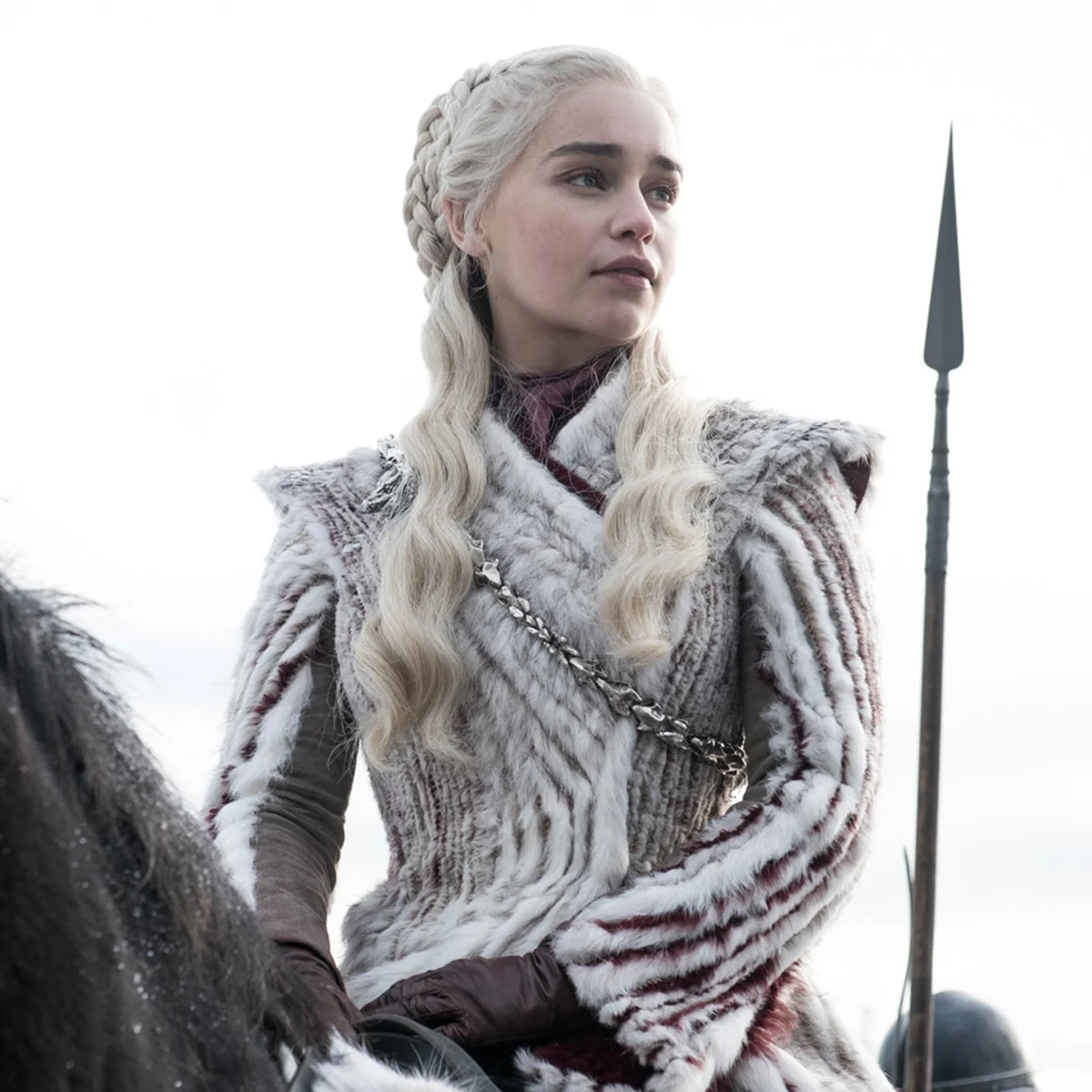
The television landscape was forever altered on April 17, 2011, when HBO premiered Game of Thrones. What began as a risky adaptation of George R.R. Martin’s dense fantasy novels evolved into a global cultural phenomenon, earning 59 Emmy Awards and redefining the scale of prestige television. Today, as the franchise continues with its prequel series, A Knight of the Seven Kingdoms, the shadow of the original series remains a testament to the power of high-stakes storytelling.
The Genesis of an Epic: A High-Stakes Bet
The journey of Game of Thrones was anything but guaranteed. George R.R. Martin, the architect behind the A Song of Ice and Fire series, had long been wary of condensing his sprawling, 694-page inaugural novel into a feature film. He believed that the depth of his world required the long-form narrative format of television.
When showrunners David Benioff and Dan Weiss approached him, they had to prove their commitment. During a pivotal meeting, Martin famously tested their knowledge of the lore, asking them to identify Jon Snow’s true mother. Their correct, intuitive answer secured their place at the helm. However, securing the greenlight from HBO was a grueling multi-year process. The network’s programming executives, including Michael Lombardo, were initially skeptical, viewing a high-fantasy project as a massive financial gamble.
The first pilot, directed by Tom McCarthy, proved to be a disaster. It lacked the necessary epic scope, famously leading executives to remark, "We could have shot this in Burbank." The production was salvaged only after a massive overhaul, including reshooting the pilot and recalibrating the series’ visual identity. This "biggest rescue in Hollywood history," as writer Craig Mazin called it, set the stage for the show’s unprecedented success.
Casting the Icons: A Chronicle of Auditions
The casting process for Game of Thrones is now the stuff of industry legend. Kit Harington, who defined the role of Jon Snow, faced intense competition from eventual co-stars like Alfie Allen (Theon Greyjoy), Joe Dempsie (Gendry), and Iwan Rheon (Ramsay Bolton). Nicholas Hoult, then known for his work in Clash of the Titans, also auditioned for the role, though he admitted his fake tan and ponytail were likely not what the producers were looking for.
Peter Dinklage, the only actor envisioned for the role of Tyrion Lannister, initially hesitated, fearing the tropes associated with fantasy characters. It was only after a personal connection to Benioff and his wife, Amanda Peet, that he agreed to the project. Similarly, the role of Daenerys Targaryen underwent a significant transition. While Tamzin Merchant was cast in the original pilot, it was Emilia Clarke who eventually embodied the "Mother of Dragons," with producers noting that the role seemed uniquely destined for her.
The friendships formed on set mirrored the intensity of the show. Maisie Williams and Sophie Turner, cast as the Stark sisters at ages 12 and 13 respectively, grew up together on screen. Their bond became so synonymous with the show that they commemorated their shared history with matching tattoos marking their casting date: August 7, 2009.
The Evolution of the Seven Kingdoms: From "Thrones" to "Knight"
As the original series concluded its eight-season run in 2019, the franchise looked toward its future. A Knight of the Seven Kingdoms, based on George R.R. Martin’s Tales of Dunk and Egg novellas, represents a tonal shift for the franchise.
Showrunner Ira Parker has characterized the production as both a "pleasure and a curse." Unlike the massive, continent-spanning scope of Game of Thrones or the dragon-heavy spectacle of House of the Dragon, A Knight of the Seven Kingdoms focuses on a smaller, more intimate story: the bond between Ser Duncan the Tall and the young Aegon V Targaryen.
"The big feeling was relief," Parker told The Hollywood Reporter, acknowledging the show’s nine Emmy nominations. "To know that it wasn’t just all an illusion, that it did connect with people." For Parker, the challenge lies in the simplicity. With a smaller cast and a more contained narrative—centered on a three-day tournament at Ashford Meadow—the show cannot rely on complex, shifting storylines to hide pacing issues. Every moment must be earned.
Supporting Data: The Financial and Critical Scale
The transition from a modest, character-driven pilot to an $80 million-per-season spectacle was marked by a steady escalation in budget and ambition.
- Budget Growth: The cost per episode rose from approximately $6 million in the first season to a staggering $15 million in the final season.
- Awards Dominance: Across its 73 episodes, the series secured 59 Emmy wins, setting a benchmark for fantasy television.
- Production Logistics: The "Battle of the Bastards" serves as the quintessential example of the show’s logistical prowess, requiring hundreds of extras, dozens of horses, and weeks of meticulous planning by director Miguel Sapochnik.
These figures illustrate the "Bank of Westeros" approach—an unprecedented investment that paid off in both cultural influence and viewer engagement.
Official Responses and Creative Philosophy
The showrunners’ philosophy regarding the conclusion of Game of Thrones was rooted in the desire for a "cohesive story." Benioff and Weiss repeatedly emphasized that they were not interested in keeping the show alive indefinitely for the sake of profit. They viewed it as a singular, continuous narrative that demanded a definitive end.
In contrast, Ira Parker’s approach to the new prequel series reflects a modern understanding of the audience’s fatigue with constant spectacle. "Everything was a little quieter [at the start of GOT]," Parker noted. "Then, all of a sudden, you have all these sprawling stories that no one can keep track of." His goal with A Knight of the Seven Kingdoms is to return to that "quieter" POV, focusing on character chemistry rather than just grand set pieces.
Implications for the Future of Franchise Television
The success of Game of Thrones and the subsequent launch of House of the Dragon and A Knight of the Seven Kingdoms have set a high bar for genre storytelling. The implication for the industry is clear: audiences are hungry for "well-made onscreen fantasy."
However, the lessons learned from the "crashed pilot" and the difficulty of adapting complex source material are not lost on the current creative teams. The industry now recognizes that fantasy requires more than just high budgets; it requires a deep, almost forensic, respect for the source material and a willingness to invest in the human element of the characters.
As A Knight of the Seven Kingdoms heads into its second season, the pressure to maintain the quality established by its predecessor is immense. Yet, the shift toward a more contained, character-centric narrative suggests that the franchise is maturing. It is no longer just about the "game" for the Iron Throne; it is about the stories of the people living in its shadow. Whether the audience will continue to find these quieter, more intimate tales as compelling as the sprawling wars of the past remains to be seen, but the foundation laid by the original series ensures that Westeros remains the most important map in the television world.
The legacy of the show is not found in the battles or the dragons alone, but in the enduring connection between the fans, the creators, and the complex, flawed characters that populate George R.R. Martin’s vision. As the franchise looks forward, it carries the weight—and the promise—of a story that changed television forever.
 Lina Hope
 Asro
Asro
 Raul Delapena Setiawan
