

Main Facts
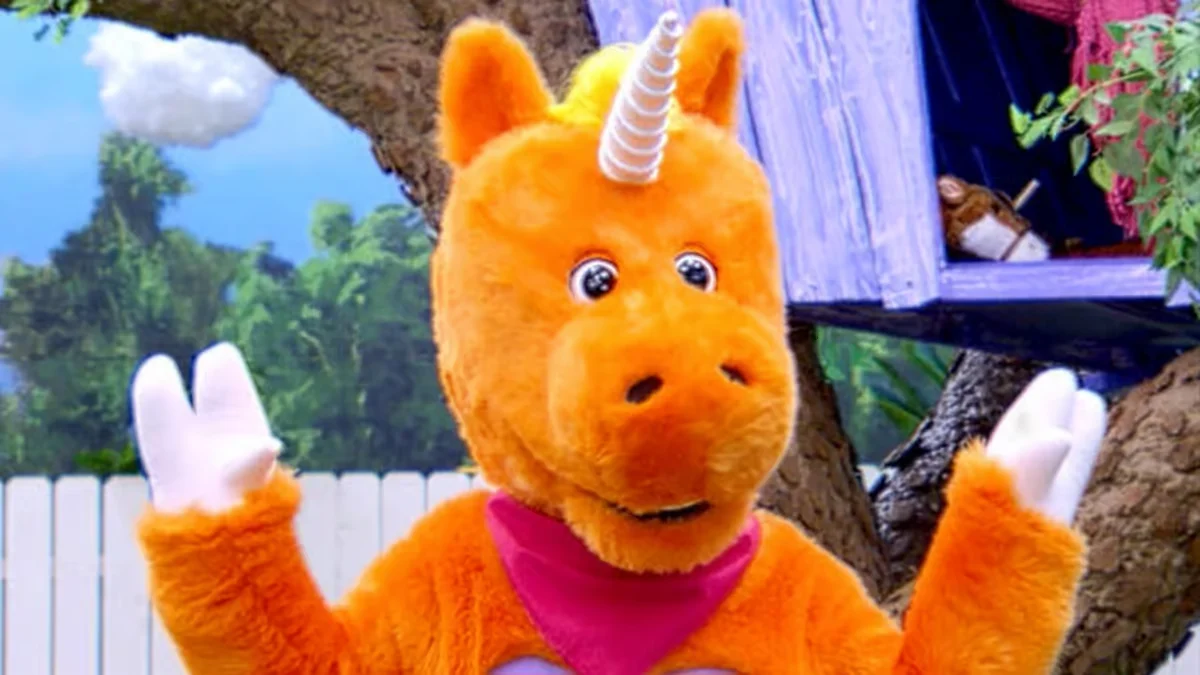
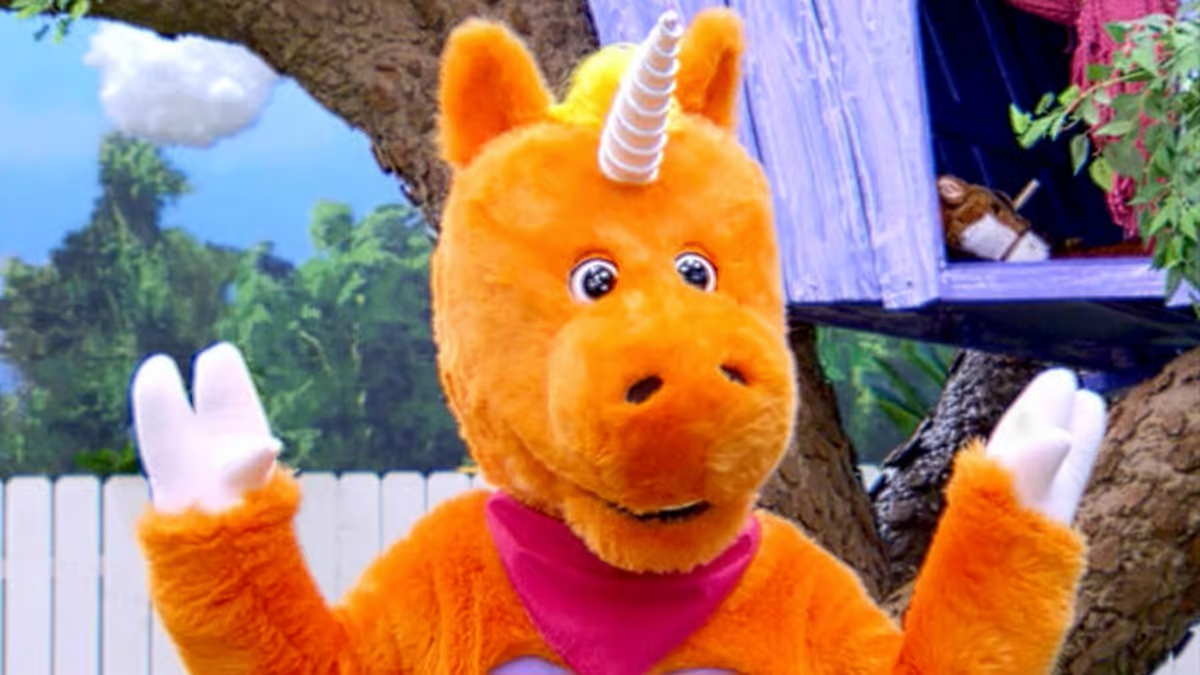
The modern cinematic landscape has developed a peculiar appetite for subverting the innocent, brightly colored icons of childhood. Earlier this year, the indie horror phenomenon Obsession achieved a rare box-office feat by grossing more in its second weekend than its first. Lightning struck twice this September with Buddy, a low-budget horror-comedy that earned $5.3 million during its August 28 frame, followed by a staggering $5.7 million over Labor Day weekend. Operating on a modest $3 million budget, Buddy follows a group of children trapped in a Barney & Friends-style television program hosted by an adorable, orange unicorn voiced by Keegan-Michael Key. Predictably—and violently—the furry mascot turns out to be a murderous terror.
While Buddy is currently riding a wave of financial success and modern novelty, its gore-heavy approach often sacrifices psychological tension and genuine wit in favor of cheap, bloody thrills. For film enthusiasts seeking a truly sharp, multi-layered, and deeply unhinged takedown of the children’s entertainment industry, the gold standard remains Danny DeVito’s 2002 black comedy, Death to Smoochy. Starring Robin Williams and Edward Norton, Death to Smoochy approached the dark underbelly of public television two decades before the current indie-horror wave, delivering a satirical masterclass that has since blossomed into a celebrated cult classic.
Chronology
The trajectory of children’s television satire spans decades, moving from wholesome moral guidance to outright cinematic subversion.
- The 1990s Golden Age of Kid-Vid: Real-world educational programs like Barney & Friends and Mr. Rogers’ Neighborhood dominated television screens, establishing an aesthetic of aggressive, unyielding wholesomeness that practically begged for theatrical deconstruction.
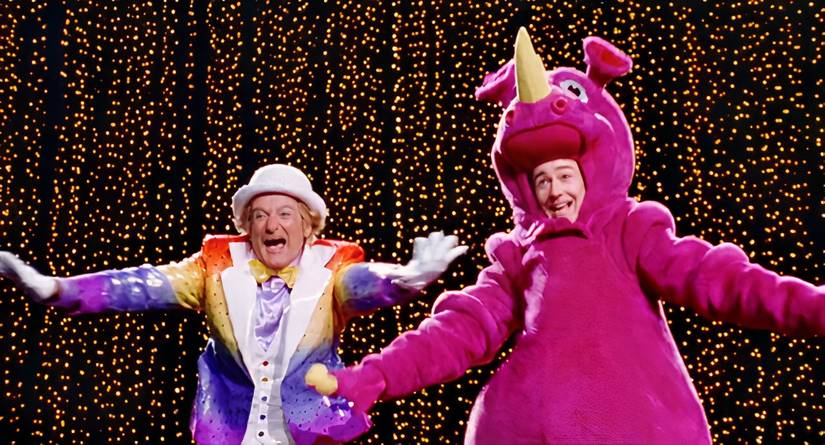
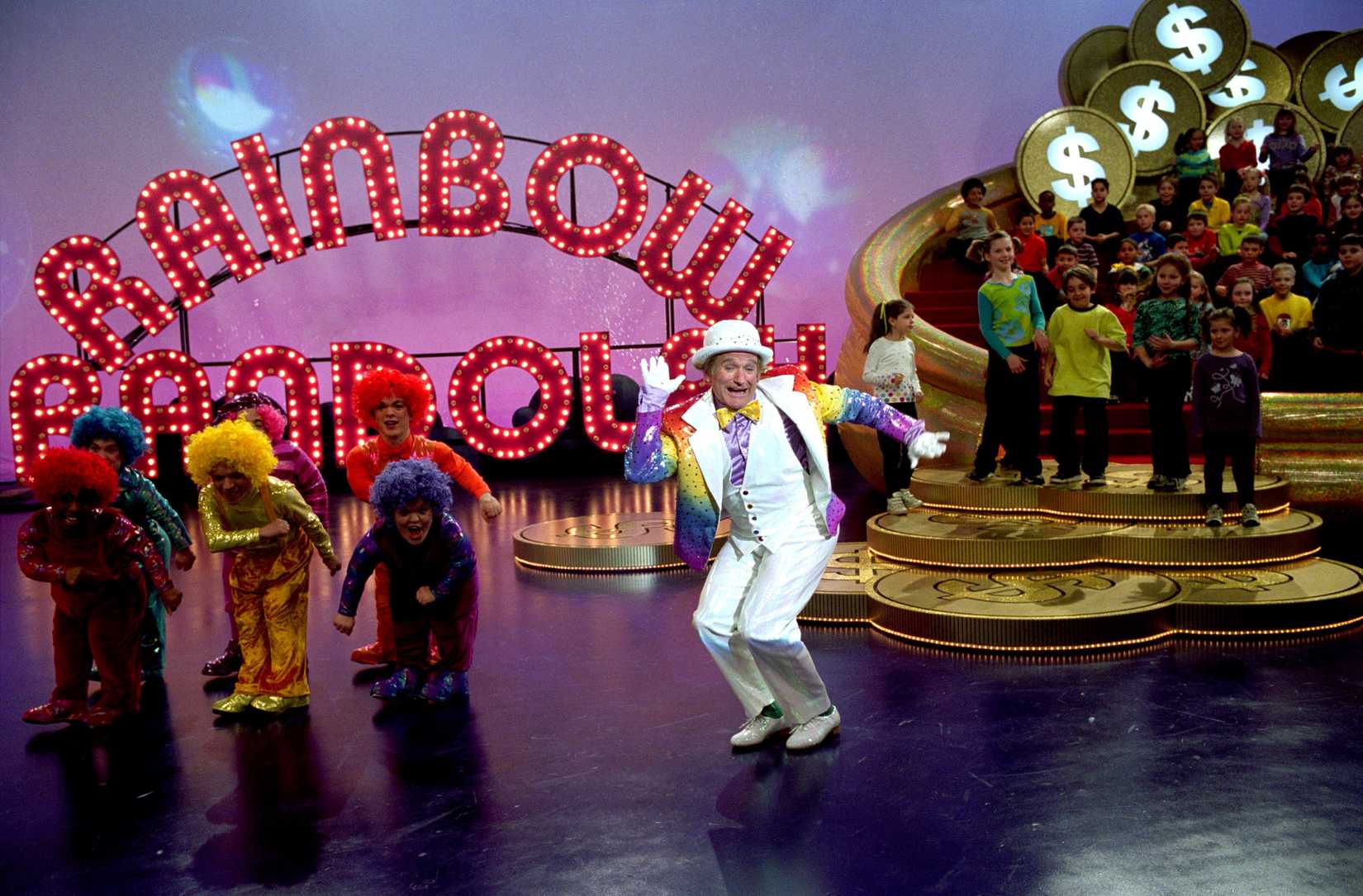
- March 2002: Warner Bros. released Death to Smoochy, directed by Danny DeVito. The film chronicled the downfall of disgraced, bribe-accepting kiddie-show host Rainbow Randolph (Robin Williams) and the meteoric rise of his replacement, Sheldon Mopes, who performed as a cheerful purple rhinoceros named Smoochy (Edward Norton).
- Spring–Summer 2002: Plagued by a controversial tone and a difficult marketing campaign, Death to Smoochy floundered at the box office, grossing roughly $8 million against an estimated $50 million production budget.
- The 2010s–2020s Cult Re-evaluation: Over the years, home media, streaming availability, and a cultural shift toward dark, ironic media re-contextualized Death to Smoochy. The film steadily accumulated a devoted fanbase who recognized its prescient, biting commentary on media corruption.
- August–September 2026: The indie horror film Buddy hits theaters. Capitalizing on the public’s enduring fascination with corrupted children’s mascots, Buddy pulls off consecutive weekend box-office growth, proving that audiences remain endlessly captivated by the concept of unhinged preschool icons—even if pure horror cannot always match the comedic brilliance of older satires.
Supporting Data
A financial and critical comparison between the modern horror wave and DeVito’s 2002 satirical experiment highlights the shifting economics of Hollywood’s dark nostalgia:

| Film Title | Release Year | Estimated Budget | Opening/Early Box Office Milestones | Critical & Cultural Reception |
|---|---|---|---|---|
| Buddy | 2026 | $3 Million | $5.3M (Weekend 1) / $5.7M (Labor Day Weekend 2) | Praised for its clever 1990s aesthetic and high concept; criticized by purists for favoring gore over psychological horror. |
| Death to Smoochy | 2002 | $50 Million | ~$8 Million Total Domestic Box Office | Initially a major box-office bomb; later re-evaluated as a brilliant, ahead-of-its-time black comedy with a cult following. |
Beyond the box office, the talent pedigree behind Death to Smoochy remains staggering. Alongside Williams and Norton, the film features an elite supporting ensemble including Catherine Keener, Jon Stewart, Harvey Fierstein, Danny Woodburn, Michael Rispoli, and Pam Ferris.
Official Responses and Industry Perspectives
When Death to Smoochy was released in 2002, studio executives and mainstream critics were largely baffled by its aggressive cynicism. The film required audiences to root for—and simultaneously recoil from—characters deeply entrenched in moral bankruptcy.
Danny DeVito defended the film’s delicate tightrope walk between sweetness and malice, noting that the absurdity of children’s television provided a pristine canvas to explore human desperation. In retrospective interviews, critics and fans alike have noted that the film’s primary strength was its refusal to play it safe.
In contrast, the makers of Buddy embraced the contemporary horror playbook pioneered by low-budget hits, prioritizing high-concept premises and viral marketing. While Buddy successfully weaponizes nostalgia to draw crowds into theater seats, critics have pointed out that its reliance on standard slasher tropes leaves it structurally hollow compared to the character-driven psychological chaos of DeVito’s work.
Implications
The enduring cultural footprint of both Death to Smoochy and newer releases like Buddy points to a broader psychological phenomenon: our collective unease with absolute, performative innocence. Children’s television mandates a level of perpetual cheer that human beings inherently struggle to maintain. When artists peel back the felt-and-velvet curtain to reveal greed, desperation, and existential dread, audiences respond viscerally.
For Death to Smoochy, the implication was that society punished a film for being ahead of its time. In 2002, a multi-million-dollar dark comedy about neo-Nazi rhinestones and corrupt network executives was a bridge too far for mainstream multiplex crowds. Today, however, audiences are far more acclimatized to the deconstruction of wholesome icons.
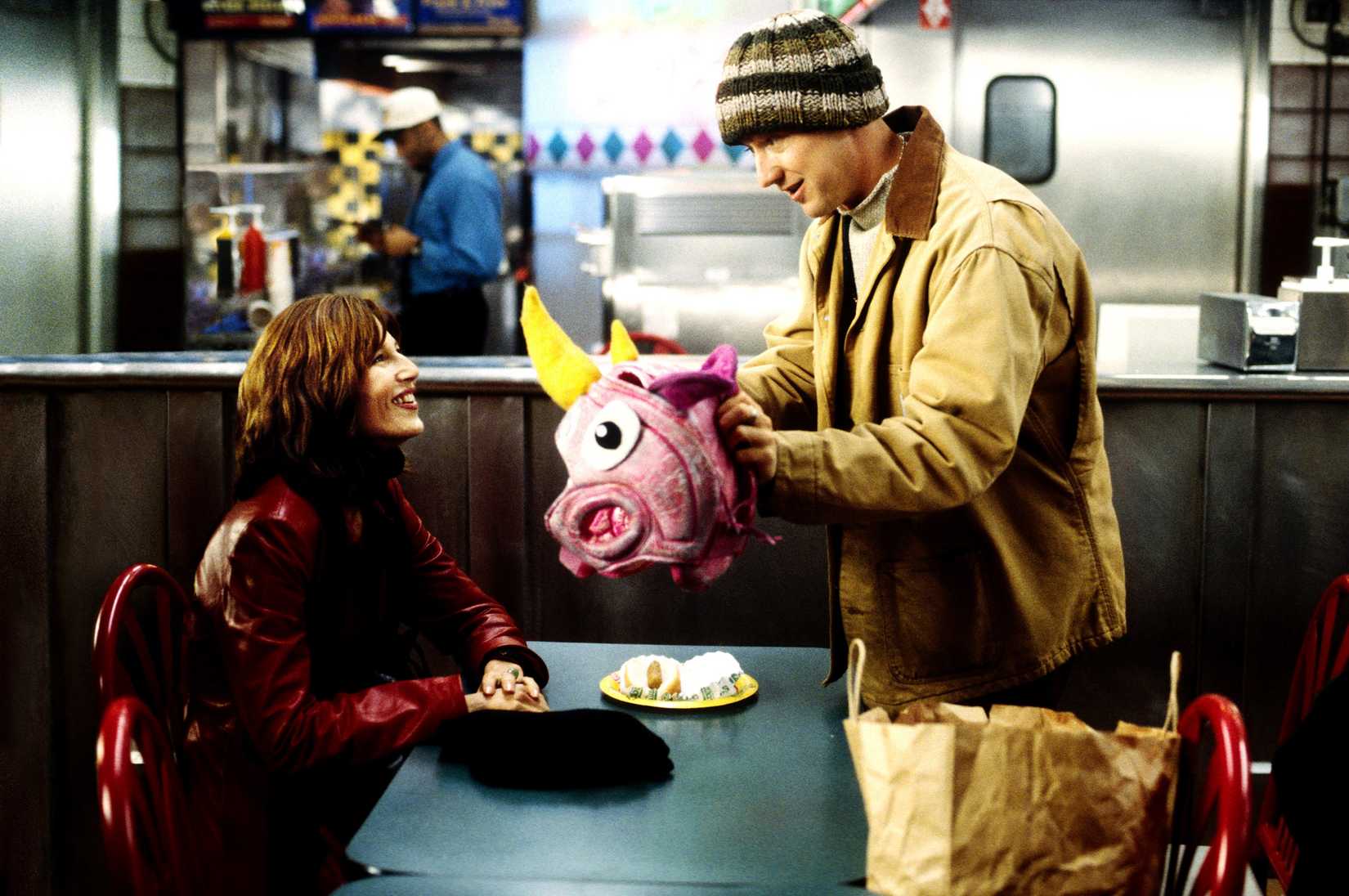
Yet, as newer entities like Buddy demonstrate, relying solely on shock value, gore, and surface-level tropes is not enough to secure true cinematic longevity. Death to Smoochy endures because beneath the dirty jokes and the absurd premise of a fuchsia rhinoceros lay career-best performances from Robin Williams and Edward Norton, bound together by Danny DeVito’s singular, twisted artistic vision. No matter how many fluffy, killer mascots Hollywood rolls out to dominate the box office, the crown for the ultimate children’s television satire remains firmly on Smoochy’s horn.
 Lina Irawan
 Azzam Bilal Chamdy
 Basiran
