

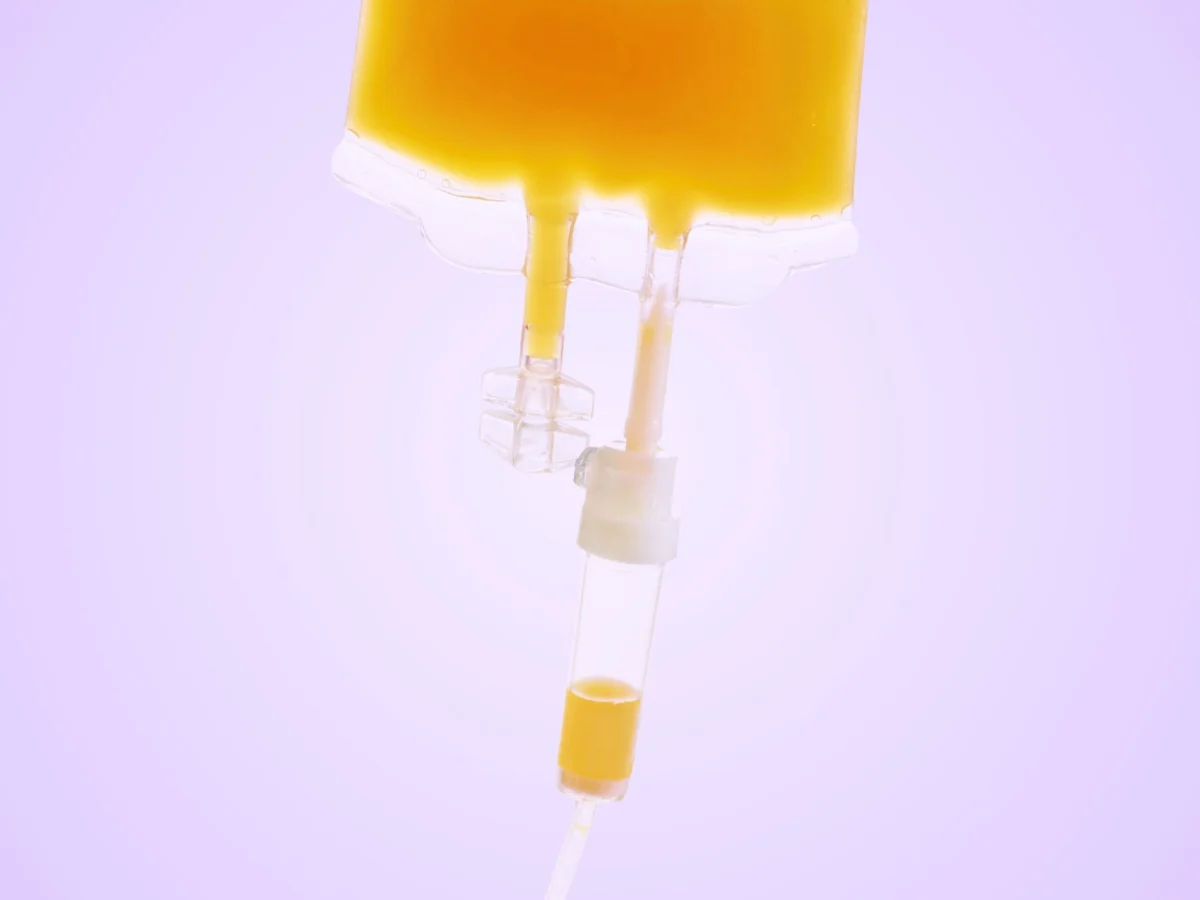
The eternal quest to unlock the fountain of youth has taken many forms throughout human history, ranging from mythical springs to modern biohacking protocols. Today, the latest scientific frontier capturing the imagination of longevity researchers and wellness enthusiasts alike is therapeutic plasma exchange (TPE)—a medical procedure that filters, purifies, and replaces the liquid portion of human blood.
A prominent 2025 study published in the journal Aging Cell sent ripples through the anti-aging community by suggesting that this procedure could potentially lower a person’s biological age by roughly two and a half years.
However, before consumers begin rushing to schedule appointments at commercial plasma clinics, longevity experts urge caution. A closer examination of the data reveals a complex medical procedure with short-lived benefits, high physical tolls, and a long road ahead before it can be considered a reliable anti-aging elixir.
Main Facts: What is Therapeutic Plasma Exchange?
To understand why scientists are examining plasma, one must look beyond the red and white blood cells that dominate popular imagery of the human circulatory system. Plasma makes up more than half of human blood volume. While primarily composed of water, it functions as a highly complex biochemical cargo bay.
Plasma is rich in:
- Proteins and metabolites
- Hormones and signaling molecules
- Inflammatory factors that reflect and influence the functional status of organ systems across the entire body.
Dr. Andrea Maier, MD, PhD, a geriatrician and board member of the Academy for Health and Lifespan Research, compares plasma to a logistical delivery network. "It’s a transport system like DHL, a vehicle to bring things from your brain to your muscles, from kidney to lungs, and so on. So it’s fluid with lots of information," she explains.
Biological Age vs. Chronological Age
Because plasma captures a wide-angle snapshot of the body’s internal molecular landscape, it has become a central focal point for measuring biological age.
Unlike chronological age—the exact number of years a person has been alive—biological age measures how well cells, tissues, and organ systems are functioning. A person might be 40 years old chronologically, but their cellular health and biomarker profile might resemble that of a 30-year-old (or a 50-year-old).
While biological age is not a singular, fixed measurement, it provides crucial health insights. According to Dr. Keenan Walker, PhD, a senior investigator at the National Institute on Aging, studies consistently show that individuals whose biological age outpaces their chronological age face significantly higher risks of chronic disease, cognitive decline, and early mortality. Therapeutic plasma exchange attempts to intervene in this trajectory by scrubbing the blood of aging factors and resetting these molecular markers.
Chronology: From Sci-Fi Experiments to Modern Clinical Trials
The scientific journey linking blood chemistry to rejuvenation did not begin with modern longevity clinics; its roots stretch back more than a decade through unconventional animal studies.
- Early 2010s — The Era of Parabiosis: Researchers began exploring the connection between plasma and the aging process using a surgical technique known as parabiosis. This involved surgically linking the circulatory systems of two mice—typically an old mouse and a young mouse. The underlying hypothesis was straightforward: if youthful plasma could be continuously introduced into an aging organism, the older animal would experience systemic rejuvenation.
- Mid-2010s — Animal Breakthroughs: The parabiosis experiments yielded striking results. Older mice whose circulatory systems were infused with young plasma demonstrated heightened resilience to tissue damage, improved muscle regeneration, and enhanced cognitive function. These findings sparked an intense wave of academic and commercial interest regarding whether specific blood components could either be cleared out or infused to extend human healthspan.
- Late 2010s to Early 2020s — Therapeutic Applications: Medical researchers adapted these concepts into targeted therapies. TPE began gaining traction as a clinical intervention to manage specific autoimmune disorders, severe neurological conditions, and certain blood cancers by filtering out pathological autoantibodies and inflammatory proteins.
- 2025 — The Aging Cell Trial: Building on clinical safety data, researchers initiated human trials specifically designed to track biological age changes following plasma exchange, culminating in the recent Aging Cell publication that brought mainstream attention back to the technique.
Supporting Data: Inside the 2025 Aging Cell Study
The recent study published in Aging Cell aimed to test whether systematic plasma replacement could alter molecular markers of aging in human participants.
Study Design and Execution
- Participant Pool: The trial enrolled 42 human participants.
- The Intervention: Researchers performed therapeutic plasma exchange, replacing the removed plasma with purified albumin (a major blood protein) and saline solutions. A subset of participants also received intravenous immunoglobulin (IVIG), a specialized immune therapy.
- Measurement Tools: Advanced molecular assays were utilized to track changes in thousands of circulating plasma proteins, mapping shifts in biological age before, during, and after the intervention.
The Findings: Promising Initial Shifts, Transient Results
At first glance, the headline-grabbing results suggested success: certain participants demonstrated a reduction in biological age of approximately 2.5 years during the course of the trial.
However, a deeper dive into the methodology and timeline reveals a more nuanced reality. Dr. Maier emphasizes that the "2.5 years younger" metric was captured at the midpoint of the study, rather than its conclusion.
"If you are digging a little bit deeper, this ‘2.5 years younger’ is comparing people at midterm to the baseline, not at the end of the study and the baseline. At the end, the effect was nearly gone," Dr. Maier notes.
Why Did the Rejuvenation Fade?
Researchers hypothesize that completely stripping and replacing human plasma places an immense physiological burden on the body. The sudden influx of alternative fluids and purified proteins triggers an initial, dramatic shift in biomarkers.
However, as the body attempts to adapt to this massive systemic disruption, it undergoes severe metabolic stress. Eventually, homeostatic mechanisms take over, and the body’s circulating biomarkers swing back toward their baseline states. In short, the rejuvenation is real, but it is temporary.
Official Responses and Expert Perspectives
As public interest in longevity therapies surges, leading scientists in the fields of geriatrics and aging research are stepping forward to temper expectations and provide crucial clinical context.
Dr. Andrea Maier: A "Phase 1" Reality Check
Dr. Maier acknowledges the scientific validity underlying plasma research but stresses that the technology is far from ready for prime-time clinical implementation.
"I would call this a phase 1 study," says Dr. Maier. "We’ve basically learned that we can safely do it, and now we have to see it in much bigger studies and look at the long-term effect. It’s not a crazy idea. It’s absolutely grounded in lots of evidence, but not for everybody. It needs to be more precise."
She cautions against early adoption, noting the physical toll the procedure takes on patients. "The future is great in our field, and this is the first tiny step, but we should absolutely not implement it now in clinical practice because it is so rough on the body."
Dr. Keenan Walker: The Importance of Personalization
Dr. Keenan Walker highlights another critical takeaway from the data: participant response was not uniform. The health status of the individual undergoing the procedure played a major role in the magnitude of the intervention’s effect.
"Those who were less healthy saw a stronger intervention effect," Dr. Walker observes. "So I think it’ll be important to find out for whom this works."
Both experts agree that future advancements will likely move away from broad, blunt-instrument plasma filtering processes and instead focus on highly personalized, precision-targeted biological interventions. Rather than swapping out entire plasma volumes, future therapies may pinpoint and neutralize specific harmful circulating proteins while leaving the rest of the circulatory ecosystem undisturbed.
Implications: What This Means for the Future of Longevity
The fascination with therapeutic plasma exchange highlights both the incredible progress and the persistent pitfalls of modern anti-aging science.
- Beware of Premature Commercialization: The gap between early-stage clinical trials and safe, effective consumer treatments remains wide. Clinics offering unverified plasma exchange procedures outside of strict clinical trials pose significant financial and physical risks to consumers.
- The Shift Toward Precision Medicine: Generalized anti-aging panaceas are largely giving way to targeted interventions. As researchers identify specific toxic metabolites and pro-aging factors within plasma, future therapies will likely focus on targeted clearance rather than total fluid replacement.
- Validation of Biomarker Tracking: Despite the temporary nature of the results, studies like the one in Aging Cell prove that human biological age is malleable and responsive to systemic interventions. This validates the use of proteomic profiling as a powerful tool for measuring the efficacy of future longevity treatments.
Ultimately, while therapeutic plasma exchange represents a fascinating chapter in the evolution of anti-aging research, it is not yet the miraculous fountain of youth depicted in wellness headlines. As Dr. Maier aptly summarizes: "I love innovation, and I love this study, but I think the future will give something else."
 Lina Hope
 Asro
Asro
 Sagoh
Sagoh
