

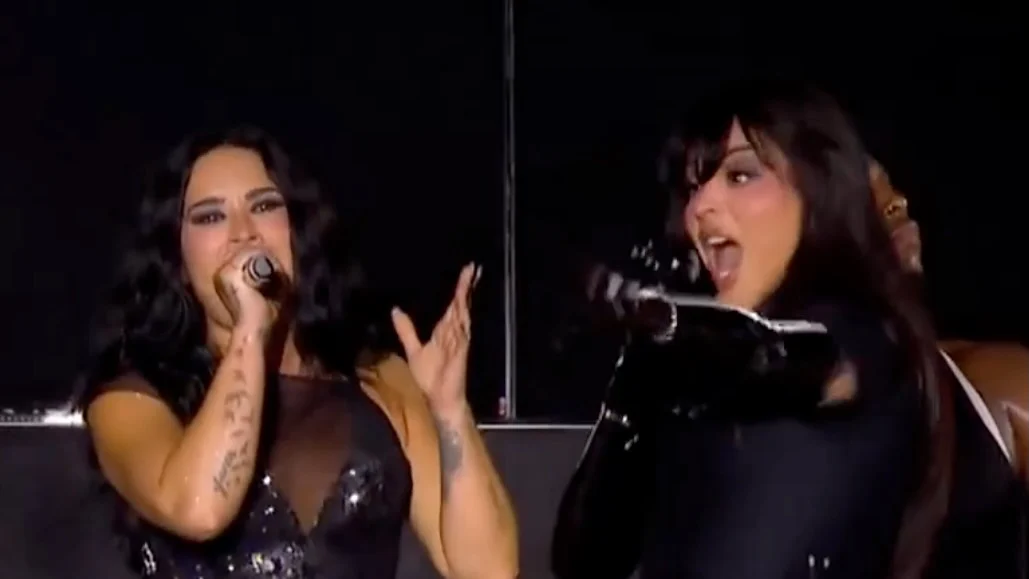
RIO DE JANEIRO — The legendary Palco Mundo stage at Rock in Rio witnessed a masterclass in pop performance on Saturday night, as American powerhouse Demi Lovato delivered a career-spanning spectacle that bridged her emotional vocal beginnings with her modern, rock-tinged electronic eras. Yet, for all the pyrotechnics, powerhouse vocals, and nostalgic sing-alongs, the defining moment of the evening arrived in its final minutes.
Saving her biggest surprise for the curtain call, Lovato welcomed Brazilian superstar and international drag icon Pabllo Vittar to the stage. Together, the two performers delivered a high-octane, electrifying rendition of Lovato’s 2015 global smash hit “Cool for the Summer.” The collaboration instantly transformed a standard festival headline slot into a historic cross-cultural celebration, sending shockwaves through the massive festival grounds and dominating global social media feeds.
Main Facts: The Historic Collaboration
The surprise appearance brought together two distinct heavyweights of modern pop and LGBTQ+ advocacy. Demi Lovato, whose career has evolved from Disney Channel darling to a Grammy-nominated vocal titan, has spent the past decade cementing her status as one of pop music’s most versatile voices. Her Saturday night set at Rock in Rio served as a sweeping retrospective, blending tracks from her latest studio album, It’s Not That Deep, with definitive anthems from her extensive back catalog.
However, the inclusion of Pabllo Vittar injected a unique local energy into the setlist. Vittar, widely recognized as one of Brazil’s biggest pop exports and arguably the most prominent drag queen in the music industry globally, brought her signature flair, vocal acrobatics, and commanding stage presence to the iconic Palco Mundo.
The performance of "Cool for the Summer" was not merely a guest appearance; it was a reimagining of a modern pop standard. With Vittar trading dynamic vocal lines with Lovato and working the massive Brazilian crowd, the collaboration underscored the unifying power of pop music. Vittar’s impressive resume—which includes high-profile collaborations with international icons like Lady Gaga, Charli XCX, and Rina Sawayama—proved essential as she matched Lovato note-for-note, creating a euphoric climax that resonated deeply with the home crowd.
Chronology: A Night of Nostalgia and Evolution
The evening’s trajectory was carefully structured to take the tens of thousands in attendance on an emotional journey through Lovato’s artistic evolution.
Act I: Establishing the Modern Era
Lovato took to the Palco Mundo stage under a barrage of lights and cheering crowds, wasting no time establishing the sonic tone of the night. She opened with material from her recent era, leaning heavily into the rock-infused pop sensibilities of It’s Not That Deep. The new tracks showcased a mature, self-assured artist who has successfully transitioned away from the bubblegum confines of her early career into a more aggressive, guitar-driven pop-rock space.
Act II: Deep Cuts and Fan Favorites
As the set progressed, Lovato steered the ship backward in time, much to the delight of the nostalgic festival audience. The mid-section of the concert became a massive, crowd-wide karaoke session. She systematically rolled out her defining mid-2010s hits, starting with the aggressive pop-rock punch of "Heart Attack," followed closely by the soaring emotional chorus of "Give Your Heart a Break."
The energy remained sky-high as she transitioned into the anthemic empowerment track "Really Don’t Care," before stripping things back momentarily for the devastating emotional vulnerability of "Stone Cold" and "Skyscraper." These acoustic and ballad-driven moments allowed Lovato to remind the audience of her world-class vocal control, proving that she can command a festival stage just as easily with a microphone stand as she can with full-throttle choreography.
Act III: The Electronic Interlude and Global Hits
Before the grand finale, Lovato treated the crowd to a burst of high-energy electronic dance music, performing "Solo," her massively successful 2018 collaboration with British electronic music group Clean Bandit. The track served as a bridge between her purely vocal performances and the high-energy dance spectacle that was yet to come.
Act IV: The Grand Finale
With the clock winding down on her allotted set time, Lovato addressed the crowd, teasing the final song of the evening. As the unmistakable synthesizer opening of "Cool for the Summer" rang out across the venue, the crowd roared. Mid-way through the first verse, the stage lights shifted, and Pabllo Vittar emerged from the shadows, adorned in a jaw-dropping ensemble. The crowd erupted into deafening cheers as Vittar hit the stage, transforming the pop anthem into a defiant, celebratory anthem that closed out the night on an absolute high.
Supporting Data: Charting the Impact
To understand the magnitude of Saturday night’s collaboration, one must look at the immense individual and combined cultural footprints of both artists.
- Demi Lovato’s Global Reach: With multiple multi-platinum albums, billions of streams across Spotify and Apple Music, and a legacy of chart-topping anthems, Lovato remains a permanent fixture in contemporary pop music. Hits like "Cool for the Summer" have amassed well over a billion streams globally, remaining staples of pop radio and streaming playlists nearly a decade after their initial release.
- Pabllo Vittar’s Milestone Career: Vittar is a trailblazer in the truest sense of the word. Boasting millions of monthly listeners on streaming platforms, she holds the title of the most-followed drag queen on social media anywhere in the world. Her discography includes critically acclaimed albums like Vai Passar Mal, Non Stop, 111, and Noitada.
- The International Collaborative Circuit: Vittar’s appearance with Lovato continues a string of high-profile global team-ups. Most notably, Vittar contributed to Lady Gaga’s Dawn of Chromatica remix album, putting her stamp on "Fun Tonight." She has also worked alongside avant-pop visionaries like Charli XCX ("Show & Tell") and Rina Sawayama ("Entertain Me"), continuously proving her ability to float effortlessly across various subgenres of pop, electronic, and dance music.
- Rock in Rio’s Cultural Weight: Rock in Rio stands as one of the largest and most prestigious music festivals on the planet. Securing the Palco Mundo (World Stage) headlining slot is a monumental achievement for any artist, and Lovato’s choice to utilize this premier global platform to champion a Brazilian queer icon speaks volumes about her artistic integrity and commitment to inclusive spaces.
Official Responses and Social Media Reactions
In the immediate aftermath of the performance, digital platforms were flooded with high-definition clips, fan reactions, and official statements celebrating the unexpected duet.
Fans took to X (formerly Twitter) and Instagram to share footage of the performance, with fan accounts such as Central Pabllo Vittar posting immediate clips that racked up hundreds of thousands of views within hours. The hashtag #RockInRio trended globally alongside both artists’ names, as international media outlets rushed to cover the historic pairing.
While formal sit-down press conferences were limited due to the fast-paced nature of festival scheduling, representatives for both artists expressed immense enthusiasm backstage. Insiders reported that the collaboration had been planned in strict secrecy in the days leading up to the festival, with both Lovato and Vittar eager to deliver a moment that would transcend the typical festival performance paradigm.
Pabllo Vittar shared glimpses of the preparation and the post-show celebration on her social media channels, expressing gratitude for the invitation to share such a prominent stage with a peer she deeply respects. Lovato, meanwhile, took to her Instagram stories to share footage of the crowd’s reaction, signaling her profound appreciation for her Brazilian fanbase and her fellow performer.
Implications: What This Means for Pop Culture and Representation
The collaboration between Demi Lovato and Pabllo Vittar at Rock in Rio goes far beyond a simple concert surprise; it carries profound cultural implications for the music industry at large.
1. The Globalization of Pop and Regional Icons
For decades, the Anglo-American music industry largely dictated global pop trends with minimal reciprocity. However, the modern music landscape increasingly thrives on cross-pollination. By bringing Pabllo Vittar onto the Palco Mundo to co-headline the climax of her set, Lovato actively signaled that regional boundaries are dissolving. Showcasing a localized superstar to a global festival broadcast elevates Latin American and Brazilian artists to the international vanguard of pop music.
2. Unapologetic LGBTQ+ Visibility on World Stages
Both Demi Lovato and Pabllo Vittar have been fiercely vocal advocates for the LGBTQ+ community throughout their careers. Lovato has been open about her own gender identity and journey of self-discovery, while Vittar serves as a global ambassador for queer joy, resilience, and visibility, particularly in her home country of Brazil, which has historically faced severe sociopolitical challenges regarding LGBTQ+ rights.
Placing two queer icons front and center on one of the most-watched stages in the world sends an unmistakable message of defiance and solidarity. In a political climate where the rights and visibility of marginalized groups—particularly drag performers and transgender individuals—face continuous scrutiny and legislative attack globally, moments of joyful, unbridled representation carry immense political and cultural weight.
3. Setting a New Standard for Festival Guest Appearances
Too often, guest appearances at major music festivals feel transactional or forced—a quick verse tacked onto a song to generate a temporary news cycle. The Lovato-Vittar duet felt organic because it honored the setting. Performing in Rio de Janeiro, Lovato could have easily brought out any number of American touring partners. Instead, she chose to platform a local legend who could elevate the emotional and sonic peaks of the song. This performance sets a high water mark for how international artists should interact with local music scenes when touring abroad: with respect, collaboration, and a genuine desire to elevate native talent.
Conclusion
As the lights faded on the Palco Mundo and the massive Rock in Rio crowds filtered out into the humid Brazilian night, the resounding sentiment was clear: Demi Lovato had not only delivered one of the standout sets of the festival, but she had also gifted pop music historians a moment for the books.
By inviting Pabllo Vittar to share the stage for "Cool for the Summer," Lovato elevated a pop classic into an anthem of unity, empowerment, and cross-cultural celebration. As the video clips continue to circulate across the globe, this fiery Rio partnership will undoubtedly be remembered as a high-water mark of the 2026 festival season—a testament to what happens when powerhouse vocals, mutual artistic respect, and fearless queer representation collide on the world’s biggest stage.
 Nana Wu
 Siti Muinah
