

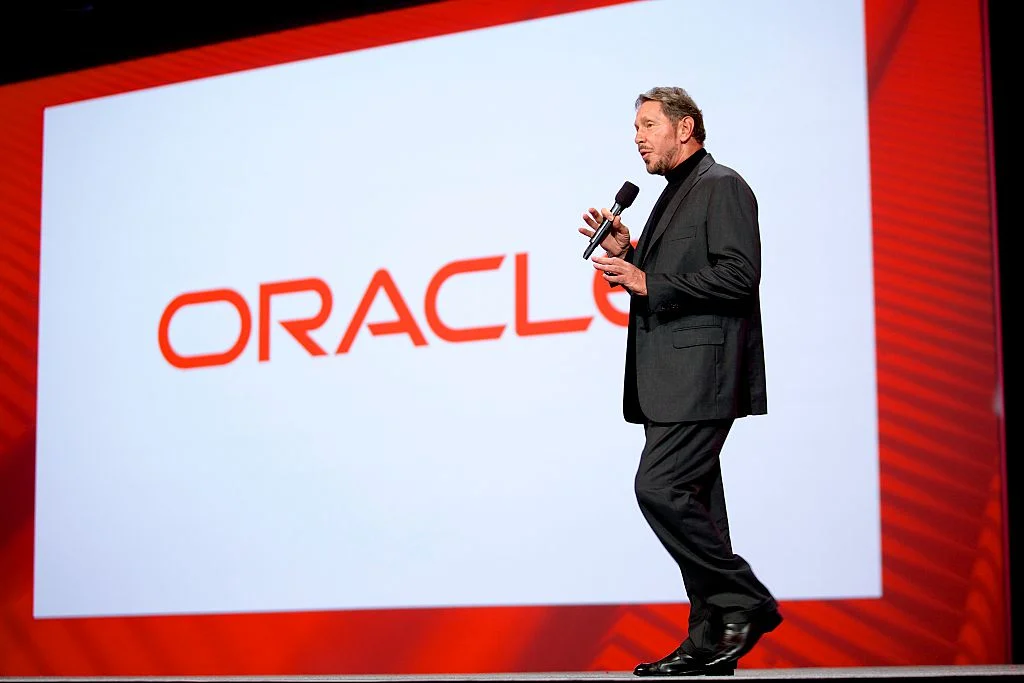
SAN FRANCISCO — In a major financial reversal that has sent ripples through Wall Street, Oracle co-founder, Chief Technology Officer, and executive chairman Larry Ellison has officially canceled a planned multi-billion-dollar stock divestment. The surprise announcement, made public by Oracle Corporation on a Saturday, halts what would have been one of the largest insider stock sales of the year, involving 50 million shares valued at approximately $7.5 billion.
The abrupt cancellation comes at a critical juncture for the enterprise technology giant. Oracle is currently navigating a high-stakes corporate transformation characterized by aggressive capital expenditures in artificial intelligence infrastructure, complex geopolitical maneuvering involving TikTok’s U.S. operations, and broader macroeconomic headwinds that have placed downward pressure on its equity value.
While market analysts scramble to decode the motivations behind Ellison’s decision, Oracle’s official communication has remained remarkably lean, leaving financial institutions and retail investors alike to read between the lines of a rapidly evolving corporate narrative.
Main Facts
The core of the announcement centers on a regulatory filing previously submitted to the U.S. Securities and Exchange Commission (SEC). Under that initial plan, Ellison—one of the world’s wealthiest individuals and Oracle’s largest shareholder—intended to offload 50 million shares of Oracle common stock. At the time of the disclosure, the transaction was valued at roughly $7.5 billion.
However, in a brief statement released over the weekend, the company confirmed that the entire initiative has been scrapped.
“No Oracle stock was sold under that plan, and he has no other plans to sell any of his Oracle stock,” the company stated.
Oracle did not provide an explicit rationale for the abrupt reversal. The decision leaves Ellison’s massive ownership stake entirely intact, signaling a powerful vote of confidence from the tech mogul in his own company’s long-term trajectory. Ellison, who founded Oracle in 1977 and served as its longtime CEO before transitioning to his current executive and technical roles, derives the vast majority of his net worth from his equity holdings in the database and cloud computing titan.
Chronology of Events
To fully understand the weight of Ellison’s canceled stock sale, it is essential to trace the sequence of strategic and financial milestones that have defined Oracle’s trajectory over the past several years:
- Late 2025 (December): Larry Ellison leverages his immense personal fortune to financially back his son, David Ellison, in a high-profile bid for entertainment powerhouse Warner Bros. The multi-billion-dollar backing secures the younger Ellison’s acquisition efforts, setting the stage for a sprawling media merger.
- January 2026: Oracle steps firmly into the geopolitical spotlight, emerging as one of the major corporate owners and primary security partners for TikTok’s restructured U.S. operations amid ongoing federal regulatory scrutiny over the social media platform’s foreign ownership.
- June 2026: In its quarterly earnings reports and public disclosures, Oracle reveals a massive surge in capital expenditures. The company commits heavily to building out next-generation data centers designed to meet the explosive enterprise demand for generative artificial intelligence (AI) workloads.
- August 2026: Legal battles intensify surrounding the Paramount-Warner Bros. media transaction, with state regulators, including California Attorney General Rob Bonta, entering settlement talks and antitrust contestations regarding the Ellison-backed media consolidation.
- Early September 2026: Regulatory filings reveal Ellison’s intention to divest 50 million shares of Oracle stock, amounting to an estimated $7.5 billion liquid windfall.
- September 12–13, 2026: Following widespread media coverage of the impending sale by outlets like Reuters, Oracle abruptly announces on Saturday that Ellison has completely canceled the plan, assuring stakeholders that no shares were traded and no future sales are currently scheduled.
Supporting Data and Market Context
The timing of Ellison’s canceled divestment is inextricably linked to Oracle’s recent stock performance and macroeconomic environment. Oracle (NYSE: ORCL) has faced significant market turbulence, with its stock price sliding roughly 22% since the beginning of the year.
This downward pressure on shares has not occurred in a vacuum. Oracle has undergone a fundamental operational pivot, transitioning away from its legacy database dominance toward a hyper-growth cloud computing and AI infrastructure model. To compete with hyperscale giants like Amazon Web Services (AWS), Microsoft Azure, and Google Cloud, Oracle has been spending heavily on data centers. Constructing facilities capable of hosting thousands of advanced GPUs for AI model training requires immense upfront capital, temporarily squeezing operating margins and causing anxiety among short-term institutional investors.
Compounding these capital expenditures are Oracle’s expanding non-core business entanglements. Beyond enterprise software and cloud services, the company’s structural integration into TikTok’s U.S. data governance framework has added layers of operational complexity. Furthermore, Ellison’s personal capital has been heavily deployed elsewhere—most notably in backing his son David Ellison’s ambitious media ventures, including the contested acquisition of Warner Bros., which has required substantial financial backing and liquidity management.
Official Responses and Stakeholder Reactions
Wall Street and the corporate governance community have responded to the canceled stock sale with a mixture of relief and cautious curiosity. Insider stock sales of this magnitude—running into the billions of dollars—are frequently scrutinized by institutional investors. When a founder of Ellison’s stature prepares to offload 50 million shares, it can inadvertently trigger negative market sentiment, as investors may interpret the move as a signal that the stock has peaked or that the insider anticipates near-term headwinds.
Conversely, the abrupt cancellation of such a massive sell-off is widely viewed as a stabilizing psychological boost for Oracle shareholders. By formally declaring that “he has no other plans to sell any of his Oracle stock,” Ellison has effectively signaled to the market that he believes the company’s equity is undervalued at its current 22% year-to-date deficit.
Oracle’s investor relations team and executive leadership have sought to project absolute stability, though they have maintained a tight-lipped stance regarding why the sale was initiated in the first place or what prompted its sudden cancellation. Financial analysts suggest that the decision may reflect shifting internal liquidity needs, changes in personal tax planning strategies, or a reassessment of Ellison’s capital allocation priorities across his vast portfolio of technology and media assets.
Implications for Oracle and Larry Ellison
The scrapping of the $7.5 billion stock sale carries profound implications for both Oracle Corporation and Larry Ellison’s broader business empire.
1. Market Confidence and Shareholder Sentiment
For Oracle investors, Ellison retaining 100% of his planned divestment shares removes an impending overhang of massive stock supply from the open market. A secondary offering or planned insider sale of 50 million shares can create short-term downward pressure as the market absorbs the influx of liquidity. With that pressure now evaporated, retail and institutional investors may view the stock with renewed optimism, particularly as the company approaches its upcoming earnings cycles.
2. Doubling Down on the AI and Cloud Narrative
Ellison’s decision to hold onto his shares underscores his unwavering faith in Oracle’s cloud and AI strategy. As the company pours billions into data center expansion, having its billionaire founder and tech visionary deeply financially aligned with the outcome provides a powerful psychological anchor. If Oracle’s massive data center investments begin to yield the anticipated enterprise returns, Ellison’s retained stake will appreciate exponentially, reinforcing his status as one of the world’s wealthiest individuals.
3. Balancing Tech and Media Ambitions
Outside of Oracle, Ellison’s financial ecosystem is increasingly complex. His active support of David Ellison’s media maneuvers—specifically the Warner Bros. acquisition and its ongoing legal and regulatory battles in California—requires vast financial agility. Analysts are left to ponder whether the cancellation of the Oracle stock sale implies that alternative financing routes have been secured for the media ventures, or if Ellison has chosen to preserve his core tech equity while utilizing alternative liquid assets to fund his family’s expanding Hollywood footprint.
Conclusion
Larry Ellison’s decision to abort his $7.5 billion Oracle stock sale is a watershed moment for the tech giant in 2026. As Oracle navigates the capital-intensive world of artificial intelligence infrastructure, manages high-stakes regulatory partnerships like TikTok, and deals with a 22% year-to-date dip in its share price, the preservation of Ellison’s massive stake offers a profound anchor of stability. Whether driven by shifting personal liquidity requirements, revised tax strategies, or a fundamental belief that Oracle’s best financial days lie ahead, Ellison has made it clear: his fortunes remain inextricably, fully bound to the cloud empire he built nearly half a century ago.
 rifanmuazin
 Nana Muazin
