

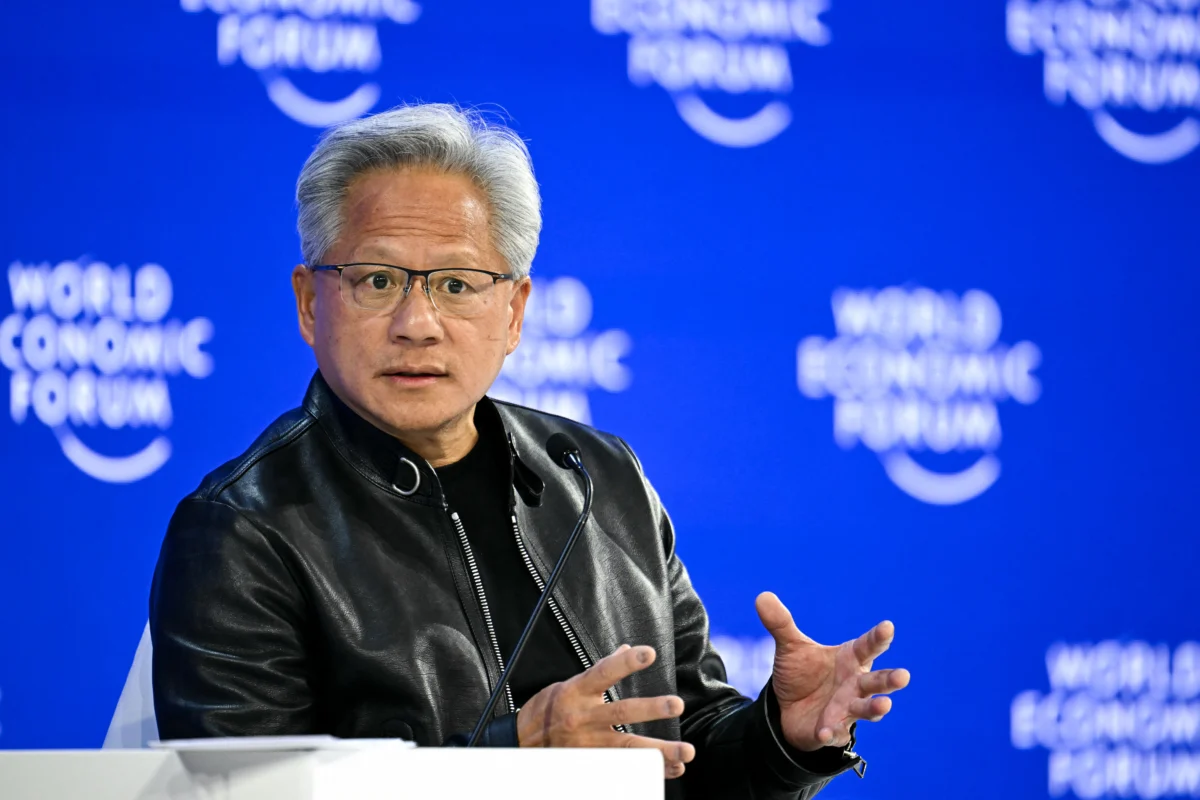
LOS ANGELES — In a moment guaranteed to induce collective heart palpitations among public relations teams across Silicon Valley and Washington alike, Nvidia CEO Jensen Huang answered an un-silencable phone call directly from the stage at the All-In Summit on Monday morning. The caller on the other end of the line was none other than President Donald Trump.
Speaking before a packed house in Los Angeles, Huang casually paused the high-profile conversation to address the interruption. "I’m onstage with the besties," Huang told the president, using the affectionate moniker for the venture capitalists and podcast hosts who helm the wildly popular All-In show. The panel included tech investors Chamath Palihapitiya, Jason Calacanis, and prominent White House advisers David Friedberg and David Sacks.
Rather than taking the call backstage or stepping away, Huang delighted—and perhaps slightly terrified—the audience by attempting to broadcast the conversation live. In a move that quickly dominated news cycles, the Nvidia chief executive worked with stagehands to secure an extra microphone to amplify the president’s voice over the arena’s sound system, creating an unfiltered, high-stakes dialogue broadcasted to thousands of tech leaders, investors, and journalists.
Main Facts: An Unprecedented Onstage Presidential Call
The impromptu phone call was far more than a casual check-in; it immediately intersected with fierce, ongoing policy debates regarding artificial intelligence regulation, national security, infrastructure scaling, and the geopolitical race for global tech dominance.
The core elements of the incident and subsequent conversation highlight a tightening alliance between high-powered tech magnates and the highest levels of federal government:
- The Interruption: Jensen Huang received a direct phone call from President Trump while participating in a live-streamed panel at the All-In Summit in Los Angeles.
- The Speakerphone Spectacle: Eschewing traditional discretion, Huang broadcasted the call live to the audience, prompting a witty quip from the president regarding Huang’s proficiency with audio equipment.
- The Policy Core: The call directly addressed recent industry calls to slow down artificial intelligence development, dismissing them as political maneuvers and potential geopolitical traps.
- The Infrastructure Clash: The conversation dovetailed into the burgeoning national debate over massive data center expansions, pitting federal accelerationist policies against local environmental and community pushback.
"The great thing about life is Jensen can develop the most complex computer chip in the world… but he can’t figure out how to put you on speaker," Trump joked after the audio connection was finally stabilized, eliciting laughter from the audience.
Chronology: How the Unfolding Drama Developed
To understand the weight of the phone call, one must examine the sequence of events that immediately preceded it on the All-In Summit stage.
1. The Debate Over "Slowing Down" AI
Prior to the ringtone interrupting the proceedings, Huang and the All-In hosts were deeply engaged in a discussion surrounding a recent high-profile essay published by Anthropic CEO Dario Amodei. In the piece, titled "We Must Pace the Frontier," Amodei argued for a deliberate deceleration in the rapid scaling and capability enhancement of frontier artificial intelligence models, citing safety, alignment, and societal risks.
Notably, Amodei’s call for caution has found strange bedfellows in Silicon Valley. SpaceX and xAI CEO Elon Musk and OpenAI CEO Sam Altman have both publicly expressed varying degrees of alignment with the sentiment that the industry needs carefully managed pacing. However, Huang’s philosophy has consistently diverged from this camp, championing relentless advancement, massive computing scale, and uninterrupted deployment of advanced hardware to drive global productivity.
2. The Presidential Interruption
As the panel dissected the merits and motives behind slowing down AI research, Huang’s phone buzzed. Recognizing the call as one that could not be routed to voicemail, the Nvidia CEO checked the screen, announced the identity of the caller to the roaring crowd, and maneuvered to bring the president into the live discussion.
3. Dismissing the "Slowdown" as a Threat
Once connected, President Trump did not mince words regarding the proposals to artificially cap or slow down AI progress.
"They’re just playing right in the hands of a lot of people that don’t want to see it happen," Trump asserted over the PA system. "That could be political people. It could also be China. And we’re not going to let that happen. It’s a hoax."
Huang, visibly aligned with the administration’s posture, immediately validated the sentiment. "You’re right. We’re not going to let that happen, sir," Huang replied, prompting a wave of enthusiastic applause from the summit attendees.
4. Reassuring the Industry on Infrastructure
The conversation quickly pivoted from software capabilities to the physical bedrock of the AI revolution: data centers. Trump addressed the growing friction surrounding the rapid, resource-intensive construction of massive computing facilities across the United States.
"We have to be a little bit careful… We have to do things and we have to do them prudently, but that doesn’t mean we’re going to stop an industry," Trump told Huang and the audience. "So I’m with you all the way. I didn’t even know how you felt about it. I just hoped you felt the same way as me. We’re going to lead."
Supporting Data: The Rising Disconnect Between Tech Ambitions and Public Will
While the White House and Silicon Valley titans like Huang and Y Combinator CEO Garry Tan frame resistance to tech infrastructure as a coordinated international psyop or political obstructionism, empirical data suggests the roots of the backlash are deeply localized and grounded in tangible everyday concerns.
The aggressive footprint required to power the artificial intelligence boom has sparked a nationwide debate over resources, space, and community impact.
Public Opinion and Data Center Backlash
Recent polling data underscores a significant chasm between government-backed tech acceleration and public sentiment:
- Overwhelming Opposition: A recent Gallup poll reveals that seven in 10 Americans (70%) oppose the construction of large-scale data centers in their local areas.
- Environmental Anxieties: More than 50% of survey respondents cited profound concerns regarding the environmental resource strain caused by data centers, specifically pointing toward massive water consumption for cooling and insatiable demands on local power grids.
- Cost-of-Living Pressures: Approximately 20% of the public expressed direct fears that localized data center booms would drive up residential utility costs, inflate local real estate markets, and negatively degrade their overall quality of life.
In regions from Loudoun County, Virginia, to newly regulated jurisdictions in Massachusetts, local municipalities are increasingly pushing back against fast-tracked zoning approvals, demanding stricter clean power mandates and environmental impact studies. Yet, the Trump administration and its tech allies maintain that yielding to local or regulatory friction risks handing the geopolitical AI crown to adversaries like Beijing.
Official Responses and Stakeholder Positions
The live phone call at the All-In Summit serves as a microcosm of the shifting dynamics in American technology policy, illuminating starkly divergent philosophies between developers, regulators, and the public.
- The Accelerationist Front (Huang, Trump, and Allies): This faction views artificial intelligence as an existential national security frontier. In their view, any attempt to voluntary slow down development—whether under the banner of AI safety or ethical pacing—is viewed as unilateral disarmament. By framing regulatory hurdles and infrastructure pushback as external interference or political obstruction, leaders like Trump and Huang are pushing for a streamlined, federally backed expansion of compute power.
- The Cautionary Camp (Amodei, Musk, Altman – in varying degrees): While deeply invested in winning the AI race, tech leaders advocating for caution argue that unmitigated scaling without adequate safety guardrails, alignment research, and societal integration frameworks could lead to uncontrollable systemic risks.
- The Grassroots and Local Municipalities: Standing outside the high-level debates of Silicon Valley boardrooms and White House advisory councils, everyday citizens are primarily focused on the immediate physical realities of the AI gold rush: flickering lights, rising electricity bills, strained municipal water supplies, and industrial sprawl in residential backyards.
Implications: What This Means for the Future of AI and Governance
The surreal spectacle of a trillion-dollar hardware CEO taking a live presidential call onstage highlights several profound implications for the trajectory of the technology sector:
1. The Blurring Lines Between Silicon Valley and Washington
The direct, casual rapport between Jensen Huang and Donald Trump exemplifies a new era of tech-state relations. Traditional bureaucratic channels are increasingly bypassed in favor of direct communication lines between executive suites and the Oval Office. This proximity ensures that industrial priorities—such as loosening restrictions on energy grids, fast-tracking data center permits, and aggressive international competition policies—will likely remain at the forefront of the federal agenda.
2. A Widening Chasm Between Elite Ambition and Public Acceptance
As the federal government doubles down on its "we’re going to lead" mandate, it runs the risk of alienating local communities bearing the brunt of the infrastructure boom. Dismissing public anxiety over environmental resources and cost-of-living increases as a "hoax" or a foreign psyop may unify the tech elite, but it does little to solve the real-world engineering and political challenges of grid capacity and community consent.
3. The Acceleration Imperative Wins Out
For now, the philosophy of relentless speed championed by Nvidia and endorsed by the White House has cemented its status as the dominant operational ethos for American AI development. As long as leaders like Huang continue to deliver unprecedented computational breakthroughs, the political establishment appears ready to clear the runway—regardless of the turbulence left in their wake.
 Nana Muazin
