

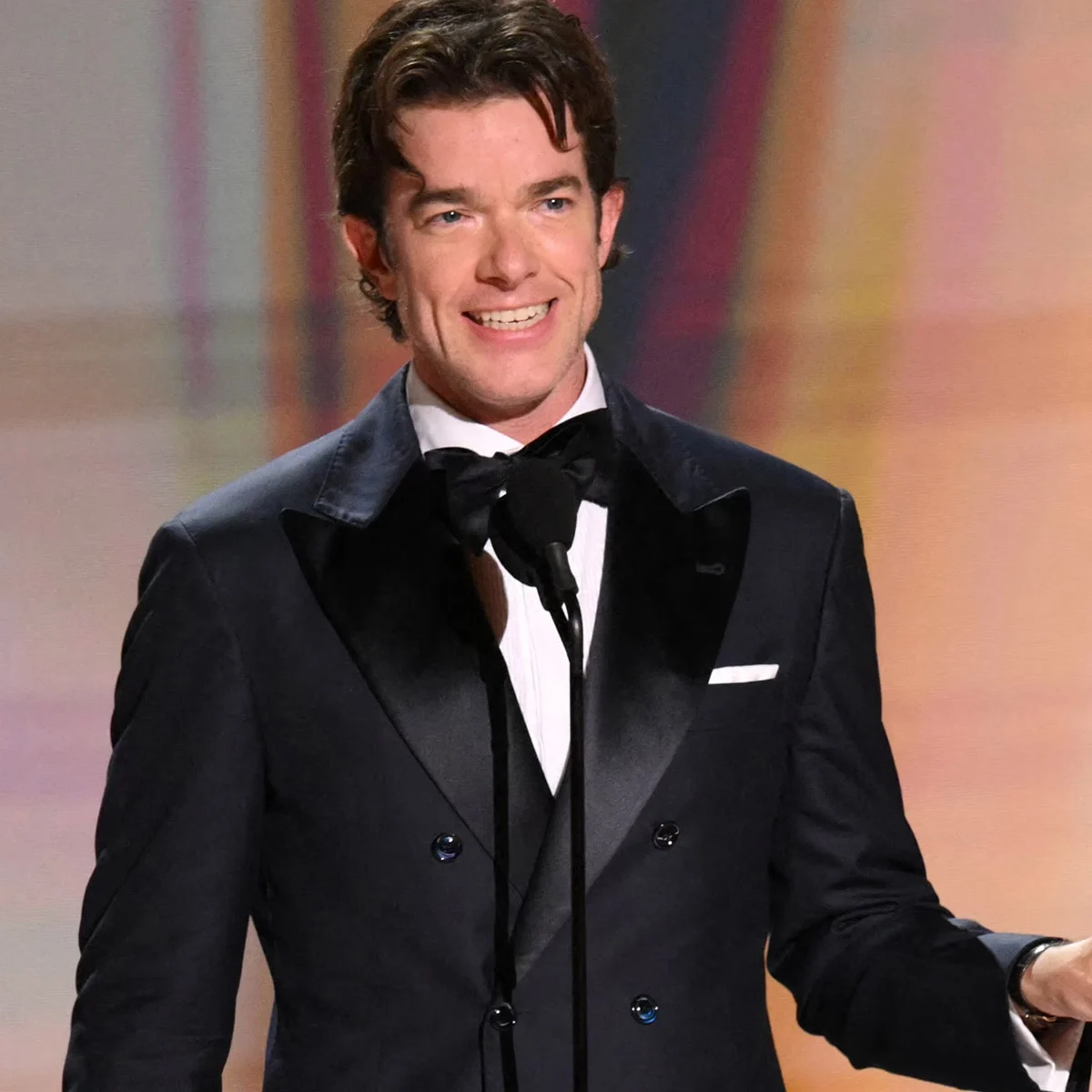
The 2026 Primetime Emmy Awards were destined to be a night of celebration, honoring the zenith of television achievement at the iconic Peacock Theater. Yet, as the ceremony unfolded on September 14, the evening’s narrative shifted from the prestige of the golden statuettes to an unexpected, boundary-pushing moment courtesy of master comedian John Mulaney. Tasked with presenting the award for Outstanding Lead Actor in a Drama Series, the former Saturday Night Live writer delivered a monologue that was as audacious as it was polarizing, leaving the live audience—and the network censors—scrambling to keep pace.
The Viral Moment: When Comedy Meets Censor
The catalyst for the evening’s discourse was a pointed, irreverent critique of a 2018 statement made by producer and mogul DJ Khaled. While on stage, Mulaney, who married actress Olivia Munn in 2024, referenced the infamous viral quote where Khaled admitted he did not perform oral sex on his wife, Nicole Tuck, citing a belief that there are "different rules for men."
"I believe it was DJ Khaled who said, ‘Real men don’t go down on their wives,’" Mulaney remarked to the hushed, expectant crowd. "But these nominees know that is BS. They know there’s often less pressure on them if they do that first."
The joke, which walked the razor-thin line of network standards and practices, was partially muted during the live NBC broadcast. The visual reaction, however, was broadcast in high definition. The camera panned to a delighted Sterling K. Brown, who erupted into hysterical laughter, while an appreciative Mark Ruffalo offered a nod of validation. In a stark contrast, Sara Wells, wife of nominee Noah Wyle, was caught on camera sheepishly hiding behind her husband in a moment of pure, unscripted spontaneity.
Chronology of a Calculated Risk
The incident was far from a spontaneous outburst. In the days leading up to the ceremony, dedicated followers of the comedian noted that Mulaney had been workshopping the material. Reports from his September 12 performance in Grand Rapids, Michigan, suggest the Emmy bit was a centerpiece of his recent set.
According to fans in attendance, Mulaney had openly discussed the "risky choice" he was preparing for the live broadcast. One attendee noted on social media that Mulaney explicitly mentioned his intent to quote DJ Khaled, regardless of whether the network’s censors approved of the content. Another source claimed the comedian had intentionally withheld the specific punchline during rehearsals to ensure the bit remained intact for the live audience—an act of defiance that ultimately forced NBC to hit the mute button during the broadcast.
The Intellectual Contrast: A Literary Turn
While the DJ Khaled reference dominated the immediate social media aftermath, Mulaney’s monologue was characterized by a distinct duality. Moments after his irreverent jab, he pivoted to a more somber and philosophical tone, drawing from the 2007 lifestyle book A Guy’s Guide to Being a Man’s Man by the late actor Frank Vincent.
"A man’s man can be wearing the best clothes, drinking the finest wine, sitting with the most beautiful woman in Las Vegas," Mulaney recited, reading from the book provided by the Glendale Public Library. "But if he doesn’t treat everyone around him with respect and class, he’s not a real man’s man. He’s just a jabroni in a good suit."
This transition from base humor to high-minded critique served as the perfect setup for the award announcement. It highlighted the complexity of Mulaney’s comedic persona: a performer who understands the power of the "lowbrow" shock value while maintaining a deep, almost academic respect for the craft of performance. He presented the award to Noah Wyle, capping off a segment that will likely be studied in comedy writing workshops for years to come.
Supporting Data: The 2026 Emmy Landscape
The 2026 Emmys were a night of shifting tides in the industry. The awards ceremony reflected a move toward new narratives, with shows like The Pitt dominating the drama categories. The following table summarizes the key winners of the evening:
| Category | Winner |
|---|---|
| Outstanding Drama Series | The Pitt |
| Outstanding Lead Actress (Drama) | Rhea Seehorn (Pluribus) |
| Outstanding Lead Actor (Drama) | Noah Wyle (The Pitt) |
| Outstanding Comedy Series | Widow’s Bay |
| Outstanding Lead Actress (Comedy) | Jean Smart (Hacks) |
| Outstanding Lead Actor (Comedy) | Matthew Rhys (Widow’s Bay) |
| Outstanding Limited Series | DTF St. Louis |
| Outstanding Reality Competition | The Traitors |
The dominance of The Pitt in the drama categories and the sweep by Widow’s Bay in the comedy sections underscored a night where established titans like The Bear and Abbott Elementary faced stiff competition from emerging powerhouses.
Official Responses and Network Implications
As of this writing, neither DJ Khaled nor NBC has issued a formal statement regarding the segment. However, industry insiders suggest that Mulaney’s "muting" is a standard practice for live television, where the broadcast delay allows for split-second intervention on content that violates FCC decency standards.
The reaction from the creative community has been overwhelmingly supportive of Mulaney’s boldness. Many argue that the "live" aspect of the Emmys has become increasingly sterile, and that Mulaney’s refusal to sanitize his performance was a necessary disruption. By turning the censorship process into part of the bit itself, Mulaney essentially "out-foxed" the network, ensuring that the joke landed with even more impact than if it had been broadcast without interference.
Implications for the Future of Live Awards Shows
The "Mulaney Incident" raises critical questions about the future of live awards shows. In an era where viewers are increasingly disconnected from traditional broadcasts, the "watercooler moment" is the primary driver of engagement. Mulaney’s decision to perform his bit in a way that guaranteed a viral, if censored, moment demonstrates a sophisticated understanding of modern media consumption.
Furthermore, it highlights the changing standards of "polite" discourse on national television. By holding up a mirror to the problematic rhetoric of public figures like DJ Khaled, Mulaney used the platform of the Emmys not just to present an award, but to engage in a broader social commentary. While some may view the segment as unprofessional, others see it as the evolution of the host/presenter role—moving away from the sycophantic praise typically seen at such events toward a more honest, biting form of cultural critique.
Ultimately, John Mulaney’s monologue at the 2026 Emmys was a masterclass in tension and release. By weaving together the absurd, the offensive, and the profound, he ensured that the ceremony would remain in the public consciousness long after the red carpet was rolled up. Whether this will lead to stricter vetting of presenters in future years or a more lenient approach to live comedy remains to be seen. However, one thing is certain: John Mulaney proved that even in a highly scripted environment, a comedian with enough wit and a bit of defiance can still command the attention of the world.
As the industry moves forward, the memory of Mulaney’s words—and the resulting silence from the mute button—will serve as a benchmark for the power of the live stage. For a night that celebrated the best in television, it was the unscripted, controversial, and deeply human moment of a man standing alone at a podium that truly defined the evening.
 Lina Hope
 Asro
Asro
 Raul Delapena Setiawan
