

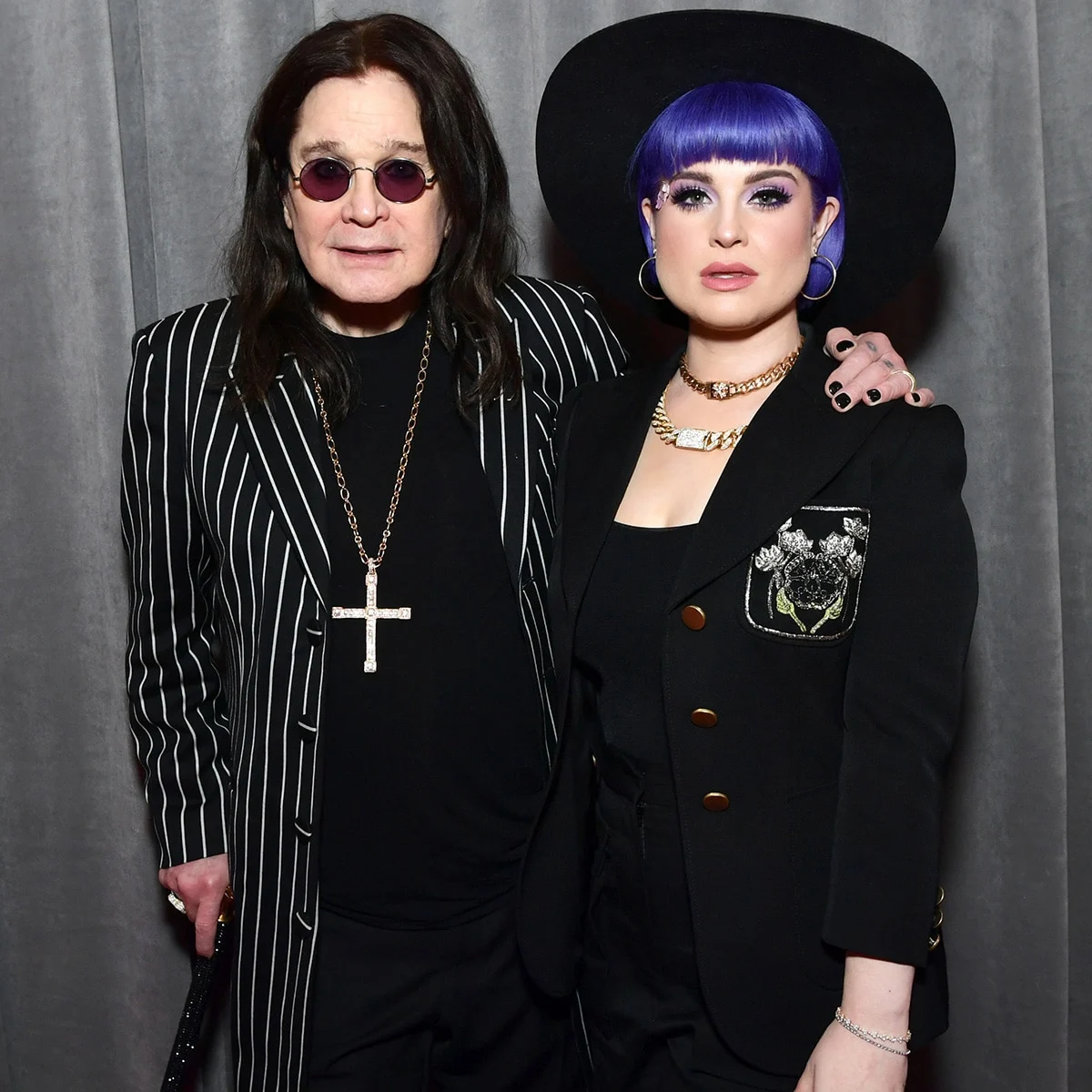
The world of rock and roll lost one of its most iconic titans when Ozzy Osbourne, the legendary "Prince of Darkness," passed away at age 76. His death, confirmed as the result of a heart attack, marked the end of an era that spanned over five decades, forever altering the landscape of heavy metal and reality television. While the public mourned the loss of a musical pioneer, his family has recently begun to pull back the curtain on the deeply personal, intimate moments that defined his final days.
A Final Conversation: Kelly Osbourne’s Lasting Memory
In a poignant appearance on the We Need to Talk podcast on September 15, Kelly Osbourne shared the details of a heart-wrenching conversation she had with her father just three days before his passing. The exchange, she noted, was an attempt by the Black Sabbath frontman to prepare his daughter for the inevitable.
"He sat me down, and this was about three days before he died," Kelly recalled, visibly emotional. "He goes, ‘You can live the rest of your life knowing that there was one man on this planet that truly loved you.’ I started to cry. I said, ‘Please don’t talk like this. Please don’t talk like this.’ ‘Cause he said, ‘You know, I’m not going to be here forever.’"
For the 41-year-old mother of three-year-old Sidney, these words have become a cornerstone of her grief and healing process. She expressed profound gratitude toward her mother, Sharon Osbourne, for her tireless efforts to ensure that Ozzy reached his final destination with a sense of peace and closure.
The Final Bow: The "Back to the Beginning" Farewell
Kelly emphasized that her father’s ultimate goal in his final months was to perform one last time for the fans who had supported him for over half a century. Sharon Osbourne, who managed Ozzy’s career with legendary ferocity, worked extensively to organize the July 2025 "Back to the Beginning" concert.
"My mum allowed him to die the happiest I’d ever seen him," Kelly remarked. "All he wanted before he left this planet was one last show. My mum worked her ass off to make that happen, and it was one of the most incredible moments in music history."
The concert served as a tribute not just to the music, but to the community that grew around it. Kelly observed that the event was attended by the very people who built their own identities and careers in the wake of the path Ozzy blazed. "It was all the people that got to be who they are because of him coming to pay tribute to him," she said. "He got to say goodbye, and then he let go."
Sharon Osbourne’s Final Moments with Her Soulmate
The loss of a spouse of over four decades is a monumental grief, and Sharon Osbourne has been open about the raw, unfiltered reality of her husband’s passing. Speaking on Piers Morgan Uncensored in December, the 73-year-old matriarch recounted the final, quiet moments of their life together in the early morning hours.
"He was up and down to the bathroom all night, and it was 4:30 a.m., and he said, ‘Wake up,’" she shared through tears. "I said, ‘I’m already bloody awake, you’ve woken me up.’ He said, ‘Kiss me.’ And then he said, ‘Hug me tight.’"
Reflecting on that morning, Sharon expressed the universal ache of hindsight. "If only I’d have told him I loved him more," she lamented. "If only I’d have held him tighter." Her reflections highlight the vulnerability beneath the public persona of the couple who, for decades, were seen as one of the most unbreakable pairings in the entertainment industry.
A Chronology of a Rock Icon
To understand the gravity of Ozzy’s loss, one must look at the trajectory of a man who rose from the working-class streets of Birmingham to the global stage.
The Early Years and the Formation of a Legend (1948–1969)
Born John Michael Osbourne in 1948, the future superstar struggled with severe dyslexia and academic challenges. He often spoke of his upbringing as a source of shame, but he found his salvation in music—specifically through the influence of The Beatles. In 1968, he joined forces with Geezer Butler, Bill Ward, and Tommy Iommi to form the band Earth, which would soon be renamed Black Sabbath. The name, inspired by a horror film, would become synonymous with the birth of heavy metal.
Rise to Global Stardom and Personal Turmoil (1970–1981)
Black Sabbath achieved meteoric success, but the pressures of fame and substance abuse took a toll. Ozzy was fired from the band in 1979 during one of the lowest points of his life. He later noted, "Money would be the alcohol and the drugs and I behaved badly. That was one of the lowest points of my life."
The Solo Era and the "Bat" Incident (1982–1999)
Ozzy reinvented himself as a solo artist, producing iconic records and solidifying his status as a rock icon. It was also a period of intense personal change. In 1982, he married his manager, Sharon Arden. This era was also marked by the infamous incident where he bit the head off a bat on stage—an act he later claimed was a misunderstanding, as he believed the prop was made of rubber.
The Reality TV Phenomenon and Beyond (2000–2025)
In the early 2000s, the Osbournes invited cameras into their home for the reality series The Osbournes, introducing a new generation to their family dynamic. Despite ups and downs—including a brief separation in 2016—the couple remained dedicated to one another. "She’s the only one I’ve ever loved in my life," Ozzy said of Sharon in his documentary, The Nine Lives of Ozzy Osbourne. "She’s my soulmate."
Official Responses and Industry Impact
The music industry has been unified in its mourning. Tributes have poured in from fellow musicians, industry executives, and fans worldwide. The "Back to the Beginning" concert is now viewed by critics as a masterclass in legacy management, providing a sense of closure that is rarely afforded to artists of such magnitude.
Beyond the music, the Osbourne family’s transparency regarding the end of his life has been praised for humanizing a man who, for many, existed as a larger-than-life caricature. By sharing these final conversations, the family has shifted the narrative from the "Prince of Darkness" back to the husband and father who sought love and connection until his final breath.
Implications: A Lasting Legacy
The death of Ozzy Osbourne leaves a void that is difficult to quantify. He was more than a musician; he was a survivor who lived through the excess of the 70s, the commercial peaks of the 80s, and the cultural shifts of the 2000s.
For the Osbourne family, the future is now a process of navigating life without their patriarch. The estrangement between Kelly and her sister Aimee, which remains a painful, unresolved chapter for the family, stands in stark contrast to the closeness Sharon and Kelly shared with Ozzy in his final days. It serves as a reminder that even the most famous families are subject to the same human fractures and complexities as any other.
As the world continues to celebrate the music of Black Sabbath and Ozzy’s solo career, the focus remains on the humanity he displayed at the end. His journey from a dyslexic child in Birmingham to a man who, according to his wife, only wanted to be held "tight" before he left the planet, ensures that his legacy will be remembered with as much heart as it is with volume.
Ultimately, as Ozzy himself reflected in 2018, "I don’t understand why I’m alive still after the hell-raising days. I guess whoever the man is upstairs, if there even is one, wants me to stick around." He stuck around long enough to touch millions of lives, leaving behind a blueprint for rock stardom that will be studied and emulated for generations to come.
 Lina Hope
 Asro
Asro
 Raul Delapena Setiawan
