

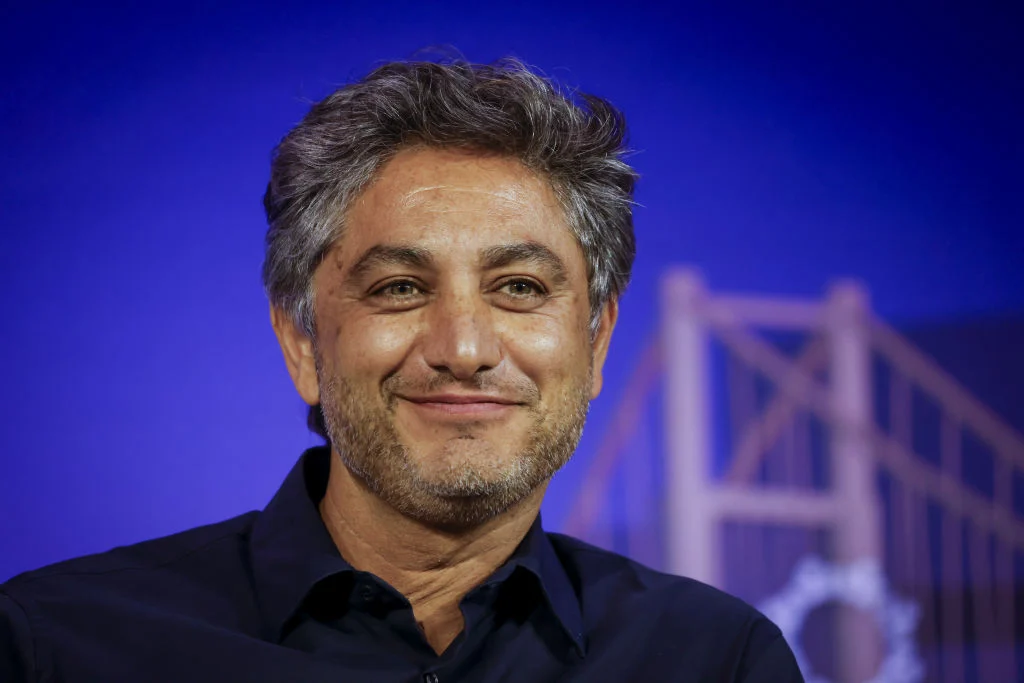
In a move that has sent ripples through the upper echelons of Wall Street and Silicon Valley, venture capital firm Valor Equity Partners has chosen an unconventional path to deliver liquidity to its backers. Rather than liquidating a massive block of SpaceX shares on the open market following the aerospace giant’s historic public offering, Valor has opted to distribute a staggering chunk of its equity directly to its limited partners (LPs).
Valued at approximately $8.5 billion, the transaction—spotted in recent Securities and Exchange Commission (SEC) filings—involves handing over roughly 8.5% of Valor’s total SpaceX holdings. The firm, helmed by billionaire investor and long-time Elon Musk confidant Antonio Gracias, has made an extraordinary return on its multi-decade bet on the private space exploration pioneer. Yet, by choosing an in-kind distribution over a traditional stock liquidation, Valor has provided a fascinating case study in post-IPO portfolio management, tax strategy, and market preservation.
This comprehensive report examines the mechanics of Valor Equity Partners’ massive stock transfer, the deep historical ties between Gracias and Elon Musk, the supporting financial data behind SpaceX’s current market performance, the strategic implications for institutional investors, and what this signals for the broader technology and aerospace sectors.
Main Facts
The foundational details of this multi-billion-dollar corporate maneuver center on scale, strategy, and insider positioning within the Elon Musk corporate ecosystem.
- The Transaction: Valor Equity Partners executed an in-kind stock distribution, transferring 8.5% of its SpaceX equity holdings directly to its limited partner investors.
- The Valuation: Based on Bloomberg estimates and recent market valuations, the transferred shares are worth an estimated $8.5 billion.
- The Remaining Stake: Despite giving away a multi-billion-dollar block of equity, Valor retains an immense position. SEC filings indicate that entities controlled by Antonio Gracias and Valor still own more than 460 million shares of SpaceX.
- The Historical Context: Valor’s initial investments in SpaceX span decades, positioning the firm as one of the earliest and most steadfast institutional backers of the company. At the time of SpaceX’s blockbuster initial public offering (IPO), entities controlled by Gracias held over 500 million shares—making them the second-largest individual and institutional blockholders, trailing only Elon Musk, who owned over 6 billion shares.
- The Market Defense Strategy: By distributing shares directly to LPs rather than selling them on the open market, Valor avoided dumping a massive tranche of equities that could have exacerbated downward pressure on SpaceX stock, which has experienced a 10% decline since its IPO debut.
Chronology: From Early-Stage Venture Bet to Multi-Billion-Dollar Payout
To understand the magnitude of Valor’s recent stock distribution, it is necessary to retrace the timeline of Antonio Gracias’s partnership with Elon Musk and the long, volatile road of SpaceX’s corporate evolution.
The Early Days: Backing Musk’s Vision (Mid-2000s)
Long before reusable orbital-class rockets were a commercial reality, Antonio Gracias recognized the disruptive potential of Elon Musk’s ventures. Through Valor Equity Partners, Gracias became an early institutional investor not only in SpaceX, but also in Tesla and SolarCity. At a time when traditional Wall Street skeptics viewed private space flight as a money-burning fantasy, Valor provided critical early-stage capital and strategic operational guidance. Gracias’s relationship with Musk extended far beyond simple check-writing; Gracias eventually secured a seat on the SpaceX board of directors, cementing his status as a core member of Musk’s inner circle.
Decades of Compounding Growth (2010s–2020s)
Throughout the 2010s, as SpaceX transitioned from experimental launches to becoming the dominant global provider of commercial launch services and the operator of the rapidly expanding Starlink satellite constellation, Valor’s early equity stake compounded exponentially. While private secondary markets and internal funding rounds regularly revalued the company, Gracias and his firm maintained their position, resisting the temptation to cash out early. This patient capital approach transformed their initial investments into one of the most lucrative positions in venture capital history.
The Blockbuster IPO (Early 2026)
After years of speculation regarding when SpaceX would finally enter the public markets, the company executed a highly anticipated, blockbuster initial public offering. The event captivated global financial markets. Regulatory filings at the time of the IPO revealed the staggering distribution of wealth: Elon Musk retained a dominant stake of over 6 billion shares, while Antonio Gracias and Valor-controlled entities emerged as the distant runner-up, owning more than 500 million shares.
The Post-IPO Correction and the In-Kind Transfer (Mid-2026)
Following its high-profile public debut, SpaceX faced the realities of public market volatility. Amid broader tech sector corrections and specific operational milestones—such as the anticipation surrounding subsequent Starship launch windows—SpaceX stock slipped roughly 10% from its initial IPO price of $135. It was against this backdrop of market recalibration that Valor made its decisive move. Rather than executing open-market sales to lock in cash returns for its LPs—a move that could have triggered further price erosion—Valor utilized an in-kind distribution, transferring 8.5% of its holdings directly to its institutional and high-net-worth investors.
Supporting Data and Financial Metrics
The mathematics behind Valor’s portfolio adjustment underscore the immense scale of modern venture capital and the unique constraints facing multi-billion-dollar institutional funds.
- 500 Million vs. 460 Million Shares: Prior to the distribution, Valor-controlled entities held upwards of 500 million shares. Following the transfer of 8.5%, the firm retains in excess of 460 million shares, ensuring that Gracias remains heavily invested in SpaceX’s long-term trajectory.
- The $8.5 Billion Valuation: The transferred 8.5% stake was valued at approximately $8.5 billion, reflecting a total implied valuation of Valor’s pre-distribution stake at nearly $100 billion—a testament to the astronomical appreciation of SpaceX over two decades.
- The 10% IPO Slip: SpaceX shares traded down approximately 10% from their $135 IPO price leading up to major test flights like the Starship launch. This sensitivity to public sentiment made open-market liquidation an unappealing option for a block of shares as large as Valor’s.
- Fund Lifecycle Realities: Venture capital funds typically operate on a 10-to-12-year lifecycle. For a fund that backed SpaceX decades ago, returning liquidity to LPs (pension funds, endowments, and family offices) is a fiduciary imperative. An in-kind distribution satisfies this requirement while bypassing traditional cash realization mechanisms.
Official Responses and Market Perspectives
While official public relations statements from private venture capital firms regarding internal distribution strategies are often sparse, financial analysts, market regulators, and securities experts have offered extensive commentary on Valor’s maneuver.
Financial analysts specializing in pre-IPO and post-IPO structural mechanics have praised the sophistication of the transfer. "When you hold a position that constitutes a significant percentage of a newly public company’s free float, selling on the open market is akin to detonating a grenade in your own portfolio," noted one senior equity strategist based in New York. "By distributing the shares directly to LPs, Valor shifts the holding decision to the individual institutional investors. It relieves the fund manager of immediate sell-pressure while protecting the underlying asset’s market price."
Meanwhile, SEC filing analysts monitoring the Form 4 and related disclosures pointed out that the move aligns with Gracias’s long-standing reputation for strategic patience. Unlike traditional private equity firms that look for rapid exits, Gracias has historically functioned more like a long-term industrial partner to Musk.
Representatives for SpaceX have maintained their typical focus on operational milestones, declining to comment directly on the internal equity distribution strategies of their institutional shareholders, while continuing to prep for upcoming orbital missions and Starship flight tests.
Implications: What Valor’s Move Means for the Market
Valor Equity Partners’ decision to distribute $8.5 billion in SpaceX stock rather than selling it carries profound implications for the venture capital industry, institutional investors, and the future trading dynamics of SpaceX.
1. The Playbook for Mega-Cap VC Exits
As venture-backed companies remain private for much longer—growing to valuations well in excess of $100 billion before ever hitting the public markets—traditional exit mechanisms are breaking down. Venture funds holding multi-billion-dollar stakes cannot simply liquidate their positions on the public exchanges without crashing the stock price. Valor’s in-kind distribution establishes a modern playbook for mega-cap venture capital exits: bypass the open market, hand the shares directly to sophisticated LPs, and let them decide whether to hold for the long term or execute orderly, gradual sales.
2. Tax Advantages for Limited Partners
In-kind stock distributions often provide distinct tax advantages for limited partners compared to cash distributions resulting from immediate market sales. By receiving the equity directly, LPs can manage their own capital gains realization timelines, holding the stock in their portfolios until market conditions prove optimal for liquidation. This flexibility is particularly attractive to institutional heavyweights managing billions in diversified assets.
3. Protecting SpaceX’s Public Valuation
SpaceX is navigating a critical phase of its corporate lifecycle. As a newly public company scaling capital-intensive projects like Starship, Starlink global broadband deployment, and deep-space exploration infrastructure, maintaining a stable stock price is vital for cost-of-capital management and employee equity retention. Had Valor dumped billions of dollars worth of stock into the open market, the resulting supply glut could have driven the share price down far below its $135 IPO benchmark, damaging investor confidence. Valor’s restraint acts as a stabilizing force for the entire ticker.
4. Sustaining the Musk-Gracias Alliance
Finally, the transaction reaffirms the unbreakable bond between Elon Musk and Antonio Gracias. By managing their massive equity footprint with surgical precision and avoiding market disruptions that could embarrass or encumber SpaceX management, Valor continues to act as a premier, trusted steward of capital within Musk’s corporate empire.
As SpaceX pushes further into the public markets and tackles increasingly ambitious interplanetary objectives, the ripples of Valor’s strategic maneuvers will continue to be felt across the global financial landscape, setting a high standard for how elite venture capital firms manage generational wealth.
 rifanmuazin
 Nana Muazin
