

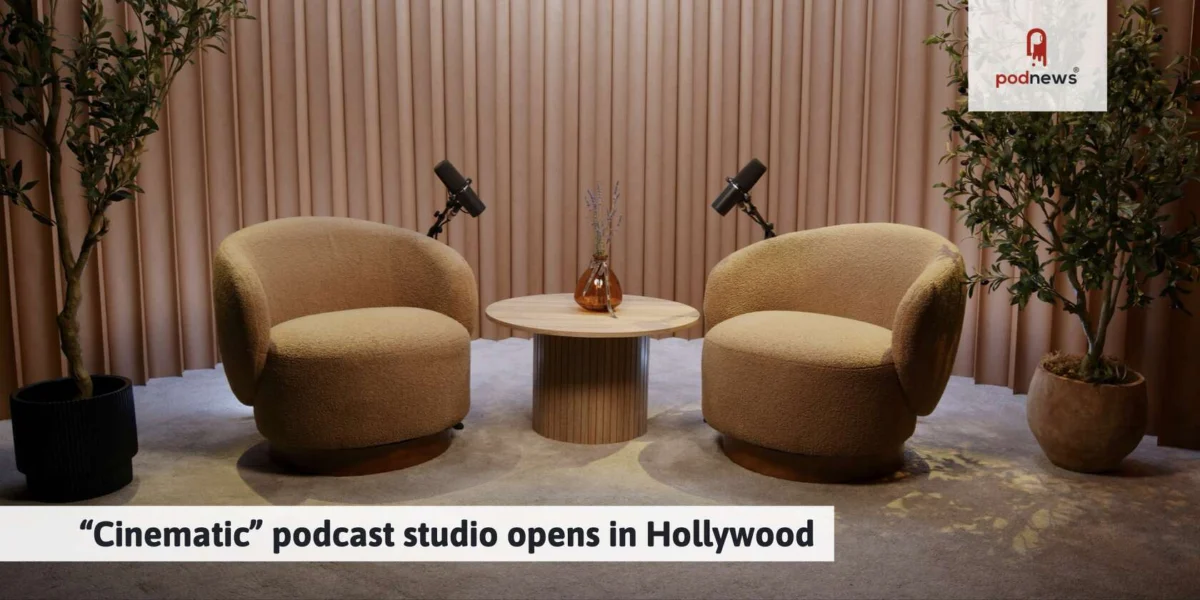
The landscape of professional audio production is undergoing a radical transformation. As of September 10, 2026, the industry is witnessing a significant shift in infrastructure, exemplified by the opening of a high-end, "cinematic-grade" podcast studio in the heart of Hollywood. This development is not merely a localized event; it marks a broader trend in which the production value of digital audio is increasingly mirroring the polish of high-budget film and television, signaling a maturity in the podcasting medium that demands both technical excellence and narrative depth.
Main Facts: The Rise of Cinematic Audio
The recent unveiling of a premier studio space in Hollywood serves as the latest milestone in a year defined by professionalization. Industry observers have noted that as the podcast market becomes increasingly saturated, the "home-studio" aesthetic is being replaced by professional, acoustically treated, and visually optimized recording environments.

This shift is driven by the rise of "video-first" podcasting, where platforms like YouTube, Spotify, and Apple Podcasts prioritize visual engagement. The new Hollywood studio features state-of-the-art cinematic lighting, multi-camera setups, and sound engineering capabilities designed to bridge the gap between traditional radio and high-end streaming television. For creators, this investment represents a pivot toward long-term brand building and content longevity.
Chronology: A Season of Growth
The trajectory of the podcasting industry throughout 2026 has been marked by strategic consolidation and aggressive content expansion.

- Early 2026: Networks began pivoting away from celebrity-only acquisitions, focusing instead on building "loyal communities" through niche programming.
- Summer 2026: A wave of high-production-value limited series, such as Edible Empire, solidified the trend of deep-dive investigative journalism.
- September 2026: The opening of the Hollywood cinematic studio coincided with a flurry of new season launches and network signings, including the major deal between NOVA Podcasts and the Australian hit We Don’t Have Time For This.
- Current Week: Major platforms continue to see shifts in listener behavior, with high-intent political analysis, such as Surviving Trump, and comedic commentary, such as Everybody Knows But Me, dominating the charts.
Supporting Data: The Pulse of the Industry
Data from the current week highlights a dichotomy in the industry: the dominance of legacy giants versus the emergence of highly targeted, thematic content.
In the United States, The Daily maintains its stronghold on Apple Podcasts, while The Joe Rogan Experience continues to command the top spot on Spotify. These figures reinforce the "platform effect," where user habits are deeply entrenched in the distribution ecosystems of major tech firms. However, the data also reveals significant upward mobility for specialized shows. Off Leash with Dr. Pete has seen a massive surge in the Canadian Pets & Animals category, proving that even niche, vertical-specific content can achieve massive reach with the right distribution strategy.

Furthermore, the "Highest New Entry" for The Baseball History Timeline in the Irish market demonstrates the global appetite for localized, historical, and niche storytelling. This fragmentation of global interest suggests that while the "mega-hits" remain, the long tail of the industry is becoming more profitable and influential than ever before.
Official Responses and Network Strategies
The industry’s major players are actively responding to the demand for higher quality and deeper community engagement. Rachel Corbett, Network Director of NOVA Podcasts, recently underscored the importance of community in the digital age. Regarding the signing of the award-winning parenting show We Don’t Have Time For This, Corbett noted that the show’s success is rooted in its ability to foster a space where listeners "don’t just listen to the show, they feel part of it."

This sentiment is echoed across the industry. Production companies like Plosive, which produces the returning Sara & Cariad’s Weirdos Book Club, have emphasized that success in 2026 requires more than just audio—it requires a "star-studded lineup" and an interactive element that encourages listeners to engage with the material beyond the episode itself.
Educational and analytical podcasts, such as Philosophize This! and Media Bubble, have adopted a different strategy: accessibility. By breaking down complex subjects—whether it be the history of philosophy or the opaque machinations of the Australian media landscape—these shows are capturing audiences who are increasingly skeptical of sensationalist content and are instead seeking "educational depth."

Implications: The Future of the Creator Economy
The implications of these developments are twofold: the technical bar for entry is rising, and the definition of a "successful" podcast is shifting.
1. The Death of the "Garage" Aesthetic
As the new Hollywood studio illustrates, the audience’s subconscious expectation of quality has changed. A podcast that sounds or looks amateurish now faces a steeper climb to gain listener trust. This creates a barrier to entry that favors established networks and well-funded creators, potentially leading to a wave of consolidation as smaller creators seek partnerships with production houses that offer access to these high-end facilities.

2. The Rise of the "Prompt Incubator"
The emergence of innovative formats like Plot Lab, which utilizes a "game show" approach to story creation and includes an off-platform "Prompt Incubator" community, suggests that the future of the medium is participatory. Podcasts are no longer passive entertainment; they are becoming platforms for community-driven creativity. By turning the act of creation into a "spectator sport," shows like Plot Lab are effectively blurring the lines between host, guest, and listener.
3. Political and Social Contexts
The launch of Surviving Trump and its focus on the 2026 midterms demonstrates the podcast’s role as the primary medium for long-form, week-by-week political analysis. Unlike cable news, which is often consumed in fragmented soundbites, the podcast format allows for deep-dive tracking of election threats and voter suppression, providing a level of granular detail that is increasingly essential for an informed electorate.

4. The Sustainability of Food and Culture
Shows like Edible Empire reflect a broader societal trend: the demand for transparency. By exploring food imperialism and the hidden costs of global food systems, this show exemplifies how long-form audio can tackle complex, systemic issues that rarely receive adequate airtime on traditional media outlets.
Conclusion: A Maturing Ecosystem
The state of podcasting in September 2026 is one of profound maturation. We have moved beyond the "Wild West" era of the medium into a period of cinematic sophistication, strategic network growth, and hyper-targeted community building.

The opening of the Hollywood studio is a physical manifestation of this evolution. It signals that podcasting is no longer a peripheral medium, but a central pillar of the global entertainment and information landscape. As we look toward the remainder of the year and into 2027, the creators who will thrive are those who can balance the technical excellence of high-end production with the authentic, community-focused engagement that defines the best of the medium.
Whether it is through the analytical rigor of political reporting, the whimsical nature of celebrity book clubs, or the intellectual curiosity of philosophy primers, the podcasting industry has proven that it is capable of adapting to the demands of a sophisticated, modern audience. The challenge for the future will be maintaining this quality while ensuring that the barrier to entry does not stifle the very innovation that made podcasting a global phenomenon in the first place.
 Muslim
 Iffa Jayyana
