

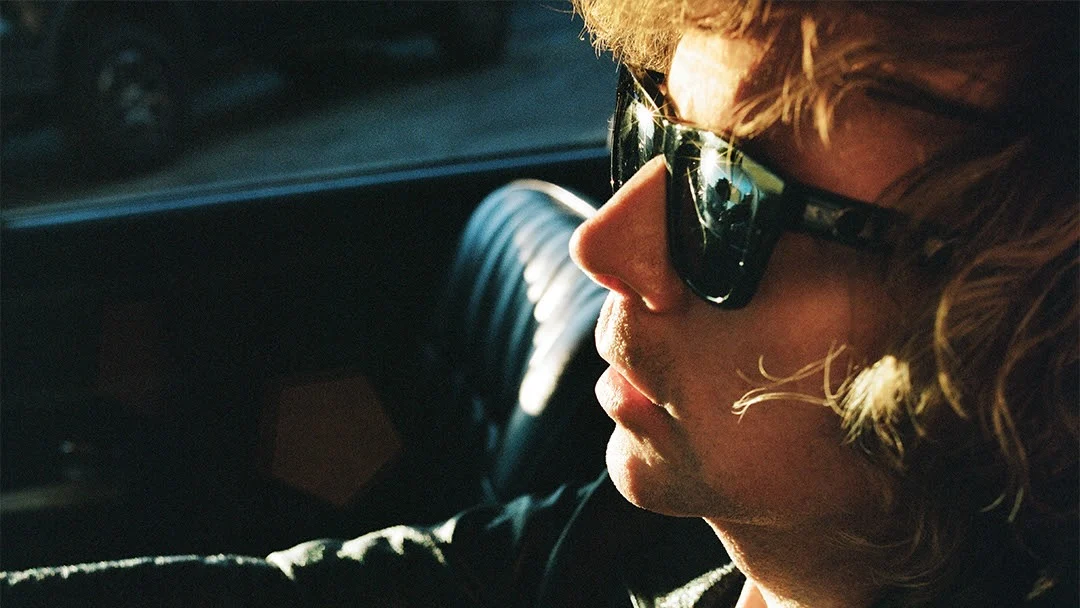
LOS ANGELES — Seven years can feel like an eternity in the hyper-accelerated landscape of modern popular music. For an artist like Beck Hansen, however, periods of prolonged studio silence have historically served as the incubator for monumental artistic shifts. On Friday, the multi-Grammy-winning chameleon of alternative rock officially ended his longest gap between full-length projects with the release of his 15th studio album, Ride Lonesome.
Clocking in at 12 tracks, the new record arrives not merely as another entry in an already storied discography, but as a nostalgic and emotionally resonant homecoming. For Ride Lonesome, Beck has reunited with the legendary core backing band and production collaborators behind some of his most critically revered, acoustic-driven masterpieces—namely, 2002’s devastating breakup record Sea Change and the Grammy-winning 2014 Album of the Year, Morning Phase.
The resulting LP bridges the gap between Beck’s restless sonic evolution and the introspective, organic songcraft that defined his turn-of-the-millennium output. As the music industry digests the release and fans flood streaming services, Ride Lonesome stands as a testament to the enduring power of creative chemistry, maturity, and the bittersweet passage of time.
Main Facts: Inside Ride Lonesome
At its core, Ride Lonesome is a 12-track exploration of solitude, movement, and emotional reclamation. Eschewing the hyper-kinetic, computerized funk and pop sheen of his 2017 LP Colors and 2019’s Hyperspace, Beck has pivoted sharply back to the rich, textured soundscapes of his past.
The project’s sonic DNA is instantly recognizable to longtime devotees. The album was recorded alongside a murderer’s row of elite session musicians: guitarist Smokey Hormel, drummer Joey Waronker, bassist Justin Meldal-Johnsen, and multi-instrumentalists Roger Joseph Manning Jr. and Jason Falkner. This is the exact ensemble that helped flesh out the melancholy acoustic frameworks of Mutations (1998), Sea Change, and Morning Phase.
Further cementing this golden-era reunion is the involvement of visionary producer and mixer Nigel Godrich. Often dubbed the "sixth member" of Radiohead, Godrich’s deft touch behind the mixing board has historically elevated Beck’s most melancholic material into pristine sonic cathedrals. Godrich’s return ensures that Ride Lonesome possesses the same spatial depth, atmospheric warmth, and acoustic clarity that turned Sea Change into a modern classic.
The album rollout is accompanied by an extensive live itinerary. Beck is currently traversing North America on the Ride Lonesome Tour, a headlining trek that will keep him on the road through the end of October, bringing the new material to life in intimate theaters and sprawling outdoor amphitheaters alike.
Chronology: The Road to Ride Lonesome
To fully understand the weight of Ride Lonesome, one must trace the winding, unpredictable timeline of Beck’s career over the last decade, marked by genre-hopping experiments and personal transitions.
2014–2017: The Pop Pivot and Collaborative Detours
Following the triumph of Morning Phase—which famously upset Beyoncé’s self-titled visual album at the 2015 Grammy Awards—Beck spent several years exploring upbeat, hook-driven pop music. He released standalone singles like "Dreams" and "Wow," which culminated in the release of his 13th studio album, Colors, in late 2017. Co-produced with Greg Kurstin, Colors was a vibrant, technicolor explosion of dance-pop and funk that polarized purists while earning commercial radio success.
2019–2020: Hyperspace and Electronic Explorations
Continuing down a futuristic, synthetic path, Beck teamed up with Pharrell Williams, Sky Ferreira, and Coldplay’s Chris Martin for Hyperspace in November 2019. The album leaned heavily into atmospheric synth-pop and lo-fi electronic textures. Though well-received, it signaled a continuation of Beck’s pop-centric era, leaving fans of his more organic, folk-inflected output wondering when—or if—he would ever return to the acoustic guitar.
2021–2025: The Silent Years and Rumors of a Return
After wrapping up his touring commitments for Hyperspace, Beck entered a prolonged period of studio hibernation. While he occasionally popped up on collaborative tracks—such as lending his vocals to Gorillaz’s 2023 single "Possession Island" and contributing to various tribute projects—news of a proper solo follow-up remained virtually non-existent. Behind the scenes, however, rumors began to swirl in late 2024 that Beck had quietly reconnected with his old bandmates, laying down tracks at studios in Los Angeles and London.
April–September 2026: The Announcement and Release
The rumors were confirmed in April 2026, when Beck officially announced the Ride Lonesome Tour alongside details of the forthcoming album. The announcement sent shockwaves through the indie-rock community, particularly due to the confirmation of Godrich’s involvement and the reunion of the Sea Change backing band. Throughout the summer, promotional singles trickled out, priming audiences for Friday’s official full-length release.
Supporting Data: The Dream Team Assembled
The primary narrative driving the critical acclaim of Ride Lonesome is the legendary lineup behind the instruments. In an industry where session musicians are frequently swapped out for convenience or shifting trends, the permanence of Beck’s core collaborative unit is a rare anomaly.
- Smokey Hormel (Guitars): Known for his mastery of blues, jazz, and folk guitar styling, Hormel’s atmospheric slide and fingerpicking work serves as the emotional spine of Beck’s slower material.
- Joey Waronker (Drums): A master of understated, pocket-driven percussion, Waronker’s drumming avoids flashy fills in favor of deep grooves that anchor the melancholic arrangements.
- Justin Meldal-Johnsen (Bass): A longtime fixture in Beck’s live and studio bands (and a powerhouse producer in his own right for artists like M83 and Paramore), Meldal-Johnsen provides warm, melodic low-end stability.
- Roger Joseph Manning Jr. & Jason Falkner (Keyboards & Guitars): This pair of power-pop royalty brings lush string arrangements, haunting mellotron textures, and intricate vocal harmonies that swell behind Beck’s lead vocals.
- Nigel Godrich (Mixing): Godrich’s involvement cannot be overstated. His ability to isolate acoustic elements and place them in vast, reverberant soundscapes is a defining characteristic of Beck’s emotional masterpieces.
Stream counts and early critical metrics indicate that Ride Lonesome is performing exceptionally well on digital platforms, outperforming the first-week metrics of both Colors and Hyperspace among core demographics, proving that the audience’s appetite for acoustic introspection has only grown during the hiatus.
Official Responses and Critical Reception
The critical consensus surrounding Ride Lonesome has been overwhelmingly positive, with many publications hailing it as a late-career masterpiece.
In an early review, music critic circles highlighted the thematic maturity of the record. Unlike the heartbroken despair of Sea Change or the sweeping, cinematic optimism of Morning Phase, Ride Lonesome finds Beck reflecting on the passage of time from the perspective of a veteran artist surveying a complex life.
Speaking briefly on the collaborative process behind the record during a recent promotional stop, Beck reflected on what it meant to step back into the studio with his longtime comrades:
"There’s an unspoken language that happens when you’ve been in a room with the same people for nearly thirty years. You don’t have to explain the mood; you just start playing, and the room fills in the blanks. We didn’t set out to recreate the past, but we couldn’t help but bring that history into the room with us."
Producer Nigel Godrich also offered insight into the meticulous tracking process, noting that the emphasis was placed on live-room takes rather than digital manipulation:
"With this record, the priority was capturing a performance in real-time. We wanted the microphone to pick up the wood, the air, and the human friction. In an era where everything can be polished and quantized to death, there is immense power in just letting a great band play together in the same room."
Fans on social media and fan forums have similarly expressed elation, with many drawing favorable comparisons to tracks like "Lost Cause" and "The Golden Age," signaling that the cultural appetite for Beck’s softer, more vulnerable aesthetic remains ravenous.
Implications: What Ride Lonesome Means for Beck’s Legacy
The release of Ride Lonesome carries profound implications for how music historians will ultimately frame Beck’s career.
For decades, Beck has fought against the pigeonholing of being defined by a single sound. He broke out in 1994 as the Gen-X slacker-rap icon of "Loser," pivoted to dusty Delta blues and folk on Odelay and Mutations, delivered sweeping orchestral sadness on Sea Change, threw a futuristic funk dance party on Midnite Vultures, and explored pastoral country-pop on Country Improv and Morning Phase.
By releasing Ride Lonesome, Beck is effectively putting a punctuation mark on his restless stylistic experiments. It demonstrates that he does not need to reinvent the wheel with every release to remain relevant. Instead, he can anchor himself in the timeless traditions of American songwriting and collaborative musicianship, trusting that his audience will follow him into the quiet spaces.
Furthermore, the album positions Beck comfortably within the pantheon of elder statesmen of alternative rock—artists like Tom Petty, Neil Young, and Paul McCartney—who can seamlessly tap into their foundational strengths decades into their careers without sounding derivative or tired.
As the Ride Lonesome Tour rolls across the country through the chilly autumn months of 2026, audiences are witnessing an artist at peace with his past, fully re-engaged with his collaborators, and delivering some of the most compelling work of his legendary career. Whether this album is a one-off return to the acoustic fold or the beginning of a brand-new chapter, Ride Lonesome secures Beck’s place as one of the most vital and enduring voices in modern music.
 Nana Wu
 Siti Muinah
