

Main Facts
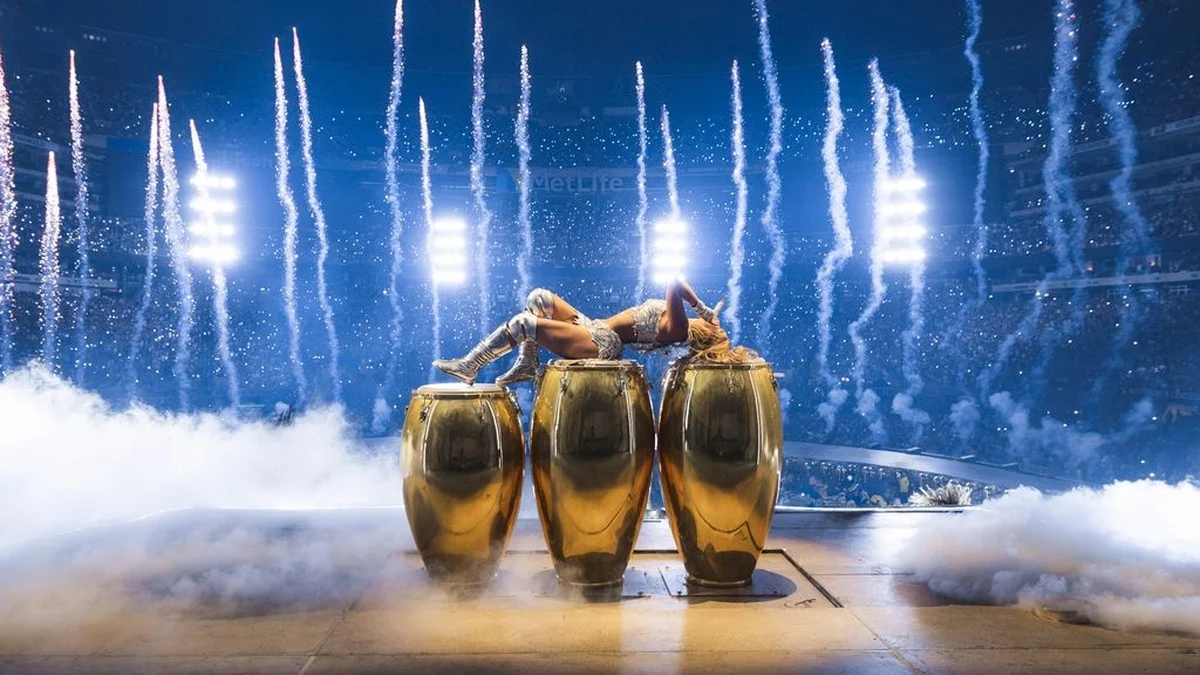
Pop superstardom often requires artists to flatten their edges, smoothing out personal quirks and emotional complexities into mass-marketable commodities. Yet, on the first night of her two-night run at New Jersey’s MetLife Stadium, Colombian global phenomenon Karol G did the exact opposite. Bringing her ambitious “Viajando Por El Mundo Tropitour” to a packed, roaring stadium, the undisputed queen of perreo delivered an experience that was as politically charged and culturally expansive as it was deeply, unflinchingly intimate.
The headline-grabbing moment of the evening arrived late in the set when Karol G was joined on stage by her frequent collaborators—producer Tainy and singer-songwriters Judeline and rusowsky—for the live, inaugural performance of their global hit, “Bby Wow.” Surrounded by flashing pyrotechnics and a DJ booth draped in the flags of Colombia, Spain, and Puerto Rico, the East Rutherford stadium momentarily morphed into a sprawling, open-air Ibiza nightclub.
However, to reduce the night to its viral guest appearances would be to miss the broader thesis of the tour. Running in tandem with her critically acclaimed 2026 studio album, No Me Arrepiento de Sentir Tanto (I Don’t Regret Feeling So Much), “Viajando Por El Mundo” is not merely a victory lap for a generational talent. It is a cinematic, genre-spanning love letter to Latinidad, a public reckoning with heartbreak, and, most importantly, an homage to Carolina Giraldo Navarro—the flesh-and-blood woman hidden behind the formidable armor of “La Bichota.”
Chronology: A Journey Through Sound, Stage, and Emotion
The trajectory of the two-hour spectacle was carefully curated to chart an emotional and geographical voyage, split cleanly into distinct thematic acts.
Act I: The Tropicoqueta Jungle and the Celebration of Heritage
The evening kicked off under a scorching, orange-hued tropical aesthetic. Backed by a high-energy troupe of dancers, Karol G emerged to the infectious rhythms of her Tropicoqueta era, tearing through crowd-pleasers like “Latina Foreva” and “Un Gatito Me Llamó.” The stage design was immediately immersive, evoking a lush, sun-drenched jungle that served as a physical manifestation of her roots.
As the set progressed, the Medellín native took the audience on a deliberate auditory tour across Latin America. She seamlessly pivoted between genres and regional aesthetics:
- An all-female mariachi band took center stage for a fierce, impassioned delivery of “Ese Hombre Es Malo.”
- Brazilian-inspired garota costumes and rhythms underscored the title track, “Tropicoqueta.”
- Dominican bachata infused a reimagining of her massive global smash, “Si Antes Te Hubiera Conocido.”
- A steady, thunderous pulse of Puerto Rican reggaeton anchored the evening’s high-energy club segments.
Act II: The Transition to Winter and the Anatomy of Heartbreak
Midway through the show, the sun-baked orange jungle dissolved into a stark, deep-blue winter landscape. Before transitioning into the more melancholic material from her latest record, a pre-recorded visual vignette played across the massive stadium screens. In it, Karol G addressed the audience directly, philosophizing on the human condition. She posited that suffering is an inescapable part of life—and that if heartbreak is the price of truly living, she will proudly continue “coleccionando heridas” (collecting wounds).
This emotional pivot set the stage for tracks dealing with vulnerability, regret, and romantic fallout, showing a multifaceted artist unafraid to trade her tough-girl persona for raw, emotional exposition.
Act III: The Global Convergence
The climax of the night arrived with the convergence of her recent collaborative work. The blue stage illuminated once more for the “Bby Wow” sequence. Tainy, operating a makeshift DJ setup, injected fresh electronic breakdowns into the song while Judeline and rusowsky traded verses with Karol G. Fireworks erupted into the New Jersey night sky, cementing a triumphant cross-continental fusion that encapsulated the unifying power of modern Latin music.
Supporting Data and Context
Karol G’s ascent to stadium-level status has been historic. Since breaking into the male-dominated reggaeton industry in 2017 with her breakout hit “Ahora Me Llama” featuring Bad Bunny, she has steadily shattered glass ceilings for Spanish-language female artists.
The “Viajando Por El Mundo Tropitour” builds directly upon the commercial and critical framework of No Me Arrepiento de Sentir Tanto. Where past eras of her career relied strictly on empowerment anthems encouraging women to leave toxic partners behind, her latest material showcases a newfound creative freedom. Having reached a tier of superstardom where she dictates her own artistic boundaries, she has chosen to collaborate with cross-genre heavyweights—such as Drake and Bruno Mars on record, and Tainy, Judeline, and rusowsky on stage—while retaining total narrative control.
The financial and logistical scale of the tour reflects this dominance. Playing consecutive nights at MetLife Stadium—a venue boasting a capacity of over 80,000—places her in an elite echelon previously reserved for a handful of Anglo-pop and rock legends. Yet, despite the massive pyrotechnic displays, elaborate costume changes, and stadium-wide scale, industry analysts and critics alike have noted the surprising intimacy of the production, proving that theatricality does not have to come at the expense of emotional resonance.
Official Responses and Sociopolitical Implications
While the music provided the rhythm of the night, the sociopolitical backdrop provided its soul. Landing squarely during Hispanic Heritage Month, “Viajando Por El Mundo” took on an added layer of urgency against the backdrop of the current political climate in the United States.
Throughout the evening, Karol G routinely paused to wave flags hoisted by fans in the audience, representing nations spanning Central America, South America, and the Caribbean. A poignant pre-recorded voiceover by veteran Mexican-American actor Edward James Olmos resonated through the stadium sound system, emphasizing a message of transnational unity:
"If Karol has taught us anything tonight, it’s that one can travel throughout the world, but your raíces [roots] are always in your heart. Raise your flags and be proud, because it’s time to celebrate where we come from, the sounds that grew up with us and made us who we are. Enjoy, and long live Latino America."
However, the evening’s most striking sociopolitical moment came courtesy of opening act Elena Rose. The Venezuelan singer-songwriter brought the audience to a stunned silence when she shared a harrowing personal anecdote: her photographer had been detained by Immigration and Customs Enforcement (ICE) while traveling to make it to the concert.
In a country where immigrant communities live under the constant shadow of aggressive enforcement crackdowns, the revelation carried profound weight. Rather than shrinking from the tension, Rose met the moment with defiance, roaring into the microphone: "There’s nothing more beautiful than being Latino!" The stadium erupted in solidarity, transforming the concert venue into a sanctuary of cultural pride and shared resilience.
Implications for the Future of Latin Pop
The success of Karol G’s MetLife Stadium takeover signals a definitive shift in the global music landscape. For decades, crossover success for Latin artists often meant diluting Spanish-language lyrics or conforming to Anglo-American pop sensibilities. Karol G has inverted this dynamic entirely. She has achieved global superstardom on her own terms, singing exclusively in Spanish, celebrating regional Latin American music styles from mariachi to bachata, and centering her identity as a Colombian woman.
Furthermore, her willingness to marry bombastic stadium theatrics with deep psychological vulnerability—admitting to heartbreak, mourning lost love, and “collecting wounds”—redefines what is expected of a modern pop icon. She proves that vulnerability is not a weakness that undermines authority, but rather a superpower that deepens the bond between artist and fan.
As “Viajando Por El Mundo Tropitour” continues its global trajectory, it leaves behind a blueprint for how to scale up an artist’s career without losing their soul. Beneath the sequins, the pyrotechnics, and the historic stadium attendance records, the beating heart of the show remains unchanged: Carolina, a Latina woman fiercely proud of her heritage, her flaws, and her unapologetic capacity to feel too much.
 Nana Wu
 Siti Muinah
