

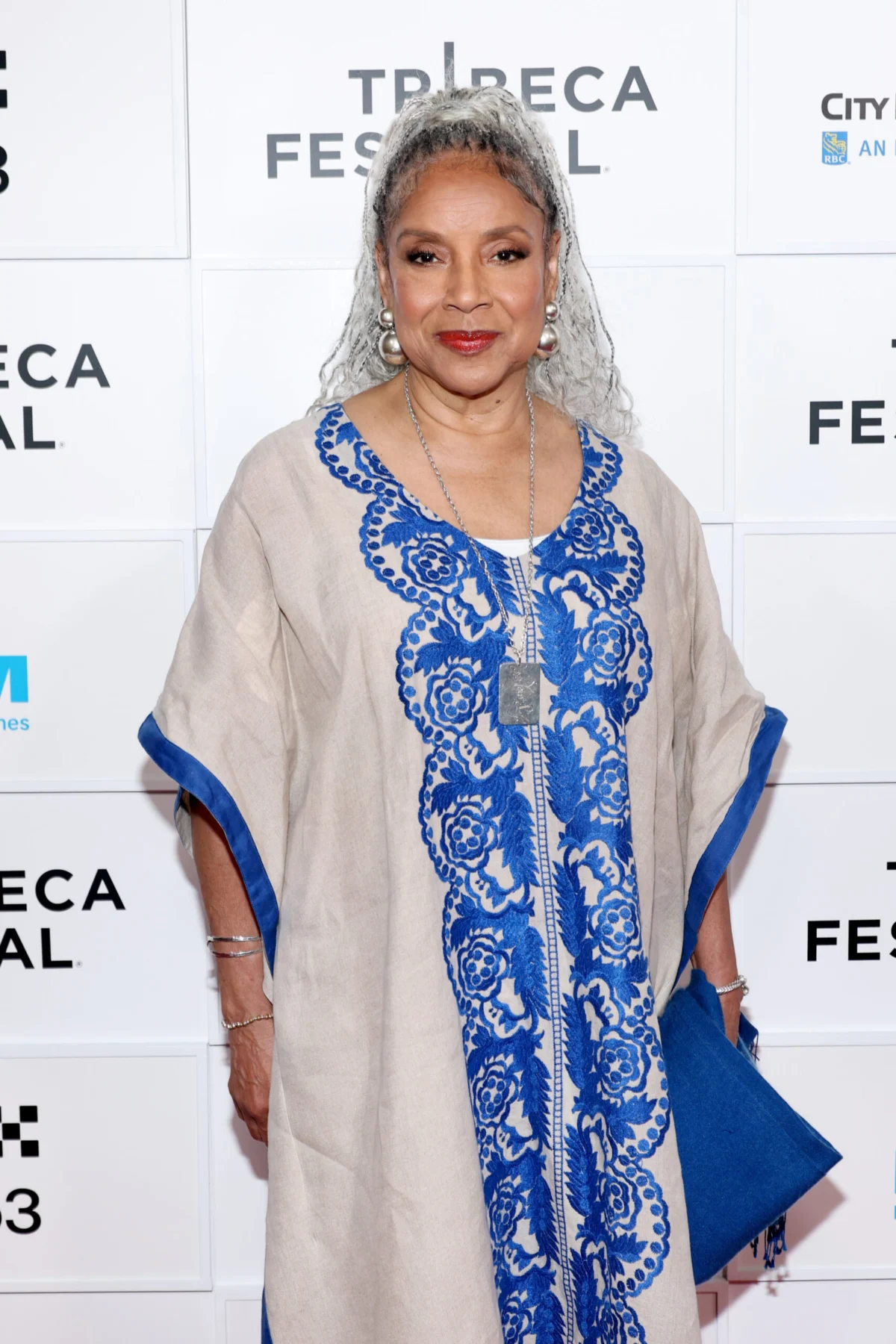
MARTHA’S VINEYARD, Mass. — The 24th annual Martha’s Vineyard African American Film Festival (MVAAFF) played host to one of the most anticipated and emotionally resonant events of its multi-week run: the C-Suite Luncheon and Leadership Summit. Sponsored by AARP and designed to uplift, support, and foster networking among executives, business owners, and women leaders of color, this year’s gathering drew massive crowds.
At the center of the celebration was legendary actress, director, and producer Phylicia Rashad. Known globally for her grace, immense talent, and cultural impact, Rashad took center stage as the keynote guest speaker. In conversation with AARP CEO Dr. Myechia Minter-Jordan, Rashad reflected on a towering career that spans decades of television, film, and theater, while also addressing the vital importance of authentic representation, family lineage, and the enduring power of Black womanhood in media.
Main Facts: A Celebration of Excellence and Representation
The C-Suite Luncheon stands as a cornerstone of the MVAAFF, an influential cultural festival co-founded by Stephanie Tavares-Rance and her husband, Floyd Rance. Over the past 24 years, the festival has evolved into a premier destination for Black cinema, creators, and corporate leaders. The accompanying summit and luncheon specifically aim to bridge gaps in corporate and creative leadership, providing a space for women of color to share insights, build alliances, and celebrate success.
This year’s partnership with AARP brought an extra layer of depth to the event, tying Rashad’s legendary career directly into a groundbreaking new research initiative. The discussion highlighted AARP’s Movies for Grownups study, titled "Bridging the Gap: The Path to More Authentic Portrayals of Black Adults in Movies and TV."
The study’s findings served as a powerful backdrop for the afternoon:
- High Consumer Engagement: Black adults attend movies and consume television and streaming content at rates significantly higher than the general U.S. population.
- Cultural Influence: Audiences view older Black women as profoundly influential cultural figures.
- Positive Aging: When older Black women are authentically showcased on television and film, viewers report feeling significantly more positive about the aging process itself.
Rashad, whose career has continually shattered ceilings and redefined the parameters of Black excellence on screen, proved to be the ideal figure to address these cultural shifts.
Chronology: Tracing a Historic Career of Artistry and Impact
To understand the weight of Phylicia Rashad’s presence at the MVAAFF, one must examine a career marked by historic milestones, artistic evolution, and unwavering integrity.
Early Beginnings and the Path to Broadway
Born in Houston, Texas, Rashad was immersed in a family of high-achieving artists and intellectuals—her mother, Vivian Ayers Rashad, was a Pulitzer Prize-nominated artist, poet, and publisher, while her sister, Debbie Allen, became an iconic dancer, choreographer, and director. Rashad pursued a degree in fine arts at Howard University before making her mark on the New York theater scene.
Throughout the 1970s and 1980s, Rashad built a formidable reputation on Broadway, appearing in landmark productions such as The Wiz and Dreamgirls. Her theatrical roots grounded her in a profound understanding of character, voice, and physical storytelling.
The Phenomenon of The Cosby Show
In 1984, Rashad stepped into a role that would forever cement her place in television history: Clair Huxtable on NBC’s The Cosby Show. As the sharp-witted, successful attorney, mother, and wife, Rashad revolutionized how Black women were depicted on prime-time television. Clair Huxtable was not a monolith or a stereotype; she was a fully realized, multi-dimensional professional and matriarch who balanced career and family with effortless brilliance. The role earned her multiple Emmy Award nominations and transformed her into a beloved cultural touchstone.
Expanding Horizons: Directing, Theater, and Contemporary Roles
Rather than resting on her laurels after the conclusion of The Cosby Show, Rashad continuously expanded her artistic footprint. She transitioned seamlessly between television, film, and prestigious stage work.
In 2004, she made history by becoming the first Black actress to win the Tony Award for Best Actress in a Play, taking home the accolade for her breathtaking portrayal of Lena Younger in a Broadway revival of Lorraine Hansberry’s A Raisin in the Sun.
Her career trajectory over the last decade has been equally dynamic. From her emotional depth on the silver screen in the Creed franchise to television appearances in acclaimed series like HBO’s The Gilded Age, Paramount+’s Diarra From Detroit, and her recent directorial triumph helming the Tony-winning Broadway play Purpose, Rashad remains an active, vital force in the entertainment industry.
Supporting Data: The AARP "Bridging the Gap" Study
The partnership between the MVAAFF and AARP provided empirical weight to the cultural conversations happening at the luncheon. The Bridging the Gap study explores the disconnect between the massive economic power of Black audiences and the historical underrepresentation—or misrepresentation—of Black adults in mainstream media.
Key Insights from the Research
- Economic Clout: Black consumers are not only avid media consumers but also major drivers of box office success and streaming metrics. Despite this, media creators have historically lagged in producing content that reflects the diverse reality of Black communities.
- The Power of Aging Gracefully: The study underscores that older Black adults, particularly women, serve as the emotional and cultural anchors of their families and communities. When media projects this reality authentically, it combats ageism and racism simultaneously.
- Audience Demand: Modern audiences are increasingly vocal about rejecting flat, stereotypical portrayals. They demand narratives that explore the full spectrum of Black life, from historical dramas to contemporary tales of joy, struggle, and triumph.
Rashad’s career serves as a living blueprint for the very authenticity that the AARP study champions. Whether playing a fictional matriarch or a deeply rooted historical figure, Rashad has consistently rejected caricature in favor of genuine humanity.
Official Responses and Reflections: In Her Own Words
During her deeply personal conversation with AARP CEO Dr. Myechia Minter-Jordan, Rashad offered profound insights into her philosophy on life, art, and what legacy truly means.
When asked about her legacy, Rashad did not immediately point to her accolades, awards, or iconic television moments. Instead, she turned her focus inward, toward her roots.
"My mother. My father, my grandparents, the communities in which they were born, and I was privileged to know as a child — that’s what I think about when I hear about legacy, because that’s what flows through," Rashad shared with the audience.
She elaborated on how legacy is maintained not through monuments or accolades, but through daily living, mutual respect, and conscious transmission of values to younger generations.
"It’s something that we become very conscious of. Something that we speak of consciously together. Something we now consciously convey to our young people," she explained. "But it’s really about the way we live. About the way we interact with each other. The way we hold ourselves, think of ourselves — this is what creates legacy."
Reflecting on her preparation for iconic roles, such as her Tony-winning turn as Lena Younger in A Raisin in the Sun, Rashad emphasized the necessity of honoring the interior life of characters:
"When it came time to play Lena Younger, I understood who the woman was. She was not a piece of furniture with a wig on it. She was a woman who knew how to grow things. And I knew that from my greater family. I am so proud of the legacy that has been handed to me. I am so proud of this heritage."
Addressing her attraction to historical and narrative-driven projects, Rashad spoke passionately about her creative process:
"I love getting a script and going back into history. I love learning because I’m looking at humanity and saying, ‘OK. We’ve done this a few times now. Let’s get it right now. Let’s get it right.’ And especially right now, being a human being is so important. I look for the humanity in every world. I’m not considering anything else, and I’m not thinking anything else. This is what my mother taught me. This for me is freedom. I am not circumscribed by anyone else’s idea."
When moderator Dr. Minter-Jordan inquired about how she handles roles or television shows that fail to accurately depict the Black experience, Rashad offered a characteristically sharp and pragmatic response:
"And if there’s something on television that I don’t like, I simply don’t watch it."
Reflecting on the breadth of her expansive career—from her earliest stage performances to her modern-day television and directing projects—Rashad noted that what she treasures most is her work’s capacity to highlight shared human experiences.
"Whether it’s Ma Pop, Aunt Esther, Clair Huxtable or whoever," Rashad concluded, "I want my work, more than anything else, to demonstrate that as human beings, we are much more alike than we could ever be different."
Implications: The Future of Black Stories and Executive Leadership
The appearance of Phylicia Rashad at the 24th annual Martha’s Vineyard African American Film Festival resonates far beyond a standard celebrity interview. It marks a critical intersection between cultural preservation, corporate responsibility, and artistic integrity.
1. Shifting Corporate and Creative Paradigms
The collaboration between MVAAFF and AARP demonstrates that major institutions are increasingly recognizing the commercial and cultural value of empowering Black women leaders and creators. By centering discussions around the Bridging the Gap study, the luncheon challenged entertainment executives and business owners to put their financial and creative weight behind authentic storytelling.
2. Redefining Aging on Screen
As the entertainment landscape gradually expands its demographic horizons, the cultural mandate highlighted by Rashad and AARP is clear: storytelling must reflect the dignity, resilience, and vitality of older Black adults. Rashad’s ongoing career—thriving across television, streaming, and Broadway—proves that talent and cultural resonance do not expire with age.
3. The Enduring Responsibility of the Next Generation
For the executives, entrepreneurs, and women leaders of color attending the C-Suite Luncheon, Rashad’s message served as both an inspiration and a call to action. True legacy is built through intentional mentorship, self-respect, and a refusal to be limited by external definitions of identity.
As the Martha’s Vineyard African American Film Festival continues to champion Black excellence in its third decade, moments like Phylicia Rashad’s keynote speech ensure that the foundational stones laid by elders, artists, and visionaries will continue to uplift generations to come.
 Layla Zulfa
 Neng Nana
 Asro
Asro
