

By: AI Newsroom & Adapted Reporting
Published in Tech / EdTech Insights
Main Facts
Society has spent the better part of the last decade bemoaning digitally addled minds, declining attention spans, and the omnipresent scourge of "doomscrolling." Cultural critics frequently point the finger at endless vertical feeds as the primary culprit behind our collective inability to sit down and read a traditional book, focus on long-form journalism, or study effectively for academic exams.
But what if the problem isn’t the medium itself, but what we are consuming through it?
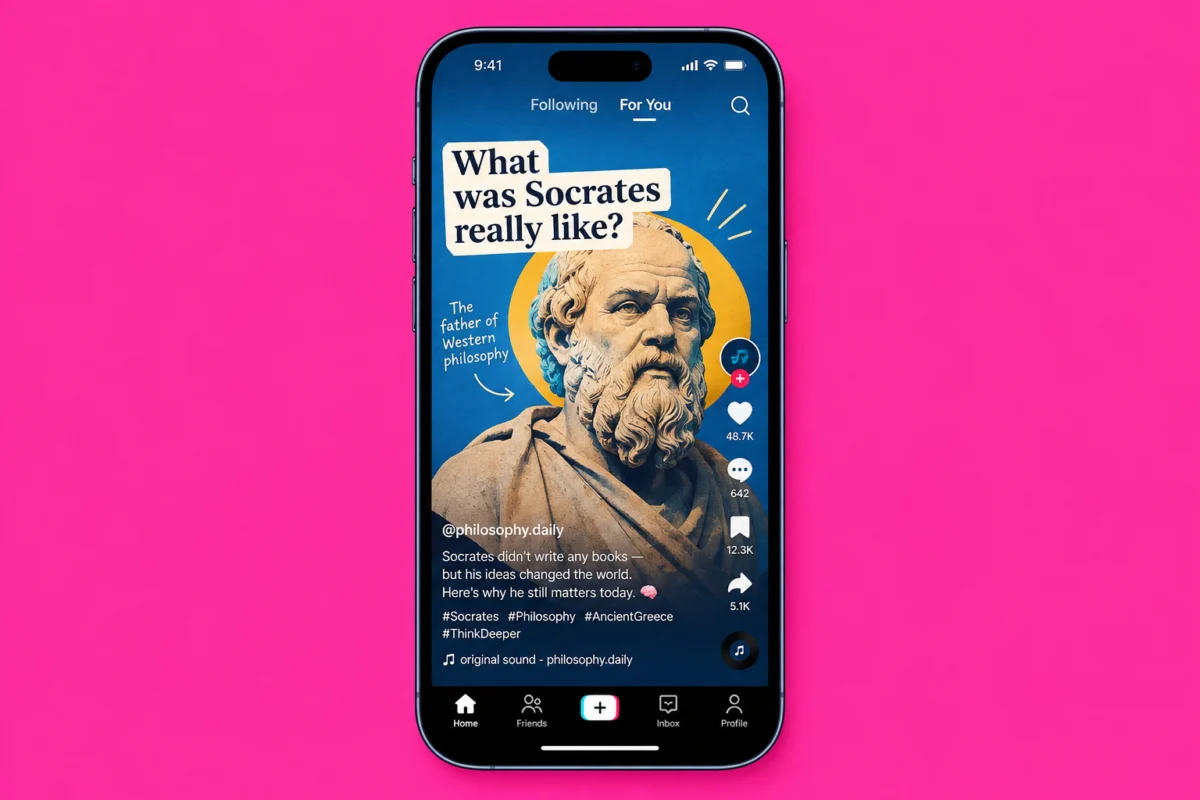
Enter ScrollEd, a Palo Alto-based educational technology startup challenging the status quo. Competing in the prestigious TechCrunch Disrupt Startup Battlefield 200 competition, ScrollEd operates on a deceptively simple yet radical thesis: if students refuse to open a heavy, intimidating textbook, the textbook should open itself up to them—right inside the vertical, swipe-based interface they already use for hours every day.
ScrollEd has developed an innovative application that allows users—whether individual learners, academic institutions, or corporate trainers—to upload any dense text file, dry PDF, or standard textbook and instantly convert it into a dynamic, interactive content feed. The user experience mirrors popular platforms like TikTok or Instagram Reels, but with a pedagogical twist. As users scroll, the source material materializes as a mix of AI-generated video clips, concise audio summaries, digestible text cards, and interactive quizzes.
Swiping up seamlessly surfaces a brand-new topic, while swiping sideways invites the learner to dive deeper into the current subject matter. At the conclusion of a deep dive, an interactive quiz awaits to test comprehension and reinforce retention.
By merging the addictive mechanics of short-form social media with rigorous educational content, ScrollEd aims to reclaim the hours lost to mindless scrolling and repurpose them for self-improvement, professional development, and academic mastery.
Chronology: The Genesis and Rise of ScrollEd
The story of ScrollEd is as much about personal frustration as it is about technological innovation.
Late 2023: The Late-Night Epiphany
The concept was born out of a shared modern ritual: late-night doomscrolling. Co-founders Utsav Gupta and Rebecca Neff found themselves experiencing the familiar wave of post-midnight dissatisfaction after hours of passively flicking through algorithmic feeds before bed. Rather than simply lamenting their habits, the duo recognized an opportunity. They observed that their peers—and particularly the younger generation of digital natives—were migrating almost exclusively to short-form, vertical video feeds. Traditional formats requiring deep, linear reading were losing ground rapidly.
Early 2024: Bootstrapping in Palo Alto and Philadelphia
Operating out of academic hubs, Gupta and Neff decided to build a solution. Gupta, studying AI and human purpose at Stanford University, teamed up with Neff, a computer science student at the University of Pennsylvania. Together, they bootstrapped ScrollEd, combining their expertise in artificial intelligence, software engineering, and cognitive design. They spent the early months developing the core conversion engine—a proprietary workflow capable of parsing complex, dry educational texts and translating them into multi-modal interactive media.
Mid 2024: Refining the Architecture and User Experience
During the development phase, the founders consulted heavily with prospective users, particularly 18-year-olds entering higher education. These conversations confirmed a widening chasm between how educational institutions deliver information (long-form lectures, dense textbooks) and how students consume media (snackable, interactive, vertical video). ScrollEd refined its interface, implementing the distinctive navigation system where vertical swipes change topics and horizontal swipes unpack deeper layers of complexity, capped off with formative assessments.
October 2024: The TechCrunch Disrupt Debut
ScrollEd reached a major milestone by securing a spot in the fiercely competitive TechCrunch Disrupt Startup Battlefield 200 in downtown San Francisco. The event serves as the public launchpad for the company’s consumer-facing application, marking its formal entry into the competitive EdTech and social media landscapes. With pilot programs underway and a freemium business model established, the startup is shifting its focus toward scaling its institutional offerings and expanding its automated source-checking infrastructure.
Supporting Data and Business Model
To understand ScrollEd’s viability, one must examine its target audience, monetization strategy, and technological foundation.
Target Demographics
ScrollEd is strategically casting a wide net across three primary markets:
- Educational Institutions: High schools, colleges, and universities seeking innovative ways to engage digital-native students with required reading and curriculum materials.
- Corporate Training Programs: Enterprises looking to modernize onboarding, compliance training, and continuous employee upskilling by replacing lengthy PDF manuals with engaging, bite-sized mobile modules.
- Individual Consumers: Self-directed learners, lifelong students, and individuals who simply "want something better to scroll on" during their downtime.
The Freemium and B2B Monetization Structure
ScrollEd operates on a hybrid business model designed to drive mass consumer adoption while securing predictable, high-value enterprise revenue:
- Freemium Consumer Tier: Individual users can access a robust free consumer feed featuring general educational content, curated topics, and basic interactive modules.
- ScrollEd Pro: A paid subscription tier for power users who want advanced customization, deeper libraries, and specialized learning tracks.
- Institutional Licensing: Schools and corporations pay annual licensing fees to deliver proprietary training and educational materials through the ScrollEd platform. In return, these organizations receive comprehensive backend analytics reports detailing user engagement metrics, lesson progress, completion rates, and individual learner assessments.
Technological Architecture
At its core, ScrollEd relies on advanced artificial intelligence to handle heavy lifting that would otherwise require massive manual content creation teams. The platform’s processing engine ingests static documents—ranging from academic whitepapers to biology textbooks—and utilizes large language models (LLMs) and generative media tools to:
- Extract key concepts and break them down into hierarchical learning nodes.
- Generate short-form scripts, audio narration, and visual representations.
- Formulate adaptive quizzes and comprehension checks tailored to the difficulty of the source text.
- Automate source-checking workflows to ensure educational accuracy and minimize algorithmic hallucinations.
Official Responses and Founder Perspectives
The philosophy driving ScrollEd is deeply rooted in an intentional rejection of traditional engagement-maximizing algorithms. While platforms like TikTok and Instagram are engineered to keep users hooked for as long as possible through unpredictable variable rewards, ScrollEd is intentionally designed with off-ramps.
In an email interview with TechCrunch, co-founder Utsav Gupta elaborated on the psychological shift the platform aims to foster:
"The younger generation is increasingly going short-form, vertical feed only (especially the 18-year-olds we’ve spoken to!), and this poses challenges for any kind of media that requires depth. We want to meet them where they are… We just have to be deliberate about how we use it and choose not to maximize engagement on the platform."
Gupta emphasized that traditional short-form media often creates an incomplete loop of curiosity. A user watches a 15-second clip, feels a fleeting spark of interest, but faces too much friction to pursue it further, leading them back into mindless scrolling. ScrollEd seeks to remove that friction by making deep exploration as effortless as flicking a thumb.
"A short video can make you curious; following that curiosity can mean searching for another explanation or leaving the app," Gupta continued. "We wanted going deeper to be as easy as moving to the next video."
Looking toward the future, Gupta summarizes the ultimate mission of the startup with a simple, provocative vision:
"The ambition is a social network that’s better for you."
Injecting a dose of Silicon Valley humor into the competitive arena of TechCrunch Disrupt, Gupta joked about the company’s grand ambitions: "We’re hoping to ‘disrupt’ social media and short form!"
Implications: The Future of Learning and Digital Media
ScrollEd’s emergence highlights a profound cultural and pedagogical shift. For decades, educators and parents have fought a losing battle against screens, attempting to enforce rigid digital detoxes or demanding that students retreat to the quiet solitude of physical libraries. These efforts have largely failed because they ignore the fundamental rewiring of modern attention habits shaped by ubiquitous smartphone technology.
By acknowledging that the battle against short-form media cannot be won by prohibition, ScrollEd offers a pragmatic middle ground: harmonization.
1. Re-engineering Curriculum Delivery
If startups like ScrollEd prove successful, the traditional textbook may undergo a structural evolution. Authors and academic publishers may no longer write solely for linear, page-turning consumption. Instead, textbooks could be authored with native multi-modal feeds in mind, optimized from day one for vertical scrolling, audio bites, and instant interactive testing. This could dramatically lower the barrier to entry for complex subjects like organic chemistry, macroeconomics, or legal history.
2. The Gamification of Corporate Compliance
Corporate training is notoriously dry, resulting in low completion rates and superficial knowledge retention. By transforming compliance manuals, cybersecurity protocols, and leadership frameworks into TikTok-style feeds with built-in quizzes, enterprises can drastically improve employee engagement and accountability. The detailed analytics provided by platforms like ScrollEd also allow HR departments to track true comprehension rather than mere video watch time.
3. Ethical Algorithmic Design
Perhaps the most significant implication of ScrollEd’s model is its challenge to the attention economy. For years, tech critics have argued that social media algorithms are inherently predatory, designed to exploit human psychology for ad revenue. ScrollEd flips this script by applying addictive UX mechanics to prosocial, educational ends while actively resisting the urge to maximize time-on-app metrics. If successful, it could pioneer a new wave of "mindful tech"—software that uses the tools of modern distraction to foster focus, literacy, and continuous personal growth.
As ScrollEd launches its consumer platform at TechCrunch Disrupt and rolls out its initial institutional pilot programs, the education and tech sectors will be watching closely. Whether students and professionals will willingly trade their late-night doomscrolling for curriculum-driven swipes remains to be seen. However, by turning the textbook inside out and meeting learners where they live, ScrollEd has offered one of the most creative and pragmatic responses to the attention crisis in the digital age.
 rifanmuazin
 Nana Muazin
