

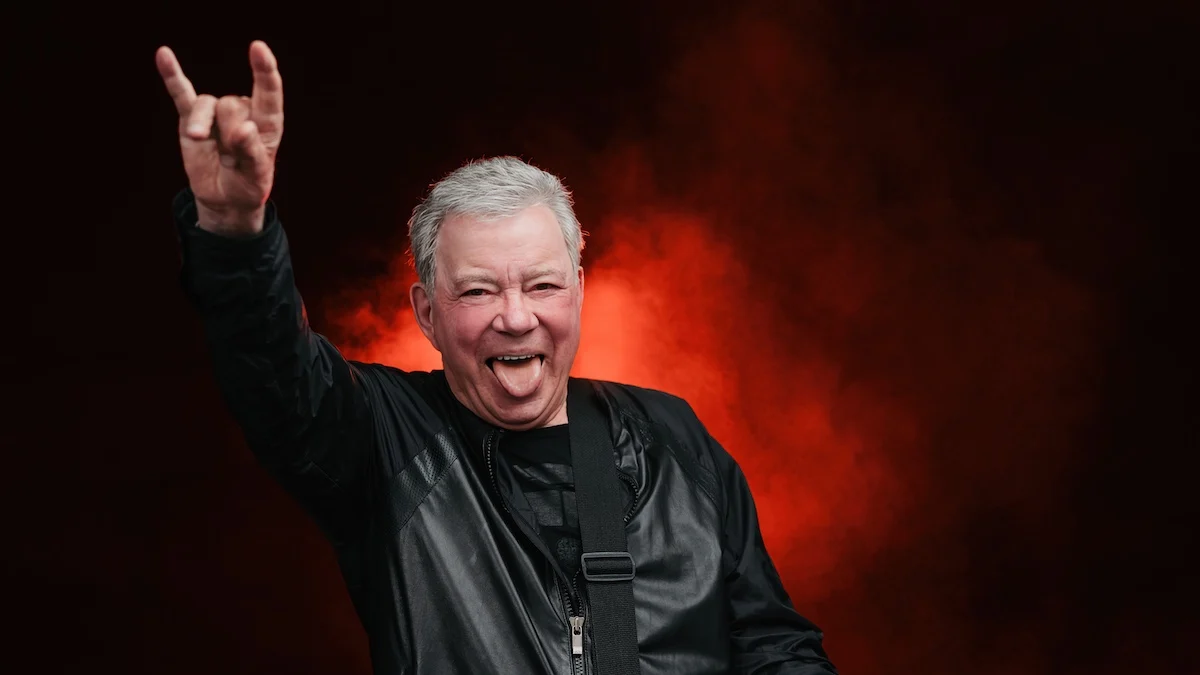
Main Facts: The Historic Debut of Metal’s Most Unlikely Frontman
In a cultural crossover event that defies both logic and genre conventions, entertainment icon William Shatner officially cemented his status as a heavy metal frontman. On Saturday evening, September 19th, the legendary Star Trek actor took the stage at Chicago’s historic Park West club to deliver his inaugural live metal performance. Backed by a fiercely tight, high-octane ensemble appropriately named The *uckers, the 95-year-old polymath treated an ecstatic, sold-out crowd to a masterclass in theatrical heavy music.
Rather than attempting traditional, soaring heavy metal vocals, Shatner leaned into his signature performance style: dramatic, Shakespearean spoken-word recitation. While The *uckers tore through towering, note-perfect renditions of immortal heavy metal anthems—including Ozzy Osbourne’s "Crazy Train," Motörhead’s "Ace of Spades," and Metallica’s "Enter Sandman"—Shatner commanded the stage with operatic intensity. He imbued every lyric with the gravitas of a stage tragedy, proving that heavy metal is as much about attitude, delivery, and emotional weight as it is about vocal range.
The landmark club appearance served as a high-octane warm-up for Shatner’s heavily anticipated festival debut at Chicago’s Riot Fest. Far from a mere novelty act, the performance underscored a genuine, albeit eccentric, artistic evolution for a man who has spent over seven decades constantly redefining his cultural boundaries. As metal purists and pop-culture enthusiasts alike looked on in awe, Shatner proved once again that, even at 95 years old, the final frontier of his career remains entirely uncharted.
Chronology: From Final Frontier to Metal Frontier
The Genesis of an Unlikely Genre Shift
William Shatner’s journey into the heavy metal ecosystem did not happen overnight. Over the past several years, the multifaceted entertainer—known globally as Captain James T. Kirk, TJ Hooker, and a prolific spoken-word artist—has increasingly gravitated toward musical collaborations that challenge conventional boundaries. From his spoken-word interpretations of classic rock tracks on albums like Has Been (2004) and Seeking Major Tom (2011) to his recent explorations into blues and country, Shatner has consistently used his distinctive cadence to reinterpret familiar sonic landscapes.
The seeds for his heavy metal transformation were officially planted earlier this year. In February, industry announcements confirmed that Shatner was actively recording a full-length heavy metal album titled What the F Is Heavy Metal? via Cleopatra Records. The project instantly generated global buzz, not just due to Shatner’s involvement, but because of the staggering caliber of metal royalty attached to the recording sessions.
The Chicago Warm-Up at Park West
As the summer of 2026 wound down, preparations for Riot Fest brought Shatner to the Windy City. Recognizing an opportunity to test his newly crafted material and metal covers in front of a live audience, plans were quietly set in motion for an intimate club gig.
On the evening of September 19th, Park West transformed into an alternate universe where classical elocution met blistering distortion. Walking onto the stage to rapturous applause, Shatner—dressed sharply and moving with remarkable vitality for a nonagenarian—wielded the microphone not as a traditional singer, but as a dramatic storyteller.
The meticulously curated setlist oscillated seamlessly between thunderous covers and striking original compositions:
- "Crazy Train" (Ozzy Osbourne cover) – Kicking off the night with unmistakable heavy metal pedigree, Shatner delivered Ozzy’s paranoid reflections with piercing theatricality.
- "Do Not Go Gentle Into That Good Night" – Bridging high literature and heavy distortion, Shatner delivered Dylan Thomas’s immortal poem over crushing guitar riffs.
- "Ace of Spades" (Motörhead cover) – A relentless, adrenaline-fueled homage to Lemmy Kilmister, executed with tongue-in-cheek reverence and undeniable power.
- "Will We Care When the Sky Turns Black" – An apocalyptic original composition addressing environmental and existential dread.
- "Enter Sandman" (Metallica cover) – A chilling, atmospheric reading of Metallica’s monster hit that recast the classic lullaby as a waking nightmare.
- "Damn Old Age" – A poignant, darkly humorous original track that directly confronts the realities of aging with unflinching honesty and grit.
Following the triumphant Park West showcase, Shatner was slated to bring the spectacle to the masses at Riot Fest, staking his claim on a festival bill that typically caters to punk, rock, and alternative royalty.
Supporting Data: Behind the Scenes of What the F Is Heavy Metal?
To understand the legitimacy of William Shatner’s metal reinvention, one needs only to look at the personnel roster behind his upcoming Cleopatra Records release, What the F Is Heavy Metal?. This is no vanity project cobbled together in a basement; it is an ambitious collaborative effort featuring some of the most celebrated architects of heavy music history.
A Masterclass in Heavy Metal Collaboration
Shatner has surrounded himself with metal aristocracy, ensuring that the musical backbone of his project meets the rigorous standards of genre purists. Confirmed guest contributors on the album include:
- Brian May (Queen): Bringing his unmistakable, soaring guitar harmonies and orchestral rock sensibilities to the project.
- Rob Halford (Judas Priest): The legendary "Metal God" himself, whose vocal firepower provides a fascinating foil to Shatner’s spoken-word delivery.
- Tony Iommi (Black Sabbath): The undisputed godfather of heavy metal riffage, whose sludgy, doom-laden guitar work anchors the album’s heaviest moments.
- Dave Lombardo (Ex-Slayer, Testament, Misfits): A thrash metal drumming icon whose blistering double-bass precision drives the rhythmic engine of Shatner’s sonic assault.
The Anatomy of the Live Band: The *uckers
While the album features an all-star cast of studio legends, translating that studio wizardry to the live stage required a dedicated road band. Enter *The uckers*, a nimble, high-skill backing unit assembled specifically to support Shatner. Capable of pivoting on a dime from the intricate thrash-metal gallop of Metallica to the greasy, blues-soaked punk-metal of Motörhead, The uckers provided the heavy, uncompromising sonic infrastructure that allowed Shatner’s performance to soar. Their instrumental precision ensured that the music remained authentic to the genre, validating the experiment for even the most skeptical metalheads in the audience.
Official Responses: Industry and Fan Reactions
The announcement and subsequent execution of William Shatner’s metal debut have sent shockwaves across the entertainment and music industries, generating a fascinating spectrum of responses from fans, critics, and fellow musicians.
The Fan Phenomenon: Confusion Turned to Adulation
Initially, social media reaction to the announcement of What the F Is Heavy Metal? and the Park West show was met with a mixture of disbelief and humorous skepticism. Many fans assumed it was an elaborate piece of performance art, a late-career joke, or internet misinformation.
However, as footage from the Park West gig began circulating online—showcasing Shatner barking the poetry of Dylan Thomas over a sludgy, Sabbath-esque groove—public sentiment shifted dramatically from irony to genuine appreciation. Concertgoers took to X (formerly Twitter) and Reddit to praise the sheer audacity of the performance.
"Seeing a 95-year-old William Shatner deliver the lyrics to ‘Ace of Spades’ like he’s performing King Lear on Broadway is something I will never forget," wrote one attendee. Another fan noted, "It shouldn’t work on paper, but the heavy instrumentation combined with Shatner’s unmatched dramatic delivery makes it feel like spoken-word doom metal. It’s brilliant."
Critical Reception: Redefining the Boundaries of Rock
Music journalists and culture critics have similarly lauded the endeavor. Rather than viewing the pivot as a misstep, critics have pointed out that rock and roll—and heavy metal in particular—has always thrived on theatricality, shock value, and boundary-pushing eccentricity. By embracing the genre without irony or self-deprecation, Shatner has managed to out-punk performers half his age.
Industry insiders have also commended Cleopatra Records for leaning into the conceptual brilliance of the pairing. By placing a cultural icon at the intersection of heavy metal and spoken word, the label has engineered one of the most talked-about crossover releases of the decade.
Implications: What Shatner’s Metal Turn Means for Music and Pop Culture
William Shatner’s plunge into heavy metal carries profound implications for how we view aging, artistic reinvention, and genre fluidity in the modern entertainment landscape.
Shattering the Boundaries of Age in Heavy Music
Traditionally, heavy metal has been viewed as a young person’s game—a genre defined by physical stamina, youthful angst, and high-energy rebellion. While legendary acts like Judas Priest, Iron Maiden, and Metallica continue to tour well into their senior years, frontmen rarely debut within the genre in their mid-nineties.
By taking the stage at Park West and Riot Fest at 95 years old, Shatner is completely redefining the timeline of an artistic career. He proves that creativity does not expire, and that reinvention is possible at any stage of life. His refusal to quietly fade into retirement serves as an inspiration to artists and fans alike, demonstrating that vitality is a state of mind rather than a biological limitation.
The Legitimation of Spoken-Word Metal
Shatner’s approach also forces a re-evaluation of vocal performance within heavy music. While growls, screams, and clean soaring vocals dominate the genre, spoken-word recitation over heavy riffs is a relatively underexplored territory. By utilizing dramatic phrasing and literary cadence, Shatner bridges the gap between poetry, theater, and heavy metal. His collaboration with masters like Tony Iommi and Dave Lombardo suggests that spoken-word metal could carve out a legitimate, respected niche within the broader heavy music umbrella.
A Lasting Legacy on the Final Frontier
As fans await the official release of What the F Is Heavy Metal?, one thing is abundantly clear: William Shatner is incapable of being put into a box. Whether he is commanding the bridge of the USS Enterprise, beaming down to alien planets, winning Grammy Awards, or melting faces in Chicago underground clubs, he continues to push the boundaries of what is culturally possible.
As the amplifiers powered down at Park West and the echoes of "Enter Sandman" faded into the Chicago night, Captain Kirk didn’t just boldly go where no man had gone before—he strapped on a distortion pedal and made history all over again.
 Nana Wu
 Siti Muinah
