

By Russell Brandom
Published September 18, 2026
Main Facts
The artificial intelligence sector is currently fixated on a compelling frontier: world models. Promising to revolutionize everything from autonomous navigation to household robotics and interactive entertainment, world models are designed to automate spatial intelligence—giving machines the ability to understand, predict, and interact with physical and virtual environments in three dimensions.
However, beneath the heavy layer of academic prestige, venture capital, and heavy media buzz lies a striking paradox. While pioneers in the space—most notably Yann LeCun’s AMI Labs and Fei-Fei Li’s World Labs—command immense valuations and funding rounds, they rank remarkably low on the traditional metrics of commercialization and revenue generation.
Moderating a panel on world models at the recent All-In conference (unaffiliated with the popular podcast), industry analyst and tech journalist Russell Brandom sought to dig into this mysterious corner of the AI landscape. What he uncovered was an ecosystem defined by profound ambiguity. Major labs are refusing to disclose product timelines, suppliers are being kept deliberately in the dark regarding how their data is deployed, and a pervasive culture of strategic silence has taken root. Rather than rushing to market, the industry’s leading players are opting to build in the shadows, navigating a competitive landscape increasingly resembling the "dark forest" hypothesis of science fiction.
Chronology of the Movement
To understand how the world model ecosystem reached its current state of secretive incubation, it is helpful to trace the rapid evolution of spatial intelligence and venture-backed AI research over recent years:
- The Pre-2024 Foundations: For years, spatial intelligence was treated as a sub-discipline of computer vision and reinforcement learning. Early iterations were heavily siloed, primarily powering the navigational logic of autonomous vehicles like Waymo and basic simulation software.
- Late 2024 – 2025 (The Rise of Spatial Labs): Academics and industry heavyweights began spinning out dedicated ventures. Prominent figures like computer science pioneer Fei-Fei Li launched World Labs with a mandate to build large-scale world models. Concurrently, AI luminary Yann LeCun championed non-autoregressive architectures, laying the groundwork for AMI Labs.
- Early 2026 (The Funding Surge): Venture capital flooded into spatial intelligence startups. Platforms like World Labs introduced early capability demonstrations—such as Marble, a system capable of rendering explorable 3D environments from basic prompts. However, monetization strategies remained largely undefined, with investors prioritizing fundamental research and capability expansion over immediate product rollouts.
- Mid-to-Late 2026 (The Conference Circuit & The Veil of Silence): By the late summer and autumn conference circuit—including the All-In conference in September 2026—the tension between massive capital accumulation and commercial obscurity reached a boiling point. Panelists and executives actively deflected questions regarding specific products, marking the formal arrival of an ultra-secretive development cycle across the entire sector.
Supporting Data & The Multi-Industry Paradox
The core utility of a world model lies in its vast versatility. Unlike narrow AI applications trained to perform a single task—such as transcribing audio or classifying images—a world model acts as an underlying simulation engine of reality.
Versatility Across Sectors
The same mathematical and architectural principles that allow a machine learning model to help a vehicle navigate chaotic urban traffic can theoretically be repurposed across a staggering array of commercial verticals:
- Robotics: Guiding humanoid robots to manipulate objects, navigate unfamiliar households, and sort inventory in warehouses.
- Interactive Media & Entertainment: Instantly transforming short clips of video into fully explorable, interactive 3D video game environments or real-time CGI visual effects.
- Healthcare & Biomedicine: Simulating biological pathways, assisting surgeons, and powering specialized clinical software. AMI Labs, for instance, has already begun exploring cross-industry applications through partnerships like Nabia, dipping its toes into manufacturing, biomedicine, and medical AI software.
The Supplier Blind Spot
This broad versatility creates a unique bottleneck for the supply chain. Companies supplying training data—vital inputs for teaching algorithms how physics, lighting, and spatial geometry function—are often left guessing about the ultimate application of their products.
Alex de Vigan, CEO of data supplier Physicl, noted on the sidelines of the All-In conference that while he knows his company’s data is actively aiding major world model development, he remains completely in the dark regarding the specific use cases. "I wish they would tell us more," de Vigan said. "We could build more useful data if we knew what they were working on."
Official Responses and Industry Stance
When pressed on commercial roadmaps, leadership at the premier world model labs offer a consistent defense: patience, thorough research, and the realities of early-stage incubation.
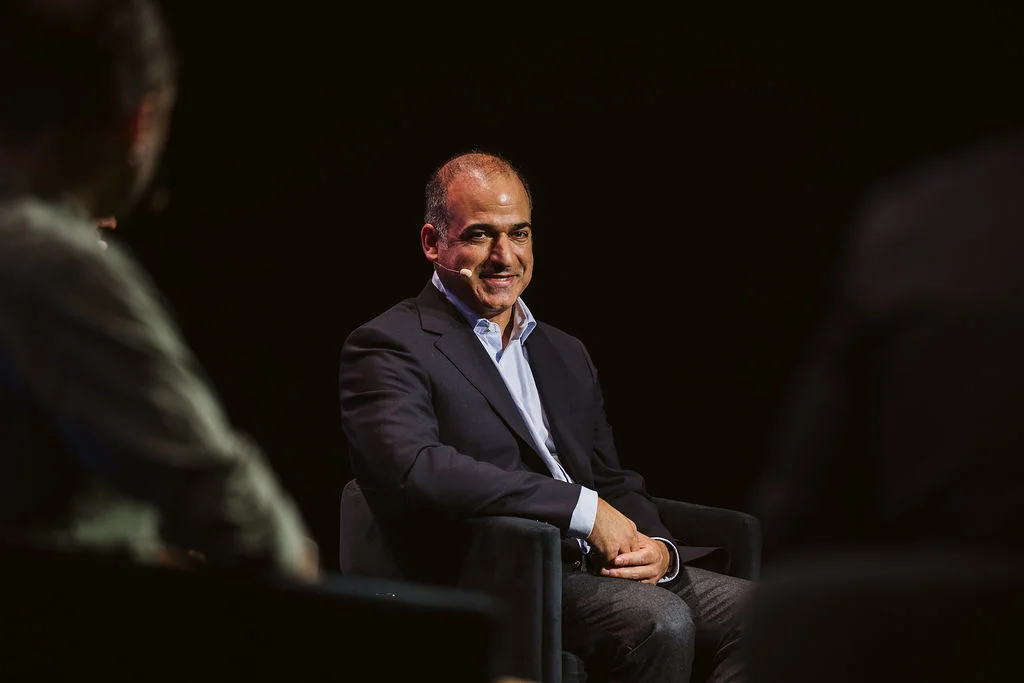
Michael Rabbat, co-founder of AMI Labs and the company’s Vice President of World Models, participated in the All-In panel alongside Brandom. When questioned directly about what products AMI Labs is actively building and when they might hit the market, Rabbat remained guarded.
"We’ll talk about it when we’re ready to talk about it," Rabbat stated during the panel discussion.
In a subsequent email clarification, Rabbat reinforced this posture:
"We’re still in a research and building phase, so we’re not talking publicly about any product plans or timeline."
Given that AMI Labs is less than a year old, a conservative, quiet approach to product development is historically standard for deep-tech startups. However, this protective caginess is not unique to AMI; it is a systemic behavioral pattern exhibited across the entire world-modeling space. World Labs’ Marble platform, arguably the most mature consumer-facing demonstration in the field, showcases impressive capabilities—generating explorable environments for video games and rendering cinematic effects—yet it continues to function primarily as a technical showcase rather than a concrete commercial product with a clear pricing model.
Implications: The "Dark Forest" of AI Competition
Why are world model labs so hesitant to reveal their commercial playbooks, especially when they are flush with venture capital and eager for industry dominance? The answer lies in the dynamic interplay between fundraising, competitive intelligence, and fear of preemptive rivalry.
The Double-Edged Sword of Easy Capital
In the current macroeconomic climate, securing tens or hundreds of millions of dollars for foundational AI research is relatively straightforward. As long as these labs can easily fundraise, there is zero immediate financial pressure to narrow their focus onto a single, profitable product line. In fact, maintaining a broad, unfocused exploratory phase is strategically advantageous.
Avoiding Preemptive Competition
If a high-profile lab like AMI Labs or World Labs were to publicly announce tomorrow that they were launching a commercialized humanoid robot operating system or a next-generation Hollywood rendering suite, it would instantly flash a beacon to the rest of the tech industry.
Suddenly, a wave of competitors—from rival world model startups and aggressive neolabs to tech behemoths like OpenAI and Anthropic—would pivot resources to capture that exact market segment.
In essence, the very same venture capital boom that allows a lab to build in stealth is also funding dozens of potential rivals. Once a definitive path to market is exposed, the window for uncontested dominance slams shut. Therefore, delaying that exposure is a matter of corporate survival.
The Dark Forest Scenario
For fans of Cixin Liu’s landmark science fiction trilogy (The Three-Body Problem), this strategic calculus maps cleanly onto the "dark forest" hypothesis—the sociological framework suggesting that in an uncertain, dangerous cosmos, civilizations hide their locations and remain silent because exposing oneself invites destruction from unseen adversaries.
Within the high-stakes arena of artificial intelligence, the rule holds true: if you don’t know who else is lurking in the woods, it is best not to draw attention to yourself. Until these world-model pioneers are ready to strike, the rest of the tech world will simply have to wait in the dark.
 rifanmuazin
 Nana Muazin
