

Introduction: A Candid Snapshot
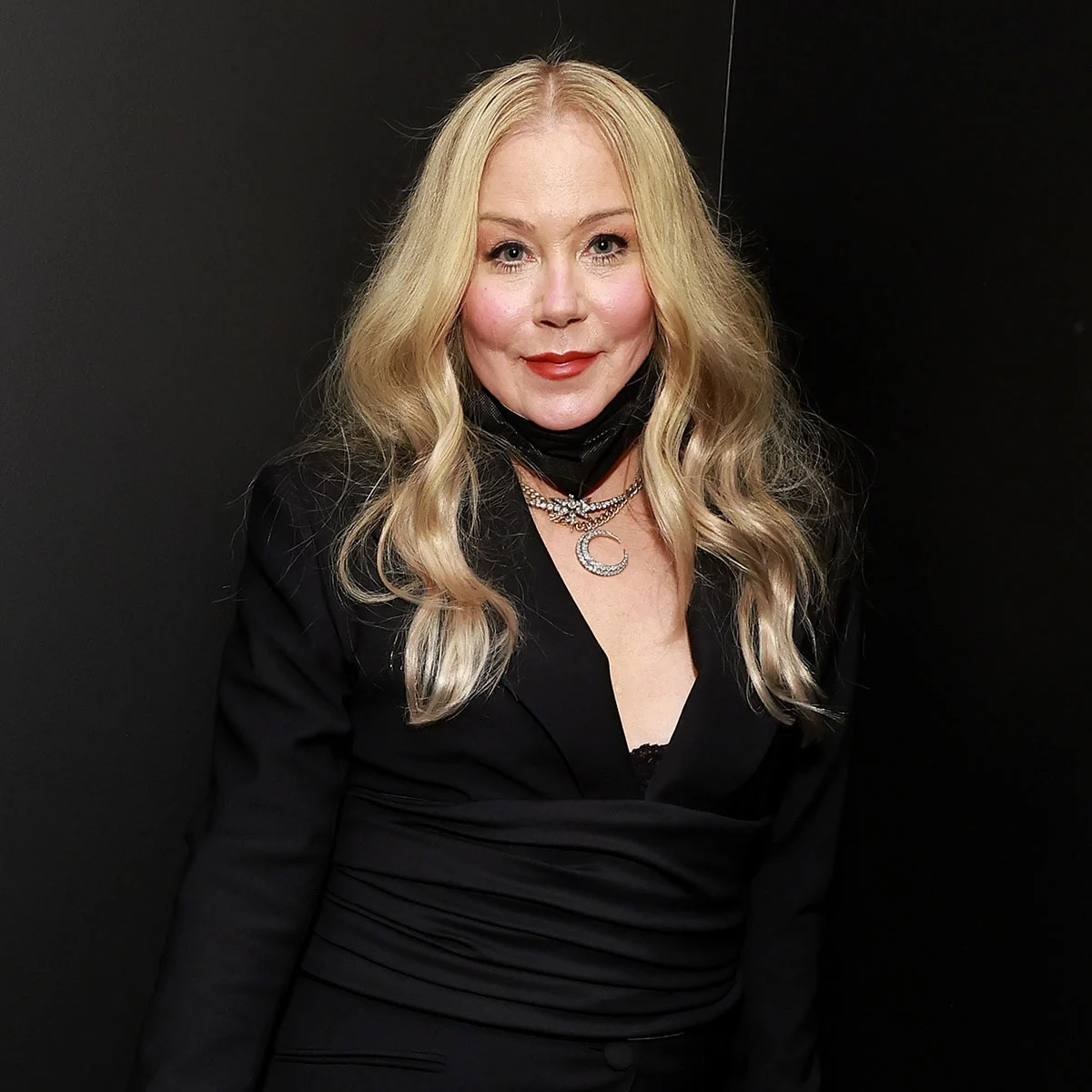
Christina Applegate, the beloved star of Married… With Children and Dead to Me, has once again offered her followers a raw, unfiltered look into her life. In a video posted to her Instagram on September 21, the 54-year-old actress debuted a fresh, bright blonde hair transformation while simultaneously pointing out a “new weird spot” on her cheek.
While the post served as a lighthearted update on her personal style, it also served as a poignant reminder of her ongoing journey with Multiple Sclerosis (MS). Since her diagnosis in 2021, Applegate has become a leading voice in chronic illness advocacy, choosing radical transparency over the polished veneer often expected of Hollywood stars. By sharing both the “fresh hair” and the “weird spots,” she continues to bridge the gap between celebrity life and the grueling, often unglamorous realities of living with a progressive autoimmune disorder.
The Chronology of a Life-Altering Diagnosis
Early Signs and The Long Road to Discovery
While the world learned of Applegate’s condition in 2021, the actress has since revealed that she likely lived with symptoms of MS for several years prior. During a March 2024 appearance on Good Morning America, she candidly admitted that her body had been signaling trouble as early as the first season of her hit Netflix series, Dead to Me.
“I noticed, especially the first season, we’d be shooting and my leg would buckle,” she recalled. At the time, she dismissed these red flags as symptoms of fatigue, dehydration, or environmental factors. It wasn’t until she was filming the show’s third and final season that the reality became impossible to ignore. By that point, she required a wheelchair to navigate the set, necessitating a difficult conversation with her cast and crew about her health.
The 2021 Announcement
In August 2021, Applegate took to social media to break the news to her fans. “It’s been a strange journey. But I have been so supported by people that I know who also have this condition,” she wrote. Even in that moment of vulnerability, her signature wit remained, adding, “It’s been a tough road. But as we all know, the road keeps going. Unless some a–hole blocks it.”
Public Appearances and the "New Normal"
Her first public appearance post-diagnosis came in November 2022, during her Hollywood Walk of Fame induction. With her characteristic humor, she quipped to the crowd, “Oh, by the way, I have a disease. Did you not notice? I’m not even wearing shoes.” This moment set the tone for her public persona: she would acknowledge the struggle, but she would refuse to let it define her spirit.
Supporting Data: The Medical and Physical Toll
The Biological Reality
MS is a complex autoimmune disorder where the immune system attacks the protective covering (myelin sheath) of the nerves. This leads to communication problems between the brain and the rest of the body. For Applegate, the damage is visible and severe; she has disclosed that she is living with approximately 30 lesions on her brain.
The most debilitating aspect for the actress is the physical pain and the profound, relentless exhaustion. In her memoir, You With the Sad Eyes, she described the daily struggle of waking up: “I often can’t get my arm to move far enough to grab the cup of water by my bed or my phone from its charger. One of the worst side effects of the illness is the exhaustion. It feels as though I’ve been on a three-day-long sleepless bender.”
Hospitalization and Complications
The physical toll has been extensive. Applegate has revealed that she has been hospitalized over 30 times since 2021 for various complications, including intense pain, severe gastrointestinal issues, and infections. In August 2025, she shared that a family trip was cut short by a double kidney infection, a reminder that even the simplest daily routines can be derailed by the unpredictability of the disease.
Emotional and Psychological Implications
The Weight of Depression
Beyond the physical symptoms, Applegate has been remarkably open about the mental health toll of her diagnosis. On her podcast, MeSsy, which she co-hosts with friend and fellow MS-warrior Jamie-Lynn Sigler, she described falling into a "fatalistic" depression.
"I don’t enjoy living—I don’t enjoy things anymore," she confessed. This honesty has resonated deeply with her audience. She has explicitly rejected the "inspirational" narrative often forced upon those with chronic illnesses, stating, “I think anyone who has MS isn’t going to be like, ‘This is the best thing that ever happened to me!’”
The Impact on Family
Perhaps the most heart-wrenching aspect of her journey is its effect on her 15-year-old daughter, Sadie. Applegate has spoken openly about the guilt she feels as a mother whose physical capabilities are constantly fluctuating. "It was like losing the mom she had to this f–king thing," she noted. The pain of not being able to walk down the hallway to say goodnight or engage in the physical activities they once shared has been a profound source of sorrow for the actress.
Healing Through Humor and Advocacy
The "F U MS" Philosophy
Applegate’s humor is more than just a personality trait; it is a survival mechanism. Whether she is joking about her burial plots—which she intends to visit for a picnic—or teasing the audience at the Emmys for "shaming" her by standing up, she uses comedy to strip the power away from the disease. "I make these jokes because if I don’t, I’ll suffocate," she explained on the Armchair Expert podcast.
Changing the Narrative on Advocacy
In the past, Applegate felt pressured to be the "good girl" regarding health struggles, notably during her battle with breast cancer in 2008. She now views that experience as a missed opportunity to show the true, messy reality of sickness. "Everything I was saying was a freaking lie," she admitted. "It was me trying to convince myself of something, and I think that did no service to anyone."
Today, she is doing the opposite. By discussing everything from her use of adult diapers to her struggles with suicidal ideation and chronic pain, she is providing a service to millions who feel similarly isolated. Her friendship with Selma Blair, who encouraged her to get tested for MS, serves as a cornerstone of her support system.
Conclusion: A Legacy of Truth
As she navigates the uncertain terrain of her future, Christina Applegate has cemented her legacy not just as a talented performer, but as an authentic voice for the chronic illness community. She has made it clear that Dead to Me will likely be her final on-camera project, choosing to step back from the physical demands of acting to prioritize her health.
While she continues to "live in hell," as she described her daily battle, her willingness to show the "weird spots" on her cheek and the deep-seated fears in her heart remains an act of immense bravery. In a culture that demands constant perfection, Applegate’s refusal to hide the ugly, exhausting, and often painful truth is, perhaps, her most powerful performance to date. She remains a symbol of resilience—not because she is "beating" her disease, but because she is refusing to let it silence her truth.
 Lina Hope
 Asro
Asro
 Raul Delapena Setiawan
