

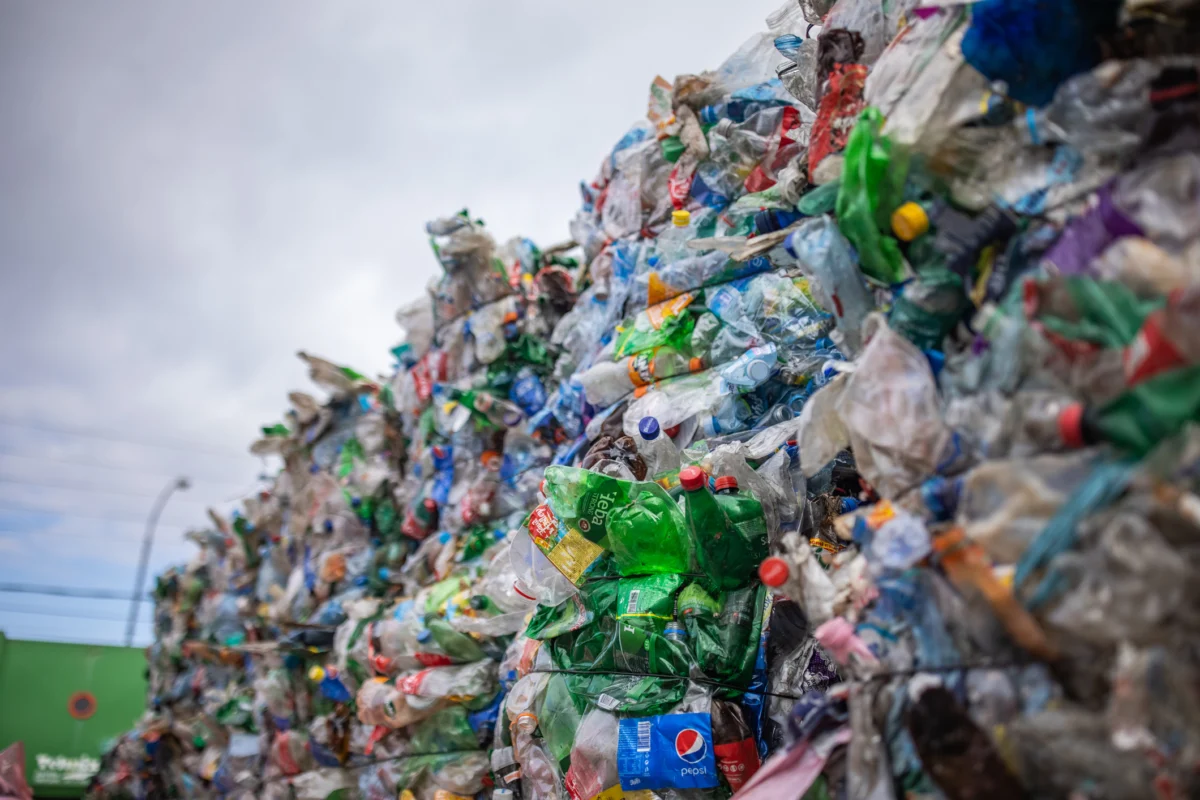
CAMBRIDGE, Mass. — In an era defined by soaring energy demands and mounting environmental waste, corporate sustainability strategies are taking creative, high-stakes turns. Meta, grappling with a rapidly expanding carbon footprint driven largely by the artificial intelligence boom, has inked a pioneering agreement with Cambridge-based plastics recycling startup MacroCycle.
Announced Tuesday, the deal represents a critical financial and strategic milestone for MacroCycle, a three-year-old venture that recently captured attention as a Top 20 finalist in the Startup Battlefield competition at TechCrunch Disrupt 2025. Under the terms of the accord, Meta will purchase environmental attribute credits (EACs) tied to the avoided carbon emissions generated by MacroCycle’s novel recycling technology.
For Meta, the partnership marks its first-ever deal of this kind, serving as both an immediate tool to offset its surging operational emissions and a long-term investment in building a domestic market for low-carbon materials. For MacroCycle, the revenue stream is nothing short of transformative, providing the financial runway required to break ground on its premier commercial-scale plant in the United States.
Main Facts: The Intersection of AI, Climate Action, and Advanced Recycling
The core of the agreement rests on a straightforward yet innovative financial mechanism: Meta is paying MacroCycle for the rights to the carbon emissions its technology prevents. Because MacroCycle’s chemical recycling process generates roughly 80% fewer greenhouse gas emissions than the production of virgin PET (polyethylene terephthalate) plastic—a staple material used globally in beverage bottles, food containers, and textiles—the resulting savings are substantial.
By purchasing these EACs, Meta can directly apply the carbon reductions to its corporate footprint. This capability has become increasingly vital for the tech giant, whose energy and emissions profiles have expanded dramatically to fuel data center infrastructure supporting the generative AI revolution.
However, Meta’s involvement extends far beyond paper-thin carbon offsets. The tech titan is positioning itself as a foundational market maker for low-carbon materials. By injecting capital and purchasing power into MacroCycle’s nascent ecosystem, Meta aims to stimulate the supply chain for sustainable plastics—materials that the tech giant heavily relies upon for hardware packaging, shipping containers, and physical infrastructure. As this market matures and supply scales, broader enterprise access to low-carbon polymers is expected to help corporations permanently lower their baseline supply chain emissions.
Chronology: From Academic Concept to Commercial Reality
The trajectory of MacroCycle highlights the rapid acceleration of deep-tech climate solutions moving from university laboratories to commercial deployment.
- Founding and R&D Phase (2023): MacroCycle was established in Cambridge, Massachusetts, born from fundamental research into polymer chemistry. The founders set out to tackle one of the most notoriously stubborn waste streams in the global economy: mixed plastic waste, including notoriously difficult-to-recycle post-consumer textiles.
- Scaling and Industry Recognition (Late 2025): Having refined its proprietary solvent-based purification process, the startup scaled its operations to demonstration level. In October 2025, MacroCycle gained international visibility by securing a coveted spot as a Top 20 finalist in the Startup Battlefield at TechCrunch Disrupt in San Francisco.
- The Meta Breakthrough (April 2026): In an exclusive preview granted to TechCrunch, MacroCycle announced its landmark agreement with Meta. This pact provided the startup with the external validation and capital guarantees needed to transition from the demonstration phase to full commercialization.
- Future Plant Rollout (Present and Beyond): Buoyed by the Meta partnership, MacroCycle is actively securing commercial buyers for its upcoming output. According to company leadership, the initial U.S. facility will pave the way for subsequent iterations capable of churning out massive industrial volumes.
Supporting Data: The Mechanics and Metrics of MacroCycle’s Technology
To understand why Meta selected MacroCycle for its debut environmental attribute credit purchase, one must examine the staggering scale of the global plastic and textile crisis, coupled with the startup’s unique chemical engineering approach.
The Problem with Conventional Plastics and Textiles
Global recycling infrastructure remains woefully inadequate for high-demand polymers. While rigid PET bottles enjoy relatively high recycling rates, other forms of PET—particularly in the textile and apparel sector—are discarded en masse. According to recent scientific studies, the global recycling rate for post-consumer textiles hovers at an abysmal 0.5%, making it one of the least-recycled material categories on Earth.
Simultaneously, the domestic textile manufacturing industry in the United States has suffered a historic decline. Over the past 25 years, employment in U.S. apparel manufacturing has plummeted by an estimated 85%, as production migrated overseas in search of lower labor and raw material costs.
MacroCycle’s Chemical Innovation
MacroCycle has bypassed the energy-intensive thermal melting methods traditional mechanical recyclers rely on. Instead, the startup utilizes a sophisticated solvent-based approach that dissolves and purifies PET present in complex, mixed-waste streams—including discarded clothing and industrial scrap.
The chemical mechanism centers on looping plastic polymers back on themselves to create stable, ring-like structures known as "macrocycles" (the namesake of the company). During this phase, specialized solvents wash away dyes, plasticizers, and other chemical contaminants. Once purified, the macrocycle loop is cleanly opened, allowing the polymers to re-link into virgin-equivalent chains.
The resulting material is, for all practical purposes, indistinguishable from newly manufactured plastic. Because the process avoids extreme heat, it achieves massive energy savings, drastically cutting operating costs and carbon output simultaneously.
Production Targets and Scaling Metrics
- Demonstration Plant Capacity: MacroCycle’s initial demonstration facility is engineered to produce 5,000 metric tons of recycled plastic annually.
- Emissions Reduction: The manufacturing process yields 80% fewer carbon emissions than conventional virgin PET production.
- Future Commercial Scale: Co-founder and CEO Stewart Peña Feliz notes that subsequent commercial plants will scale aggressively, targeting an output of 50,000 metric tons of high-grade material per year.
Official Responses and Industry Perspectives
The partnership between a Silicon Valley mega-corporation and a New England deep-tech startup signals a broader shift in how corporate climate commitments are being executed.
Stewart Peña Feliz, co-founder and CEO of MacroCycle, emphasized the catalytic nature of the deal during his briefing with TechCrunch. He noted that securing an industry leader like Meta as an initial partner establishes immense market confidence. Peña Feliz believes that proving out this model with Meta will dramatically streamline subsequent negotiations with other industrial buyers eager to secure verified sustainable materials.
From Meta’s perspective, the agreement aligns with a broader corporate push to tackle hard-to-abate sectors within its value chain. While technology companies have historically focused on neutralizing Scope 1 and Scope 2 emissions through renewable energy power purchase agreements (PPAs), Scope 3 supply chain emissions and structural footprint challenges—exacerbated by heavy data center expansion—require novel interventions. By financing high-integrity environmental attribute credits tied to tangible domestic manufacturing facilities, Meta is directly encouraging the deployment of clean industrial tech that would otherwise struggle to secure early-stage project financing.
Furthermore, MacroCycle’s mission to produce recycled textiles domestically at prices competitive with foreign suppliers strikes a chord with industrial policy advocates. By revitalizing domestic processing capabilities, the startup hopes to reverse decades of localized deindustrialization while slashing the carbon intensity of everyday goods.
Implications: A New Blueprint for Climate Finance and Supply Chains
The Meta-MacroCycle agreement carries significant implications for the broader climate tech and venture capital ecosystems.
- A Viable Revenue Bridge for Capital-Intensive Startups: Hardware and chemical recycling startups face the notoriously difficult "valley of death"—the capital-intensive phase required to transition from a successful pilot plant to a commercial-scale production facility. By monetizing avoided emissions through EACs long before the first commercial batch rolls off the assembly line, startups gain a powerful non-dilutive or pre-revenue financing tool.
- Corporate Demand for High-Integrity Credits: As corporate greenwashing scrutiny intensifies, buyers of carbon offsets and environmental attributes are increasingly turning away from nebulous forestry or distant offset schemes. Investments in domestic, measurable, industrial decarbonization—such as chemical plastic recycling—offer corporate buyers auditable, high-impact claims.
- Transforming Tech Supply Chains: Technology companies are discovering that their climate goals cannot be achieved through software efficiencies alone. By actively financing the R&D and scaling of low-carbon physical inputs, tech giants are utilizing their immense balance sheets to reshape heavy industries, paving the way for a more circular global economy.
As MacroCycle prepares to break ground on its first commercial facility, all eyes will be on whether this unique financial and technological model can be replicated across the broader manufacturing sector. If successful, it just might provide the blueprint needed to finally untangle the world from its dependence on virgin plastics and carbon-heavy industrial processes.
 rifanmuazin
 Nana Muazin
