

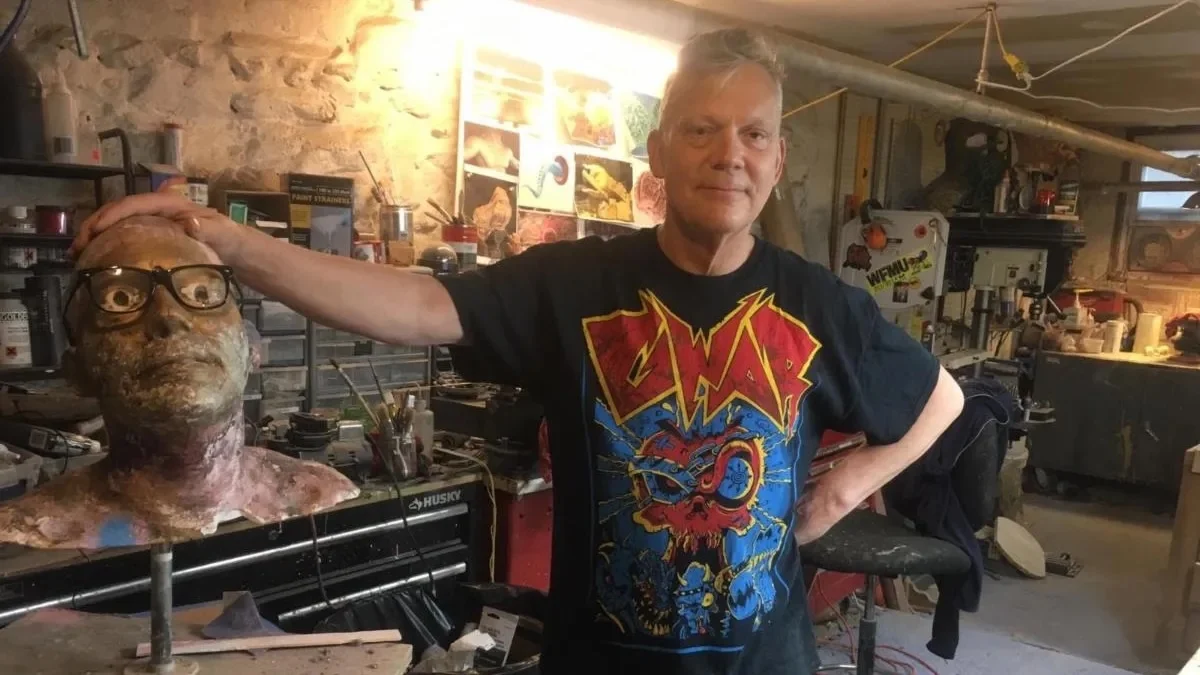
The heavy metal and underground art communities are in mourning following the death of Chuck Varga, best known to millions of thrashing, blood-soaked fans as the iconic GWAR character the Sexecutioner. Varga passed away peacefully at the age of 68 after a courageous, publicly documented battle with cancer.
His death was announced late Friday night by longtime GWAR bassist Casey Orr, who performs under the moniker Beefcake the Mighty. Varga’s passing closes the chapter on the life of a visionary artist, performer, and scholar whose fingerprints are permanently embedded in the grotesque, highly influential mythology of heavy metal’s most theatrical shock-rock band.
Varga’s contributions to GWAR extended far beyond his memorable onstage antics and vocal performances. As a foundational pillar of the band’s creative engine, he helped sculpt, illustrate, and design the bizarre, sci-fi-horror universe that made GWAR a cultural phenomenon. From the Richmond, Virginia art scene to international stages, Varga leaves behind a legacy defined by uncompromising creativity, DIY ethos, and a towering presence in the annals of underground music history.
Main Facts: The Passing of an Icon
Chuck Varga’s death marks the loss of one of the chief architects of GWAR’s visual and auditory assault. According to Casey Orr, Varga passed away surrounded by loved ones, with his beloved wife, Bambi, holding his hand.
Throughout his tenure with GWAR, Varga was instrumental in establishing the band’s unmistakable aesthetic. He was not merely a hired-gun performer; he was a co-founder of Slave Pit Inc., the legendary Richmond-based artist collective that served as the creative factory and headquarters for GWAR’s costumes, props, comic books, and albums.
While battling cancer in his final months, Varga received an outpouring of support from his bandmates, friends, and the broader heavy metal community. GWAR rallied behind him in the spring, organizing community blood drives and launching digital fundraisers to help offset the crushing financial burdens of cancer treatment, hospice care, specialized medical equipment, and round-the-clock nursing support.
Despite his declining health, Varga’s cultural footprint remained vibrant. Bandmates and collaborators frequently reminded the public of his monumental role in shaping the aesthetic vocabulary of extreme metal, ensuring that his influence would outlive his physical form.
Chronology: A Life Dedicated to Art, Chaos, and Creation
Early Roots and the Birth of Slave Pit Studios
Chuck Varga’s journey into the countercultural consciousness began long before GWAR became a household name for metalheads. Emerging from the vibrant, eclectic art scene of Richmond, Virginia, in the mid-1980s, Varga was part of a creative collective of malcontents, painters, and musicians who sought to merge punk rock, heavy metal, and avant-garde theater.
This collective eventually crystallized into Slave Pit Studios. Within the walls of the Slave Pit, Varga utilized his vast talents in sculpture, illustration, and special effects. Long before digital graphics dominated the industry, Varga and his peers worked tirelessly with latex, foam, leather, and fake blood to construct the elaborate, wearable nightmare-scapes that would become GWAR’s signature trademark.
Ascension to the Sexecutioner
As GWAR transitioned from an experimental multimedia art project into a functioning heavy metal band signed to Metal Blade Records, characters began to take on distinct, mythic identities. Varga stepped into the spotlight as the Sexecutioner—a leather-clad, sadistic, BDSM-inspired extraterrestrial executioner brandishing grotesque torture devices and spraying the audience with torrents of synthetic bodily fluids.
Varga didn’t just look the part; he owned it with theatrical gravity and unhinged physical commitment. His unmistakable vocal delivery added a visceral punch to some of GWAR’s most beloved tracks. He lent his voice to the anthemic song "Sexecutioner" on the band’s landmark 1990 sophomore studio album, Scumdogs of the Universe—a record widely regarded as a masterpiece of crossover thrash and shock-rock. Five years later, he reprised his vocal duties on "Rag Na Rok" from the 1995 concept album Ragnarök.
Later Years and Public Health Battle
In the decades following his most active touring years, Varga remained a revered figure within the Slave Pit fraternity. Even as members shifted and aged, the foundational ethos established by Varga and his early collaborators remained the blueprint for the band’s ongoing survival.
In April, GWAR went public regarding Varga’s aggressive cancer diagnosis, prompting a wave of concern from fans worldwide. Recognizing the immense financial strain of long-term cancer care, the band mobilized in June to establish public fundraising campaigns. The initiative aimed to cover essential medical needs, including hospice and nursing support. Throughout his final battle, Varga maintained the dignity and fierce independence that characterized his decades-long career, ultimately succumbing to the illness in the company of his wife.
Supporting Data: Varga’s Discography and Creative Legacy
To understand Chuck Varga’s impact on GWAR, one must examine the tangible artifacts of his career. His work spans multiple mediums, each reinforcing the other to create an immersive fictional universe:
- Sculpture and Design: Varga contributed directly to the creation of GWAR’s infamous monster suits, stage props, and weapon designs, establishing the visual language of the band that continues to influence horror-punk and metal aesthetic today.
- Slave Pit Inc. Co-Foundation: As a core member of the Richmond collective, Varga helped institutionalize a sustainable, artist-run model of production that allowed GWAR to maintain total creative control over their output.
- Musical Contributions:
- Scumdogs of the Universe (1990) – Featured his iconic vocal performance on the track "Sexecutioner."
- Ragnarök (1995) – Featured his vocal performance on the track "Rag Na Rok."
- Community Support Metrics: GWAR’s 2026 fundraising efforts mobilized thousands of fans globally, demonstrating the enduring loyalty of the "Bohab" community toward the artists who built the band from the ground up.
Official Responses: Tributes from Bandmates and Peers
The heavy metal community reacted swiftly to the news of Varga’s passing, sharing memories, condolences, and tributes across social media channels.
Casey Orr’s emotional statement captured the profound grief and reverence felt by those who worked alongside Varga:
"Chuck Varga has left this earthly realm. He passed peacefully, his beloved wife Bambi holding his hand. He was one of a kind. As an artist, as a performer; as a scholar and a gentleman. I’m better for having known him and the world is lesser for his leaving."
Orr also invoked the cosmic lore of GWAR, suggesting that Varga’s spirit was moving on to join fallen comrades in the afterlife:
"I imagine he is currently being welcomed into Valhalla by Dave Brockie and Cory Smoot. Raise your glass and tell his tales. Legends never die. Hail Varga! Hail Sexecutioner!"
Bob Gorman, a fellow GWAR artist and historian, spoke earlier in the year about Varga’s enduring influence on the collective’s creative identity. Gorman noted that Varga’s illustrations, character designs, and uncompromising artistic vision laid the groundwork for an entire underground aesthetic that defied mainstream corporate constraints and inspired generations of artists working in special effects and independent music.
Implications: The End of an Era and GWAR’s Continuing Journey
The death of Chuck Varga represents the passing of another vital link to GWAR’s foundational era. Over the years, the band has weathered profound tragedies, most notably the loss of frontman and co-founder Dave Brockie (Oderus Urungus) in 2014, as well as guitarist Cory Smoot (Flattus Maximus) in 2011. The loss of Varga reminds fans of the human toll behind the sci-fi armor, rubber prosthetics, and rivers of stage blood.
Yet, as GWAR prepares to hit the road for their upcoming North American tour this October—sharing stages with punk-metal outfit Midnight and the fast-food-themed Black Sabbath tribute act Mac Sabbath—the spirit of the original Slave Pit creators remains very much alive.
Varga’s passing underscores the unique nature of GWAR not just as a band, but as a living, breathing art collective. The monsters Varga helped sculpt decades ago still stalk the stage, carrying forward an underground aesthetic that he fought to establish.
As fans raise their glasses to toast the Sexecutioner, they are not only mourning a fallen comrade but celebrating a life dedicated to the unapologetic pursuit of bizarre, beautiful, and boundary-pushing art. Chuck Varga may have left this earthly realm, but in the annals of metal history, the legend of the Sexecutioner will echo eternally.
 Nana Wu
 Siti Muinah
