

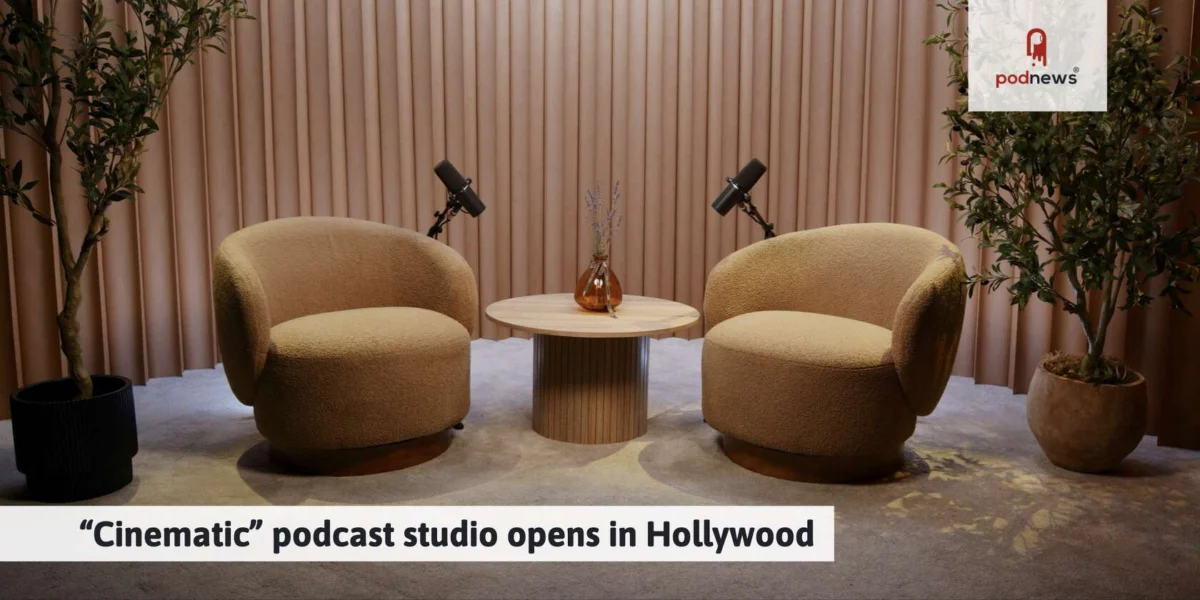
The landscape of professional audio production in Los Angeles underwent a significant shift this week with the grand opening of a state-of-the-art "Cinematic" podcast studio in the heart of Hollywood. As the medium of podcasting matures, moving beyond simple microphone-and-laptop setups toward high-fidelity, multi-camera, and visually immersive experiences, this new facility represents the next evolution in the industry. It caters to a generation of creators who demand not just superior acoustic quality, but the visual gravitas of a motion picture production.
Main Facts: A New Standard in Audio Production
The newly opened studio in Hollywood arrives at a pivotal moment for the podcasting sector. Industry data suggests that "video-first" podcasting is no longer a luxury but a requirement for audience growth and retention. The studio features advanced lighting rigs, 4K multi-cam setups, and sound-dampening technology designed to offer the "cinematic" aesthetic that high-end creators and sponsors are currently pursuing.

Beyond the hardware, the facility offers a comprehensive ecosystem for producers, including post-production suites that specialize in blending high-dynamic-range video with pristine audio mastering. This facility is expected to become a hub for production houses and independent creators alike, serving as a physical manifestation of the convergence between traditional broadcast media and digital-first podcasting.
Chronology: The Evolution of the Podcast Studio
The transition from amateur hobbyist to industrial professional can be mapped through the evolution of studio space in the Los Angeles area.

- Pre-2015: Podcasting was largely a "bedroom" industry. Most shows were recorded in makeshift closets or home offices with minimal acoustic treatment.
- 2015–2020: The rise of professional podcast networks prompted the need for dedicated, commercial-grade audio studios. Reliability and signal quality became the primary metrics of success.
- 2021–2025: The "Video Shift." As platforms like YouTube and Spotify began prioritizing video components, studios began integrating aesthetic lighting and camera setups.
- September 10, 2026: The official launch of the Hollywood Cinematic Studio. This marks the first major facility designed from the ground up as a hybrid audio-video production house, blurring the lines between talk radio and television talk shows.
Industry Spotlight: Diverse Voices and New Signings
The industry remains as dynamic as ever, with several notable developments across the global landscape.
Strategic Partnerships
NOVA Podcasts has officially signed We Don’t Have Time For This, an award-winning parenting show that has demonstrated remarkable success through its sold-out live tours across Australia. Rachel Corbett, Network Director of NOVA Podcasts, noted that the show’s success is a testament to the power of community-building. "They haven’t just built a listenership; they have cultivated a loyal community who feel like they are part of the conversation," Corbett said.

New Media Ventures
The Australian media landscape is also seeing a shake-up with the launch of Media Bubble. Hosted by industry veterans Irene Hulme, Ben Willee, and Peter Whitehead, the show aims to pull back the curtain on the opaque machinery of the media industry. By featuring three hosts with vastly different professional backgrounds, the program promises a multifaceted look at the issues shaping modern journalism and content distribution.
Literature and Storytelling
Sara & Cariad’s Weirdos Book Club has returned for its sixth season, backed by Plosive. The show continues its trend of hosting a star-studded lineup to discuss the nuances of literature. Simultaneously, Plot Lab has introduced a unique "game show" format for writers, where guests are handed headlines and forced to brainstorm stories in real-time, highlighting the creative friction that makes audio storytelling so compelling.

Social and Political Commentary
The intersection of politics and podcasting remains a critical area of growth. Surviving Trump, hosted by Bella Goode, has launched its third season. With a focus on the 2026 midterms, the show is utilizing a "week-by-week" narrative format to track the political climate. It serves as a stark example of how podcasts are being used as high-stakes, real-time investigative tools rather than just passive entertainment.
Supporting Data: The Current Podcast Ecosystem
Market data from September 2026 confirms the continued dominance of established giants alongside the rapid ascent of niche programs.

- Market Leaders: The Daily remains the undisputed leader on Apple Podcasts in the United States, while The Joe Rogan Experience continues to command the top spot on Spotify, proving that long-form conversational content maintains a massive grip on listener attention.
- Genre Growth: In Canada, Radiolab maintains its stronghold on the Natural Sciences category, signaling that high-production-value educational content still draws significant audiences.
- Emerging Trends: Off Leash with Dr. Pete has shown the largest gain in the "Pets & Animals" category in Canada, indicating a healthy appetite for specialized, expert-led niche content. Meanwhile, The Baseball History Timeline has seen a strong entry into the Irish market, proving that even hyper-specific American cultural interests can find global appeal.
- UK Trends: We Need To Talk with Paul C. Brunson holds the #1 spot for Society & Culture in the United Kingdom, reflecting a global interest in relationship and social-psychology-based programming.
Official Responses and Industry Sentiment
Industry leaders are viewing the new Hollywood cinematic studio as a benchmark for the next five years of production. "The goal was to eliminate the ‘podcast feel’—that sense of being in a cramped box," said a spokesperson for the facility. "When a viewer clicks on a show, they should feel like they are watching a premium streaming production. That is the new standard."
Experts also point out that this trend toward high-end production is essential for monetization. As CPMs (cost per thousand impressions) become more competitive, advertisers are gravitating toward shows that offer high-quality video assets for use on social media platforms like TikTok and Instagram. A "cinematic" look is, in effect, a marketing requirement for talent acquisition and brand partnerships.

Implications for the Future of Podcasting
The move toward cinematic studio environments has profound implications for the industry.
1. The Death of the "Garage" Aesthetic
While the intimacy of the bedroom recording will always have a place in podcasting, the commercial sector is clearly moving toward professionalization. Independent creators may find themselves at a disadvantage unless they can mimic these production values, which could lead to a rise in "co-working" audio spaces where creators rent studio time to remain competitive.

2. The Rise of Hybrid Talent
Hosts are no longer just radio personalities; they must now be on-camera performers. This requires a new skill set: lighting management, understanding lens composition, and maintaining visual engagement, in addition to vocal performance.
3. Increased Production Costs
The shift toward cinematic quality necessarily increases the barrier to entry. Production budgets will likely bloat as teams hire lighting directors, camera operators, and video editors to support the audio output. This could lead to a period of consolidation where only well-funded networks or high-earning independent creators can afford to maintain the "cinematic" look.

4. Convergence with Television
Finally, the gap between podcasting and traditional television is effectively closing. We are witnessing the birth of a new medium—one that maintains the long-form, deep-dive nature of the podcast, but with the aesthetic polish of prestige television.
As we look toward the remainder of 2026, the success of this Hollywood studio will likely act as a bellwether. If the "cinematic" trend takes hold, we should expect to see similar facilities popping up in New York, London, and Sydney, fundamentally changing how the world experiences audio storytelling. The era of just listening is coming to an end; the era of immersive, visual audio has officially begun.
 Muslim
 rifanmuazin
