

By [Author Name]
Published: September 2026
Main Facts
Marking a solemn and reflective milestone in heavy metal history, September 2026 marks 40 years since the tragic passing of legendary Metallica bassist Cliff Burton. Burton’s life was cut short on September 27, 1986, when the band’s tour bus crashed in the remote countryside of Ljungby, Sweden, during the European leg of their Damage, Inc. tour.
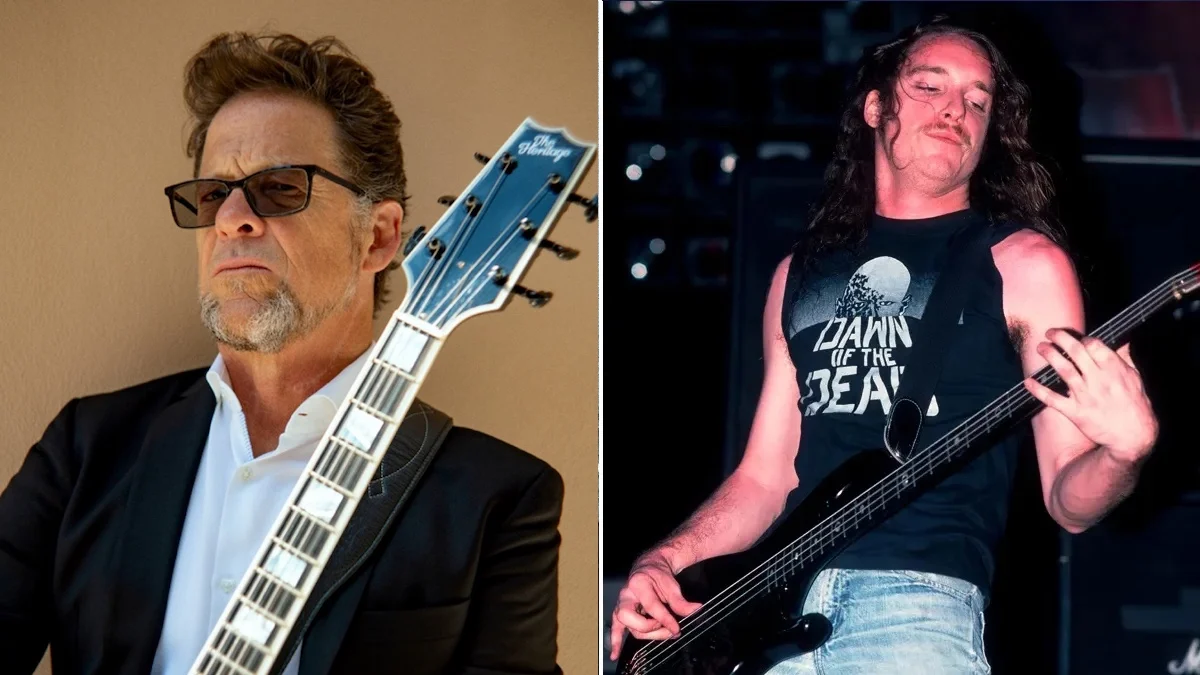
Four decades later, the seismic impact of his musicianship, his unique compositional style, and his unmistakable personality continue to reverberate through the heavy metal landscape. To commemorate the anniversary, Heavy Consequence sat down with Jason Newsted—the musician who faced the monumental and unenviable task of stepping into Burton’s shoes following the tragedy.
Newsted offered a candid, awe-struck retrospective on Burton’s natural brilliance, comparing the late bassist’s innate abilities to musical contemporaries like Primus frontman Les Claypool and marveling at how James Hetfield and Lars Ulrich uprooted their lives simply to play with a teenage prodigy. While Metallica has continued its march through heavy metal history—currently featuring long-standing bassist Robert Trujillo and preparing for a landmark residency at the Las Vegas Sphere—the metal community pauses once more to honor the foundational architect of the thrash metal low-end.
Chronology: The Rise, Tragic Fall, and Eternal Legacy of Cliff Burton
To understand the weight of Jason Newsted’s reflections, one must trace the meteoric, albeit tragically brief, trajectory of Clifford Lee Burton. Born on February 2, 1962, in San Castro, California, Burton was introduced to music early, studying classical piano before pivoting to the bass guitar at age 13 following the death of his brother. Fuelled by a relentless work ethic, Burton practiced up to six hours a day, fusing heavy metal, classical music, and jazz fusion into a style that had never been heard before.
1982–1986: The Metallica Years
Burton joined Metallica in late 1982, replacing original bassist Ron McGovney. Crucially, Burton refused to relocate from the Bay Area to Los Angeles with Hetfield and Ulrich. Recognizing his once-in-a-generation talent, Hetfield and Ulrich packed up their lives and moved to San Francisco just to secure him for the band.
With Burton in the fold, Metallica crafted a holy trinity of thrash metal masterpieces:
- Kill ’Em All (1983): Though much of the album was written prior to his arrival, Burton’s ferocious solo track, "(Anesthesia) — Pulling Teeth," introduced the world to his revolutionary use of distortion, wah-wah pedals, and classical phrasing.
- Ride the Lightning (1984): Burton showcased his soaring melodic capabilities and songwriting prowess on tracks like "For Whom the Bell Tolls" and the instrumental masterpiece "The Call of Ktulu."
- Master of Puppets (1986): Widely regarded as one of the greatest heavy metal albums ever recorded, the record cemented Burton’s status as an avant-garde composer. His menacing bass intro to "Orion" and the crushing title track stand as monuments to his genius.
The September 26–27, 1986 Tragedy
While touring Sweden in support of Master of Puppets, Metallica played their final show with Burton in Stockholm on September 26. In the early hours of September 27, their tour bus skidded off an icy road and flipped over. Burton was thrown through the window and crushed by the vehicle. He was just 24 years old.
The Successors and Beyond
Following Burton’s death, Metallica held auditions, ultimately bringing in Jason Newsted in late 1986. Newsted endured a notoriously difficult trial period marked by hazing and grief from the band and fanbase alike, anchoring the low-end through Metallica’s peak commercial eras (…And Justice for All, the Black Album, Load, and Reload) until his departure in 2001. Robert Trujillo took over bass duties in 2003, maintaining the post to this day. Yet, 40 years later, Burton’s shadow looms larger than ever over the thrash metal institution.
Supporting Data: Natural Prodigy vs. The Work Ethic
During his interview with Heavy Consequence, Jason Newsted provided deep psychological and technical insights into what made Cliff Burton an untouchable force in modern music. Rather than speaking out of professional obligation, Newsted’s words dripped with a mixture of reverent admiration and the lingering humility of a successor who spent years trying to scale an impossible peak.
"Cliff could wake up and do it," Newsted remarked, contrasting Burton’s effortless genius with the grueling realities of life on the road. "James [Hetfield] could wake up after how many ever beers and do it. Just wake up 10 minutes out of bed and play as good as I could after working for five hours to get to that spot."
Newsted went on to compare Burton’s terrifyingly early mastery to another legendary Bay Area virtuoso, Primus bassist Les Claypool (who was actually childhood friends with Burton and briefly considered for Metallica following Burton’s death).
"By the time [Burton’s] 16, 17, pretty, pretty goddamn good already. Same as Les… They’re the same age and the same deal and live some miles from each other, same trip, both those cats in that way. By the time they’re 17… they are… already there."
This innate, preternatural talent is precisely what drove Hetfield and Ulrich to uproot their lives in Los Angeles. As Newsted noted, Metallica’s founders "recognized it so strongly that they moved their lives to be just in a band with the guy before they even made a fucking record… He was that fucking good."
For Newsted, watching Burton perform live shortly before his death was a humbling, almost paralyzing experience:
"From a bassist fan player person, I saw him play in 1985… a year and a little bit before he died… It was like, why do you even fucking bother? Here’s the firewood. Let me get that for you. Maybe if I try really hard, I could be a tenth of as good as that… I think ultimately it was inspiring, and made me want to try harder, but it was intimidating as fuck the whole time."
Official Responses and Reflections
The 40th anniversary has sparked an outpouring of grief, gratitude, and remembrance from across the rock and metal community.
Metallica’s official channels, along with founding members James Hetfield and Lars Ulrich, have consistently kept Burton’s memory alive through archival footage, commemorative merchandise, and live tributes. Hetfield has often spoken of how Burton introduced the band to classical music, harmony theory, and literature, effectively steering Metallica away from standard, one-dimensional punk-metal into realms of artistic sophistication.
Meanwhile, Jason Newsted’s public reflections have resonated deeply with fans who lived through the transition eras of the band. Rather than harboring bitterness regarding the impossible standards set by the fanbase—who infamously buried the bass frequencies on Newsted’s debut studio album, …And Justice for All—Newsted has consistently championed Burton’s legacy.
"I think that what I like the most or what I really appreciate is how everyone continues to show such respect for his efforts," Newsted said of the global fan base’s four-decade-long devotion, "because they were so fantastical in his brief span."
Current bassist Robert Trujillo has also been instrumental in honoring his predecessor. Trujillo, a ferocious finger-style player in his own right, frequently incorporates nods to Burton’s iconic bass solos—such as "(Anesthesia) — Pulling Teeth"—into his live interludes, ensuring that younger generations of Metallica fans understand the lineage of the instrument.
Implications: Metallica Today and the Immortal Echo of Cliff Burton
As Metallica moves deeper into the 2020s, the band continues to balance modern innovation with deep-rooted historical reverence. Four decades after losing their creative compass, Hetfield, Ulrich, and guitarist Kirk Hammett remain global titans of rock.
The band is currently gearing up for a monumental stretch of performances. This Thursday, October 1st, Metallica is set to launch their heavily anticipated "Life Burns Faster" residency at the cutting-edge Las Vegas Sphere—a technological marvel that promises to redefine live rock production. Following the residency, the band will embark on a brand-new North American leg of their career-spanning "M72 World Tour" throughout 2027, continuing a touring schedule that defies their decades-long tenure.
Yet, despite the futuristic production of the Las Vegas Sphere and the massive stadiums of the M72 tour, the ghost of Cliff Burton remains the bedrock upon which Metallica’s empire is built. Every time Trujillo steps onto the stage and slaps the distortion pedal for an instrumental breakdown, every time Hetfield plays a riff informed by Burton’s harmonic teachings, and every time a young bassist picks up a four-string to try and master the intro to "Orion," Burton’s legacy lives on.
Jason Newsted’s reflections 40 years later remind us that true artistry transcends time. Cliff Burton may have only lived 24 years, but the notes he left behind are timeless, echoing powerfully across the heavy metal cosmos four decades on.
 Nana Wu
