

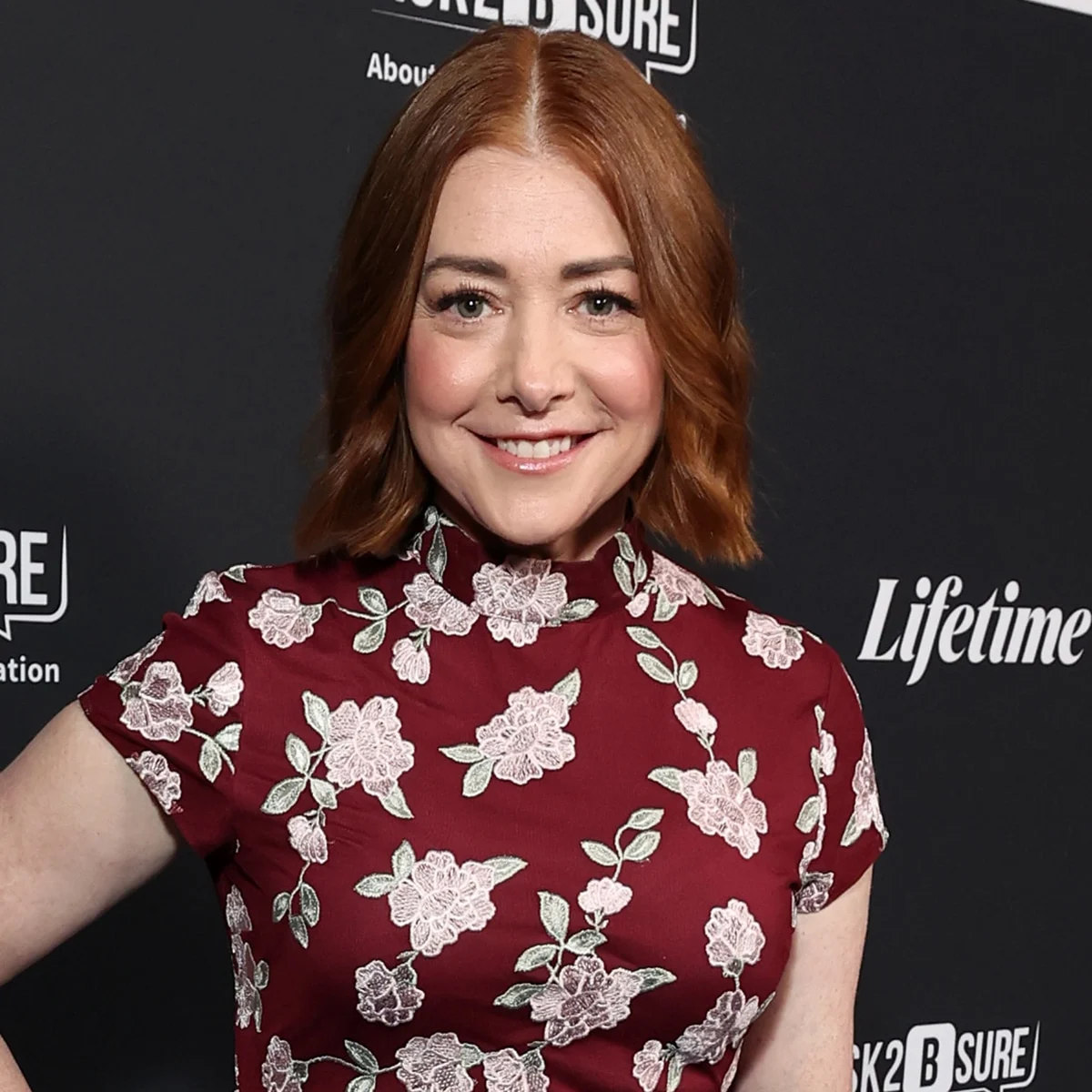
In the world of high-profile celebrity culture, the public has always been fascinated by the concept of "mini-mes"—the phenomenon where the offspring of A-list stars mirror their parents with such startling accuracy that they appear to be carbon copies. This cultural obsession was recently reignited when How I Met Your Mother star Alyson Hannigan shared a candid selfie with her 14-year-old daughter, Keeva, sparking a viral conversation about the power of genetics and the surreal nature of watching the next generation step into the spotlight.
The Viral Moment: Alyson Hannigan and the "Legendary" Resemblance
On September 26, 2024, Alyson Hannigan took to Instagram to share a joyous outing with her daughter at a Jellycat pop-up shop in Los Angeles. The image, which quickly garnered widespread attention, showcased the undeniable physical bond between the 52-year-old actress and her teenager. Both sporting vibrant red hair and similar middle-part styling, the pair looked less like mother and daughter and more like siblings.
The reaction from fans was immediate and hyperbolic. Commenters flooded the post with comparisons, noting that Hannigan’s husband, actor Alexis Denisof, seemed to have been entirely left out of the genetic equation. "That’s your exact twin," one follower remarked, while another quipped, "I only see two Alysons."
For Hannigan, who also shares 17-year-old daughter Satyana with Denisof, this is a recurring theme. The actress has previously noted that her daughters are now reaching the age where they can truly appreciate the resemblance by looking back at her earlier career. In an interview with People magazine, Hannigan remarked, "I think what’s amusing to my daughters is that because people always come up to them and they’re like, ‘Oh, you look just like your mom,’ now they actually have the proof. They can see footage of me at their age."
Beyond Physicality: Shared Talents and Artistic Expressions
While the internet focuses on the visual likeness, the bond between Hannigan and her daughters extends into shared interests and creative collaboration. In the same Instagram update, Hannigan highlighted her daughter Satyana’s burgeoning artistic talent, specifically praising her for creating a custom, Jellycat-themed manicure for their outing.
"Had the BEST time," Hannigan captioned the post. "We had so much fun and I could not be more grateful for this custom Jellycat manicure by my daughter @satyana_art." This highlights a broader trend among celebrity families: the transition from "mini-me" status to independent creative engagement, where children of famous figures begin to carve out their own niches in art, fashion, and social media.
Chronology of Celebrity Twinning: A Cultural Phenomenon
The fascination with lookalike children is not a modern invention, but it has certainly been amplified by the rise of social media, where high-definition selfies provide constant, intimate windows into the lives of Hollywood royalty.
The Evolution of the "Mini-Me"
Historically, the public relied on paparazzi shots to compare the features of children to their parents. Today, celebrities curate their own narratives. Figures like Demi Moore and her daughter Rumer Willis have long been lauded for their striking similarities. As far back as 2015, Rumer posted an image of herself and her mother, joking, "That moment when you realize you actually are becoming your mother #twinning #imnotmad."
Generational Transitions
In other instances, the resemblance serves as a roadmap for career paths. Cindy Crawford and her daughter, Kaia Gerber, represent one of the most successful examples of this phenomenon. Kaia, who has risen to the top of the fashion industry, has reached a point where she finds the resemblance disorienting. "It used to be that I didn’t see it at all," Kaia admitted, "but now I will look at a picture and have to take a moment before realizing which one of us it is."
Supporting Data: The Genetics of Fame
Genetic inheritance in the public eye often follows distinct patterns. When we analyze the list of celebrities whose children mirror them, we see two distinct categories: the "visual carbon copy" and the "stylistic successor."
- The Visual Carbon Copy: These are pairings where bone structure, hair color, and eye shape align perfectly. Examples include Reese Witherspoon and Ava Phillippe, Kim Zolciak and Brielle Bierman, and Katie Holmes and Suri Cruise. In these cases, the resemblance is often so strong that fans use the term "twin" as a shorthand for the biological reality.
- The Stylistic Successor: This category involves children who adopt their parents’ aesthetics or professional leanings. This is evident in the careers of Scott Eastwood, who has followed his father Clint Eastwood into action cinema, and Lila Moss, who has walked the same runways as her mother, Kate Moss.
Official Responses and Public Sentiment
The discourse surrounding these images often invites commentary on the nature of identity. Psychologists suggest that the "mini-me" phenomenon is a way for the public to feel a sense of continuity regarding the stars they grew up with. When a fan sees Alyson Hannigan’s daughter, they are not just seeing a child; they are seeing a younger version of the "Buffy the Vampire Slayer" star, effectively bridging the gap between the 1990s and the 2020s.
Celebrities themselves often embrace this narrative. By engaging with these comparisons on social media, stars like Hannigan, Witherspoon, and Moore humanize their public personas. It transforms the pedestal-bound celebrity into a relatable parent navigating the joys and ironies of raising a child who is, in essence, a younger reflection of themselves.
Implications: The Impact of Visibility on the Next Generation
As these children grow into adulthood, the implications of being a "celebrity lookalike" are complex. For some, like Zoë Kravitz—who bears a striking resemblance to her mother, Lisa Bonet—the focus on appearance can be a hurdle to overcome in establishing an individual artistic identity. However, for others, it serves as a bridge to industry entry.
The Role of Social Media
The rise of platforms like Instagram and TikTok has shifted the power dynamic. Children of celebrities are no longer passive subjects of media speculation; they are active participants. Satyana’s ability to create a custom manicure for her mother and document it on social media is a perfect example of how the "mini-me" dynamic is evolving into a collaborative, brand-building activity.
The Psychological Aspect
There is also the psychological impact on the teenagers themselves. While it may be fun to be compared to a famous parent, it can also lead to a pressure to perform or look a certain way. However, as evidenced by the lighthearted nature of these posts, most celebrity families seem to be navigating this with humor, viewing the genetic repetition as a shared, amusing family trait rather than a burden.
Conclusion: A Legacy of Likeness
The story of Alyson Hannigan and Keeva Denisof is more than just a viral moment; it is a testament to the enduring curiosity the public holds for the lineages of their favorite stars. Whether it is the red hair that links Hannigan to her daughter or the fashion-forward runways that connect Kate Moss to Lila, these resemblances serve as a visual narrative of growth and time.
As these "mini-mes" continue to mature, the world will undoubtedly keep watching, eager to see how they navigate the paths paved by their parents while carving out their own unique identities in an increasingly digital and image-conscious society. For now, the "legendary" resemblance remains a delightful highlight in the ongoing, ever-changing story of Hollywood’s most famous families.
 Lina Hope
 Raul Delapena Setiawan
 Nana Wu
