

By Editorial Staff
Editor’s note: This review was originally published on May 16, 2026, following its world premiere at the 2026 Cannes Film Festival. Kino Lorber will release the film in theaters nationwide on Friday, October 2.
In the crowded landscape of contemporary war cinema, it is rare to find a film that eschews the spectacle of the battlefield to focus entirely on the tectonic shifts in the human psyche. Reed Van Dyk’s directorial feature debut, Atonement, is precisely that rarity. Adapting Dexter Filkins’ haunting 2012 New Yorker article, "Atonement After Iraq," Van Dyk has crafted a film that feels less like a historical reenactment and more like a clinical, deeply empathetic study of the long-term trauma inflicted by U.S. imperial policy.
The film operates with the emotional acuity of a life-changing therapist. It is not interested in the tactical movements of armies or the strategic maneuvering of politicians; rather, it is obsessed with the "after"—the decades of silence, the weight of a trigger pull, and the insurmountable grief of those left in the wake of military incursions.
The Architecture of a Tragedy: The Baghdad Opening
The film’s narrative is tightly coiled around a singular, horrific event: a shooting in the Baladiyat district of Baghdad on April 8, 2003. Van Dyk structures the film so that every scene serves as either a precursor to or a repercussion of this moment. By narrowing the aperture, the film avoids the bloat often found in war epics, instead creating an intimate, claustrophobic portrait of lives derailed by a single, catastrophic afternoon.

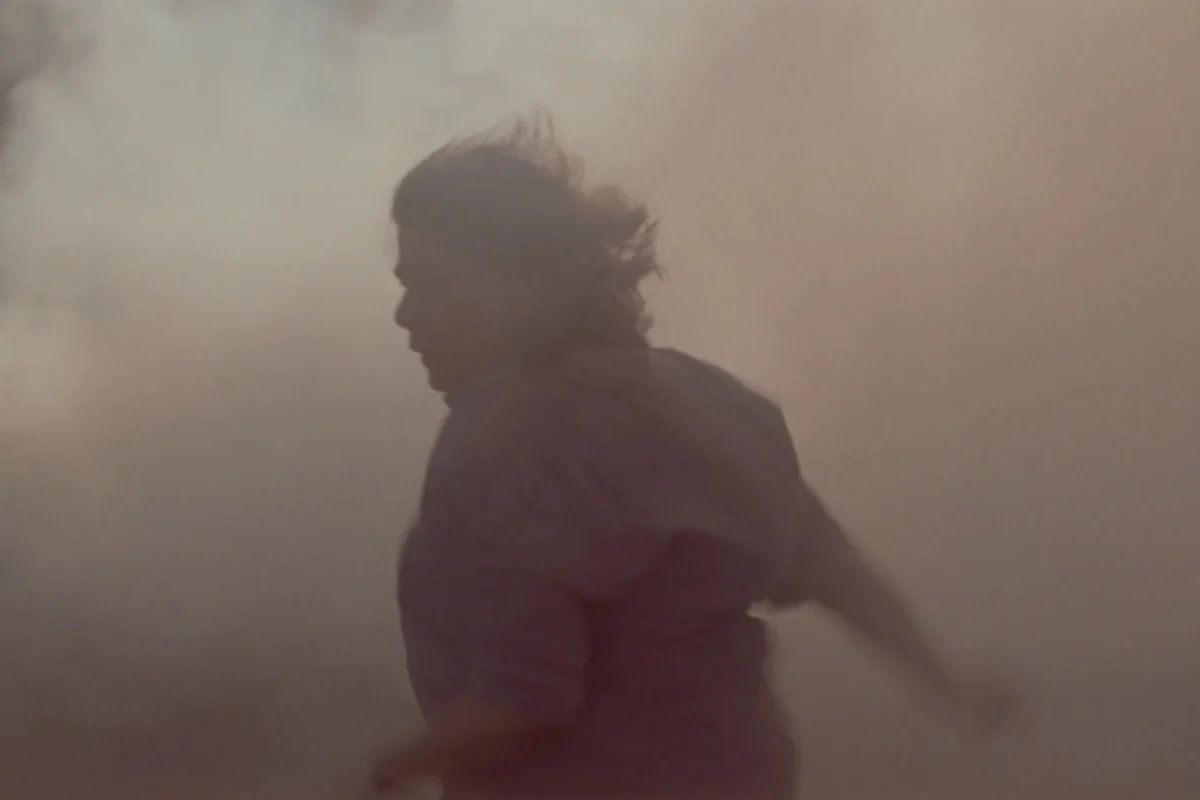
The opening act is a masterclass in tension. We are introduced to the Khachaturian family—a Christian-Armenian Iraqi clan—through the lens of domestic normalcy. The scene is set in a home where three generations are preparing a meal. The sounds of war are distant but pervasive; electricity flickers, water is scarce, and the television blares Saddam Hussein’s desperate, bombastic rhetoric. Yet, the family clings to the rituals of daily life. Mariam Khachaturian, portrayed with breathtaking, statuesque dignity by Hiam Abbass, acts as the family’s emotional anchor.
Abbass, a performer who carries the weight of history in every movement, imbues Mariam with a self-possessed, godly composure. When the violence finally erupts, it is not shown as a grand cinematic set piece. It is sudden, chaotic, and terrifyingly final. The contrast between the mundane act of eating cherries and the subsequent, world-ending silence of a blast creates a visceral reaction in the audience. It is a sequence that demands the viewer hold their breath, a testament to Van Dyk’s restraint.
Chronology: From the Rubble of Baghdad to the Streets of Los Angeles
The film’s second act performs a jarring, necessary transition. We shift from the dusty, sun-bleached tension of occupied Iraq to the sterile, muted despair of Los Angeles, a decade later. We follow Lou (Boyd Holbrook), a U.S. Marine who was part of the unit responsible for the Baladiyat incident.
This is where Van Dyk takes his greatest risk. To ask an audience to empathize with a man who has caused such unimaginable suffering is a high-wire act of storytelling. Holbrook plays Lou as a man physically and mentally eroded by his own memories. His posture is a constant slouch, his clothes are perpetually disheveled, and he moves through his life with the hollowed-out expression of a man who has never truly returned home.
His struggle is mirrored in his relationship with his partner, Anna (played with exquisite nuance by Gratiela Brancusi). In a standout scene at a veterans’ support group, Anna articulates the film’s central thesis: "When a bullet is fired, it shoots both ways." This acknowledgment that the occupier is also a casualty of his own actions—though not in the same physical sense as the victims—adds a layer of complexity that keeps the film from descending into jingoism or simple moralizing.

Supporting Data: The Intersection of Fact and Fiction
The film’s authenticity is bolstered by the presence of a fictionalized surrogate for the journalist Dexter Filkins: Michael Reid, played by a subtle and understated Kenneth Branagh. Reid serves as the narrative bridge. His investigative work allows the disparate threads of the story to converge.
When Lou eventually discovers the story of the Khachaturians through Reid’s reporting, the film transitions into its final, quiet movement. There is no Hollywood-style reconciliation here. There is no grand apology that fixes the broken past. Instead, Van Dyk presents the meeting between the perpetrator and the survivor as a series of stilted, agonizing silences and brief, flickering moments of human connection. It is a reminder that some wounds are too deep to be "atoned" for in any traditional sense.
Official Responses and Thematic Implications
While the film has garnered significant praise for its performances, particularly from Hiam Abbass, it has also sparked discourse regarding the "White Savior" tropes often associated with American war films. However, Atonement largely manages to avoid these pitfalls by refusing to make Lou the hero of his own story. The camera lingers on his failure, his inadequacy, and his inability to offer any real solace to Mariam.
The implication of the film is clear: the violence of the 2003 invasion was not a discrete event that ended when the troops left. It is a living, breathing entity that continues to exist in the homes of those who were attacked and the minds of those who pulled the triggers. By positioning Hiam Abbass’s Mariam as the moral center, the film ensures that the Palestinian and Iraqi experience of displacement and loss remains the primary focus. Abbass, drawing on her own history and her recent work in Bye Bye Tiberias, brings an authenticity to the screen that is both painful and profound.
Conclusion: A Garden Beyond Right and Wrong
Atonement concludes with a scene that feels like a quiet prayer. There is no resolution, only a state of being. As the credits roll, one is reminded of the Rumi quote that seems to serve as the film’s spiritual compass: "Somewhere beyond right and wrong, there is a garden, I will meet you there."

Van Dyk has not made a film about forgiveness, but a film about the shared, inescapable reality of trauma. He suggests that the only way forward, for a nation and for individuals, is to sit with the ghosts of the past rather than trying to exorcise them.
For its bold pacing, its refusal to provide easy answers, and the monumental performance of Hiam Abbass, Atonement stands as one of the most important cinematic explorations of the Iraq War to date. It is a film that does not just ask the viewer to witness history; it demands they feel the cost of it.
Grade: A-
Technical Specifications
- Director: Reed Van Dyk
- Starring: Hiam Abbass, Boyd Holbrook, Gratiela Brancusi, Kenneth Branagh
- Release Date: October 2, 2026
- Distributor: Kino Lorber
- Festival Premiere: 2026 Cannes Film Festival (Directors’ Fortnight)
 Lina Hope
 Azzam Bilal Chamdy
