

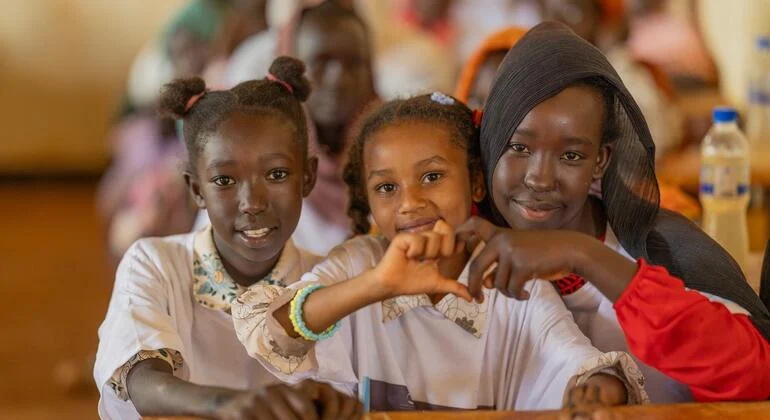
For millions of children displaced by the unrelenting tides of war, persecution, and violence, the classroom is more than a building—it is a sanctuary. It represents the thin line between a future defined by agency and a life restricted by the shadows of displacement. Yet, for 5.8 million refugee children worldwide, that sanctuary is currently under threat. As funding cuts loom over global humanitarian budgets, the hard-won progress of the last decade faces a potential reversal, leaving a generation of young people at a crossroads.
The State of Global Refugee Education: Main Facts
As of 2025, the global refugee population includes approximately 13.1 million school-age children. While international efforts have historically aimed to provide universal access to education, the current landscape is precarious. Nearly half of these children—5.8 million—remain entirely out of school.
The crisis is not uniform; it is characterized by a "leaky pipeline." While primary school enrollment rates remain relatively stable due to global initiatives, the transition to secondary and tertiary education acts as a massive barrier. According to recent data from the United Nations High Commissioner for Refugees (UNHCR), only 32% of refugee children are enrolled in high school, a stark drop from the 65% enrollment rate at the primary level.
Furthermore, foundational learning remains a critical gap. Two out of every three refugee children arrive at primary school without the necessary literacy or numeracy skills to succeed, often due to fragmented schooling, trauma, or years of interruption caused by flight. Without immediate intervention and consistent financial support, these gaps threaten to solidify into a permanent lack of opportunity.
A Chronology of Progress and Setbacks
The trajectory of refugee education over the last decade has been a story of resilience pitted against systemic volatility.
- 2015–2019: The Era of Awareness. Global attention turned toward the "lost generation" of Syrian refugees, sparking a push to integrate refugees into national education systems rather than relying on parallel, segregated "refugee-only" schools.
- 2020–2022: The Pandemic Disruption. COVID-19 dealt a massive blow to education worldwide. For refugees, the digital divide proved catastrophic, as remote learning was often inaccessible due to lack of internet, devices, and electricity in host communities.
- 2023–2024: The Funding Crunch. As global geopolitical tensions rose and humanitarian budgets were stretched thin by multiple simultaneous conflicts, education funding became the first item to face the chopping block.
- 2025: The Current Threshold. The UN refugee agency warns that 2025 marks a pivotal moment. With enrollment in higher education reaching a record 11%—a glimmer of success—the threat of funding cuts now risks dismantling the very infrastructure that enabled this growth.
Supporting Data: The Disparity of Access
The data reveals a deeply unequal landscape that favors those in stable economies while penalizing those in low-income, conflict-affected regions.
The Secondary Education Cliff
The disparity between primary and secondary education is arguably the most significant hurdle. As students age, the barriers to attendance multiply. For adolescent girls, in particular, the risks of poverty, early marriage, and safety concerns often necessitate leaving the classroom to help support their families.
The 15×30 Pledge: A Beacon of Hope
Despite the bleak statistics, there is a clear roadmap for success. The UNHCR’s "15×30 pledge"—an initiative aimed at ensuring 15% of refugee youth have access to higher education by the year 2030—is showing tangible results. In 2025, university and vocational enrollment hit an all-time high of 11%, with over 450,000 students participating. This progress serves as a vital proof-of-concept: when the investment is sustained, the outcomes are transformative.
The National Average Gap
The report highlights that in over 80% of countries hosting refugees, enrollment rates remain below the national average. In the most vulnerable, low-income settings, only 2% of refugees access higher education, compared to 13% of their host-country peers. This 11-point deficit is a metric of exclusion that the international community has yet to resolve.
Official Responses and Strategic Visions
The call for action is urgent and multifaceted. UN High Commissioner for Refugees Barham Salih, a former refugee from Iraq, has become the leading voice in warning against the current trajectory.
"At a time of severe pressure on humanitarian and development financing, cuts to education risk reversing decades of collective investment and closing opportunities for a generation of young people," Salih stated.
The UNHCR’s strategy has shifted from short-term emergency schooling to a long-term integration model. The agency is calling for:
- Systemic Investment: Strengthening national education systems by upgrading teacher training, building classrooms, and procuring high-quality learning materials.
- Host-Community Benefit: Ensuring that investment in schools benefits both refugees and the local populations hosting them, thereby reducing social friction and fostering integration.
- Financial Safeguarding: Urging development partners to protect education budgets from being diverted to immediate, short-term emergency relief.
The Human Element: Resilience in the Face of Adversity
Statistics, while necessary, often obscure the individual lives at stake. Jamila Mostafa, a 19-year-old from Sudan, is one of the millions whose future hangs in the balance. Currently living in Egypt, she continues her high school education through UNHCR-backed support.
"When we left Sudan, I was worried that my education would stop," Jamila says. Despite the trauma of fleeing war, she has cultivated a fascination with artificial intelligence, hoping to use technology to address the socio-economic challenges of her community. "School gives me confidence," she notes. "It reminds me that even though I lost my home because of the war, I have not lost my dreams."
Similarly, Faiza Qudrati, an Afghan student who grew up in Kazakhstan, credits higher education for her ability to build a career in psychology. "For me, higher education gives me a chance to grow, learn, and one day help other people in the same way that support was once provided to me," she explains. Her trajectory demonstrates the "ripple effect" of education: an educated refugee does not just escape poverty; they become a pillar for their community.
Implications: The High Cost of Inaction
The implications of failing to fund refugee education extend far beyond the individual. When millions of young people are denied the chance to gain qualifications and professional skills, the global economy loses potential innovators, caregivers, and leaders.
Furthermore, the lack of education serves as a recruitment tool for instability. Without the structure and hope that school provides, adolescents are more vulnerable to radicalization, exploitation, and cycles of chronic poverty. The "lost generation" is not a metaphor; it is a policy outcome.
Conclusion: A Moral and Economic Imperative
Education is the most powerful tool for self-reliance. It is the mechanism by which a refugee transitions from a recipient of aid to a contributor to their new society. As the international community debates the priorities of the coming years, the message from the UNHCR and the students themselves is clear: education is not a luxury to be trimmed when budgets are tight—it is an essential investment in global stability.
"Education gives young people the tools to shape their own future," Commissioner Salih reminded the international community. "Our responsibility is to make sure they have that chance."
If the world fails to safeguard these dreams, the cost will not be measured in dollars, but in the lost potential of millions who, like Jamila and Faiza, are simply waiting for the opportunity to contribute to a world that has already taken so much from them.
 Nana Muazin
 Suro Senen
 Nila Kartika Wati
