

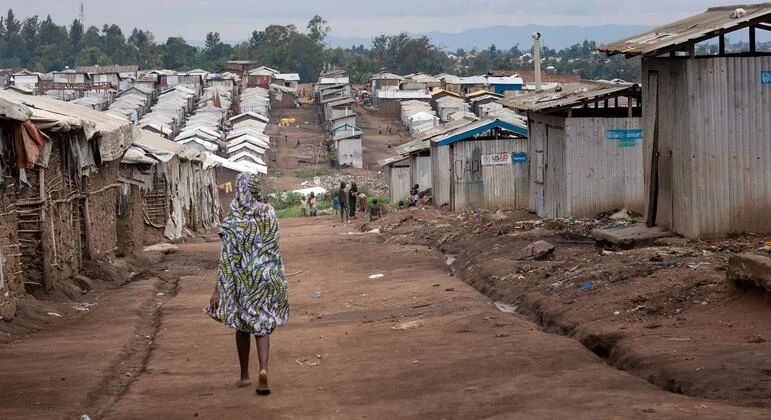
The humanitarian landscape in the Democratic Republic of the Congo (DRC) has deteriorated sharply this week, as a devastating fire consumed a critical Ebola transit centre in the Kigonze displacement camp. This incident marks a significant setback in the nation’s battle against its 17th, and most lethal, Ebola outbreak. As armed conflict continues to displace thousands across the resource-rich eastern provinces, the convergence of infectious disease and civil unrest is creating a "perfect storm" that threatens to undo months of painstaking medical and logistical progress.
The Burning of Hope: A Strategic Loss
The destruction of the Kigonze transit facility is not merely a loss of infrastructure; it is a clinical catastrophe. Julien Harneis, the UN’s senior Ebola response official in the DRC, expressed deep dismay over the blaze, noting that the Kigonze camp—which once provided a semblance of safety for 19,000 civilians fleeing regional violence—has now been entirely abandoned.
"It’s been a huge struggle to create these Ebola transit and treatment centres; it has required significant capital, the deployment of specialized staff, and an arduous effort across the east," Mr. Harneis stated in an interview with UN News. "When we lose a centre, we lose capacity, we lose investment, and we are forced to start from square one. Above all, it means that vulnerable people are denied the life-saving care they desperately need."
The fire occurred following reports of a military incursion into the camp, with soldiers allegedly searching for weaponry and suspected members of non-State armed groups. The presence of gunfire and the subsequent mass exodus of the camp’s population have rendered the area a "no-go" zone for medical teams, further isolating communities from the regional health network.
Chronology of a Collapsing Front
The current crisis is the culmination of months of mounting instability. The following timeline outlines the rapid decline of regional security and its direct impact on the public health response:
- Mid-May: The government officially declares the 17th Ebola outbreak, which has since spread across seven provinces, including Ituri, North Kivu, and South Kivu.
- Late September: Violence intensifies in the Ituri province. On September 27, clashes at the Rhoe displacement camp trigger the flight of over 3,000 people. At least four individuals are killed and seven injured in the surrounding area of Blukwa.
- September 27–28: In North Kivu, two dedicated Ebola response workers are killed in the Lubero region, highlighting the extreme dangers faced by medical personnel on the front lines.
- Late September/Early October: The Kigonze transit centre is destroyed by fire, forcing the total abandonment of the site.
- Ongoing: Persistent insecurity in the Masisi territory has forced over 24,000 people from their homes since mid-September, placing immense pressure on already overstretched humanitarian resources.
Supporting Data: The Scale of the Emergency
The statistics surrounding the current outbreak are harrowing, marking this as the largest and deadliest Ebola emergency in the history of the DRC, surpassing even the widely publicized 2018–2020 crisis.
- Human Toll: Over 8,000 laboratory-confirmed cases have been recorded, with the death toll currently standing at 4,000.
- Geographic Spread: The virus has infiltrated seven provinces: Bas-Uele, Haut-Uele, Ituri, North Kivu, South Kivu, South Ubangi, and Tshopo.
- Ituri Epicentre: The city of Bunia and the surrounding Mongbwalu area remain the epicentre of the outbreak. In the Mongala health region alone, 346 cases and 149 deaths have been confirmed since May.
- Resource Gap: While the World Health Organization (WHO) has successfully scaled up the number of mobile safe and dignified burial teams from 53 to 114, the clinical sector faces a critical personnel shortage. To fully operate the planned 1,800-bed network across 54 facilities, health officials estimate that an additional 1,400 specialized health professionals are urgently required.
Official Responses and Humanitarian Appeals
The United Nations Office for the Coordination of Humanitarian Affairs (OCHA) and the World Health Organization (WHO) have issued urgent calls to all parties involved in the conflict to respect the neutrality of medical facilities and the safety of displaced civilians.
The WHO has emphasized that the current strategy must be twofold: "Where transmission remains intense, we need to increase capacity to halt the pace of infections. And in emerging hotspots, we need to intervene quickly to stop the virus from taking hold."
Dr. Stéphane Mutombo, an anaesthesiologist and head of the clinical component for the DRC’s Ministry of Health, underscored the necessity of this rapid response. "Increasing capacity allows us to admit more patients under better conditions and reduce delays. Rapid isolation and treatment of cases is essential to breaking the chain of transmission," he noted.
Despite these goals, the reality on the ground is stark. In many areas, the transport of laboratory samples has been halted due to road blockades and the threat of ambush. The transfer of confirmed patients to regional centres, such as those in Nizi or Bunia, has become a logistical gamble, as some aid organizations have been forced to suspend operations entirely to protect their staff.
Implications: A Looming Regional Threat
The implications of the current situation extend far beyond the immediate health crisis. The interaction between the Bundibugyo virus and the ongoing civil conflict in the eastern DRC mirrors the conditions of the 2014–2016 epidemic in West Africa—the only outbreak in history more deadly than the current one.
The Security-Health Nexus
The destruction of the Kigonze centre serves as a grim reminder that health initiatives cannot function in a security vacuum. When humanitarian actors are forced to retreat, the virus does not follow suit; rather, it thrives in the shadows of displaced populations and crumbling infrastructure. The displacement of thousands of civilians creates ideal conditions for rapid viral transmission, as overcrowded and under-resourced camps become breeding grounds for the disease.
Long-term Economic and Social Costs
The loss of medical infrastructure in the resource-rich east is also likely to have long-term economic consequences for the DRC. The disruption of health services, coupled with the flight of essential workers, threatens to destabilize local economies that are already reeling from years of conflict. If the outbreak is not contained, the potential for it to cross borders remains a significant concern for regional health authorities.
A Call to Action
The international community faces a critical juncture. The DRC requires more than just medical supplies; it requires a coordinated approach that integrates peacekeeping with public health. Safeguarding displacement camps and ensuring "humanitarian corridors" are not merely procedural suggestions, but absolute requirements for the survival of the population.
As the UN continues to monitor the situation, the message remains clear: unless the parties to the conflict prioritize the protection of civilians and the preservation of health infrastructure, the death toll from this outbreak is likely to climb higher. The resilience of the Congolese people, and the bravery of the health workers who continue to operate under fire, remain the only barriers between this crisis and a full-scale national catastrophe.
With the epidemic showing no signs of slowing down, the global health community must mobilize further support, ensuring that the necessary human capital—the 1,400 professionals currently missing from the response—is recruited and deployed before the window for containment closes entirely.
 Lina Hope
 Asro
Asro
 Layla Zulfa
