

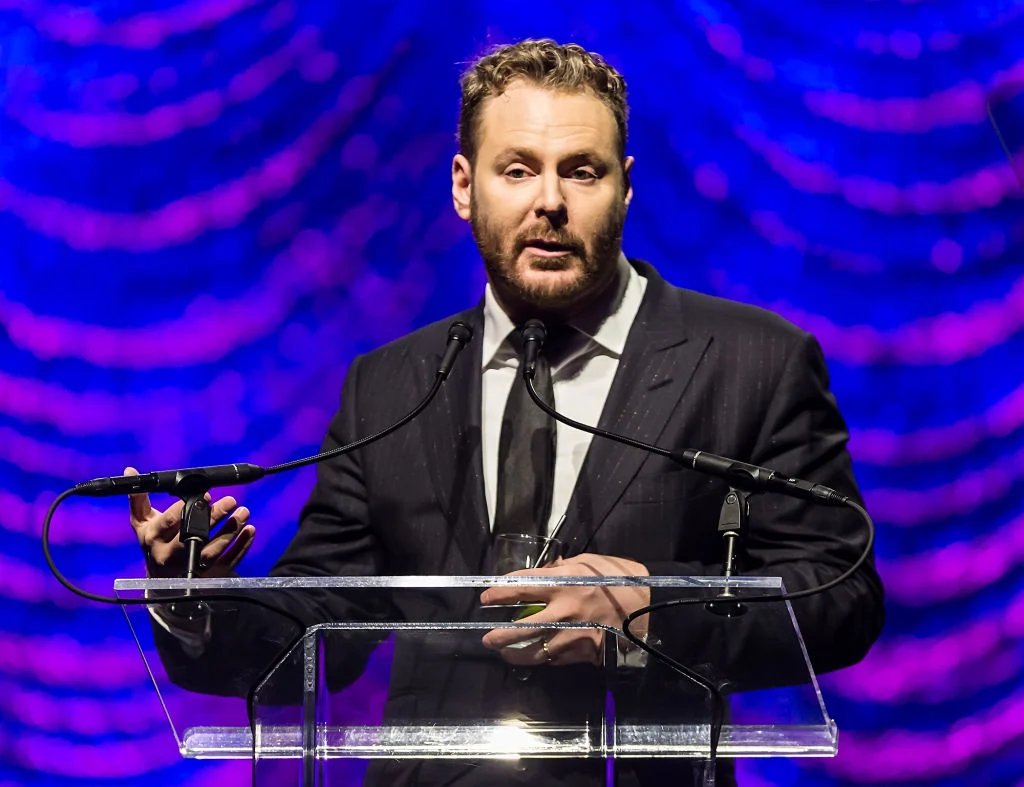
Published: October 2, 2026
Author: Tech & Media Desk
Main Facts
Tech billionaire and entrepreneur Sean Parker is making a dramatic return to the music industry, more than two decades after he upended the sector as the co-founder of the peer-to-peer file-sharing pioneer Napster. However, this time, the narrative is entirely different. Rather than embracing the disruptive ethos of "ask for forgiveness, not permission" that defined his early career—a strategy that ultimately led to Napster’s legal dismantling in the early 2000s—Parker is positioning himself as a champion of legal compliance and industry collaboration.
Parker’s current vehicle is Stability AI, the generative artificial intelligence startup best known for its Stable Diffusion image generator. Following a tumultuous period marked by internal conflict and near-collapse, Stability AI was rescued two years ago through an $80 million injection. Today, under the leadership of CEO Prem Akkaraju—a longtime friend and collaborator of Parker—the company is pivoting aggressively toward the lucrative and legally fraught domain of AI-generated music.
The core developments defining this new chapter include:
- Major Label Partnerships: In late August 2026, Stability AI secured $76 million in fresh funding from industry heavyweights, including Sony Music Entertainment, Warner Music Group, and Universal Music Group. Crucially, this funding round was paired with licensing agreements granting Stability AI legal access to train its models on the major labels’ vast copyrighted music catalogs.
- New Audio Offerings: Stability AI has officially rolled out three advanced audio models alongside dedicated AI music-editing software. These tools allow creators to generate complete instrumental tracks or short musical snippets using simple text prompts.
- Interactive AI Features: Demonstrating the roadmap for upcoming iterations, Parker revealed that future updates will introduce intuitive input methods, allowing users to hum melodies or beatbox drum patterns to directly guide and shape the AI’s output.
Chronology: From Napster’s Downfall to Stability AI’s Resurgence
To understand the weight of Sean Parker’s latest venture, it is necessary to retrace a trajectory spanning over two decades of digital media evolution.
The Napster Era (1999–2001)
At just 19 years old, Sean Parker co-founded Napster alongside Shawn Fanning. The software revolutionized how humans consumed music by enabling decentralized peer-to-peer sharing of MP3 files. While immensely popular among consumers, the platform bypassed traditional licensing and royalty structures, triggering aggressive legal action from the Recording Industry Association of America (RIAA) and major rock acts like Metallica. The ensuing copyright lawsuits dealt a fatal blow to the company, resulting in its bankruptcy and shutdown by mid-2001. The episode became the definitive cautionary tale of tech disruption colliding with intellectual property law.
The Wilderness and Web 2.0
Following Napster, Parker became a legendary figure in Silicon Valley lore. He served as the first president of Facebook, playing a pivotal role in its early scaling and monetization strategies, and later co-founded Plaxo and Air.Time. Over the years, his investments and philanthropic efforts spanned life sciences, immunotherapy, and venture capital, keeping him at the periphery of tech innovation while largely steering clear of the music business.
The Stability AI Crisis (2024)
Stability AI, once heralded as a darling of the generative AI boom, found itself on the brink of financial ruin by mid-2024. Fueled by high burn rates, escalating compute costs, and intense internal friction—culminating in a bitter public lawsuit filed by a co-founder—the company faced an existential crisis. Founder Emad Mostaque was ousted, leaving a leadership vacuum and a desperate need for capital.
Recognizing an opportunity at the intersection of generative AI and creative media, Parker stepped in alongside a consortium of investors, orchestrating an $80 million rescue package that stabilized the company and installed Prem Akkaraju as CEO.
The Pivot to Authorized Audio (Late 2026)
With its financial footing restored, Stability AI quietly redirected its engineering resources toward audio synthesis. By forging unprecedented alliances with the "Big Three" record labels in August 2026, Parker and Akkaraju successfully bridged the chasm between Silicon Valley tech developers and the traditional music establishment, culminating in the release of the company’s new suite of generative audio tools.
Supporting Data and Financial Metrics
The commercial architecture underpinning Stability AI’s new musical venture reflects a massive influx of institutional capital and strategic partnerships designed to insulate the company from the legal battles currently plaguing competing generative startups.

- $156 Million Total Rescue and Growth Capital: Over the past two years, Stability AI has successfully raised a cumulative $156 million in emergency and growth funding ($80 million in the initial 2024 rescue round, followed by $76 million in the August 2026 strategic funding round).
- The "Big Three" Alliance: The inclusion of Sony, Warner, and Universal as investors in the latest round marks a fundamental shift in how generative AI firms acquire training data. Rather than scraping the internet or relying on vague "fair use" legal defenses—tactics that have triggered class-action lawsuits against firms like OpenAI, Midjourney, and earlier iterations of Stability AI—Parker’s team has established a compliant, pre-cleared training framework.
- Model Capabilities: The newly deployed audio models represent a significant leap in computational audio generation. By processing complex text prompts into high-fidelity instrumental tracks, the platform competes directly with specialized audio generators like Suno and Udio, while aiming to integrate deeper into professional Digital Audio Workstations (DAWs).
Official Responses and Industry Perspectives
The reception to Sean Parker’s return has been characterized by a mixture of cautious optimism from legacy music executives and intense scrutiny from the independent artist community.
Sean Parker’s Pragmatic Stance
In his interview with The Information, Parker was remarkably candid about his past mistakes and the strategic necessity of compliance.
"Asking for forgiveness rather than permission didn’t work out so well last time around," Parker conceded, reflecting on the Napster days.
By working directly with copyright holders, Parker is attempting to chart a sustainable path forward. "We are playing by the rules this time," he emphasized, noting that modern AI models cannot survive in a vacuum of perpetual litigation.
The Major Labels’ Calculated Bet
For Sony, Warner, and Universal, investing in Stability AI represents a pragmatic hedge against technological disruption. Rather than attempting to block generative AI entirely—a strategy that proved futile during the early days of digital file-sharing—the major labels have chosen to monetize their catalogs proactively. By taking equity stakes in Stability AI and establishing licensing revenue streams, the labels ensure that their artists are compensated when AI models are trained on historical master recordings, transforming a perceived existential threat into a new revenue channel.
Concerns from Independent Creators and Songwriters
Despite the institutional buy-in from major labels, reaction from independent musicians, producers, and trade organizations remains anxious. Critics argue that even with licensed training data, generative AI tools threaten to depress session work, lower production budgets, and flood streaming services with algorithmic noise. Furthermore, questions persist regarding how individual session musicians and songwriters—who often do not own their master recordings—will share in the licensing windfalls secured by corporate conglomerates.
Implications for the Future of Music and AI
Stability AI’s strategic pivot under Sean Parker and Prem Akkaraju signals a maturation point for generative artificial intelligence within the creative industries. Several key implications emerge from this development:
1. The Death of the "Wild West" Era in AI Training
For years, generative AI startups operated under the legal gray area of web-scraping, consuming vast troves of copyrighted text, images, and audio without explicit authorization or compensation. Stability AI’s deals with Sony, Warner, and Universal establish a new precedent. Moving forward, foundation model developers may find it increasingly difficult to raise venture capital or secure enterprise partnerships without fully licensed, legally bulletproof training datasets.
2. Democratization vs. Devaluation of Production
Features such as text-to-music generation and the upcoming ability to translate humming or beatboxing into polished instrumental tracks lower the technical barrier to music production. Amateurs and professional songwriters alike can rapidly prototype arrangement ideas. However, this democratization carries economic risks; as the marginal cost of producing a polished backing track approaches zero, the economic value of basic production labor may face severe downward pressure.
3. Redefining Human-AI Collaboration
Parker’s emphasis on intuitive interfaces—such as vocal humming and rhythmic input—points toward an industry future where AI functions less as a total replacement for human creativity and more as an advanced co-pilot. By keeping the human creator at the center of the workflow through direct performance inputs, Stability AI hopes to steer clear of the sterile, entirely automated outputs that turn off traditional music consumers.
4. Redemption and Full Circle
For Sean Parker, the venture represents a poetic, albeit ironic, career arc. Having spent his youth dismantling the traditional music business model through unauthorized digital distribution, he now enters his mature entrepreneurial phase as an architect of its legally sanctioned digital future. Whether the broader creative community will forgive the architect of Napster remains to be seen, but there is no doubt that Parker is once again sitting at the epicenter of a historic technological transformation.
 Neng Nana
 Ali Ikhwan
 Dwi Wanna
