

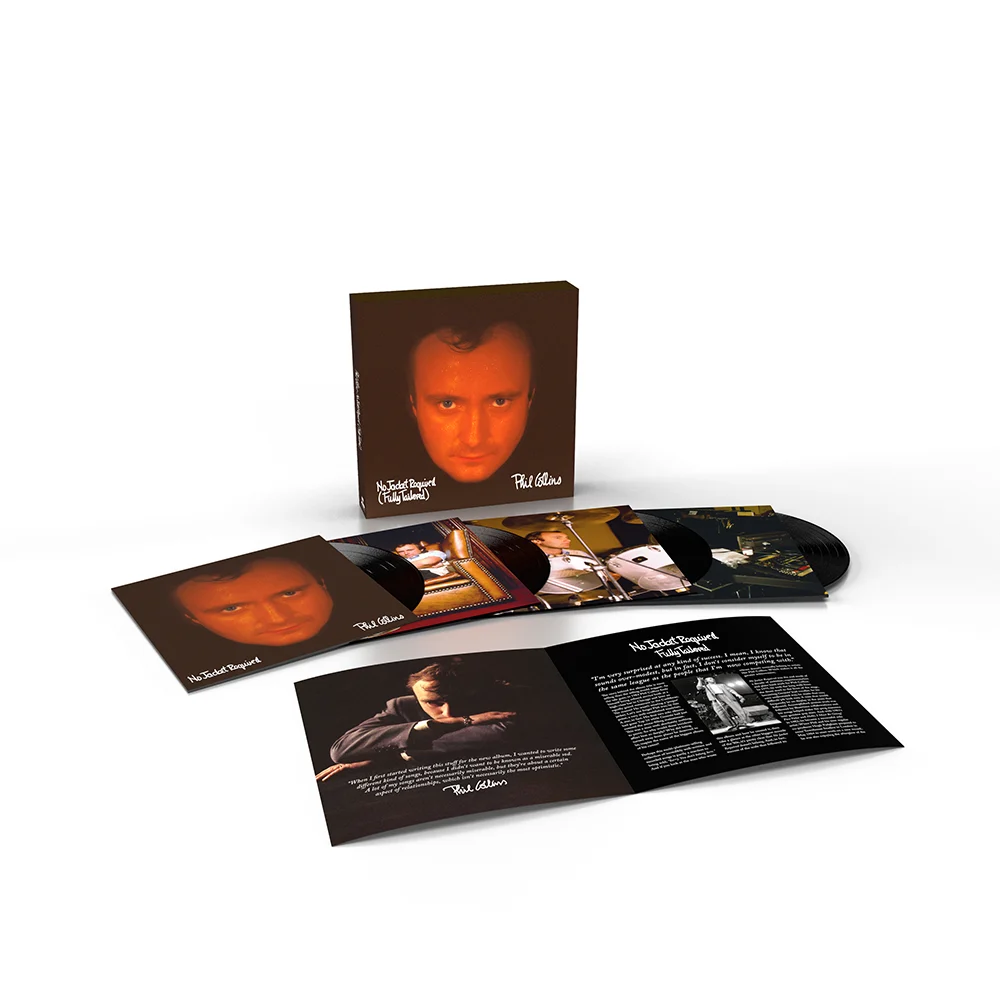
As legendary singer, songwriter, and percussionist Phil Collins prepares for his monumental induction into the Rock and Roll Hall of Fame—coinciding with the 45th-anniversary reissue of his classic, chart-dominating solo album Face to Face—the music icon sat down for a wide-ranging, deeply candid hour-long interview on Piers Morgan Uncensored.
Spanning a storied career that shaped the sound of modern pop and progressive rock alike, Collins addressed a multitude of headlines. From his permanent retirement from the drum kit due to debilitating physical ailments to clearing the air over a decades-long feud with Sir Paul McCartney, the British music pioneer held nothing back. He also offered pointed critiques of contemporary politics and shared his candid thoughts on fellow musicians, providing fans with an intimate look at the man behind the music during a complex chapter of his life.
Main Facts: The Core Takeaways
The extensive interview yielded several major revelations that quickly dominated entertainment news cycles, shedding light on Collins’ current physical reality, his relationships with rock royalty, and his worldview.
- Permanent Drumming Retirement: Collins confirmed that he is permanently unable to play the drums. Severe medical complications, including drop foot and multiple complex knee surgeries, have robbed him of the physical dexterity required to hold drumsticks or operate a bass drum pedal.
- The McCartney Reconciliation: After years of cold war stemming from a perceived slight backstage at Buckingham Palace during the Queen’s Golden Jubilee, Collins and Paul McCartney have officially buried the hatchet following a recent phone call initiated by the former Beatle.
- A Dim View of Trump: Turning his attention to global politics, Collins delivered a scathing assessment of Donald Trump, describing the former U.S. President’s demeanor as "unattractive" and warning that his transactional, business-centric approach to diplomacy poses a threat to democratic norms.
- Dismissal of Oasis: When asked about his thoughts on the newly reunited Britpop icons Oasis—who are also fellow Rock and Roll Hall of Fame inductees—Collins offered a dismissive quote reminiscent of Mick Jagger, stating that he simply doesn’t think about them at all.
- Ongoing Health Battles: Beyond his mobility issues, Collins detailed his struggles with sudden deafness, a condition that began around the year 2000 and now requires him to wear hearing aids in crowded environments.
Chronology: A Timeline of Legacy and Recent Struggles
To understand the weight of Collins’ recent revelations, it is necessary to contextualize his career timeline alongside the physical hurdles that have forced him out of the spotlight in recent years.
The Peak Years (1970s–1990s)
Collins first rose to prominence as the virtuosic drummer and eventual frontman of the progressive rock titans Genesis, before launching a blockbuster solo career in 1981 with Face Value (often referenced alongside his broader catalog milestones, including Face to Face). Throughout the 1980s and ’90s, he dominated global airwaves with inescapable pop anthems like "In the Air Tonight," "Against All Odds," and "Phil Collins," earning multiple Grammy Awards and an Academy Award.
The Physical Decline (2000s–2020s)
Signs of physical strain began to accumulate at the turn of the millennium. Around 2000, Collins experienced a sudden onset of deafness in one ear. Years of pounding the drum kit also took a severe toll on his vertebrae, leading to nerve damage in his hands.
Despite these compounding health crises, Collins mounted a triumphant return to the stage for Genesis’ 2021–2022 farewell trek, The Last Domino? Tour. During these final performances, unable to stand behind his traditional kit, he sang lead vocals while his son, Nicholas Collins, brilliantly handled the drum duties. Following that tour, however, a severe health crisis in 2024 left the musician briefly on life support, cementing the reality that his touring days were definitively over.
Supporting Data: The Medical and Musical Realities
The physical toll detailed by Collins during his conversation with Piers Morgan underscores the structural reality of a lifetime spent at the vanguard of rock performance.
The Drumming Halt
Detailing his final, futile attempt to play, Collins explained to Morgan:
"I haven’t really tried. The last time I tried was on the Genesis ‘The Last Domino?’ tour when Nicholas, my son, was playing drums. I got the drums set up in a room just to see if I could play. As soon as I sat down and started playing, I couldn’t. I couldn’t really hold the stick properly."
He elaborated on the physiological barriers:
"I’ve got drop foot in my right leg from the knee downwards, which means I can’t really do much with it. And at that time, I needed a knee operation, which eventually I had five of, because it just kept getting infected or the spacer broke. I spent a long time in hospital."
Sensory Challenges
In addition to his orthopedic struggles, Collins noted the cumulative damage to his hearing. What began as an isolated incident of "sudden deafness" around 2000 has steadily worsened. Today, the musician relies on hearing aids, noting that modern social settings—particularly environments where multiple people speak at once—present a significant auditory challenge.
Official Responses and Personal Reflections: McCartney and Beyond
Perhaps the most culturally resonant segment of the interview focused on Collins’ interpersonal relationships within the music pantheon, most notably his long-standing tension with Sir Paul McCartney.

Burying the Hatchet with Sir Paul
The rift began decades earlier at the Queen’s Golden Jubilee concert at Buckingham Palace, where Collins served as the house band’s drummer. Seeking an autograph on a rare first-edition Hunter Davies Beatles biography, Collins approached McCartney backstage. According to Collins, McCartney remarked to his then-partner Heather Mills, "He’s a big Beatle fan, is our little Phil."
Feeling profoundly patronized, Collins later recounted the incident in his autobiography. The story gained a life of its own on internet forums, fueled by tabloid speculation. However, the icy silence was recently broken.
"A month or two ago, Paul asked my office for my number," Collins recalled. "He called me because I had written letters to everyone I’d ever played with asking for donations for the King’s Trust charity auction in November. On the phone, he said, ‘What is all this about?’"
"I said, ‘I wish I’d never said it, Paul. I wish I’d never said it.’ So we kissed and made up. I said I was sorry. He likes to be liked, as we all do."
A Cool Stance on Oasis
When conversation turned to the modern rock landscape and the recent reunions dominating the festival circuit, Collins mirrored a famous quote by Rolling Stones frontman Mick Jagger. Asked his opinion on Oasis, Collins quipped:
"Mick Jagger once said when someone asked him, ‘What do you think of U2?’ He said, ‘I don’t think of U2.’ And that’s really what I think about Oasis."
Conversely, reflecting on his formative progressive rock days with Genesis, Collins pinpointed a specific piece of music that still holds a dear place in his heart: "There’s a thing called ‘Apocalypse in 9/8,’ which is an instrumental piece. And then at the end, there’s a very triumphant, elegant piece. Those two pieces, joined together, are among my favorites."
Implications: A Global Icon Evaluates the World
Beyond music and personal history, Collins did not shy away from global current events, offering a stark critique of modern political leadership.
Commenting on Donald Trump, the legendary artist did not mince words regarding the former president’s public persona:
"His whole manner is unattractive, even when he’s saying he did nothing… Historically, presidents have been eloquent and elegant. Even if you don’t agree with them, you still respect them. But when someone like Trump is as nasty as he is, you end up feeling dislike for him…"
Collins further analyzed Trump’s methodology through a geopolitical lens, warning against applying corporate strategies to international diplomacy:
"[He] plays politics like a businessman, and it’s not a business at all, it’s diplomacy. Sometimes you can lose but still come out winning. But he sees everything as a deal, won or lost. It’s a very scary time. It wouldn’t surprise me if he tries to overrule the two-term limit for American presidents."
Conclusion
Phil Collins’ appearance on Piers Morgan Uncensored serves as a poignant reminder of the human cost of a legendary artistic life. As he prepares to accept his place in the Rock and Roll Hall of Fame—an honor that solidifies his legacy both as a master percussionist and a prolific solo hitmaker—Collins faces the physical twilight of his career with characteristic candor.
Whether making peace with old friends like Paul McCartney, lamenting the physical barriers that keep him from his drum kit, or offering sharp commentary on the state of global politics, Phil Collins remains an unvarnished and compelling voice in modern culture.
 Nana
Nana
 Nila Kartika Wati
 Asep Darmawan
