NEW YORK — In a landmark policy shift aimed at shoring up the city’s creative workforce, New York City Mayor Zohran Mamdani and Department of Cultural Affairs (DCLA) Commissioner Diya Vij announced today that city-funded grants for individual artists are immediately doubling from $5,000 to $10,000.
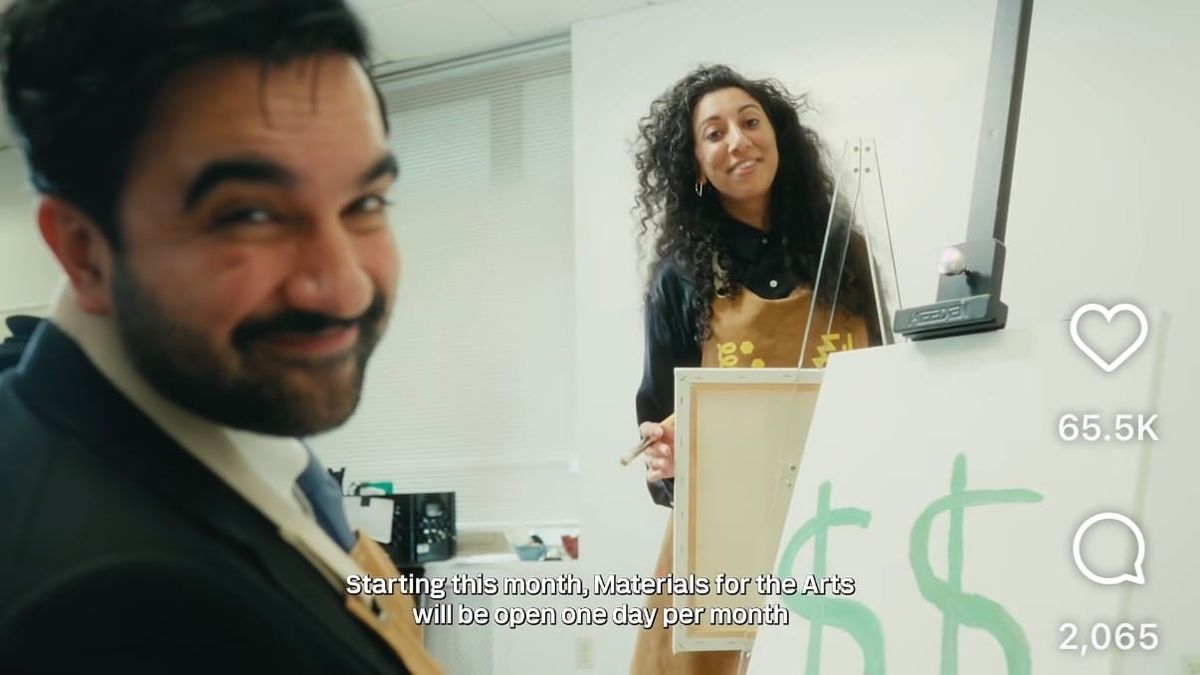
The announcement, delivered via a joint video released on Instagram—featuring Mamdani painting at an easel alongside Vij—marks the first time the baseline funding amount has been increased in nearly 20 years. The long-stagnant $5,000 ceiling had failed to keep pace with New York’s escalating cost of living, forcing generations of painters, sculptors, performers, and writers to hustle through multiple jobs just to sustain their practices.
The policy change comes on the heels of a historic fiscal package passed earlier this year and arrives as municipal leaders grapple with a troubling demographic shift: a measurable decline in New York’s resident artist population for the first time in decades.
Main Facts
The core of the announcement centers on a direct financial injection into the city’s individual creator ecosystem.
Grant Amount Doubled: Individual city-funded grants administered through DCLA’s local cultural partners have risen from a maximum baseline of $5,000 to $10,000.
Application Deadlines Underway: Borough-specific administering councils are currently accepting applications for the funding cycle, with distinct closing dates across the city (excluding Staten Island, which opens its process in November).
Complementary Support: Alongside the cash grants, the DCLA’s Materials for the Arts (MFTA) program is launching a new monthly shopping initiative, giving grantees free access to millions of pounds of surplus creative supplies from a massive 35,000-square-foot warehouse.
Broader Fiscal Commitment: The expansion is supported by the Fiscal Year 2027 budget, which secured a record-breaking $323.8 million for the DCLA following an agreement between Mayor Mamdani and the City Council.
Chronology of Municipal Support and Cultural Policy
To understand the weight of today’s announcement, one must look at the recent timeline of New York City’s municipal arts funding and the deliberate strategy deployed by the Mamdani administration since taking office.
Early Tenure & Expert Critique: In the early months of Mayor Mamdani’s administration, cultural commentators and critics, such as writer Aruna D’Souza, voiced cautious optimism about the new leadership. Writing for Hyperallergic, D’Souza highlighted the desperate need for affordable studios, housing, and structural support, while noting a renewed collective determination to prevent the city’s legendary arts scene from withering away.
July 2026 (The FY 2027 Budget): Mayor Mamdani successfully struck a budget agreement with the City Council, allocating a historic $323.8 million to the DCLA. This marked the highest yearly cultural appropriation in the city’s modern history.
Interim Small Business Grants: Leading up to the fall grant cycle, the administration distributed portions of an $8.4 million small business grant pool directly to public art commissions and local arts programming, signaling an intersection between economic recovery and cultural preservation.
October 2, 2026 (The $10,000 Announcement): Mayor Mamdani and Commissioner Diya Vij officially unveil the doubling of the individual artist grants via social media, aligning the policy shift with the opening of the autumn borough-wide application cycles.
October 19, 2026 (MFTA Expansion): The Materials for the Arts program is scheduled to inaugurate its new monthly shopping program, ensuring that selected artists can secure free materials on the second Monday of every month.
Supporting Data: The Artist’s Cost-of-Living Crisis
The urgency behind the DCLA’s funding boost is underscored by a sobering array of economic and demographic data compiled over recent years. New York remains one of the most expensive cities in the world, a reality that bears down mercilessly on cultural workers.
1. Population Decline
According to a landmark January report published by the Center for an Urban Future, New York City’s resident artist population has fallen by 4.4% since 2019. This represents the first measurable decline in the city’s creative workforce in decades. Analysts point directly to skyrocketing rents, commercial displacement, and acute income instability as the primary drivers of this exodus.
2. The Multi-Job Reality
A recent investigative report by Cultured magazine detailed the precarious economic balancing act required of contemporary New York artists. To afford basic housing and studio overhead, creative professionals routinely stack supplemental income streams—ranging from grueling full-time day jobs and teaching gigs to sex work and gig-economy labor.
3. Application Windows and Regional Partners
The $10,000 grants are distributed through hyper-local cultural councils across the five boroughs. Current deadlines for artists seeking to capitalize on the doubled funding include:
Brooklyn Arts Council: Accepting applications through October 11.
Bronx Council on the Arts: Accepting applications through October 30.
Lower Manhattan Cultural Council: Accepting applications through November 12.
New York Foundation for the Arts (Queens): Accepting applications through November 17.
Staten Island: Applications open in November.
Official Responses
The rollout of the doubled grants has been framed by city leadership not merely as a matter of municipal budgeting, but as an existential investment in the identity of New York City itself.
In their joint Instagram video—filmed casually with Mamdani at a canvas and Vij nearby—the mayor emphasized the psychological and financial toll artists have long faced in the metropolis.
"Artists are forced to make hard choices when it comes to living in this city and getting paid," Mamdani stated during the announcement. "There’s never been a better time to apply. Anyone who’s an artist in our city and has a vision is welcome to."
Commissioner Diya Vij echoed these sentiments, highlighting the foundational role that creative workers play in the urban ecosystem.
"Artists are the beating heart of this city, but it’s not always easy to make a living as one," Vij noted.
The policy has also found resonance among cultural critics and advocates who spent years lobbying prior administrations for structural reform. The shift away from the stagnant $5,000 baseline—which had survived multiple economic booms, a global pandemic, and runaway inflation—is being interpreted as a definitive signal that the current municipal government recognizes art as labor rather than a mere hobby.
Broader Implications for New York’s Cultural Future
While doubling individual grants to $10,000 is a monumental victory for grassroots creators, cultural economists and urban planners agree that it represents just one piece of a much larger puzzle.
Alleviating Material Overhead
Beyond direct cash infusions, the integration of the Materials for the Arts monthly shopping initiative on October 19 addresses a critical, often-overlooked expense: production supplies. By opening the 35,000-square-foot MFTA warehouse on the second Monday of every month, the city is effectively subsidizing the raw physical components of art-making. For sculptors, mixed-media artists, and community arts organizers, access to millions of pounds of diverted corporate and institutional waste can mean the difference between realizing a project and abandoning it.
The Fight for Affordable Housing and Studios
As Aruna D’Souza and other cultural thinkers have repeatedly emphasized, financial grants and free materials cannot single-handedly solve the structural crisis of real estate in New York. The 4.4% decline in the artist population serves as a warning klaxon: without parallel expansions in rent-stabilized housing explicitly reserved for cultural workers, and without legal protections for artist-run spaces and independent galleries, the city risks pricing out the very people who generate its global cultural capital.
Nevertheless, the Mamdani administration’s actions—anchored by a record $323.8 million DCLA budget, targeted small-business and public art programming, and now, doubled baseline grants—suggest a radically proactive posture. For a creative community long accustomed to fiscal neglect and administrative indifference, the new landscape offers a tangible glimmer of hope that New York is finally putting its money where its art is.



 Muslim
 Evan Lee Salim
