

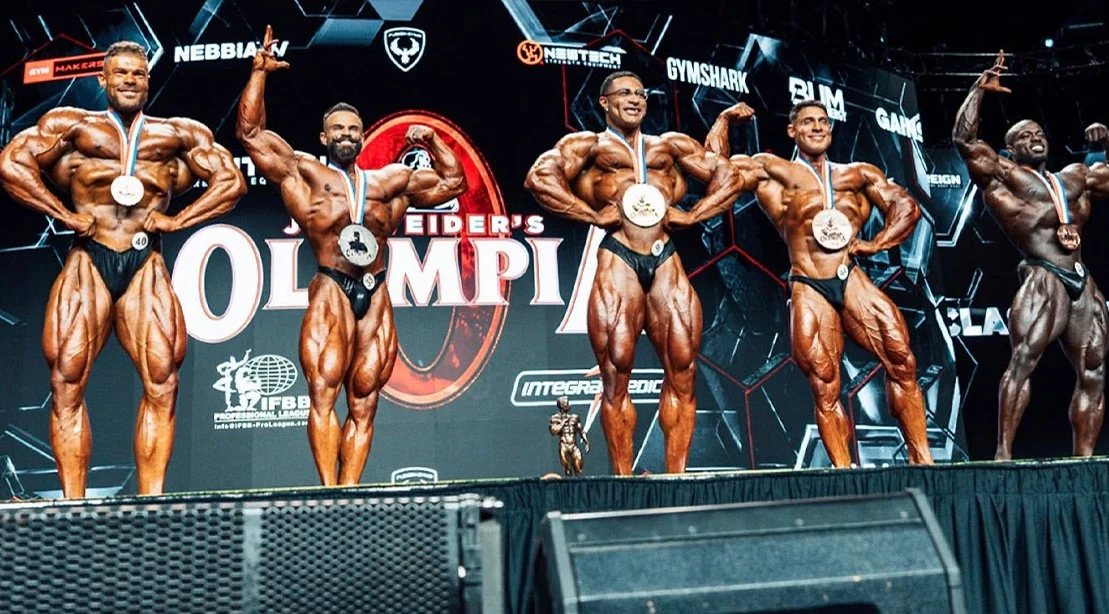
With 62 editions now etched into the annals of sporting history, the Olympia remains the undisputed heavyweight champion of the bodybuilding world. In an era of fragmented digital media and shifting fitness trends, the "O" continues to exert a gravitational pull that no other competition can replicate. As the event expands its global footprint, its stewards are navigating a delicate balance: pushing the boundaries of inclusivity and accessibility while maintaining the uncompromising, elite standards of physique excellence that defined its inception.
Muscle & Fitness takes a comprehensive look at why the Olympia remains the ultimate destination for athletes and fans alike, and how the "Big O" is evolving to meet the demands of the future.
The Coronation: A Legacy of Iron
On September 26, 2026, the bodybuilding world turned its gaze toward Las Vegas. Jake Wood, the owner and visionary custodian of the Mr. Olympia brand, stood center stage to crown the event’s 20th champion: Nick “The Mutant” Walker. As Walker hoisted the iconic Sandow trophy, he joined an exclusive lineage of titans.
Since its inception in 1965 by the legendary Joe Weider, the Olympia has functioned as the industry’s ultimate seal of approval. It is more than a competition; it is a cultural touchstone. "It’s the absolute best," says Andrei Deiu, a standout in the Men’s Physique division who has graced the Olympia stage twice. "All of the best bodybuilders in the entire world meet at Olympia. There is no other room where you can find that density of talent."
Chronology: From Weider’s Vision to Modern Dominance
To understand the Olympia’s prestige, one must look at the landscape of the mid-1960s. Before Joe Weider’s intervention, the sport was in a state of stasis. Top-tier winners of the Mr. America, Mr. World, or Mr. Universe titles were often barred from defending their crowns, forcing legends like Bill Pearl and Larry Scott into premature retirement or the repetitive circuit of guest posing.
Weider changed the trajectory of the sport forever. By creating the Mr. Olympia, he established a venue where the best could compete against the best, year after year, allowing champions to build dynasties. Larry Scott, the inaugural winner, set the precedent in 1965 and 1966. He was followed by an assembly of icons: the mass-defining era of Lee Haney and Ronnie Coleman—who share the record of eight titles—and the transformative influence of Arnold Schwarzenegger, whose seven victories in the 1970s propelled the sport into the mainstream consciousness.
The torch has since been carried by legends like Dorian Yates, Jay Cutler, and Phil Heath. Today, the landscape has shifted from the muscle magazines of the past to the viral ubiquity of social media. Modern icons like Chris Bumstead, with his staggering 26 million followers, and breakout stars like Sam Sulek, demonstrate that while the medium has changed, the hunger for Olympia-level excellence remains as potent as ever.
Supporting Data: Why the "O" Remains King
While events like the Arnold Classic have risen as formidable pillars of the industry—often offering significant purses and top-tier talent—the Olympia holds a unique position in the athlete’s psyche.
The distinction lies in the qualification process. Unlike invitational events, the Olympia is a meritocracy. "The Arnold is great, but it’s nothing like the Olympia," says IFBB pro Blessing Awodibu. "Olympia is that one show—a title that every single bodybuilder wants to win. It is not easy to earn the qualification to compete here. It proves, without a shadow of a doubt, that you are the best in the world."
The numbers bear this out. During the 2026 event, the Olympia’s free global livestream, despite technical strain caused by overwhelming demand, showcased a viewership base that no other bodybuilding organization can currently match. Furthermore, the companion Fitness and Performance Expo at the Las Vegas Convention Center reported record-breaking attendance, proving that the synergy between high-level competition and fan engagement is the brand’s secret sauce.
Eras of Evolution: The Shifting Definition of "Ideal"
The Olympia is a mirror reflecting the evolving aesthetics of human physical potential. The sport has moved through distinct phases:
- The Golden Era: Defined by the proportions of Frank Zane and the classic symmetry of Arnold Schwarzenegger.
- The Mass Monster Era: The 1990s and 2000s, where Dorian Yates and Ronnie Coleman pushed the limits of human muscle density and size.
- The Modern Synthesis: Today’s competitors are tasked with an incredibly difficult challenge: blending the extreme conditioning of the past with the aesthetic flow required to appeal to a more diverse, global audience.
As 212-division competitor Breon Ansley notes, "Each champion receives the utmost respect because each has a different journey. None of them look exactly alike, yet they all represent the pinnacle of worldwide excellence."
Inclusivity and the Expanding Portfolio
The Olympia is no longer just about the Open Bodybuilding division. In an effort to reflect contemporary fitness culture, the brand has aggressively expanded its categories.
The 2026 introduction of the "Fit Model" category is the latest step in a broader strategy to embrace a wider demographic. Currently, there are more female divisions than male divisions at the Olympia, a shift that has significantly bolstered the brand’s reach.
Perhaps most inspiring is the growth of the Wheelchair division. James Berger, the 2025 Wheelchair Olympia champion, highlights how increased investment and sponsorship have transformed the category. "We’ve got more sponsorships, more prize money, and we are truly grateful," Berger says. "The division is growing tremendously. We are on the upswing."
Official Responses and Strategic Implications
Olympia President Dan Solomon has been clear regarding the organization’s trajectory. The focus is not merely on maintaining the status quo, but on globalizing the experience. Jake Wood is currently evaluating the feasibility of hosting the Olympia in international cities once again—a move that hasn’t occurred since the 1992 Helsinki event.
Furthermore, the Joe Weider estate is looking to deepen the social impact of the sport. Plans for a "Humanitarian Olympia Award" are in development, aiming to honor athletes who leverage their platform for community service. This initiative signals a move to shift the public perception of bodybuilders from mere physical specimens to societal leaders and role models.
The Future: Beyond the Sandow
As we look toward 2027, the Olympia finds itself at a crossroads of tradition and innovation. The inclusion of diverse events—ranging from strength sports and Sumo to Spartan races and professional skateboarding—within the Fitness & Performance Weekend suggests that the Olympia is evolving into an all-encompassing lifestyle brand rather than a singular contest.
The challenge, as always, will be to retain the "hardcore" essence of the sport while continuing to court the casual viewer. However, if the energy at the Palms Hotel & Casino in 2026 is any indication, the heartbeat of bodybuilding is stronger than ever.
The community that forms around the Olympia is one defined by shared struggle and mutual respect. It is a brotherhood that transcends borders, ethnicities, and socio-economic status. As the sport moves into its next decade, the Olympia remains the ultimate stage, the final judge, and the singular dream for every person who picks up a weight.
For the athletes, the fans, and the organizers, the message is clear: The biggest moments for the Mr. Olympia are not in the rearview mirror—they are waiting on the stage of the future.
For more information on the 2027 Olympia and Fitness & Performance Weekend as it is released, visit the official Mr. Olympia website.
 Lina Hope
 Reynand Wu
 Ali Ikhwan
