

The adage "write what you know" has served as the bedrock of creative endeavor for centuries, but in the hallowed halls of Tinseltown, that advice has evolved into a full-blown existential feedback loop. Hollywood has always possessed a reflexive, almost narcissistic compulsion to turn the camera on its own machinery—a tradition stretching from the cynical grandeur of Sunset Boulevard and the nostalgic euphoria of Singin’ in the Rain to the modern, razor-sharp deconstructions found in The Player and La La Land.

As the 2026 awards season accelerates, it is clear that this fascination with the "business of show" has not merely persisted—it has reached a fever pitch. A significant portion of this year’s most formidable Oscar contenders are deeply, unapologetically self-referential, serving as both love letters and autopsy reports on the entertainment industry. Whether exploring the grit of the creative process, the brutal economics of stardom, or the psychological toll of performance, these films suggest that the industry is currently in a state of profound self-reflection.

The Anatomy of an Obsession: Why Now?
The prevalence of "insider" narratives in 2026 is no accident. The industry finds itself at a crossroads, navigating the aftermath of seismic shifts in distribution, the rise of synthetic performance technologies, and a changing cultural landscape. When filmmakers feel the ground beneath their feet shifting, they naturally retreat to the subject they know best: the art of making the dream itself.

This year’s crop of potential nominees is diverse in scope—ranging from intimate character studies set in the world of community theater to sprawling, meta-textual biopics—but they are unified by a common thematic thread: the desperate, beautiful, and often ugly struggle to create something that lasts.

A Chronology of Self-Reflexivity: From Legend to Reality
The 2026 slate is defined by its willingness to peer behind the curtain. Below are the most significant titles currently dominating the conversation.

I Play Rocky: The Origin of an Icon
Peter Farrelly’s I Play Rocky serves as perhaps the most literal interpretation of the "Hollywood myth" genre. The film chronicles the grueling, improbable journey of a young, destitute Sylvester Stallone, who fought tooth-and-nail to bring his screenplay to the screen—with the non-negotiable caveat that he, an unproven actor, must play the lead.

Written by Peter Gamble and featuring a breakout turn by Anthony Ippolito as the young Stallone, the film functions as a meta-commentary on the nature of the "Hollywood Underdog." By dramatizing the creation of an Oscar-winning classic as the industry approaches the original’s 50th anniversary, I Play Rocky forces audiences to confront the difference between the manufactured legend of a movie star and the gritty, messy reality of the creative process.

The Debut: The Toxicity of Performance
Jesse Eisenberg’s The Debut shifts the focus from the glitz of the studio system to the raw, unfiltered passion of community theater. Starring Julianne Moore as Mona, a New Jersey housewife who finds herself subsumed by the demands of a local musical, and Paul Giamatti as her eccentric, demanding director, the film is a satirical look at how performance can consume a person. What begins as a hobby spirals into an obsessive pursuit of validation, highlighting the dark, intoxicating allure of the stage.

The Further Mis-Adventures of Cliff Booth: The Meta-Textual Peak
In a bold creative gamble, David Fincher has directed The Further Mis-Adventures of Cliff Booth, returning to the character made iconic by Brad Pitt in Quentin Tarantino’s Once Upon a Time in Hollywood. Set against the backdrop of 1977 Los Angeles, the film follows the former stuntman-turned-fixer as he navigates the changing tide of the industry.

With Tarantino penning the script and Pitt reprising his Academy Award-winning role, this film is arguably the most "meta" of the year. It is a story about a character who exists within a film that was already a fantasy about the industry—a hall-of-mirrors approach that speaks to the cyclical nature of Hollywood storytelling.

Behemoth!: The Invisible Architects
Tony Gilroy’s Behemoth! tackles a sector of the industry rarely given the spotlight: the film composer. Pedro Pascal stars as a world-weary cellist who returns to Los Angeles to pivot into the high-stakes world of scoring major motion pictures. By focusing on the musicians who craft the emotional subtext of our favorite films, the movie reveals the "invisible" labor that keeps the machine running. As Olivia Wilde, a co-star in the film, noted on the Smartless podcast, the project is a sincere "love letter" to the process of sonic storytelling.

Primetime: The Price of Fame
Robert Pattinson stars as Chris Hansen in a film that explores the thin line between journalism and spectacle. Tracing the origins of the Dateline NBC sensation To Catch a Predator, Primetime examines the moment when the "newsman" became an unlikely, and uncomfortable, television celebrity. The film has not been without controversy; the real Chris Hansen has publicly criticized the production, calling it "bizarre." However, at the Venice Film Festival, Pattinson defended the film’s necessity, noting that the "electrifying" nature of the character was precisely what made the story worth telling.

Misty Green: A Systemic Critique
Directed by Chris Rock, Misty Green is a stark, biting examination of the racial and gender disparities within the entertainment industry. Starring Rosalind Eleazar as an Emmy-winning actress struggling to maintain her position as she ages, the film boasts a high-profile ensemble including Adam Driver, Daniel Kaluuya, and Anna Kendrick. Rock has been vocal about the film’s intent, stating that he wanted to expose the "lowest pay scale" realities often faced by Black women in Hollywood—a systemic issue he claims to have witnessed firsthand throughout his career.

Michael: The Machine Behind the Pop
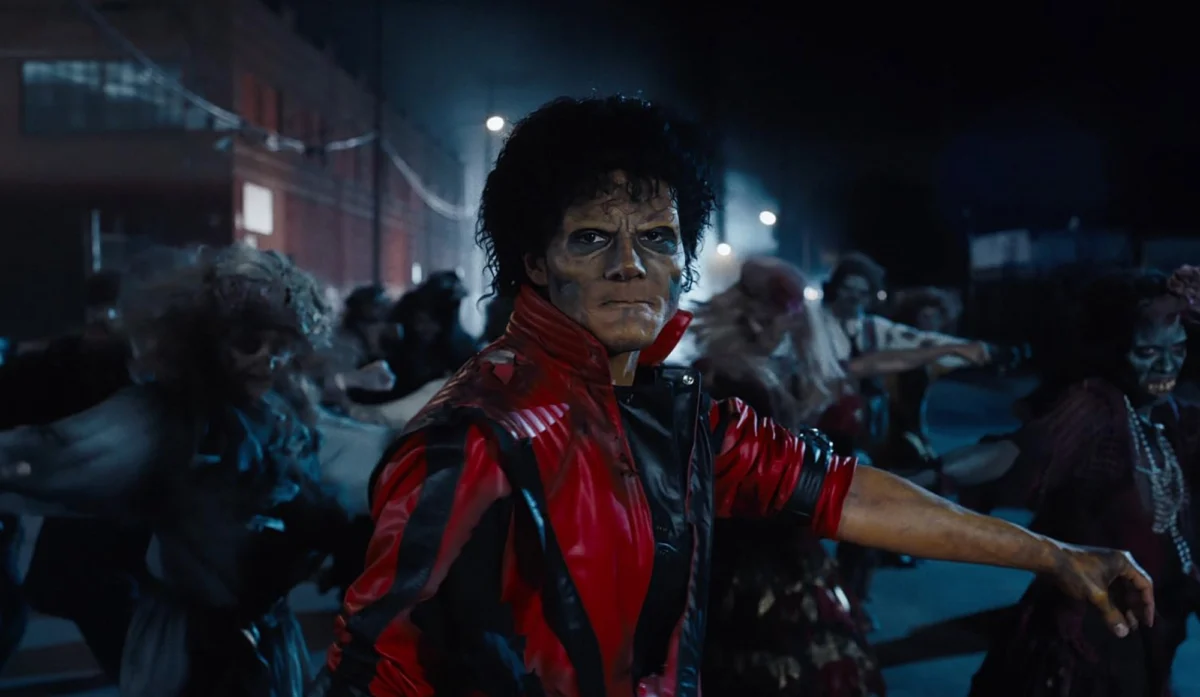
Antoine Fuqua’s Michael offers a grand-scale look at the music industry’s most potent cultural force. Starring Jaafar Jackson, the film does more than just hit the biographical notes of Michael Jackson’s life; it recreates the meticulous, high-pressure environment of the recording studio and the film set. By centering the film on the "machine" that produces icons, Fuqua provides a window into the intersection of art and corporate expectation.

Supporting Data: The Awards Landscape
The "Showbiz-about-Showbiz" trend is not just a critical curiosity; it is a force on the awards circuit. Currently, these films are not merely being discussed as niche projects; they are dominating the Top 30 of Gold Derby’s Best Picture leaderboard.

This indicates that Academy voters—who, after all, are the very people these films are depicting—find something profoundly resonant in these stories. The industry’s current propensity for navel-gazing is being rewarded by the very institutions that govern its prestige. Whether this reflects a genuine artistic evolution or a self-congratulatory trend remains to be seen, but the data is undeniable: the path to the Oscars in 2026 runs directly through the backlots of Hollywood.

Official Responses and Industry Implications
The reception to these films has been as varied as their subject matter. While I Play Rocky has been praised for its heart, films like Primetime have sparked intense debate regarding the ethics of biopics and the "ownership" of a public figure’s life story.

From an industry perspective, these films serve as a form of institutional catharsis. By dramatizing the challenges of casting, the struggle for creative control, or the systemic biases of studio pay structures, filmmakers are using the medium to hold a mirror up to their own flaws. However, critics argue that this obsession with the industry creates a barrier for audiences who may find the "insider baseball" approach alienating. The challenge for these films is to prove that the struggles of a filmmaker, an actor, or a composer are universal human experiences, rather than just the petty grievances of a privileged class.

Conclusion: The Mirror Won’t Look Away
Hollywood has always been a place of myth-making, and in 2026, the myth it seems most interested in is itself. Whether this fascination is a sign of creative exhaustion or a necessary period of introspection, the result is the same: the entertainment industry is currently the most popular subject in the cinema.

As we look toward the awards ceremony, one thing is certain: voters will be choosing between films that do not just provide an escape from reality, but rather provide a hyper-focused, sometimes uncomfortable, look at the reality of their own existence. Whether this cycle will continue into the next decade or whether it will burst under the weight of its own narcissism remains an open question. For now, however, the cameras are staying on the set, and the industry is watching.
 Nana Wu
 Asep Darmawan
 Suro Senen
