

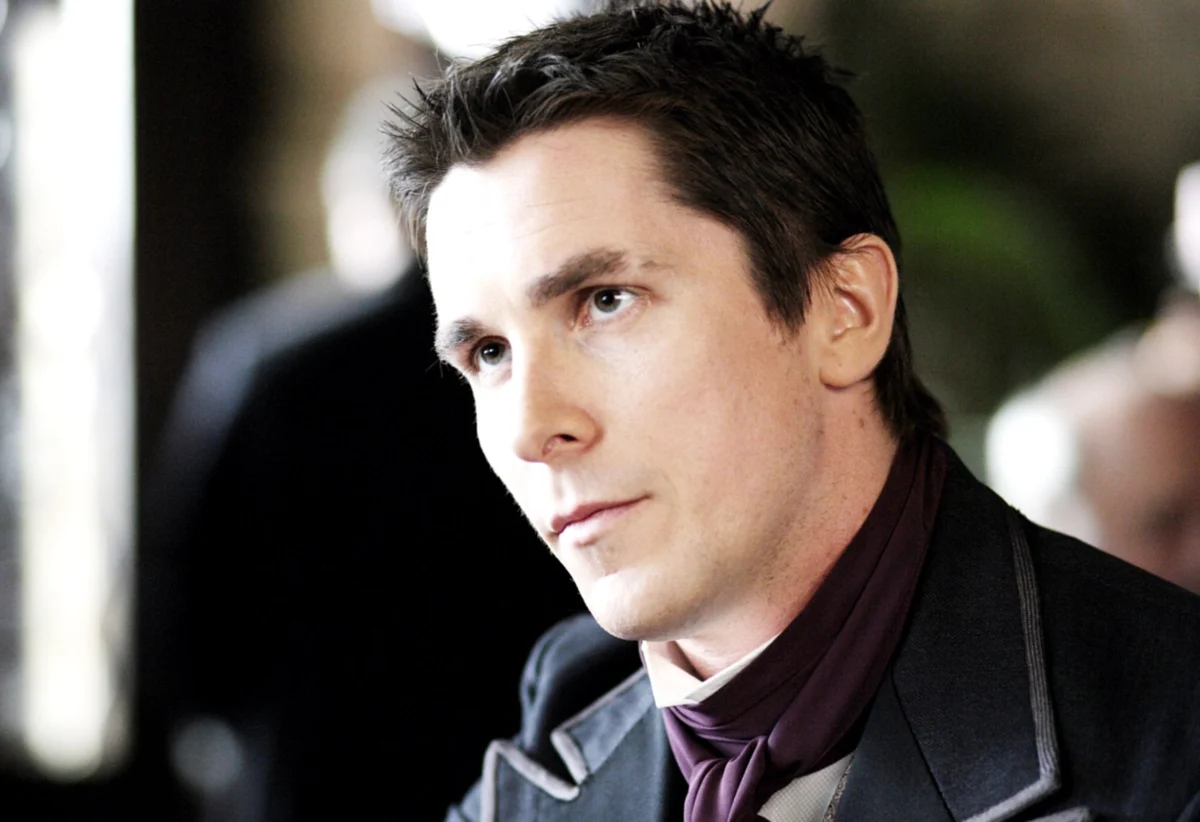
When critics and cinephiles debate the crown jewel of Christopher Nolan’s filmography, the conversation usually spans a predictable spectrum. Memento is celebrated as his purest puzzle box; Tenet pushes his cinematic fascination with time manipulation to confounding extremes; Interstellar blends cosmic spectacle with raw, tear-jerking emotional stakes; and The Dark Knight channels his cerebral instincts into one of the most culturally dominant superhero blockbusters of all time.
Yet, nestled quietly between these monumental blockbusters is a film that arguably represents Nolan’s most complete and cohesive artistic statement: The Prestige. Released theatrically on October 20, 2006, the dark, period-accurate thriller wraps an intricate, mechanically precise puzzle around a deeply personal and tragic story. It follows two rival magicians who systematically destroy their lives, relationships, and humanity in an obsessive quest to outwit and outperform one another.
Approaching its 20th anniversary and finding a new wave of appreciation on streaming platforms like Netflix, The Prestige stands as arguably the most "Nolanesque" movie in his catalog. It achieves this without relying on cosmic sci-fi concepts or complex espionage frameworks, proving that Nolan’s greatest magic trick was hiding his darkest secrets right in plain sight.
Main Facts: The Anatomy of an Obsession
At its core, The Prestige is an adaptation of Christopher Priest’s 1995 World Fantasy Award-winning novel. Set primarily in turn-of-the-century London, the film chronicles the escalating feud between Robert Angier (Hugh Jackman) and Alfred Borden (Christian Bale), two stage assistants whose friendship shatters following a tragic accident.
The primary components of the film’s narrative engine include:
- The Production: Directed by Christopher Nolan, with a screenplay co-written by his brother, Jonathan Nolan.
- The Ensemble Cast: Led by Hugh Jackman and Christian Bale, supported by Michael Caine as stage engineer John Cutter, Rebecca Hall as Sarah Borden, Scarlett Johansson as Olivia Wenscombe, and David Bowie in a memorable turn as visionary inventor Nikola Tesla.
- The Central Conflict: A war of escalation over a teleportation illusion called "The Transported Man," which spirals from petty stage sabotage into industrial espionage, psychological warfare, and literal self-destruction.
- Thematic Core: The lengths to which human beings will go for professional validation, the cost of obsession, and the willingness of audiences—and characters—to be deceived.
Chronology: The Three Acts of a Cinematic Masterpiece
In the cinematic universe of The Prestige, magic tricks are governed by strict structural rules laid out by Michael Caine’s character, John Cutter. Every true illusion consists of three acts, and Nolan structures his screenplay to mirror this exact framework: The Pledge, The Turn, and The Prestige.

Act I: The Pledge (Borden Looks Like the Villain)
The film opens abruptly on a forest floor littered with dozens of identical top hats, before flashing back to the beginning. Cutter explains the first act of an illusion: The Pledge, where the magician presents something ordinary—in this case, two ambitious young men working under the same mentor in Victorian London.
Hugh Jackman plays Robert Angier, a natural showman who transforms into "The Great Danton." Angier possesses immense charisma and an instinctive understanding of theatricality, appealing directly to the high-society crowds. However, beneath his charming exterior lies a hollow core of grief and vengeance.
Christian Bale’s Alfred Borden serves as his ultimate foil. Performing as "The Professor," Borden is a working-class genius with an encyclopedic understanding of magic theory, but virtually zero stage polish. Bale plays Borden with a jagged, erratic energy—warm one moment, intensely secretive and hostile the next.
The rivalry turns venomous early in the narrative when Angier’s wife, Julia (Piper Perabo), drowns during a water-tank escape act. Borden had tied the knots for her wrists; when a grieving Angier demands to know which knot he used, Borden coldly claims he doesn’t know. To Angier—and the viewer—this feels like chilling negligence, establishing Borden as the clear-cut villain of the piece.
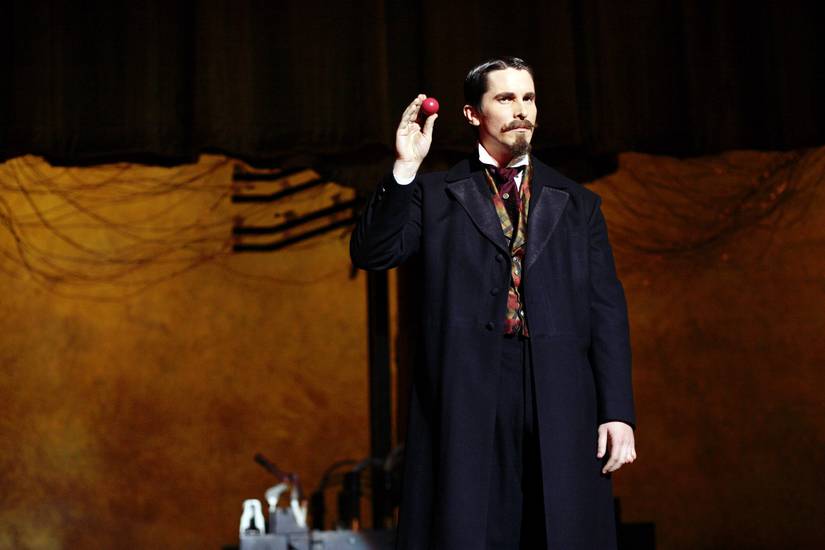
Borden eventually unveils "The Transported Man," a trick where he steps into one cabinet, rolls a rubber ball across the stage, and instantly emerges from another cabinet to catch it. Cutter assumes Borden is utilizing a body double, but Angier refuses to accept such a mundane, simple explanation.
Act II: The Turn (Science Fiction Disguised as History)
The second act of a magic trick is The Turn, where the ordinary is made to do something extraordinary—vanishing or defying the laws of physics.

Consumed by a desperate need to replicate Borden’s success, Angier travels to Colorado Springs to commission a custom device from the enigmatic inventor Nikola Tesla (played with an ethereal, otherworldly grace by David Bowie). Here, The Prestige quietly crosses the threshold from a historical drama into speculative science fiction, though the technology functions more like a cursed Faustian bargain than traditional sci-fi.
Tesla builds Angier a massive, humming electrostatic apparatus. However, instead of physically transporting matter across space, the machine unwittingly clones it. This scientific breakthrough explains the surreal opening image of duplicated top hats scattered across the forest—and sets the stage for a much darker climax.
Act III: The Prestige (The Monsters Change Places)
The final act of any illusion is The Prestige: making the vanished object return. In the film’s final act, both protagonists reveal the horrific prices they paid for their respective illusions.
Angier launches his own version of "The Transported Man," utilizing Tesla’s machine. But the true horror of Angier’s act is revealed: every single night, he steps into the machine knowing that a clone will materialize above the stage to take the applause, while the original version falls through a trapdoor into a locked water tank below to drown. Angier has effectively turned his life into a literal graveyard of his own duplicated corpses, sacrificing his humanity for the sake of the applause.
Meanwhile, Borden’s secret is far more grounded, yet equally devastating. There is no sci-fi machine; "Alfred Borden" is actually two identical twin brothers—Alfred and Fallon—who have lived a lifelong, unbreakable con. They alternate lives, sharing a single existence. When one brother loses two fingers in a stage accident, the other willingly amputates his own fingers to maintain the illusion. One brother loves Sarah; the other loves Olivia.
This extreme deception explains why Sarah grew so desperately unhappy—her husband’s emotional availability fluctuated wildly, and his physical injuries never seemed to heal correctly. When the surviving Borden confronts Angier in the finale, he delivers the thematic thesis of the entire film: "Simple, maybe. But not easy."
Supporting Data and Production Insights
Though it opened to modest box-office returns in the fall of 2006—grossing roughly $109 million worldwide against a $40 million budget—The Prestige was warmly received by critics, holding a robust 76% approval rating on Rotten Tomatoes. Over the last two decades, its reputation has only appreciated, frequently cited by film historians as one of the best films about the creative process ever made.
- The Cast’s Commitment: Both Jackman and Bale reportedly dove deep into the history of stage magic, studying the techniques of 19th-century illusionists like Harry Houdini and Jasper Maskelyne.
- David Bowie’s Casting: Christopher Nolan famously chased David Bowie for months to play Nikola Tesla, writing personal letters to the rock icon because he felt nobody else possessed the necessary otherworldly aura to play the eccentric inventor.
- Foreshadowing Clues: Nolan litters the film with blatant clues regarding both twists. Early in the film, an elderly Asian illusionist produces a massive bowl of water from beneath his robes by carrying it between his legs—a trick that works only because he performs it 24 hours a day, exactly like the Borden twins. Similarly, Angier’s opening monologue about watching a spectator’s face foreshadows the psychological trap the film sets for the audience.
Implications: Why We Want to Be Fooled
The enduring brilliance of The Prestige lies not just in its clever screenwriting twists, but in what it says about the nature of entertainment and human psychology.
In the film’s framing sequences, Nolan repeatedly circles back to a simple children’s magic trick involving a disappearing bird. When a child asks where the bird’s brother went after it is supposedly crushed inside a collapsible cage, the adults in the audience ignore the dark reality and eagerly applaud the illusion because they want to be fooled.
This thematic undercurrent applies directly to the audience watching the film. Knowing the twists—knowing about the Tesla clones and the Borden twins—does not ruin subsequent viewings of The Prestige. Instead, it elevates the film into a meticulously constructed clockwork puzzle where every line of dialogue, lingering glance, and thematic motif clicks into place.
Nearly twenty years later, Christopher Nolan’s cinematic sleight-of-hand remains entirely intact. The Prestige proves that the greatest illusions aren’t the ones hidden in the shadows, but the ones hiding right in plain sight—awaiting an audience willing to pay close enough attention.
 Basiran
 Asep Darmawan
 rifanmuazin
