

6 October 2026
The small Horn of Africa nation of Djibouti, a vital maritime gateway, is currently grappling with a severe and complex humanitarian crisis. According to the International Organization for Migration (IOM), the country is being forced to navigate "overlapping emergencies" as the geopolitical volatility in neighboring Yemen pushes waves of refugees across the Red Sea, even as thousands of economic migrants continue to traverse the country in the opposite direction.
The situation, characterized by the UN migration agency as a "multidirectional movement of desperation," has left the Djiboutian government and international aid organizations scrambling to provide basic necessities to people whose lives have been upended by conflict, poverty, and environmental catastrophe.
Main Facts: A Convergence of Crises
The core of the crisis lies in the sheer volume of human movement across the Bab al-Mandab Strait. Within the past three weeks alone, more than 3,700 individuals have fled the intensifying conflict in Yemen, seeking sanctuary on Djiboutian shores. These refugees, having survived a perilous sea crossing, arrive in a state of extreme vulnerability, often lacking food, water, or medical care.
Simultaneously, IOM data indicates that the migratory flow toward the Arabian Peninsula remains largely undeterred by reports of war. Since September 10, over 20,000 people—primarily from Ethiopia—have been recorded moving through Djibouti, driven by the hope of securing employment in Saudi Arabia and other Gulf States. To further complicate the logistics, a third group of approximately 539 Ethiopian migrants has been recorded moving back from Yemen, attempting to return home as the security situation in the region deteriorates.
Alexandre Coissac, head of the IOM mission in Djibouti, articulated the gravity of the situation during a video briefing in Geneva: "Djibouti is confronting movement in both directions. People are fleeing the violence in Yemen, while others are still pushing forward into the conflict zone, unaware of the escalating danger, and a third group is trying to retreat. It is a logistical and humanitarian nightmare."
Chronology: The Escalation of the 2026 Crisis
The current surge in humanitarian demand did not occur in a vacuum; it is the culmination of years of instability in the Horn of Africa and the Arabian Peninsula.
- Early September 2026: A renewed offensive by Saudi-backed government forces in Yemen leads to heavy combat near the Bab al-Mandab Strait.
- 10 September 2026: IOM begins tracking a significant uptick in Ethiopian migration toward Yemen, totaling over 20,000 individuals within the following three weeks.
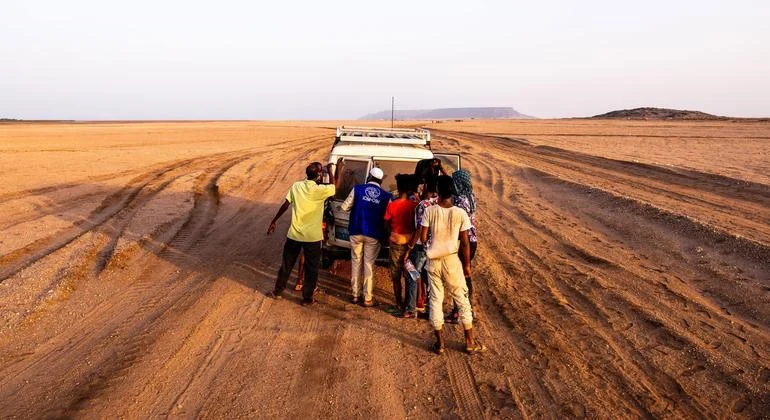
- Late September 2026 (20–30 September): Reports emerge of over 3,000 stranded migrants across desert routes in Djibouti. The IOM notes that many are suffering from acute dehydration and exposure.
- Early October 2026: The conflict in Yemen reaches a new peak as government forces claim to have retaken strategic positions at the mouth of the Red Sea, prompting a fresh wave of refugees to flee toward Djibouti.
- 6 October 2026: The IOM issues a formal warning to the international community, highlighting the "overlapping emergencies" and the immediate need for resources to assist both refugees and stranded migrants.
Supporting Data: The Human Cost of the Desert Route
The data surrounding the current crisis paints a grim picture of the conditions faced by those caught in the transit. Beyond the statistics of arrivals and departures, the reality on the ground is one of profound suffering.
The desert regions near the Djibouti-Ethiopia border have become graveyards for many. The IOM has received consistent, harrowing reports of migrants perishing from thirst and exhaustion while attempting to bypass official checkpoints. As enforcement tightens, migrants are increasingly opting for "secondary routes"—treacherous, uncharted paths through the desert that are significantly more dangerous and far beyond the reach of humanitarian aid patrols.
Furthermore, the demographic profile of these migrants is largely young and economically desperate. They view the Gulf states as their only pathway out of poverty, yet they remain largely uninformed about the reality of the war in Yemen. The disconnect between the migrants’ perceptions of opportunity and the stark, blood-stained reality of the Yemeni conflict is a primary driver of the current crisis.
Official Responses: A Call for International Solidarity
The government of Djibouti, despite its limited resources, has been praised by international observers for its rapid response to the influx. Local authorities in Obock have been on the front lines, providing initial reception and emergency aid. However, as the scale of the crisis grows, the local infrastructure is being pushed to the breaking point.
The Role of the IOM
The IOM is currently engaged in a multi-pronged intervention. This includes:
- Direct Assistance: Distributing food, clean water, and hygiene kits to new arrivals.
- Voluntary Returns: Facilitating assisted voluntary return (AVR) programs for those who wish to go back to their countries of origin.
- Advocacy: Calling on the international community to recognize the complexity of the situation and provide increased financial and material support.
The United Nations Perspective
UN Secretary-General António Guterres has weighed in on the wider conflict, condemning the cross-border Houthi attacks on Saudi Arabia. The UN’s stance is clear: the humanitarian situation in Djibouti is a direct byproduct of the political stalemate in Yemen. Without a cessation of hostilities, the UN warns that the pressure on neighboring nations like Djibouti will only continue to mount.
Mr. Coissac emphasized that the Djiboutian state cannot manage this burden alone. "The country is responding to people moving in different directions, for different reasons, but they all share the same immediate reality: they need safety, protection, and basic assistance. The international community has a moral obligation to ensure that this small nation is not left to collapse under the weight of a regional catastrophe."
Implications: The Long-Term Stability of the Horn
The crisis in Djibouti is a microcosm of the wider geopolitical challenges facing the Horn of Africa. The implications of this "overlapping emergency" are twofold:
1. Regional Security and Humanitarian Capacity
The strain on Djibouti threatens the stability of a key regional player. If the humanitarian crisis is not managed effectively, the potential for social unrest within host communities increases. Furthermore, as the Bab al-Mandab Strait remains a global maritime choke point, any instability within the surrounding nations poses a risk to global supply chains and security.
2. The Failure of Information Dissemination
The fact that thousands of migrants continue to move toward an active war zone suggests a critical failure in communication networks. Many migrants are being misled by human smugglers who prioritize profit over human life, painting a picture of safety and employment that simply does not exist in Yemen. Addressing this requires not only humanitarian aid but also a strategic communication campaign to inform potential migrants of the actual risks of the journey.
3. The Need for a Holistic Approach
The situation demands a move away from siloed responses. A successful strategy must integrate:
- Immediate Relief: Funding for food, water, and medical care.
- Political Engagement: Renewed international efforts to bring a peaceful resolution to the conflict in Yemen.
- Economic Development: Addressing the root causes of migration in Ethiopia and other source countries to ensure that leaving home is a choice, not a desperate gamble.
As the situation evolves, the international community remains under scrutiny. Will the response be reactive, addressing only the most immediate needs of the starving and the displaced? Or will it be proactive, addressing the underlying drivers of the conflict and the migration flows that have turned Djibouti into a place of such profound, overlapping tragedy?
For now, the people arriving on the shores of Obock remain focused on the next meal and the next day. The international community, however, must look further—toward a future where such desperate journeys are no longer the only option for thousands of the world’s most vulnerable people.
 Jia Lissa
 Asep Darmawan
 Nana
Nana
