

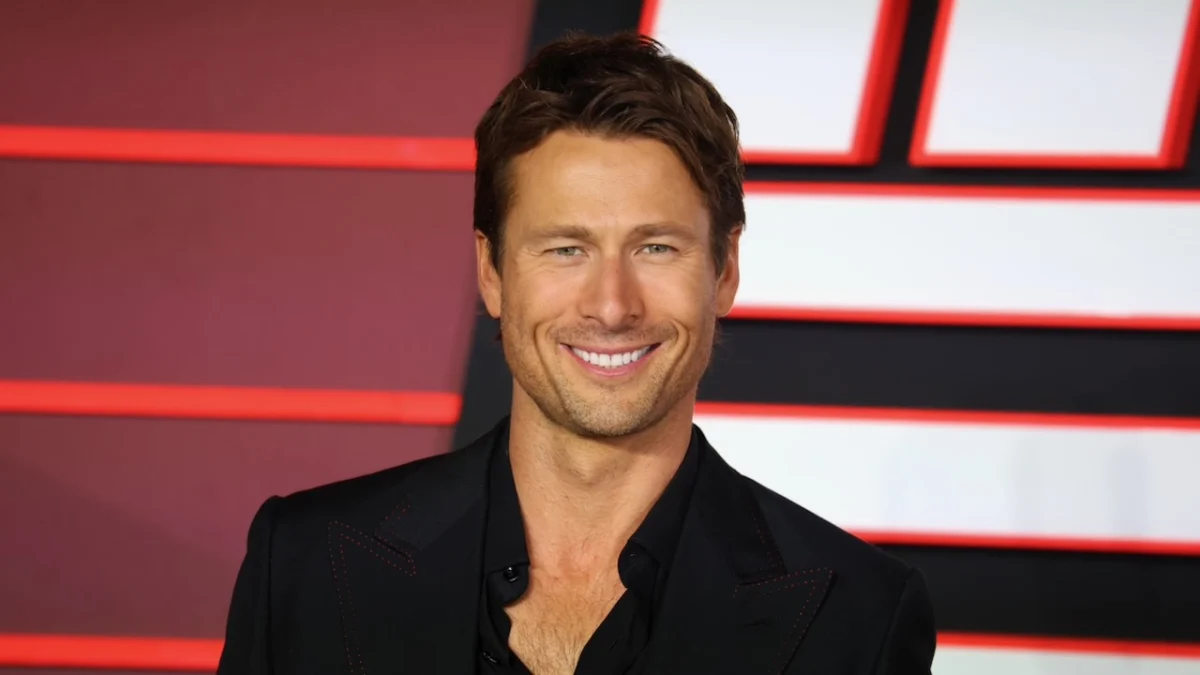
In an era defined by hyper-polarization, social media call-out culture, and relentless pressure on public figures to take a stand on every global issue, a major cultural shift is quietly taking place in the entertainment industry. Hollywood’s biggest box-office draws and global music icons are increasingly choosing a radical path: opting out of the political conversation entirely.
Leading this charge is actor Glen Powell. In a candid interview with Esquire, the Top Gun: Maverick and Twisters star opened up about why he deliberately avoids political discourse, joining a growing roster of celebrities who believe that engaging in the modern political arena does more harm than good to both their careers and the public sphere at large.
Powell’s stance reflects a broader, systemic recalibration among major cultural figures who are finding that the cost of public political engagement—ranging from alienated fan bases to career backlash—outweighs the perceived benefits. As audiences grow weary of being lectured by the wealthy and famous, a new era of celebrity neutrality is taking root.
Main Facts: The Anatomy of Powell’s Neutrality
The core of the story centers on Glen Powell’s recent reflections on political discourse, upbringing, and career philosophy. According to the actor, his aversion to politics stems from childhood. He recalled how his parents deliberately avoided bringing up current events or partisan debates at the family kitchen table, prioritizing harmony and open communication over ideological sparring.
As he grew older and entered the public eye, Powell recognized that this early lesson insulated him from the vitriol that defines modern public life.
"Over time, I realized that politics divide people," Powell told Esquire. "People trying to prove their point—for me, it’s the worst version of a conversation. I genuinely do not like the discourse. It’s not as healthy as it once was."
Rather than offering hot takes or attempting to navigate the landmines of social media algorithms, Powell has chosen to step back entirely. He admitted that, in his view, genuine, productive political engagement is "not presently possible" in the current cultural climate.
At the same time, Powell was careful not to condemn those who choose a different path. "I applaud people for jumping into those things and fighting for what they believe in," he noted. "If I were a political person, I would be talking about it. For me, my calling is elsewhere."
Chronology: The Shift Away From Celebrity Activism
To understand Powell’s perspective, it helps to examine the timeline of how celebrity activism has evolved over the past decade, and how the pendulum has swung sharply back toward neutrality.
The Peak of Outspokenness (2016–2020)
Following the 2016 U.S. presidential election, Hollywood entered a period of unprecedented political visibility. Award shows routinely doubled as platforms for anti-administration speeches, and actors faced immense pressure from fans and peers alike to use their platforms to signal political allegiance. Silence was frequently interpreted as complicity.
The Backlash and Fatigue (2021–2024)
As cultural polarization deepened and the global landscape grew increasingly complex—marked by contentious elections, polarized social movements, and polarizing international conflicts—both audiences and celebrities began experiencing severe fatigue. Fans increasingly voiced frustration with being lectured by wealthy stars living in gated communities. Concurrently, studio executives worried that alienating half of a movie’s potential box-office demographic over political statements could tank hundred-million-dollar investments.
The Era of Opting Out (2025–Present)
By 2025 and 2026, the strategy of deliberate political avoidance became a fully realized industry movement. Rather than risking career damage, major stars began openly articulating why they prefer to keep their private views private.
- November 2025: Academy Award-winning actress Jennifer Lawrence reflected on her past political outspokenness during an interview with The New York Times Magazine. Lawrence noted that she had consciously changed course from her early opposition to Donald Trump during his first administration. She explained that she no longer wished to "start turning people off to films and to art" simply because of her personal political opinions.
- June 2026: Dwayne "The Rock" Johnson, long the subject of speculative presidential runs and a massive global fixture, told Esquire flatly that he was "going to keep my politics to myself." Johnson’s pivot represented a major milestone, given his universal cross-demographic appeal.
- September 2026: Pop superstar Ed Sheeran addressed the complexities of international politics following a high-profile controversy surrounding his tour. After facing intense pressure from stadium owners, rapper Macklemore—who was slated to open for Sheeran—departed the tour due to his onstage activism regarding Palestine. Sheeran subsequently issued a comprehensive statement clarifying his own stance on political engagement.
Supporting Data and Industry Perspectives
The decisions made by Powell, Johnson, Lawrence, and Sheeran are supported by growing data regarding audience sentiment. Market research over the past several years indicates that a significant percentage of consumers—particularly those in suburban and rural demographics, who form the bedrock of domestic and international box-office grosses—prefer their entertainment untainted by partisan messaging.
When pop stars and actors step into the political ring, the financial stakes are immense. A single ill-received tweet or award-show speech can trigger coordinated boycotts, tank streaming numbers, and prompt studios to quietly re-evaluate a star’s viability as a four-quadrant lead.
Ed Sheeran’s commentary on his own touring philosophy provides a masterclass in this modern corporate-artistic calculus. Addressing the controversy surrounding Macklemore’s departure, Sheeran articulated a clear boundary between having a conscience and weaponizing a professional platform:
"I have my personal views on this devastating conflict," Sheeran stated, referring to the Israel-Hamas war. "Just because I choose not to speak publicly, it doesn’t mean I don’t have them, and it doesn’t mean I don’t care. Nor does it mean I don’t support causes in my own, personal way."
Sheeran elaborated on why he deliberately insulates his concerts from geopolitics:
"There is a reason I do not use my professional platform for politics — my audience includes young people, often children, of all backgrounds. Those who come to my shows do not expect a political forum… I choose to use my fame and platform to be a place of safety and sanctuary, to maintain diplomacy and keep conversations open, not closed. If we only focus on shouting the loudest, nothing will ever change. There are different approaches to being an advocate for change."
Official Responses and Public Reactions
The public reaction to the exodus of celebrities from political discourse has been mixed, reflecting the very polarization that stars are trying to escape.
On one hand, cultural critics and political activists have argued that celebrities have a moral obligation to use their immense reach to highlight human rights abuses, domestic policy failures, and global injustices. Critics of the "neutrality movement" contend that choosing silence in the face of suffering is a political act in itself—one that tacitly supports the status quo and prioritizes box-office returns over human empathy.
On the other hand, a substantial portion of the public has welcomed the shift with a collective sigh of relief. For millions of moviegoers and concert attendees, entertainment serves as a vital escape from the exhausting daily grind of culture-war politics. Social media commentary frequently praises stars like Glen Powell and Dwayne Johnson for respecting their audiences enough not to assume fans look to action heroes or rom-com leads for geopolitical guidance.
Industry insiders, speaking anonymously to entertainment trades, suggest that public relations and crisis management firms are increasingly advising clients to adopt the "Sheeran-Powell model." By keeping heads down and focusing purely on the craft, actors and musicians can shield themselves from the volatile swings of internet outrage.
Implications: What Does Hollywood’s Neutrality Mean for the Future?
The retreat of major celebrities from political advocacy carries significant long-term implications for both the entertainment industry and modern political movements.
1. The Decentralization of Cultural Influence
Historically, political campaigns and non-profit organizations relied heavily on celebrity endorsements to mobilize young voters and raise awareness for charitable causes. As top-tier stars systematically step back, campaigns will need to find alternative ways to capture public attention. This could lead to a democratization of advocacy, shifting the spotlight away from wealthy elites and back toward grassroots organizers, local community leaders, and authentic digital creators.
2. The Re-emergence of "Pure" Entertainment
For decades, Hollywood operated under the old studio-system ethos that movies and music should appeal to everyone, regardless of political affiliation. The hyper-politicized era of the late 2010s temporarily shattered that norm, resulting in polarized box-office results where films wearing their politics on their sleeves frequently alienated broad segments of the audience. Powell’s philosophy signals a return to the classic Hollywood model: treating art as a universal sanctuary rather than a partisan weapon.
3. Redefining Authentic Activism
An underlying theme in the statements made by Powell, Sheeran, and Lawrence is the distinction between performative public posturing and genuine, private conviction. By asserting that they care deeply about issues without feeling the need to broadcast their opinions to millions of strangers, these artists are challenging the digital-age assumption that silence equals apathy.
Whether this trend will permanently reshape celebrity culture remains to be seen. However, as Glen Powell continues his ascent to the top tier of Hollywood stardom, his refusal to play the political game proves that sometimes the smartest career move—and the most peaceful path—is simply refusing to pick up the microphone.
 Nana
Nana
 Nana Muazin
