

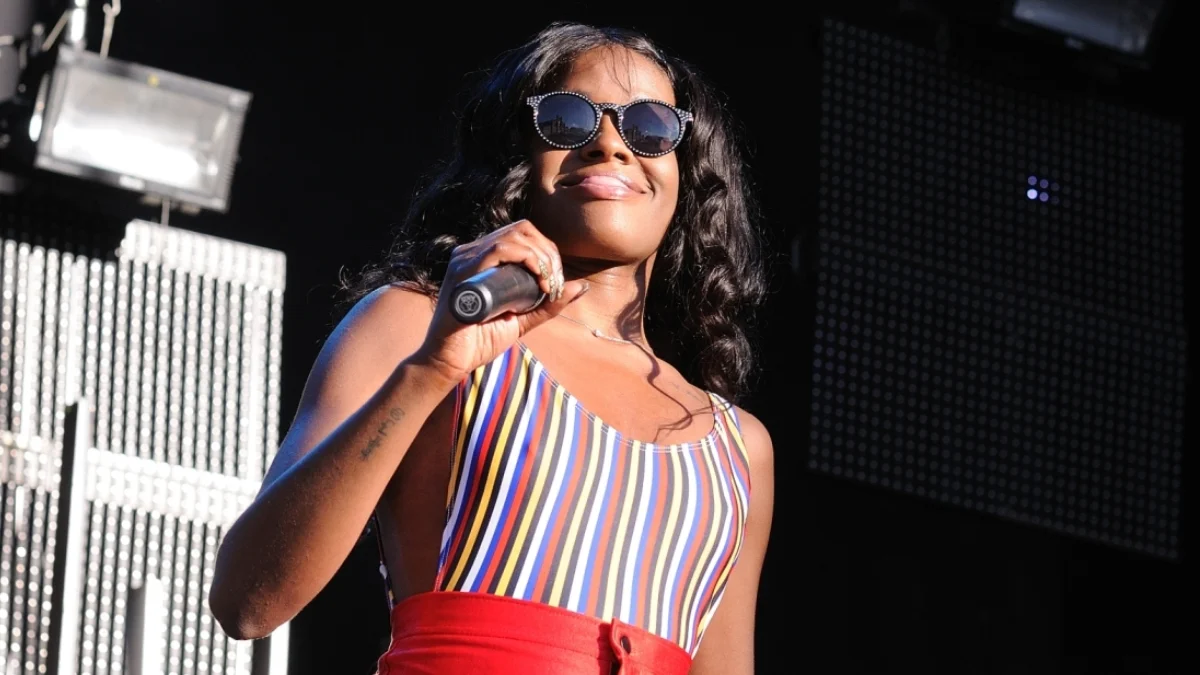
TEL AVIV — In a development that has once again confounded her fanbase and added another layer to her notoriously turbulent public persona, outspoken rapper Azealia Banks has officially relocated to Israel. The “212” hitmaker took to social media this week to share snapshots of her new residence in Tel Aviv, formally cementing what has become one of the most volatile geopolitical and cultural pivots in modern entertainment history.
"Moving in," Banks wrote on X (formerly Twitter), accompanying a photograph of her new home. "If you would have told me years ago I’d end up moving to Tel Aviv and liking it, I would have said you’re crazy."
For an artist whose career is defined almost as much by her digital provocations and ideological about-faces as it is by her critical acclaim, the permanent move marks a stunning climax to a multi-year saga of burning, rebuilding, and ultimately crossing over bridges.
The Chronology of a Volatile Relationship
To understand the weight of Banks’ recent relocation, one must trace the dizzying, pendulum-like trajectory of her relationship with Israel—a dynamic characterized by severe condemnation, sudden romanticization, fiery nationalism, and violent rejection, all compressed into less than a decade.
2018: The Initial Falling Out
The friction began in 2018 when Banks traveled to Tel Aviv to perform at the Barby venue. What was anticipated to be a standard international tour stop quickly devolved into public acrimony. Following the concert, Banks took to social media to air grievances regarding what she described as overtly racist treatment encountered in local shops, restaurants, and at Ben Gurion Airport.
At the time, her condemnation was absolute and uncompromising. “I will never ever ever ever ever go to Israel again,” she wrote on a previous X account. “I didn’t get paid enough to put up with the social culture in Israel tbh. I won’t be coming back unless it’s for some real money.” For years, the rapper maintained a strict posture of estrangement from the country, aligning her grievances with broader critiques of international cultural landscapes.
2024–2025: The Zionist Pivot
By mid-2025, however, Banks’ public stance underwent a radical and unexpected transformation. Against the backdrop of the escalating conflict in Gaza—which drew widespread international condemnation and a formal UN commission finding of genocide—Banks pivoted aggressively in the opposite direction.
In a series of blistering social media posts, she began criticizing Black solidarity movements for supporting Palestine, launching into broad anti-Arab diatribes, and ultimately declaring to her followers: "I’m a Zionist."
During this ideological spree, Banks attempted to substantiate her views by pointing to historical issues of human rights abuses in parts of the broader Middle East. "The Arab world is not gonna push this oppressed victim shit off like they aren’t RAMPANTLY enslaving and degrading Africans behind closed doors," she posted.
Historians have indeed documented centuries of African enslavement across various historical empires within the Islamic world, alongside enduring issues of anti-Black prejudice in select modern Middle Eastern societies. However, sociologists and political analysts sharply criticized Banks for applying these sweeping generalizations wholesale to Palestinians—a population with its own distinct national identity, struggles, and an established, long-standing Afro-Palestinian community.
Late 2025: The Return and the Flag
Capitalizing on her shifting worldview, Banks broke her self-imposed seven-year exile and returned to Israel in late 2025. Her visit was deliberately timed to coincide with the second-anniversary commemorations of the October 7th attacks. During the trip, she made a high-profile pilgrimage to the site of the Nova music festival before taking the stage in Tel Aviv. In a display that stunned many observers, she performed draped in an Israeli flag and wearing a prominent Star of David pendant.
Early 2026: The March Reversal
True to form, Banks’ alignment with Israel proved fragile. When direct military exchanges between Israel and Iran escalated in March 2026, dragging international anxieties to a fever pitch, the rapper experienced yet another swift ideological breakdown. Furious over the geopolitical entanglement and its potential implications for the United States, Banks turned viciously on the Israeli government and its leadership.
"On second thought, FUCK ISRAEL," she posted in a tirade that sent shockwaves through her newly acquired Israeli fan base. "I actually HOPE Netanyahu is dead. We should strike a big [deal] with Iran and just go to war with Israel and keep the petrodollar strong."
September–October 2026: Settlement and Relocation
Despite her violent rejection of the state just months prior, Banks’ mercurial temperament swung back once more. By September, she had deleted her anti-Israel diatriles and returned to questioning the validity of Black-Palestinian solidarity.
"It’s really the joint struggle of black solidarity with palestine that just doesn’t really sit right with me," she wrote in a post that remains active on her profile. "Why would any modern black american want to trauma bond with a group that has nothing to offer us and we’ve spent no time building anything with?"
By October, the rhetoric translated into real estate. Banks packed her belongings, relocated to Tel Aviv, and announced that she had finally found a conducive environment to complete her long-awaited studio album.
Supporting Data and Creative Environment
While political observers remain baffled by her rapid transitions, Banks insists that her move is primarily artistic rather than ideological. In follow-up posts addressing followers who questioned her sanity, she defended the infrastructure of Tel Aviv and the ease of her day-to-day life there.
"That’s how you know a city is alive… The movement of people in and out of a city," she posted. "So many Israelis want to be in New York and so many New Yorkers want to be in Tel Aviv."
Addressing the geographical distance, she added: "Tel Aviv to New York is the exact same distance as New York to LA. Y’all are acting like I moved to Australia lol. I’m 5 hours away and here making my album FINALLY."
According to Banks, the local creative ecosystem offers a unique psychological freedom that she struggled to find in the United States or the UK, where she has frequently found herself embroiled in intense public feuds and social media "cancel culture."
"It’s ironically just been easier to create here because Israel’s arts scene is really mature," Banks explained. "People aren’t withholding stems and holding grudges about social issues, and it’s freeing. Everyone in Israel thinks my political opinions fucking suck and think I have trash taste in men, but no one is trying to sabotage me for that."
Official Responses and Public Reaction
The reaction to Banks’ relocation has been predictably polarized, reflecting the deep international fault lines that define perceptions of Israel today.
- The Local Reception: Israeli cultural figures and local media outlets have responded with a mixture of amusement, skepticism, and cautious welcome. While her music has retained a niche cult following in the country’s electronic and underground scenes, her volatile public statements—ranging from calling for the death of the prime minister to declaring herself a proud Zionist—have left many locals hesitant to fully embrace her. Nevertheless, tickets for her upcoming performance at the Tel Aviv Amphitheater on October 8th continue to draw interest, driven largely by the sheer spectacle of her presence.
- International Fanbases: On global social media platforms, reactions from her core fanbase have ranged from deep alienation to dark humor. Many long-time listeners expressed exhaustion with her ideological pivots, pointing out the stark hypocrisy of moving to a country she wished war upon just six months prior. Others noted the total erasure of her previous political stances, observing that her X profile has been systematically scrubbed of her harsh spring 2026 criticisms.
Implications of the Move
Azealia Banks’ permanent move to Tel Aviv carries several broader implications for both her career and the intersecting worlds of celebrity culture and geopolitics:
- The Weaponization of "Cancel-Free" Spaces: Banks’ rationale for moving—citing a mature arts scene where people do not hold grudges over social issues—highlights a growing trend among controversial public figures. Artists who find themselves alienated by Western progressive cultural norms increasingly seek out environments where societal pressure or political incorrectness is met with local indifference, regardless of the host nation’s global standing.
- The Commodification of Geopolitics: For critics, Banks’ trajectory serves as an extreme case study in how geopolitical conflicts can be superficially adopted, performed, and discarded by celebrities for clout, shock value, or personal convenience. Moving fluidly from anti-Israel crusader to vocal Zionist, to violent detractor, and finally to a resident of Tel Aviv within a span of three years underscores a profound detachment from the human realities on the ground.
- Future Artistic Output: Professionally, Banks has continuously struggled to match the commercial and critical highs of her early 2010s output due to her self-sabotaging behavior and industry blacklisting. Whether the relative tranquility of Tel Aviv and a supportive local crew will finally yield the cohesive, long-promised new album remains to be seen.
As Banks prepares to take the stage at the Tel Aviv Amphitheater, she remains one of contemporary pop culture’s most unpredictable figures—a lightning rod for controversy who has seemingly found temporary harbor in one of the world’s most fiercely contested geopolitical zones.
 Nana Muazin
 Asro
Asro
