

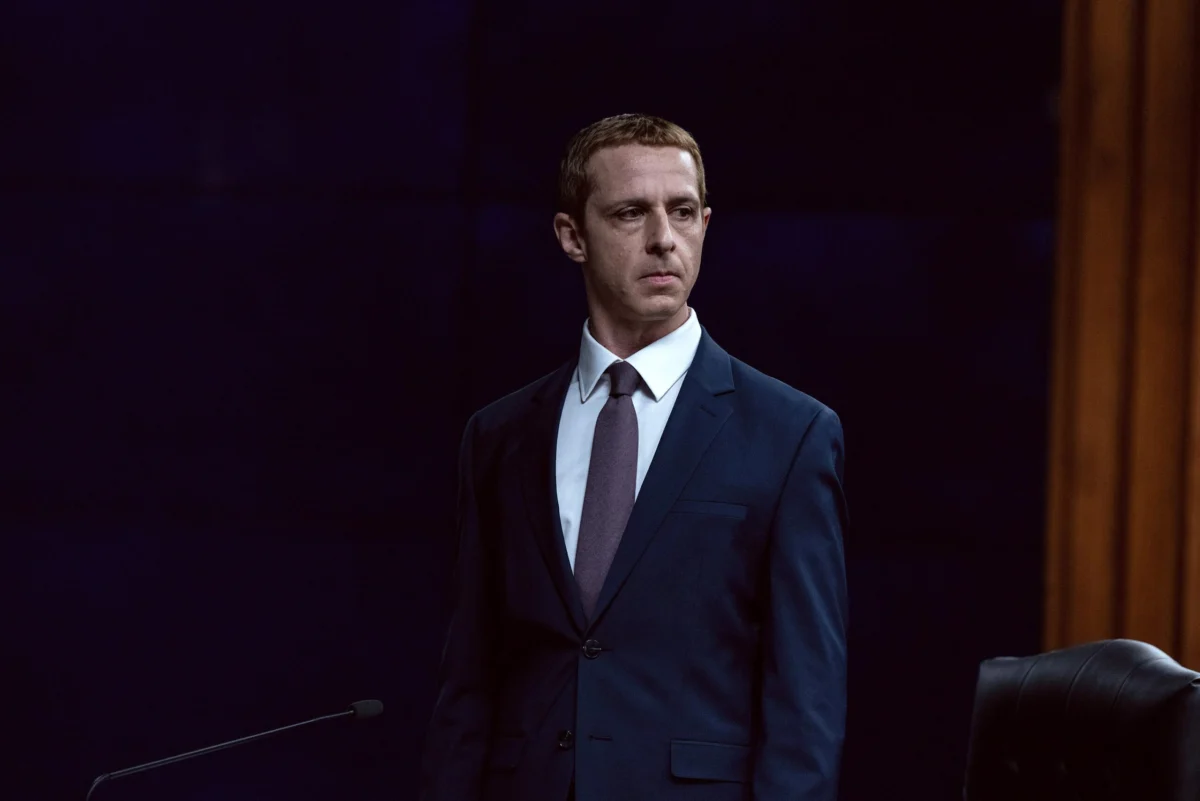
In the landscape of modern cinema, few filmmakers possess a brand as recognizable as Aaron Sorkin. Known for his rapid-fire dialogue, kinetic pacing, and a penchant for idealism filtered through the halls of power, Sorkin has carved out a singular niche in Hollywood. However, with the release of his latest directorial effort, The Social Reckoning, that signature style is facing an uncomfortable collision with a shifting cultural and cinematic reality. While the film is competently crafted and boasts a stellar cast, it struggles to justify its own existence in an era that has moved beyond the "prestige drama" tropes that defined the early 2000s.
The Premise: A Technical Breakdown
On its own merits, The Social Reckoning is far from a disaster. It is a polished, professional production that highlights Sorkin’s strengths as a writer who can make high-stakes meetings and legislative hearings feel like gladiatorial combat. The film chronicles the harrowing journey of Facebook whistleblower Frances Haugen, played with disciplined intensity by Mikey Madison, alongside the investigative rigor of Wall Street Journal reporter Jeff Horwitz, portrayed by Jeremy Allen White.
The narrative architecture relies on a dual-timeline structure. We witness the painstaking assembly of the "Facebook Files"—a mountain of internal data exposing the platform’s moral failures—intercut with the high-pressure environment of a future congressional hearing, where Mark Zuckerberg (Jeremy Strong) prepares to face the music. It is a familiar rhythm for Sorkin fans, echoing the structural DNA of his previous works, yet it lacks the electrifying urgency that once made his scripts the gold standard of the industry.
Chronology of a Disconnect
To understand the friction surrounding The Social Reckoning, one must look back to 2011. David Fincher’s The Social Network, written by Sorkin, was a cultural touchstone. It captured the birth of a digital empire with a biting, cynical wit that felt perfectly calibrated to the zeitgeist of the late 2000s. It was a biopic that felt like a thriller—a study of ego, betrayal, and the fundamental shift in how humans communicate.
The Social Reckoning attempts to mirror this prestige, but it pivots in tone and intent. While the former was a character-driven biopic, the latter is a "process film." It is an procedural examination of institutional rot. In this way, the film feels more aligned with Sorkin’s A Few Good Men than with the Fincher-helmed origin story of Meta. White and Madison serve as the dogged investigators—the Tom Cruise and Demi Moore archetypes—while Jeremy Strong’s Zuckerberg is cast as the untouchable, mercurial witness in the vein of Jack Nicholson’s Colonel Jessup.

However, where A Few Good Men offered a cathartic, iconic confrontation, The Social Reckoning is markedly more restrained. It avoids the explosive "You can’t handle the truth" climax, opting instead for a resolution that has been described as curiously optimistic, almost reminiscent of a John Hughes film, complete with the triumphant, albeit tonally jarring, fist-pump ending.
The Casting Conundrum
The casting of the film is a fascinating study in intent versus execution. By hiring Mikey Madison (an Oscar winner), Jeremy Strong (an Oscar nominee), and Jeremy Allen White (a Golden Globe nominee), Sorkin clearly intended to mirror the breakthrough casting choices of The Social Network, which catapulted Jesse Eisenberg, Andrew Garfield, and Rooney Mara to stardom.
Yet, there is a distinct irony at play. By populating his film with three actors who achieved massive cultural cachet through the medium of prestige television—The Bear, Succession, and various independent breakouts—and pairing them with a director whose own sensibilities are rooted in the television writing room, the final product feels less like a cinematic event and more like a high-budget cable television special. It carries the aesthetic of a 20-year-old TNT programming block: well-acted, expertly paced, but ultimately tethered to a medium that is no longer the primary driver of artistic innovation.
Supporting Data: The Shifting Oscar Landscape
The critical reception of The Social Reckoning cannot be separated from the current realities of the film industry. The Academy of Motion Picture Arts and Sciences has undergone a significant evolution in its voting patterns. The "mid-budget drama"—the staple of the 1990s and 2000s, where Sorkin reigned supreme—is now an endangered species.
Current Best Adapted Screenplay nominees and winners tend to fall into two distinct buckets:

- The Epic Scope: Films that challenge the medium, such as The Odyssey or Project Hail Mary, which push the boundaries of visual storytelling and scale.
- The High-Risk Independent: Smaller, grittier films like The Invite or All of a Sudden, which operate on tighter budgets and take bold thematic risks that resonate with modern, socially conscious audiences.
Even within the category of conventional biopics, the bar has moved. A film like Being Heumann earns its place in the conversation by tackling the specific, visceral challenges of underrepresented communities. In comparison, The Social Reckoning—while technically superior—is effectively shouting into the wind of a marketplace that has moved on.
Official Responses and Industry Context
In recent interviews, including a notable sit-down with IndieWire, Mikey Madison discussed her attraction to the project, specifically citing a desire to work with the "restraint" of Sorkin’s writing. While the actors remain supportive of the work, the industry chatter suggests a growing divide between the "Sorkin style" and what audiences crave in 2026.
Sorkin’s directorial track record—every film he has helmed has received at least one Oscar nomination—is impressive, but it is also a legacy built during a unique moment in history. Two of his previous features were released during the COVID-19 pandemic, finding their audience primarily through streaming platforms at a time when theatrical options were limited. Now that the theatrical landscape has replenished and the competitive field is more diverse and forward-thinking, Sorkin’s "throwback" approach feels increasingly vulnerable to the accusation of being dated.
Implications for the Future of Prestige Cinema
The failure of The Social Reckoning to capture the cultural imagination is not an indictment of Sorkin’s talent, but rather a symptom of a larger, systemic shift. The film is a reminder that prestige is not a static quality. What was considered revolutionary fifteen years ago is now considered formulaic.
The implications for Sorkin—and for filmmakers of his generation—are clear: the audience is no longer content with the "Great Man" theory of history, nor are they satisfied with the rapid-fire, witty dialogue that once served as a substitute for deep emotional complexity. The modern viewer expects a film to engage with the world as it is today, not as it was in the era of early social media expansion.

There is, undoubtedly, a wide audience that will appreciate the craft on display in The Social Reckoning. It remains a "solid" movie in the most traditional sense of the word. However, in the brutal calculus of the awards season and the shifting priorities of the modern cinephile, "solid" is no longer enough to make a dent.
As we look toward the future, the success of stories like those seen in The Social Reckoning will likely move away from the traditional, dialogue-heavy, "process-driven" dramas and toward works that embrace visual language, diverse perspectives, and the messy, nonlinear reality of the digital age. Aaron Sorkin has spent his career writing for the smartest people in the room; perhaps the next step is to recognize that the room has changed entirely.
 Dwi Wanna
 Nana
Nana
