

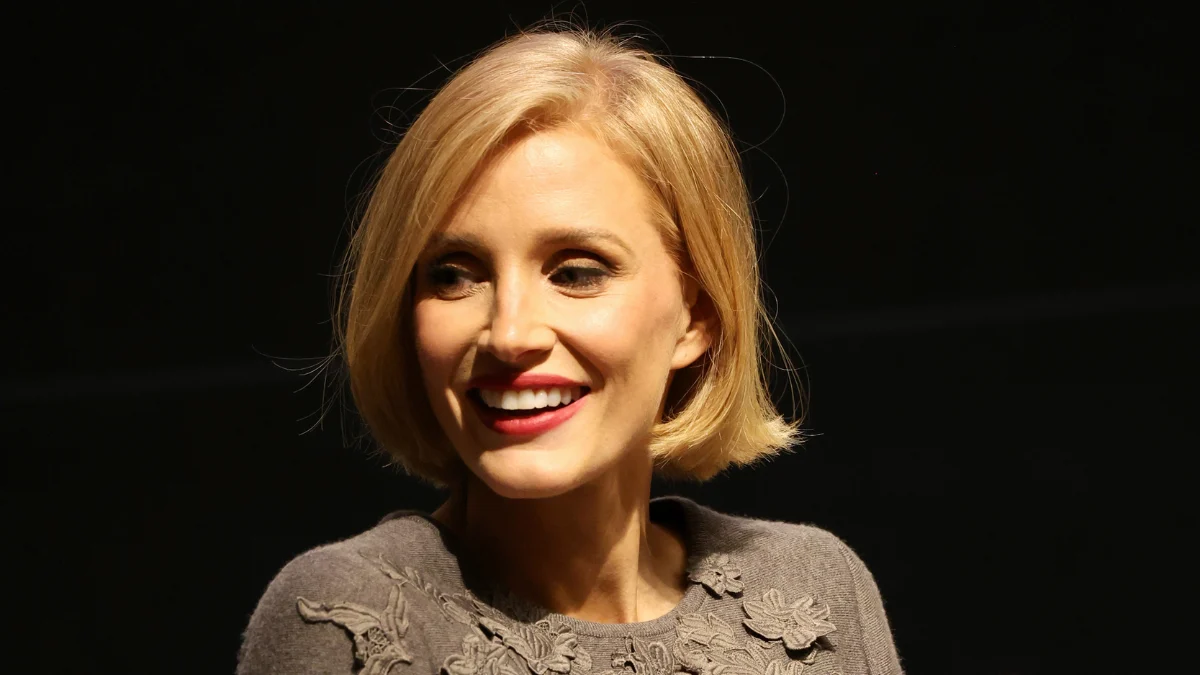
In a rare and candid look at the friction between artistic integrity and corporate risk management, Academy Award-winning actress Jessica Chastain has doubled down on her public criticism of Apple TV+. The point of contention: the streamer’s abrupt decision to pull the plug on her highly anticipated limited series, The Savant, just days before its scheduled premiere in September 2025.
The postponement occurred in the immediate, volatile aftermath of the assassination of far-right activist Charlie Kirk, a political event that sent shockwaves through the American cultural and political landscape. While Apple TV+ maintained that the delay was a matter of “careful consideration,” Chastain’s recent remarks suggest a deeper divide between the studio’s risk-averse marketing strategy and the moral responsibility she felt toward the project’s subject matter.
A Stance of Accountability
In a wide-ranging cover story for Porter magazine, published this past Monday, Chastain addressed the controversy with a level of transparency rarely seen in an industry that often prioritizes public relations over personal conviction.
For Chastain, who serves as both the star and an executive producer on the series, the delay was not merely a scheduling inconvenience—it was an ethical failure. “I felt responsible to a lot of people, to all of the actors in the series… to the real person I played,” she explained. “I felt accountability to her because of the sacrifices that she’s made and the difficult things she’s done to keep us all safe.”
The actress, known for her commitment to complex, often controversial roles, emphasized that her decision to speak out was rooted in a belief that professional gratitude should not necessitate silence. Addressing the systemic pressure often placed on women in Hollywood to remain “grateful” for their opportunities, Chastain noted, “You can be honest in a kind and respectful way and feel like you’re still speaking your truth, you’re still authentic to who you are without being fearful of—I don’t know—I guess of never working again.”
The Chronology of a Disrupted Launch
The trajectory of The Savant has been anything but conventional. The series was slated for a high-profile release on September 23, 2025. However, the assassination of Charlie Kirk—a polarizing figure in the American political sphere—created a climate of extreme sensitivity.
- September 2025: Apple TV+ abruptly halts the rollout of The Savant just days before its premiere. The decision creates a vacuum in the streamer’s fall lineup.
- Late 2025–2026: Silence prevails regarding the show’s status, leading to industry speculation about whether the project would ever see the light of day.
- Early 2027: Apple TV+ officially confirms that The Savant has been rescheduled for a spring 2027 release.
- Current Status: The series is now set to debut roughly 18 months behind its original schedule, effectively pushing the release past the 2026 midterm elections.
The delay is widely viewed by industry analysts as a move to avoid any potential association between the show’s plot—which involves infiltrating white supremacist online forums—and the real-world political violence that followed Kirk’s death. By pushing the release into mid-2027, Apple is evidently attempting to distance the fictional narrative from the immediate, raw memory of the assassination.
The Narrative: Exploring the Shadows
The Savant tells the story of Jodi Goodwin, a character based on a real-life whistleblower and investigator. As a veteran, wife, and mother, Goodwin leads a double life, embedding herself in the dark corners of the internet where white supremacists gather to plan domestic terror attacks.
The series is designed to be an uncomfortable, high-stakes thriller that forces the audience to confront the prevalence of radicalization in modern society. Given the themes of political violence and extremist rhetoric, the parallels between the show’s fictionalized threats and the real-world climate surrounding Charlie Kirk’s death are undeniable. It is this proximity to reality that seemingly paralyzed the studio’s marketing department.
Corporate Risk vs. Artistic Vision
When the postponement was first announced, Apple TV+ issued a brief, boilerplate statement: “After careful consideration, we have made the decision to postpone The Savant. We appreciate your understanding and look forward to releasing the series at a future date.”
The brevity of the statement left a void that critics and fans alike were quick to fill with theories. For the studio, the calculus was likely focused on brand safety. Major tech-conglomerate-backed streamers often prioritize “neutrality” in the face of political turmoil. By delaying the show, Apple effectively avoided a potential firestorm of criticism from groups who might have claimed the show was “exploiting” or “commenting” on the assassination of a political figure.
However, Chastain’s rebuttal challenges the corporate logic that views art as a liability. By framing the delay as a “mistake,” she challenged the idea that studios should curate content based on the shifting sands of the 24-hour news cycle. “I really had to go on record that I thought [the postponement] was a mistake… I learned that it’s okay to be honest,” she told Porter.
Implications for the Industry
The standoff between Chastain and Apple TV+ highlights a growing trend in Hollywood: the “postponement as shield” strategy. In recent years, several projects have been shelved or delayed due to real-world tragedies, from school shootings to political unrest. While proponents argue that this shows sensitivity, detractors—like Chastain—argue that it undermines the very purpose of serious art.
1. The Chilling Effect on Political Thrillers
If creators know that their work may be shelved for over a year due to unpredictable real-world events, will they continue to tackle sensitive political topics? The delay of The Savant may signal to showrunners that projects exploring domestic extremism or political radicalization are “high-risk” assets that may be buried if they become too timely.
2. The Power Dynamic in Streaming
Chastain’s vocal criticism represents a shift in the power dynamic between high-profile talent and the streaming giants. In the traditional studio system, actors were often discouraged from criticizing the “hand that feeds them.” By speaking out, Chastain is asserting that her contractual obligation to promote a project does not supersede her moral obligation to the story she is telling.
3. The Election Cycle Factor
The decision to push the release until after the 2026 midterm elections is a telling detail. It suggests that Apple TV+ is not merely concerned with the tragedy of the assassination itself, but with the broader, ongoing political climate of the United States. By opting for a post-election premiere, the studio is choosing to release the show during a time of presumed (or hoped-for) political cooling, effectively stripping the show of its potential to spark timely, necessary discourse.
Conclusion: A Test of Principles
As The Savant prepares for its eventual release in 2027, the cultural conversation surrounding it has already been fundamentally altered. It is no longer just a thriller about fighting domestic terrorism; it is now a case study in the struggle for artistic autonomy in an era of corporate caution.
Jessica Chastain’s insistence on speaking her truth has placed her in a unique position. She has managed to be both a loyal lead actress and a fierce critic of her own employer. As she noted, “We can be grateful and we can also be honest about things. We can be both things at once.”
Whether the public will resonate with The Savant as much in 2027 as they might have in 2025 remains to be seen. However, by refusing to be silenced, Chastain has ensured that when the show finally premieres, it will be viewed through a lens of integrity, regardless of the studio’s attempts to sanitize its timing. The lesson for the industry is clear: in an age of calculated silence, there is significant power—and potential professional cost—in simply telling the truth.
 Nila Kartika Wati
 Lina Hope
 Neng Nana
