

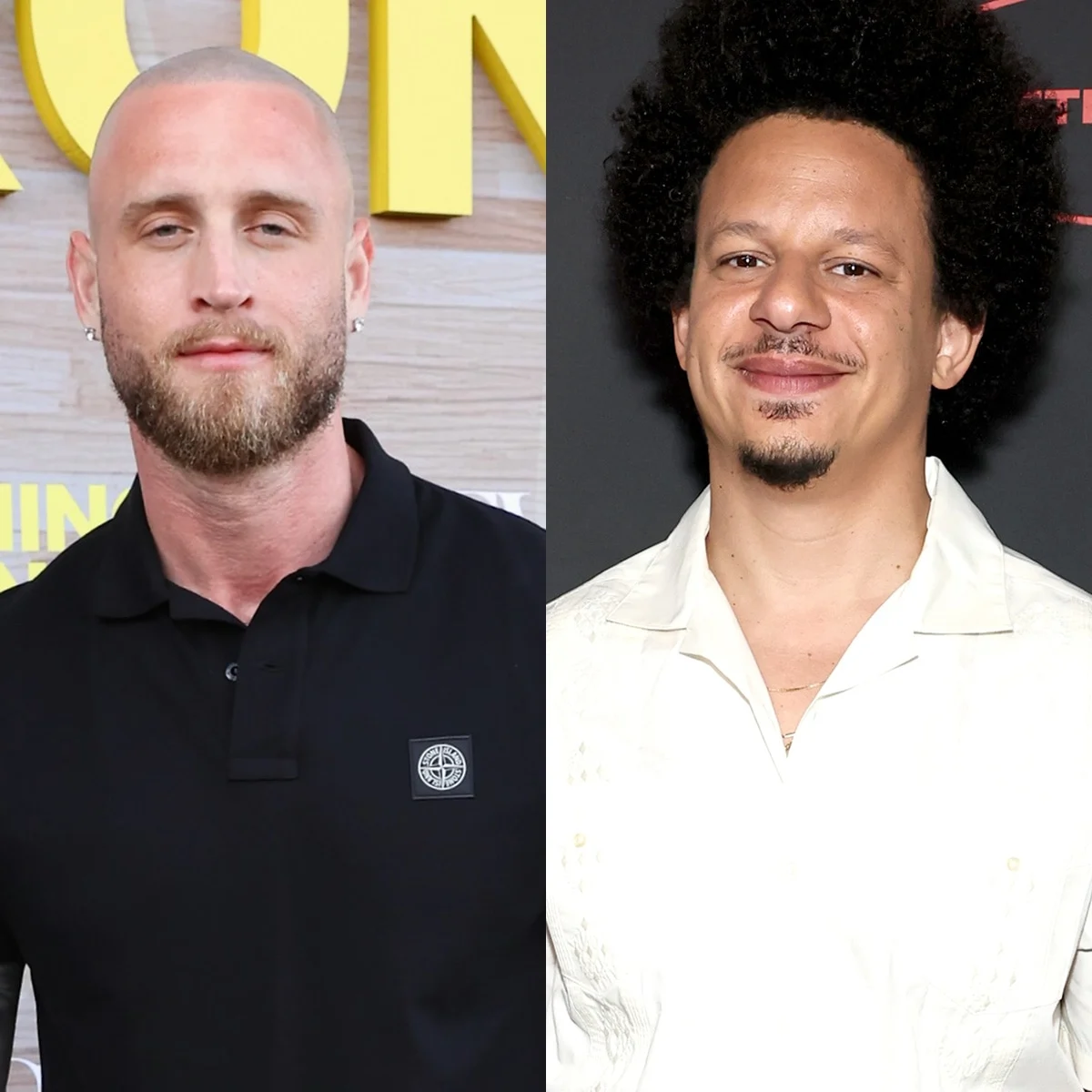
The landscape of celebrity conflict is often defined by hushed whispers, cryptic social media posts, and publicist-vetted statements. However, on October 5, the simmering tension between Chet Hanks and comedian Eric André moved from the digital realm into a physical confrontation at ComplexCon. What began as a one-sided grievance following a 2021 television appearance has evolved into a full-blown public rift, underscoring the volatile intersection of reality television, internet personality, and the modern culture of “cancelation” discourse.
Main Facts: A Tense Encounter in the Public Eye
The incident occurred during the ComplexCon event, where Chet Hanks, the 36-year-old son of Hollywood icons Tom Hanks and Rita Wilson, approached Eric André. The encounter was captured on video and subsequently posted to Hanks’ Instagram account.
In the footage, Hanks—who has garnered a polarizing reputation for his social media presence and "White Boy Summer" persona—confronts the Eric André Show host regarding disparaging comments made in the media years prior. The interaction, which began with a physical touch on the shoulder, quickly escalated in intensity as both men removed their sunglasses and engaged in a heated verbal exchange. The situation was ultimately defused when André’s security detail intervened, physically separating the two parties before the situation could escalate into a physical altercation.
Hanks, seemingly unbothered by the intervention, later used his social media platform to frame the encounter as a victory, alleging that André possessed “no memory whatsoever” of the negative press he generated at Hanks’ expense, only to later pivot to a moralistic defense of his past behavior.
Chronology of the Conflict
To understand the animosity displayed at ComplexCon, one must look back to 2021, the year following Chet Hanks’ appearance on The Eric André Show.
1. The 2021 Fallout
Following the broadcast of his episode, Chet Hanks was the subject of intense media scrutiny. Eric André, in an interview with Rolling Stone, did not mince words regarding his guest. He labeled Hanks "emotionally disturbed," claiming that the guest’s behavior on set was volatile and dangerous. Specifically, André alleged that Hanks attempted to steal a motorcycle, endangering crew members who were standing on ladders.
2. The 2023 Retrospective
André continued to distance himself from the episode in subsequent years, questioning the upbringing of the Hanks children and contrasting Chet’s behavior with that of his brother, Colin Hanks. This public disparagement became a recurring talking point for André in interviews, positioning the comedian as a critic of Hanks’ public persona.
3. The October 2024 Confrontation
The culmination of these years of passive-aggressive media barbs occurred at ComplexCon. Hanks’ account of the event suggests that he intended to confront the comedian about the discrepancy between André’s public stance and his private demeanor. Hanks claims that once André was “sheltered by his security team,” he pivoted from confusion to a specific critique of Hanks’ past use of a Patois accent—a controversy that first went viral in 2019.
Supporting Data and Contextual Analysis
The feud between the two men is not merely a clash of personalities; it is a clash of two very different brands of irony and public performance.
Eric André’s career is built on the foundation of the "anti-talk show," a medium where chaos, discomfort, and absurdity are the primary tools of engagement. His critique of Hanks as "emotionally disturbed" fits neatly into the persona of a comedian who thrives on pushing boundaries. However, this raises a question of professional ethics: to what extent is a host responsible for the behavior of their guests, and does a guest’s chaotic performance on such a show grant the host license to critique them in the press?
Conversely, Chet Hanks has consistently utilized his status as the "black sheep" of a Hollywood dynasty to build a niche internet following. His "White Boy Summer" brand and his penchant for unfiltered, often erratic social media content are intentional provocations. By confronting André, Hanks effectively utilized his own brand of "chaos" to challenge the comedian at his own game, essentially accusing the comedian of performative moral outrage.
Official Responses and Public Statements
As of this writing, E! News has reached out to representatives for Eric André for a formal comment regarding the ComplexCon incident. To date, the comedian’s camp has remained silent, opting not to engage with the narrative being pushed by Hanks on Instagram.
Hanks, however, has been highly vocal. In his Instagram caption, he wrote: “WHO KNEW that in addition to the brain rot and poop joke humor he is known for, Eric is also such a passionate cultural activist.” This sarcasm highlights the core of the conflict: Hanks views André’s critique of his past Patois accent as a cynical shield for the comedian to distance himself from a guest he deemed "bad for business."
The Implications of Celebrity Feuds
The Hanks-André feud is emblematic of a broader trend in the entertainment industry where the line between "content" and "reality" is increasingly blurred.
1. The Weaponization of Social Media
In previous decades, celebrity feuds were mediated through publicists and glossy magazine interviews. Today, the platform of Instagram or X (formerly Twitter) allows the parties involved to curate their own narratives in real-time. By filming and uploading the confrontation, Hanks ensured that the audience would view the incident through his specific lens, effectively controlling the initial news cycle.
2. The Erosion of Privacy
The involvement of security teams and the public nature of the confrontation at a fan-facing event like ComplexCon highlights the increasing lack of "safe spaces" for celebrities. When professional disagreements turn into public face-offs, the fans become the audience for a high-stakes, unscripted reality show.
3. Cultural Activism vs. Performance
The debate over whether André’s criticism of Hanks’ Patois accent is legitimate "cultural activism" or a convenient deflection is a reflection of the current cultural climate. In an era where cultural appropriation is a significant and serious topic, figures like Hanks often find themselves under a microscope. However, when those criticisms are leveled by peers who have built careers on satire and absurdity, the waters become muddied. The public is left to decide whether the accusation holds weight or if it is merely a strategic move to deflect from the chaotic reality of an unsuccessful interview.
Conclusion: A Lingering Tension
The confrontation at ComplexCon serves as a reminder that the Hollywood ecosystem is rarely as harmonious as the red carpets suggest. While the exchange was brief and ultimately non-violent, it solidified a long-standing animosity between two figures who operate in vastly different corners of the entertainment industry.
As both men continue their respective careers—Hanks with his ongoing projects and André with his brand of surrealist comedy—it remains to be seen whether this incident will be the final word in their feud or merely a new chapter in an ongoing saga of personality clashes. For now, the "feud" remains a testament to the fact that even in the world of high-profile entertainment, some professional bridges are burned beyond repair, and sometimes, those burns are broadcast for the entire world to see.
As the industry moves forward, observers will be watching to see if Eric André breaks his silence or if he continues to utilize his security and his platform to keep the son of Hollywood royalty at arm’s length. One thing is certain: the era of the "unfiltered" celebrity interaction is here to stay, and it is increasingly messy.
 Ali Ikhwan
 Lina Irawan
 Nana Muazin
