PARIS — Every season, attending a Louis Vuitton runway presentation comes with a singular, unspoken guarantee: creative director Nicolas Ghesquière will subvert expectations. True to form, for the Spring/Summer 2027 collections at Paris Fashion Week, Ghesquière delivered a conceptual yet deeply wearable curveball centered around a surprising motif—ergonomics.
While the term typically conjures images of office chairs, ergonomic design, in Ghesquière’s hands, became an avant-garde exploration of movement, human anatomy, and sensory ease. Rather than imposing an external, rigid silhouette onto the body, the S/S 27 collection was engineered to move dynamically with the wearer. The resulting runway show was a masterclass in modern luxury: feather-light, cloud-like ensembles that effortlessly concluded one of the fashion calendar’s most high-profile weeks.
Main Facts: The Blueprint of S/S 27
At its core, Louis Vuitton’s Spring/Summer 2027 collection was a direct challenge to the stiffness traditionally associated with high-end designer tailoring.
The Core Concept: Moving away from architectural rigidity, Ghesquière prioritized clothing that molds to the body rather than forcing the body to conform to a pre-determined shape.
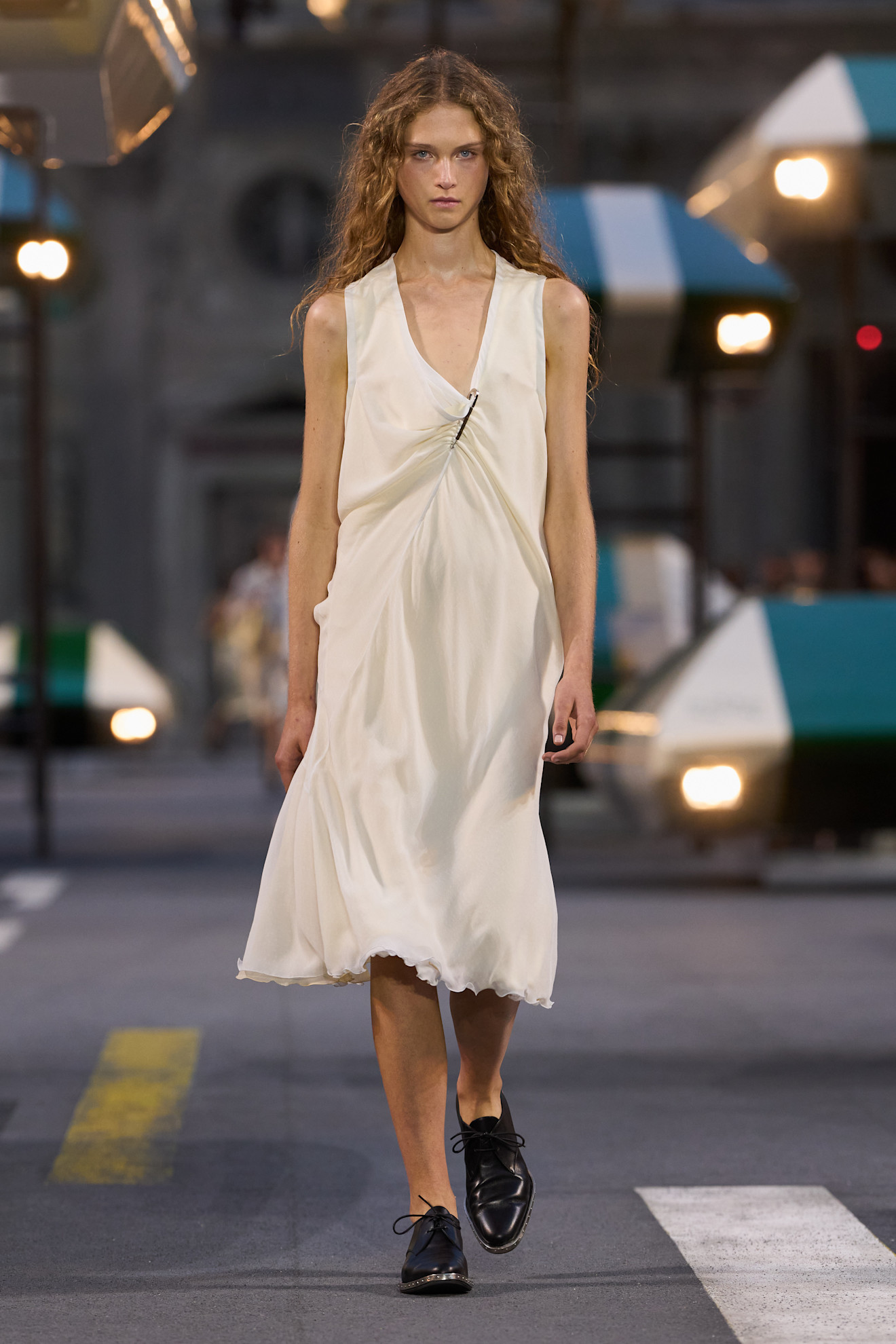
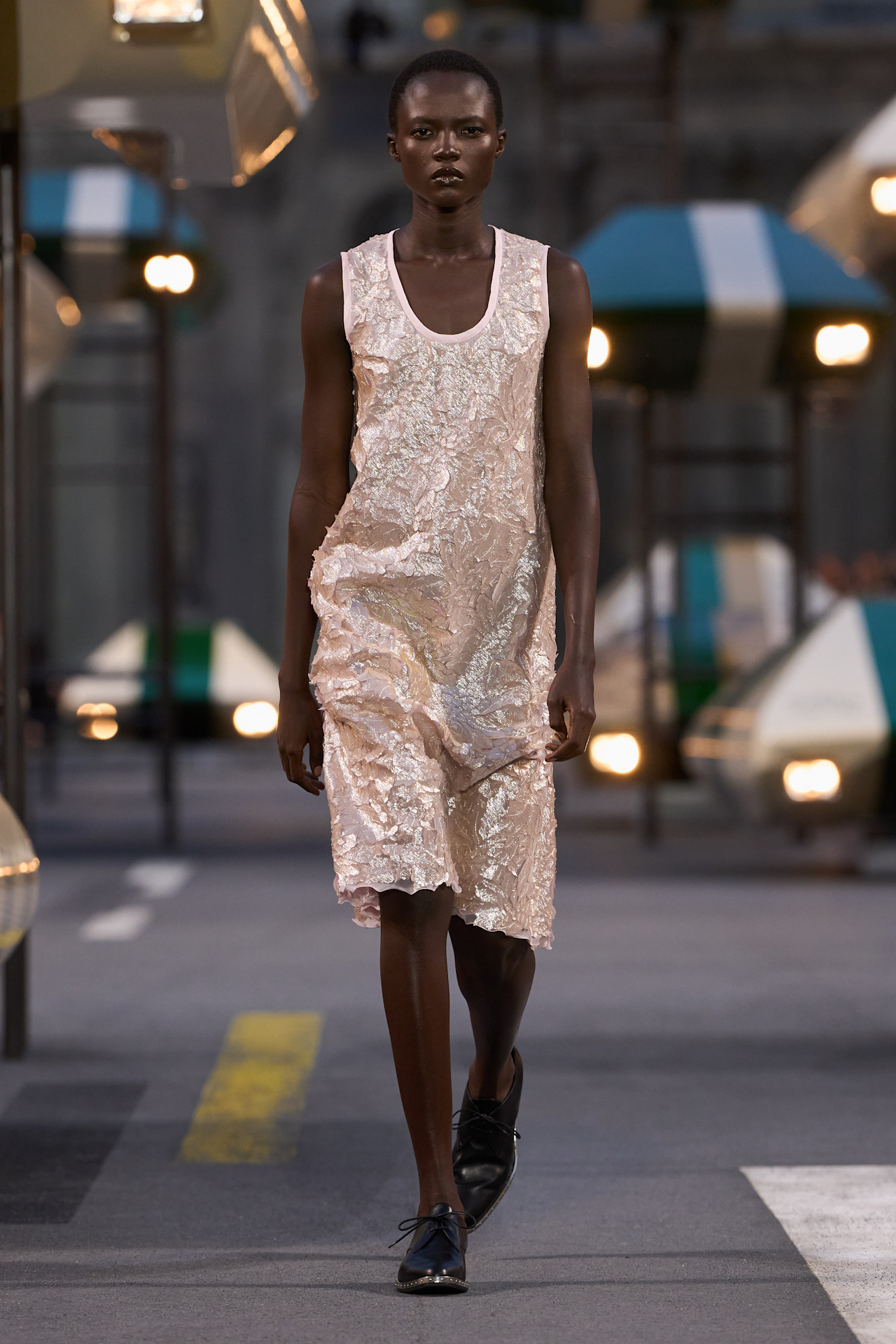
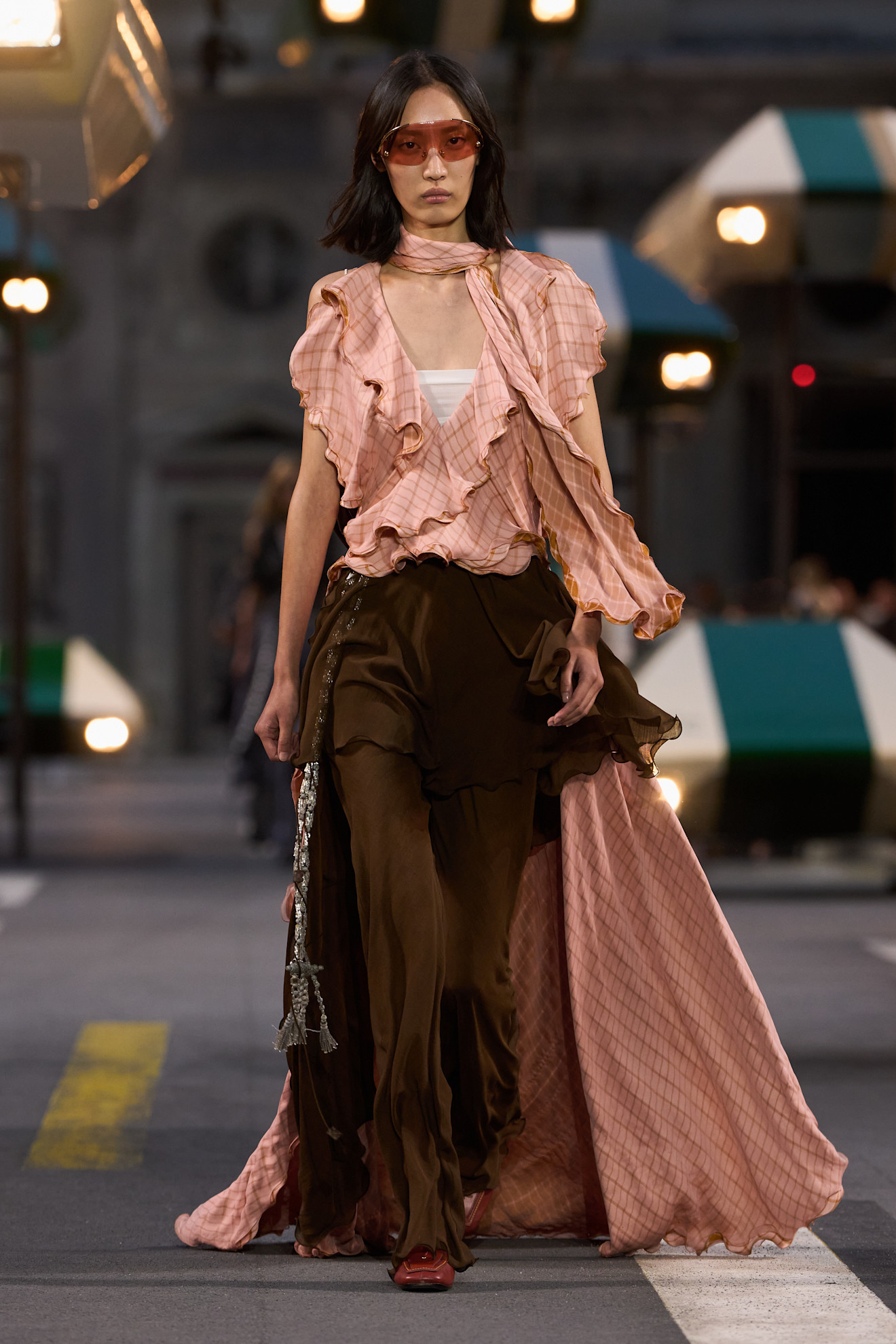
Fabric Innovations: The collection featured cloud-like layers of multi-tiered chiffons, silk carrés, silk-cashmere scarf fabrics, and deconstructed tailoring. Inner linings and rigid structures were stripped away to create a "second-skin" sensation.
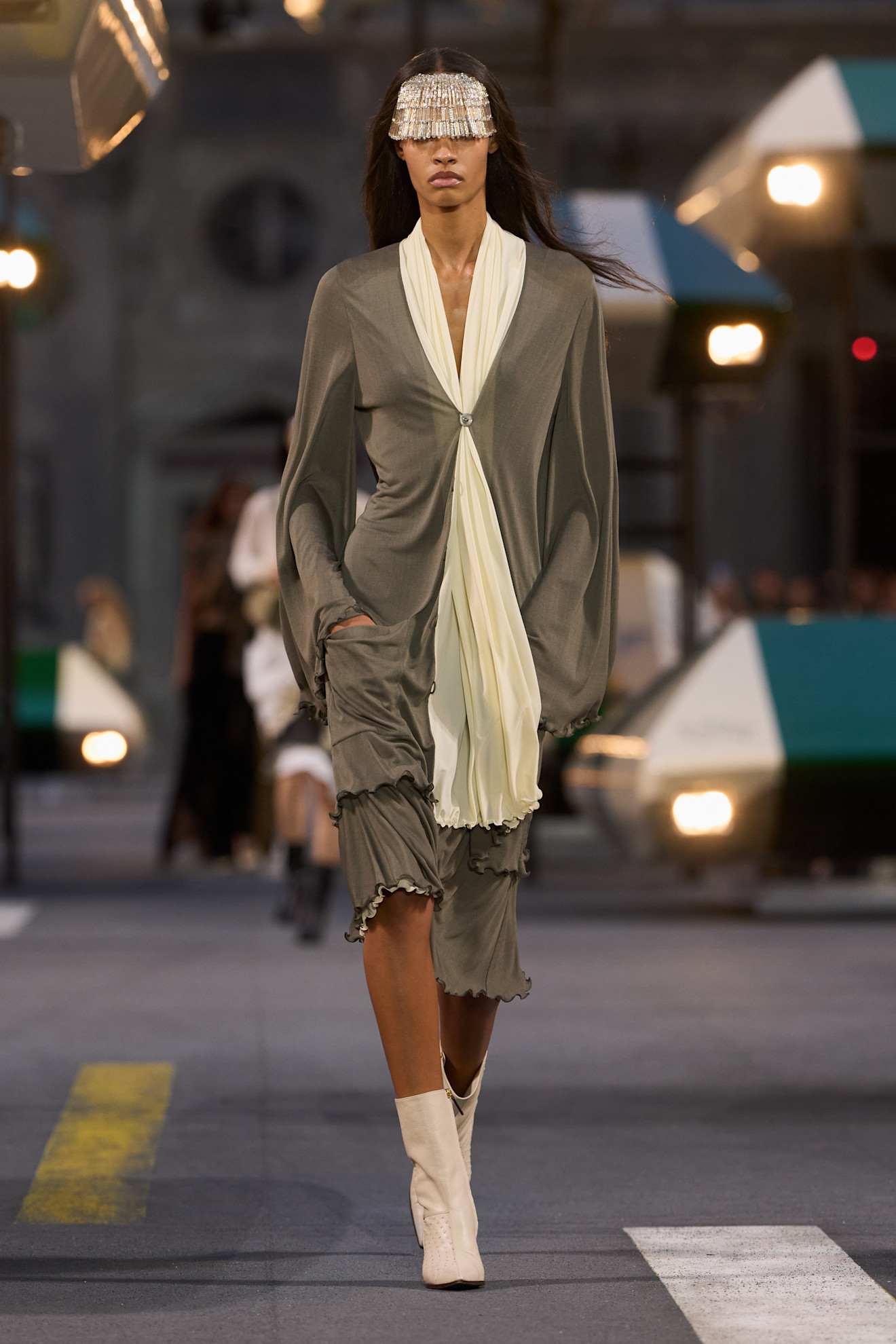
Key Silhouettes: Longline, floor-sweeping tunics layered over tailored trousers dominated the runway, introducing a fresh, wearable proportion play.
The Accessories: Sleek, crystal-embellished futuristic visors provided an otherworldly, sci-fi counterbalance to the fluid, organic textiles.
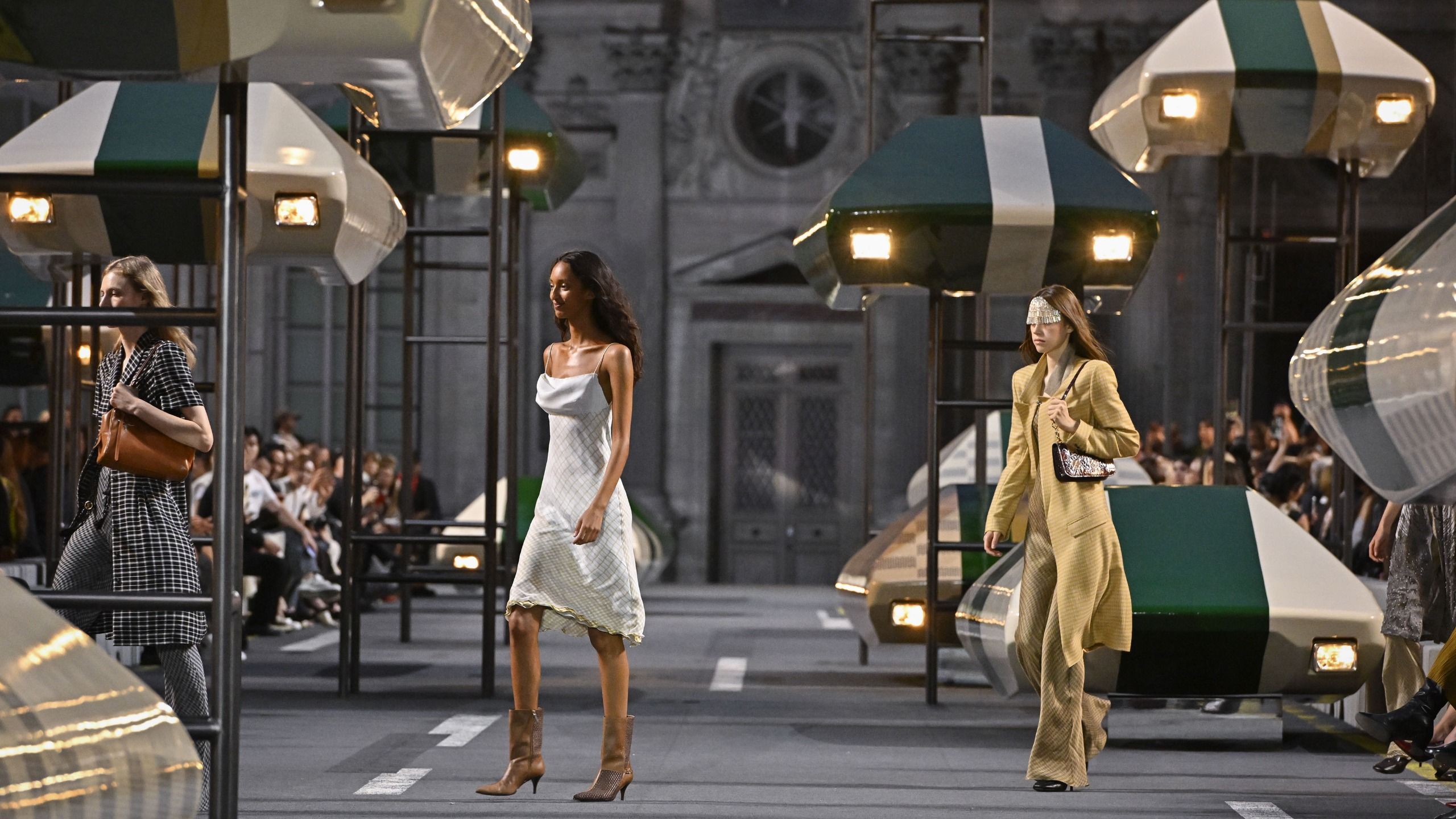
The Setting: Set against the backdrop of a "paused cityscape," models drifted through the architectural space with a feather-light grace.
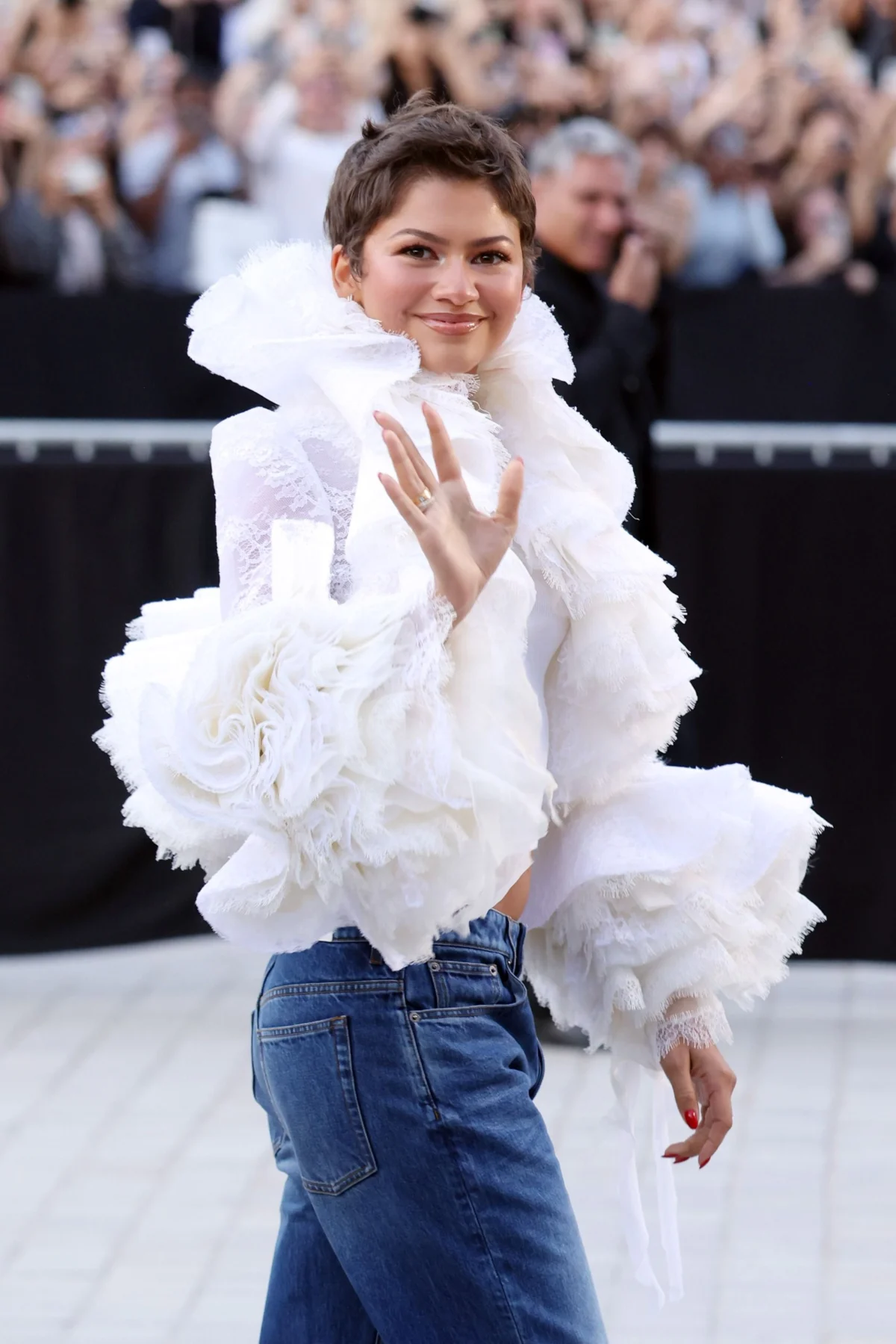
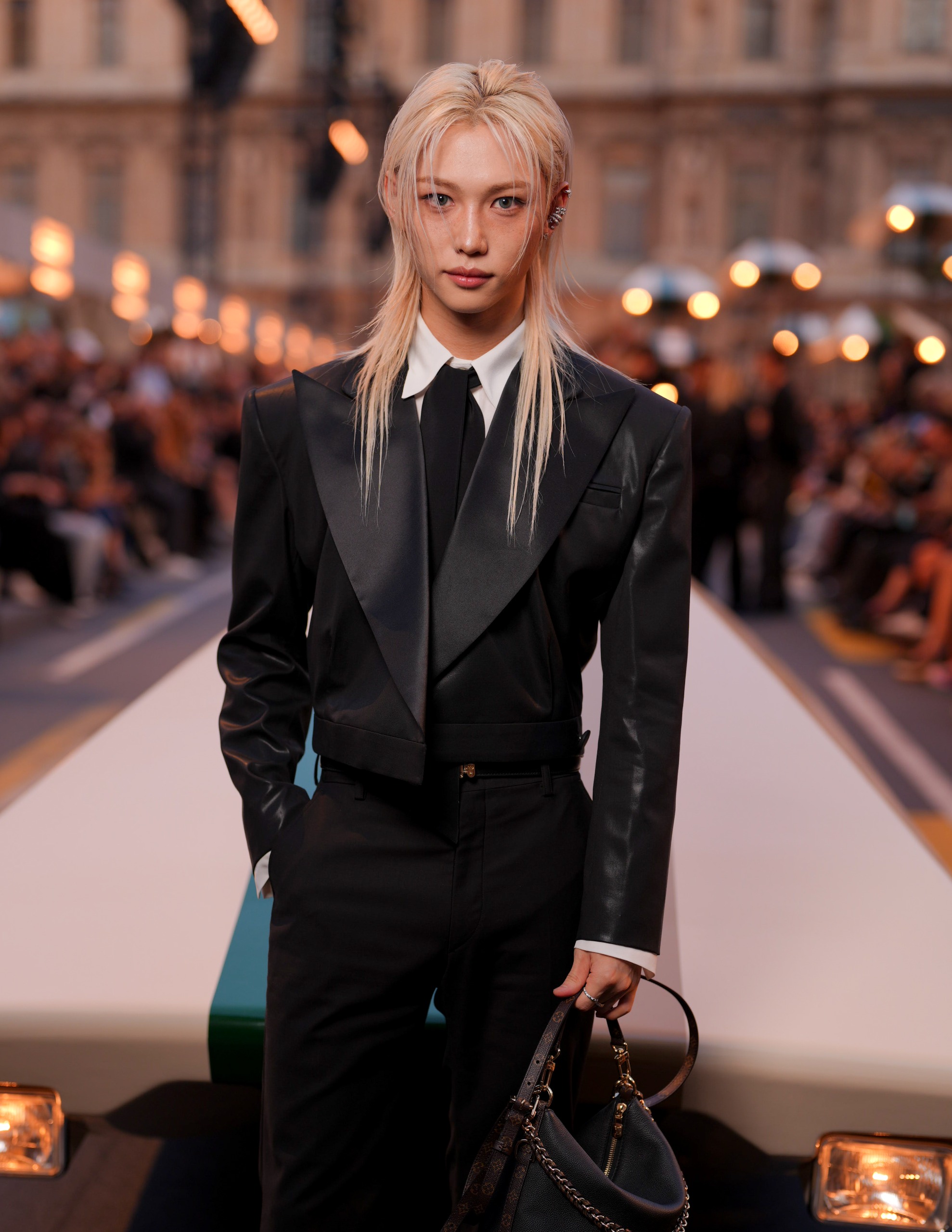
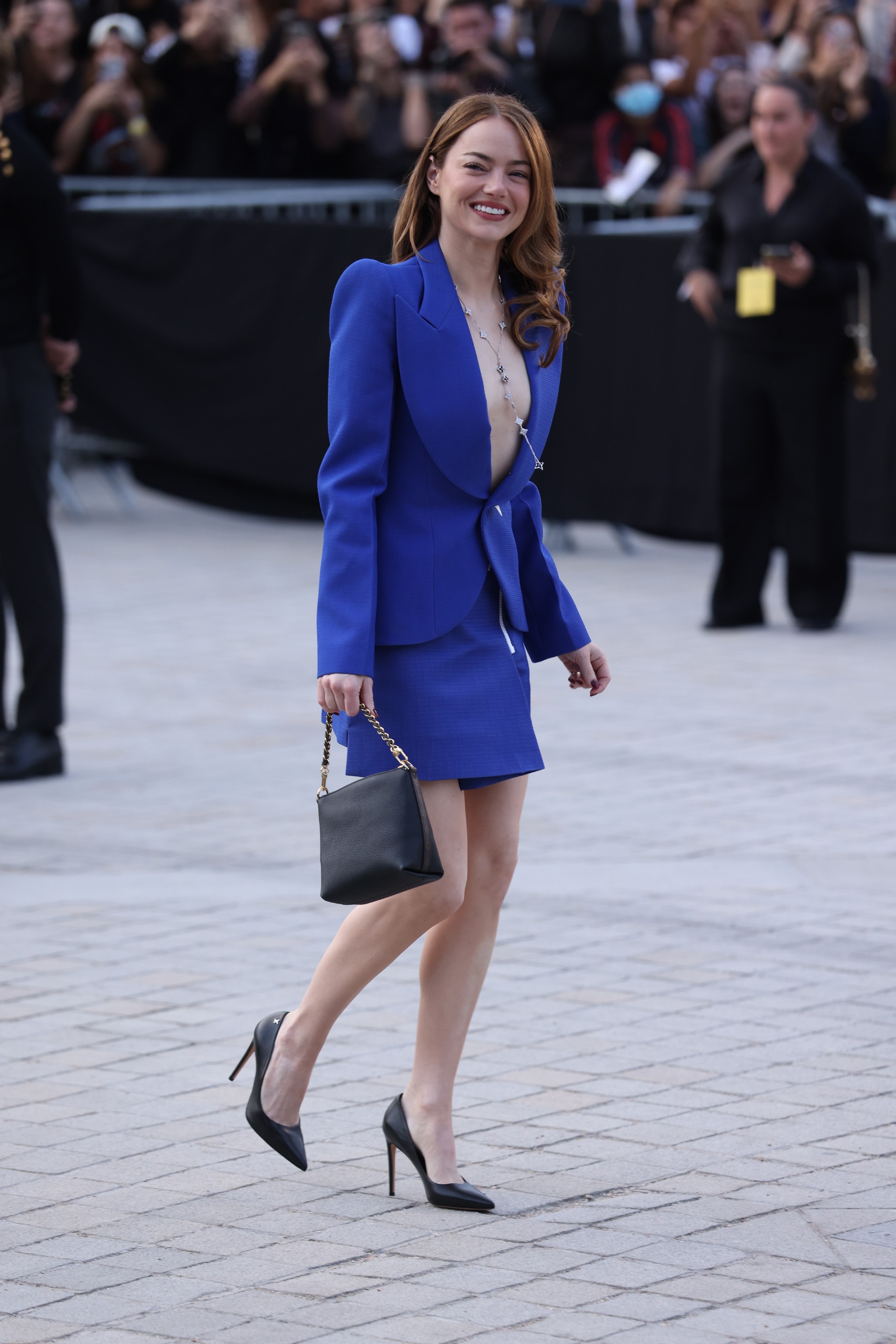
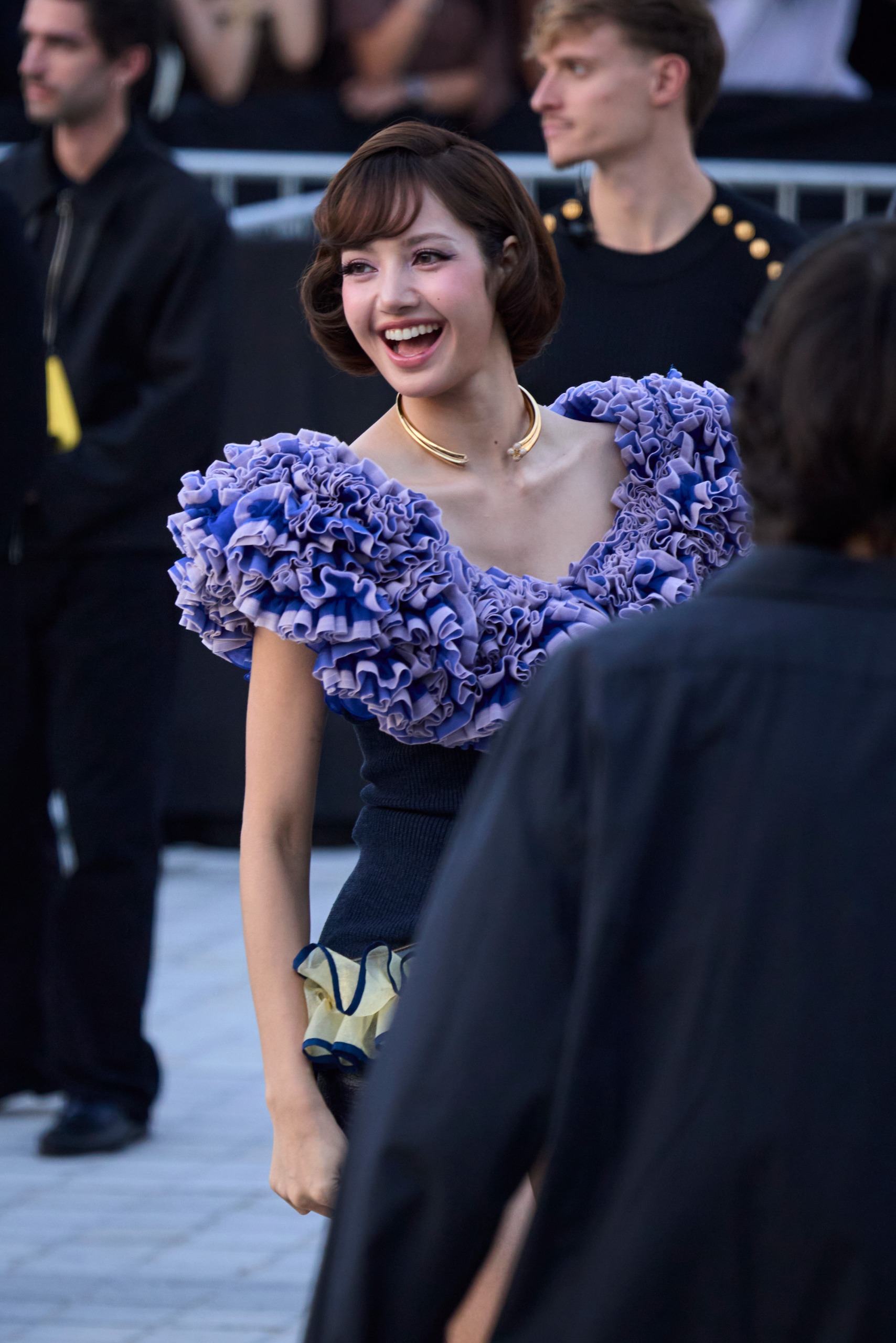
The Star-Studded Front Row: The FROW drew unprecedented attention, featuring powerhouse brand ambassadors and global icons including Zendaya, Emma Stone, Lisa, and Felix of Stray Kids.
Chronology of the Event: From FROW Buzz to the Grand Finale
Pre-Show Anticipation and the Arrival of Global Icons
Long before the first model stepped onto the runway, the atmosphere outside the venue was electric. Paris Fashion Week always attracts global media attention, but the Louis Vuitton presentation reliably commands a category of its own. Livestream chatrooms moved at breakneck speeds as fans tracked the arrivals of the brand’s star-studded roster.
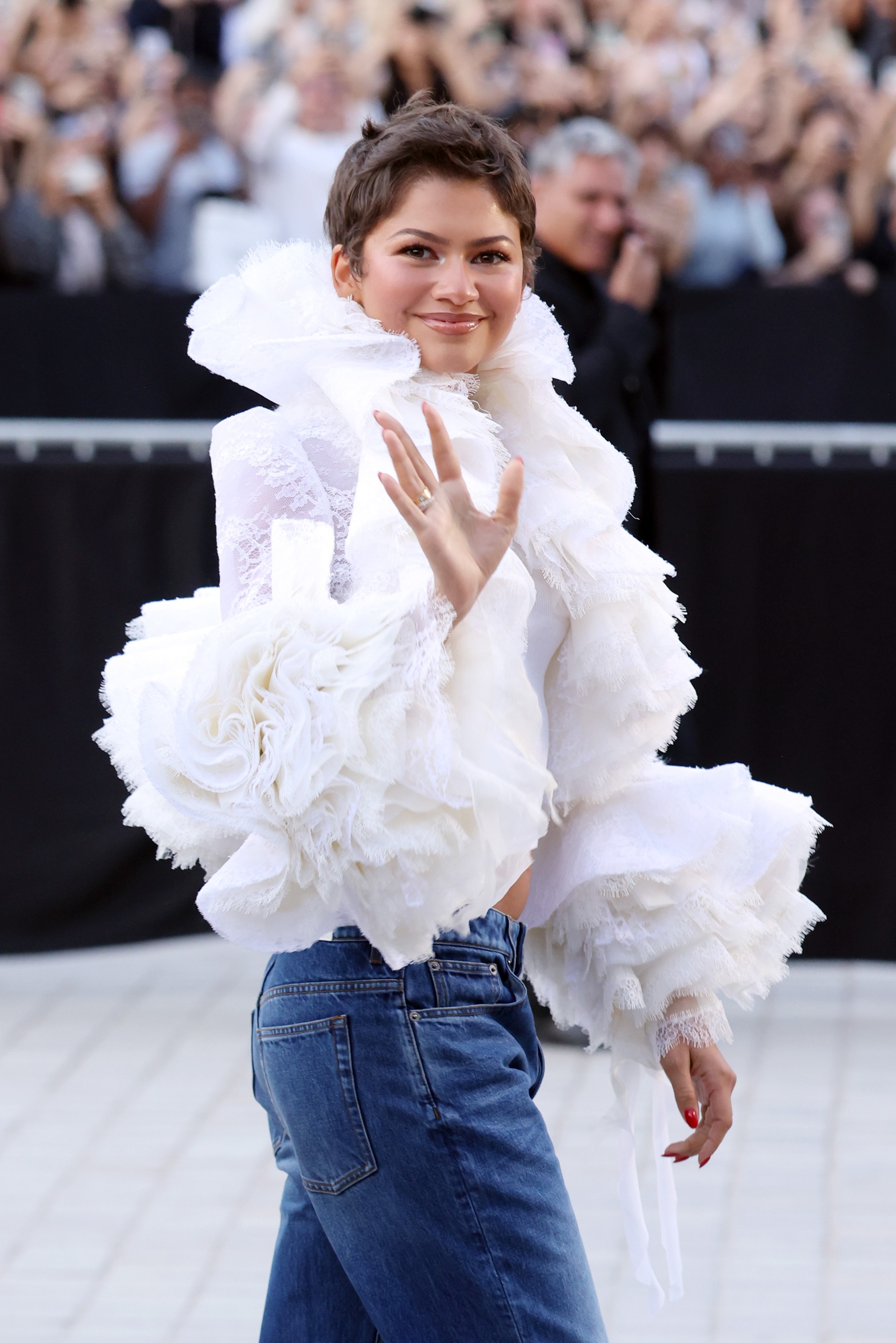
The front row was a masterclass in modern celebrity endorsement, bringing together Academy Award winners, K-pop royalty, and global fashion muses. Emma Stone, BLACKPINK’s Lisa, and Stray Kids’ Felix captivated photographers and fans alike. However, the most viral moment of the pre-show belonged to Zendaya. In a refreshing nod to sustainability and everyday style practicality, Zendaya wore a top previously debuted during The Odyssey press tour. By swapping the original skirt for classic denim jeans, the style icon proved that even A-listers partake in the universally relatable art of outfit repeating.
The Runway Presentation: A Symphony of Motion
As the lights dimmed over the paused cityscape set design, the presentation commenced. Unlike shows defined by sharp angles and heavy beats, the pacing was hypnotic and fluid.
The opening looks immediately established the seasonal thesis: ergonomics in fashion. Models glided past the audience in layers of sheer, double- and triple-layer chiffons that caught the ambient air with every step. Rather than wearing garments that stood away from the body, the clothes appeared fluid, nearly liquid, wrapping the models in tactile comfort.
As the presentation progressed, the focus shifted toward deconstructed outerwear. Traditional jackets, usually fortified with canvas and shoulder pads, were completely gutted of their internal scaffolding. What remained was soft tailoring that acted more like a knit sweater than a structured blazer.
Toward the final third of the collection, the aesthetic shifted toward a futuristic horizon. Models emerged wearing crystal-encrusted visors that refracted light across the venue, pairing futuristic headwear with celestial color palettes. It was a bold visual contrast: ultra-modern accessories paired with deeply organic, touchable fabrics.
Supporting Data and Technical Breakdown
To fully understand the weight of Ghesquière’s S/S 27 vision, one must examine the technical craftsmanship required to achieve such effortless movement.
Textile Weight Reduction: According to atelier insights, outerwear structural weight was reduced by roughly 40% compared to previous spring collections, achieved by eliminating traditional interfacing.
Digital Engagement Metrics: Within the first hour of the livestream, the Louis Vuitton S/S 27 presentation generated over 15 million combined social media impressions globally, largely driven by the digital footprints of brand ambassadors Lisa and Felix.
Commercial Viability: Retail analysts predict that the floor-sweeping tunic-and-trouser pairings will see a high commercial sell-through rate, as consumers increasingly favor elevated comfort post-pandemic.
Official Responses and Creative Direction
In the official show notes distributed following the presentation, Nicolas Ghesquière elaborated on his fascination with human mechanics and apparel.
"We spend so much time engineering the clothes from the outside in," Ghesquière noted. "For S/S 27, the challenge was to reverse the engineering. How do we build garments that respect, follow, and amplify the natural architecture of the human body? Fashion should liberate movement, not restrict it."
Industry critics and veteran editors were quick to praise the collection’s intellectual depth paired with commercial accessibility. Long-time fashion commentators noted that while Ghesquière is frequently praised for his futuristic, sci-fi leanings, this collection successfully grounded those galactic ideas in tangible tactile luxury.
Brand executives expressed immense satisfaction with both the critical reception and the immediate consumer engagement. The strategic placement of multi-generational, cross-cultural ambassadors like Zendaya and Lisa ensured that the brand’s luxury narrative resonated effortlessly across diverse global markets, from Western luxury hubs to the booming Asian luxury sector.
Implications for the Future of Luxury Fashion
The ripple effects of Louis Vuitton’s S/S 27 collection are expected to shape the trajectory of ready-to-wear fashion for seasons to come. Several key implications emerge from the runway:
1. The Death of Stiffness in Tailoring
For decades, power dressing has been synonymous with structured shoulders, heavy wools, and rigid silhouettes. Ghesquière’s deconstructed tailoring signals a definitive turning point. As luxury consumers increasingly prioritize remote work flexibility, travel convenience, and sensory comfort, structured garments without ease are losing ground. The S/S 27 collection proves that sophistication and softness are no longer mutually exclusive.
2. High Fashion Meets Functional Ergonomics
By introducing the concept of ergonomics into high fashion, Louis Vuitton has opened a dialogue between industrial design and couture. Expect to see other luxury houses exploring biomechanics, active-wear integration, and body-mapping fabrics in upcoming cycles. The focus is shifting from how a garment looks on a hanger to how it performs on a living, breathing human body.
3. Sustainable Styling and Circularity
Zendaya’s choice to rewear a archival-recent press tour top with casual denim sent a powerful, albeit subtle, message regarding fashion consumption. While luxury brands traditionally push for total obsolescence each season, the integration of versatile, timeless separates—like floor-sweeping tunics and fluid silk scarves—encourages wardrobe longevity. When high-fashion muses openly repeat pieces, it normalizes sustainable styling choices for the broader consumer base.
4. The Omnipresence of K-Pop and Global Powerhouses
The immense digital footprint generated by Felix and Lisa underscores the ongoing, vital democratization of the front row. Western heritage luxury brands are no longer just courting traditional Hollywood royalty; they are anchored by cross-continental megastars who command unprecedented digital engagement. This strategy ensures that high-concept runway shows like Louis Vuitton’s remain central to global pop-culture conversations.
Conclusion
Louis Vuitton’s Spring/Summer 2027 presentation was more than just a runway show; it was a conceptual reset for one of the world’s most influential fashion houses. By marrying the intellectual rigor of ergonomic design with the effortless grace of cloud-like chiffons and deconstructed tailoring, Nicolas Ghesquière successfully answered the modern consumer’s demand for beauty without sacrifice. As Paris Fashion Week draws to a close, the industry is left with a clear directive: the future of luxury belongs to those who move with us.


 Nana Wu
 Asep Darmawan
 Evan Lee Salim
