

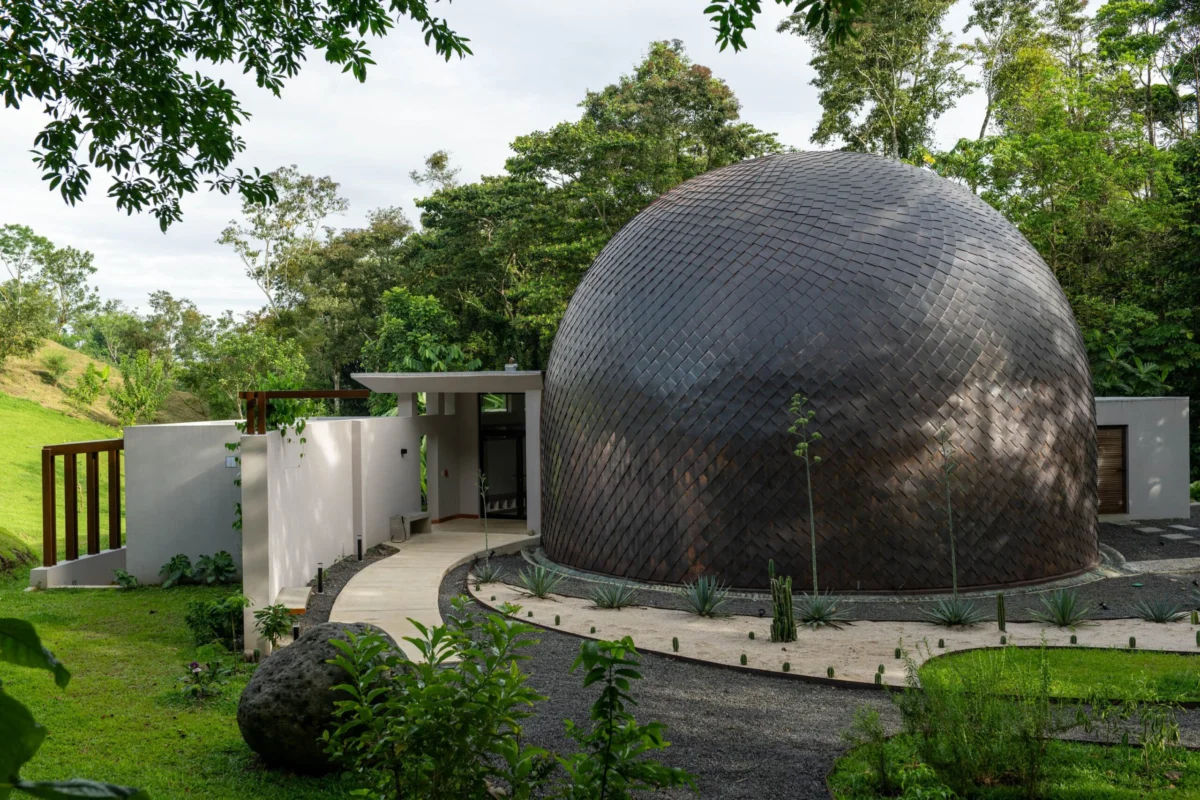
In an era defined by the pursuit of optimization—where wearable technology tracks our every heartbeat, sleep cycle, and caloric expenditure—the concept of "wellness" has evolved from simple relaxation into a high-tech discipline. Nowhere is this shift more apparent than at The Vessyl, a newly opened, 118-acre retreat nestled in the shadow of Costa Rica’s Arenal Volcano.
Launched in August, The Vessyl bills itself as the world’s first "4D sound resort." It is a sanctuary that promises to bridge the gap between ancient healing traditions and the cutting edge of acoustic engineering. For the modern traveler, weary of the standard sauna-and-cold-plunge circuit, The Vessyl offers a radical departure: a place where guests are invited not just to hear sound, but to physically inhabit it.
The Genesis of the Frequency Dome
The resort’s primary architectural and spiritual centerpiece is the "Frequency Dome." Developed in collaboration with Grammy Award-winning acoustician George Augspurger over an exhaustive 11-year development cycle, the structure is a marvel of immersive design.

The Dome is engineered to facilitate a total nervous system reset. The floor is not a static surface; it is a custom floating platform embedded with 24 transducers—the same technology utilized in high-end theme park attractions at Disney and Universal. These transducers allow sound frequencies to translate into tangible vibrations, theoretically allowing guests to "feel" music and ambient soundscapes through their skeletal and nervous systems.
"We aren’t just playing music," explains Chief Operating Officer Chad Wittman. "We are creating a space where the environment itself responds to the human condition, using spatial audio and vibrational haptics to shift the guest into a state of profound regulation."
Chronology of a Nervous System Reset
My journey to The Vessyl began not with a desire for luxury, but with a pressing need for stillness. Facing a "quarter-life" transition—marked by a recent breakup, the impending loss of my 11-year-old French Bulldog, Cooper, and the looming shadow of turning 30—I arrived in La Fortuna seeking an exit from the noise of my own internal monologue.

Day One: Data-Driven Diagnostics
Upon arrival, the landscape was a testament to the "pura vida" philosophy, with the Arenal Volcano peeking through a shifting curtain of clouds. My accommodation, a treehouse built on stilts, offered a panoramic view of the copper-scaled Dome.
My first formal experience was a "Bio-Well" scan, a diagnostic tool developed by Russian physicist Konstantin Korotov. Using Gas Discharge Visualization (GDV) technology, the device analyzes fingerprints to map energy fields and stress levels across various organs. While the request to provide my biometrics felt slightly futuristic—leading me to jokingly ask if they planned to clone me—the results were startlingly accurate. The graphs, which charted my biorhythms over the past month, perfectly mirrored the periods of high-stress veterinary visits and sleepless nights I had spent caring for Cooper in New Jersey.
Day Two: The Human Design
The second day focused on "Human Design," a complex personality-mapping system that synthesizes Kabbalah, I Ching, astrology, and quantum physics. Lead facilitator Svetlana Parmar walked me through my "bodygraph," an intricate chart generated by my birth data.

In the Dome, the experience took a turn into the abstract. Wearing headphones and lying on the vibrating floor, I was greeted by a voice identifying itself as my "higher self." While the AI-driven personalization of the audio felt, at times, like a sophisticated form of hypnosis, it successfully broke through my intellectual defenses. I began to realize that my obsession with "fixing" my life was, in itself, a form of resistance to the natural flow of aging.
Day Three: Somatic Release
The most transformative moment occurred during a somatic breathwork session. Facilitators Dylan Baird and Ashley Marie guided the group through 40 minutes of rhythmic, connected breathing. The intent was to induce an altered state of consciousness. As my hands went numb and my body began to oscillate with the vibrations of the floor, I entered a state of profound emotional release. I found myself crying, not from a specific trauma, but from a feeling of total, quiet emptiness. It was the most relaxed I had ever felt in my adult life.
Supporting Data: The Science of Sound and Breath
The Vessyl’s approach is not entirely rooted in mysticism; it relies on physiological shifts. Dr. Diva Nagula, the resort’s co-founder and chief medical officer, explains the mechanics behind the breathwork sessions.
.png)
"During active, connected breathing, carbon dioxide levels drop, which temporarily raises blood pH and reduces cerebral blood flow," Dr. Nagula notes. "This activates the sympathetic nervous system and can produce tingling or involuntary contractions, which guests experience as energy moving through the body."
When the session ends, the body rebounds with an increased parasympathetic response, leading to a "reset" of the nervous system. By combining this biological mechanism with the immersive spatial audio of the Dome, the resort aims to lower the barrier to entry for deep meditative states, allowing even the most cynical "thinkers" to access their intuition.
Implications for the Future of Travel
The Vessyl represents a growing trend in the global wellness market, which has seen a 58% increase in valuation since 2019, according to the Global Wellness Institute. As people become increasingly aware of their internal metrics—tracking sleep, heart rate variability, and stress via Oura rings and smartwatches—resorts are moving to meet that demand with "bio-hacking" environments.
.jpg)
However, the experience also highlights an irony: the more we use technology to "hack" our way to wellness, the more we risk becoming obsessed with the metrics themselves. As I sat with Parmar during a one-on-one reading, I realized that while the data was interesting, the true value lay in the human connection—the conversation about fears, relationships, and the inevitable passage of time.
A Lesson from the Rainforest
The final highlight of the retreat was a visit to a local stable, where horse whisperer Enrique Molina provided a masterclass in emotional transparency. Watching how his horses reacted to our presence—mirroring our confidence or our hidden hesitations—was a grounding experience.
When I encountered a young Doberman at the training grounds, her joyful, unpretentious invitation to play brought me back to the memory of my dog, Cooper. It was a reminder that while technology can help us quiet the mind and reset our nervous systems, the deepest lessons of life are often found in the simple, non-digital connections we share with living things.

The Vessyl does not promise to solve the problems of the world or stop the clock on aging. Instead, it provides a high-tech container for an ancient human requirement: the need to be still, to be heard, and to be present. As I left the rainforest, I carried with me not just a digital readout of my "energy state," but the realization that the most powerful technology we possess is the ability to accept our own vulnerability. The Dome may have helped me find that realization, but the jungle, and the memories of the life I was returning to, solidified it.
 Muslim
 Lina Hope
