

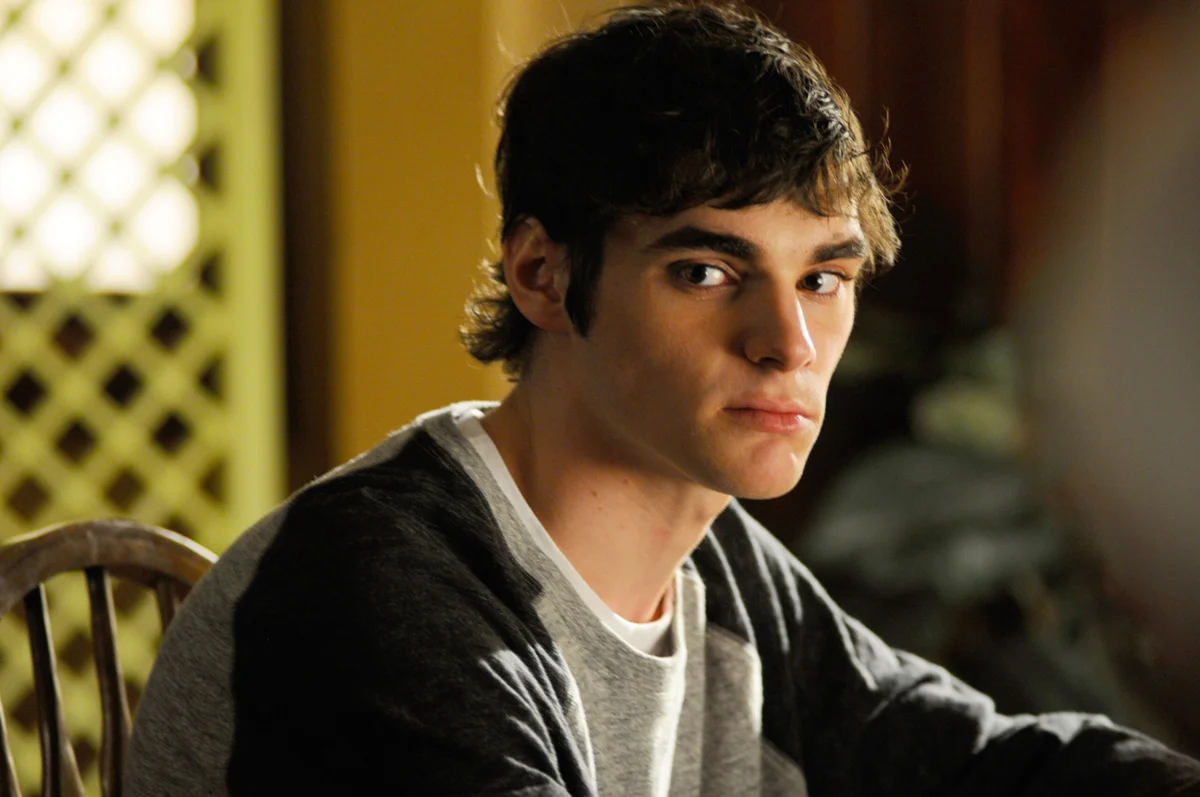
Hollywood is in mourning following the tragic news of the passing of RJ Mitte, the accomplished actor and tireless disability advocate, who died on Monday at the age of 34. Known globally for his nuanced and grounded portrayal of Walter White Jr. in the seminal television series Breaking Bad, Mitte leaves behind a legacy that transcends his on-screen achievements, marked by his profound impact on the representation of individuals with disabilities in the entertainment industry.
The announcement of his passing was confirmed by his representatives, who issued a somber statement: "It is with profound sadness that we share the tragic passing of a beloved actor, philanthropist, and passionate disability rights advocate, RJ Mitte. His spirit, his dedication to his craft, and his unwavering commitment to equality will be deeply missed by all who had the privilege of knowing him."
A Life Defined by Resilience and Ambition
Born Roy Frank "RJ" Mitte III in Jackson, Mississippi, in 1992, Mitte’s journey to the heights of Hollywood was defined by both personal grit and professional tenacity. Diagnosed with cerebral palsy at the age of three, Mitte faced unique challenges from a young age. Rather than allowing his diagnosis to define his limitations, he channeled his energy into the arts, eventually moving to Los Angeles in 2006 to pursue a career as an actor.
His breakthrough came in 2008 when he was cast as Walter White Jr. in AMC’s Breaking Bad. The role was a turning point not just for Mitte, but for television history. Over the course of 57 episodes and five seasons, Mitte’s portrayal of a young man navigating the turbulence of his father’s descent into the criminal underworld—all while dealing with his own physical condition—offered a level of authenticity rarely seen on screen. He became a beacon of visibility, proving that actors with disabilities could command the screen with the same gravity and complexity as their peers.
Chronology of a Rising Star
Mitte’s career trajectory was marked by a steady evolution from a child actor to a seasoned professional. After moving to Los Angeles, he initially took on minor roles, honing his craft and navigating the competitive landscape of the industry.
- 2008: Mitte secures the role of Walter White Jr. in Breaking Bad, catapulting him into international fame. His performance is critically lauded for its emotional resonance and realism.
- 2013: Following the conclusion of Breaking Bad, Mitte transitions into various film and television projects, continuing to challenge casting tropes regarding disability.
- 2014–2016: Mitte expands his profile as a public speaker, leveraging his platform to address global audiences on the necessity of inclusive storytelling.
- 2017–2022: He becomes increasingly involved in humanitarian efforts, specifically focusing on the empowerment of youth with physical disabilities through his work with United Cerebral Palsy.
- 2026: At the age of 34, his untimely passing concludes a decade of significant contributions to both cinema and advocacy.
The Advocate Beyond the Lens
While his performances won him acclaim, Mitte’s work as an activist was perhaps his most defining characteristic. He was a vocal and consistent advocate for inclusivity within the Screen Actors Guild-American Federation of Television and Radio Artists (SAG-AFTRA). His efforts were focused on breaking down the barriers that prevent disabled performers from accessing auditions and securing roles that are not strictly defined by their disability.

"Disability is not a monolith," Mitte famously noted in a 2018 interview regarding the importance of authentic casting. "It is a human experience. When you cast a disabled actor in a role, you aren’t just filling a quota; you are adding a layer of truth to the narrative that cannot be manufactured."
His work as a celebrity ambassador for the United Cerebral Palsy organization saw him traveling across the country, mentoring young actors and speaking at universities about the importance of accessibility in public spaces. He was instrumental in pushing for more inclusive production practices, often meeting with showrunners and casting directors to discuss the logistics of making sets more accessible to crew members and performers with physical limitations.
An Industry in Grief: Official Responses and Tributes
The news of Mitte’s passing triggered an immediate and widespread outpouring of grief across the entertainment industry. Colleagues, directors, and fans took to social media and official press releases to honor his memory, painting a portrait of a man who was as kind-hearted as he was professional.
Marlee Matlin, the Academy Award-winning actress and disability rights pioneer, shared a deeply personal tribute: "My heart is shattered. There will never be another like RJ Mitte. You’ll always have a place in my heart."
Dean Norris, who played Mitte’s father-figure counterpart on Breaking Bad, expressed his disbelief: "I am heartbroken. Though RJ didn’t play my TV son in reality, I always looked out for him as a young kid on set. He was a sweetheart of a young man and will be greatly missed."
The sentiment was echoed by others, including actor Vincent Martella, who described Mitte as "genuinely nice to everyone he spoke to," and actor Jared Gilman, who highlighted the critical success of Breaking Bad as a direct result of Mitte’s "powerfully shattering" performance.

Implications for Future Representation
Mitte’s death forces a difficult conversation regarding the future of disability representation in Hollywood. He was part of a vanguard of actors who insisted on being seen for their talent rather than their medical history. His loss leaves a void in the industry, specifically regarding the advocacy work he led within unions and policy-making circles.
Industry analysts suggest that Mitte’s passing serves as a catalyst for a "call to action." The "Mitte Standard," as some are beginning to call his approach to acting and advocacy, posits that disability should be considered a standard component of diversity initiatives rather than an afterthought. The challenge for the industry now is to ensure that the momentum Mitte generated—the push for ramps, for inclusive casting, and for honest portrayals—does not stall.
Conclusion: A Legacy of Truth
As the entertainment world prepares to honor RJ Mitte in the coming weeks, the focus remains on the integrity he brought to every room he entered. He was more than a television character; he was a bridge between the public perception of disability and the reality of the human condition.
By refusing to be sidelined, he forced a medium that is often obsessed with artifice to confront the truth. Whether he was standing in the kitchen of the White household in Albuquerque or standing at a podium advocating for legislative change, RJ Mitte remained consistent: he was a man of substance, a man of heart, and a man whose impact on the cultural fabric of our time will not be forgotten.
He is survived by his family and the countless individuals he inspired. In his memory, the industry is left with a singular, echoing demand: to continue the work he started, to keep the doors open for those who follow, and to ensure that stories of all kinds continue to be told with the honesty and grace he exemplified throughout his life.
 Ammar Sabilarrohman
 Lina Hope
 Evan Lee Salim
