

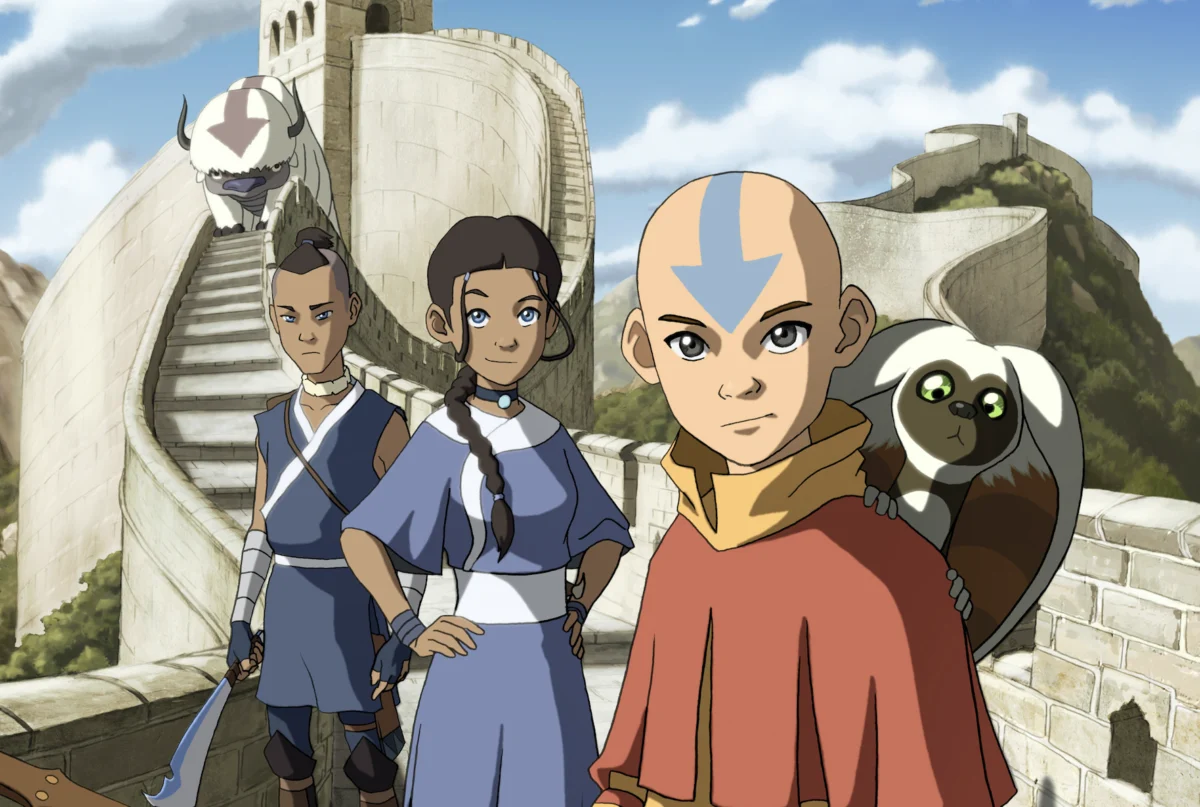
In the landscape of modern intellectual property, few franchises have navigated the treacherous waters of expansion as precariously—or as successfully—as Avatar. Created by Michael Dante DiMartino and Bryan Konietzko for Nickelodeon Animation Studios in 2005, Avatar: The Last Airbender (ATLA) stands as a landmark in 21st-century television. Its omission from recent major cultural retrospectives, such as The New York Times list of the best TV shows of the century, remains a point of contention for fans and critics alike—an oversight that feels increasingly glaring as the franchise continues to exert a gravitational pull on the medium.
The original series, which concluded in 2008 after three "books," remains the gold standard for serialized storytelling. Its finale is frequently cited as one of the most structurally flawless conclusions in the history of television. By blending the fluid expressiveness of anime with a unique, bold aesthetic rooted in distinct martial arts disciplines, DiMartino and Konietzko crafted a world that was as emotionally resonant as it was visually inventive.
A Chronology of the Elements: From Aang to the Havens
To understand the current state of the Avatar universe, one must trace its complex evolution from a single, contained masterpiece to a sprawling, multi-platform media empire.

- 2005–2008: The original run of Avatar: The Last Airbender. It introduced the Four Nations and the concept of the Avatar, the singular bridge between the spirit and physical worlds tasked with maintaining balance.
- 2010: The release of M. Night Shyamalan’s live-action film, a critical and commercial failure that is largely ignored by the fandom and the studio alike.
- 2012–2014: The sequel series, The Legend of Korra, which matured the tone for an older audience and shifted the setting to the industrializing, metropolitan Republic City.
- 2021: The establishment of Avatar Studios, a dedicated venture by Nickelodeon and Paramount to oversee the franchise’s future.
- 2024–2026: A period of intense saturation, including a Netflix live-action adaptation, a feature film focusing on an adult Aang, and the premiere of the latest animated series, Avatar: Seven Havens.
The Pitfalls of Adaptation and the Limits of Nostalgia
The Avatar franchise has long been plagued by the "adaptation dilemma." While there is an understandable desire to replicate the magic of the original in live-action, both the 2010 film and the recent Netflix series have struggled to capture the essence of the source material.
The core issue lies in the unique nature of animation. The medium allows for a level of expressive, unreal physicality that carries narrative weight through color theory, line work, and exaggerated motion. Live-action, by contrast, often forces a "realistic" aesthetic that can feel stifling. While actors like Dallas Liu have successfully embodied iconic characters like Prince Zuko, the surrounding production design often feels like a museum recreation rather than a living, breathing world. The "bending" of elements requires a visual language that only animation can fluidly execute; when translated to CGI, it often loses the poetic, character-defining weight that the original series perfected.
Supporting Data: The Aesthetic Shift
The original ATLA was defined by its collaboration with South Korean studios—chiefly JM Animation and MOI Animation. This collaboration produced a unified, distinct look that perfectly balanced the chaotic energy of the protagonist, Aang (voiced by Zach Tyler Eisen), with the soulful, sprawling landscapes of the Four Nations.

In contrast, The Legend of Korra introduced a more "riveted" aesthetic, reflecting the urban sprawl of Republic City. It prioritized weight and impact over the intricate, dance-like choreography of the original. However, the most radical shift has occurred in the latest installment, Avatar: Seven Havens. Moving away from the "Ghibli-esque" inspirations of the original, Seven Havens leans into a visual language reminiscent of Nausicaä of the Valley of the Wind or the surreal, bio-mechanical wonder of Scavengers Reign. By utilizing the French studio La Chouette Compagnie, the series has moved toward a "broken, stained-glass" aesthetic that signals a departure from the franchise’s comfort zone.
Official Responses and Strategic Shifts
Paramount+ has positioned itself as the "Lion Turtle" of the franchise, attempting to consolidate the various threads of the universe under the Avatar Studios banner. The studio’s strategy has been to balance fan service with innovation. While the feature film Avatar Aang: The Last Airbender served as a retrospective, heart-tugging look at the adult life of the original protagonist, the series Seven Havens represents a bold pivot.
Executives have noted that the survival of a long-running franchise depends on its ability to evolve. By setting Seven Havens hundreds of years after the events of Korra—in a world ravaged by a yet-to-be-explained cataclysm—the creative team has given itself the breathing room to introduce new, darker themes. The inclusion of Hindu and Jainist influences in the design of the city of Ellora demonstrates a commitment to building upon the franchise’s foundation of global cultural inspiration rather than simply repeating the aesthetics of the 2005 original.

Implications: The Future of the Franchise
The success of Seven Havens provides a vital lesson for the industry: radical aesthetic departure is perhaps the only way to sustain a legacy franchise. When a property is as beloved as Avatar, the temptation to iterate on what came before is overwhelming. However, as evidenced by the lackluster response to projects that attempted to mimic the original’s tone and look too closely, the audience is craving evolution.
The "Ghibnalogy" observed in Seven Havens—referencing a shift in inspiration toward different pillars of animation—suggests that the franchise is no longer content to be a "pale shadow" of its ancestor. It is choosing to embrace the "creative destruction" of its own established world.
Furthermore, the franchise’s influence is undeniable. Shows as varied as Blue Eye Samurai, Fullmetal Alchemist: Brotherhood, She-Ra: Princesses of Power, and Star Wars Rebels all owe a debt to the tectonic character growth and deep, mature friendships established in ATLA. But now, the original must compete with its own legacy.

As the first three episodes of Avatar: Seven Havens stream on Paramount+, it is clear that the franchise is at a crossroads. It can continue to recycle the iconic symbols of the Fire Nation and the Earth Kingdom, or it can continue to push into the post-apocalyptic, structurally experimental territory it has now carved out. For Avatar to remain relevant for another two decades, it must continue to master not just the four elements, but the difficult element of change.
The takeaway for fans and observers is simple: the era of the "remake" is fading. The future of Avatar lies in its ability to look at its own history, acknowledge the mastery of what came before, and have the courage to build something entirely new on the ruins of the old. Whether the mystery of the "Seven Havens" will hold the same weight as the original series remains to be seen, but for the first time in a long time, the franchise feels like it is moving forward, rather than just bending back.
 Nana Wu
 Lina Hope
 Evan Lee Salim
