

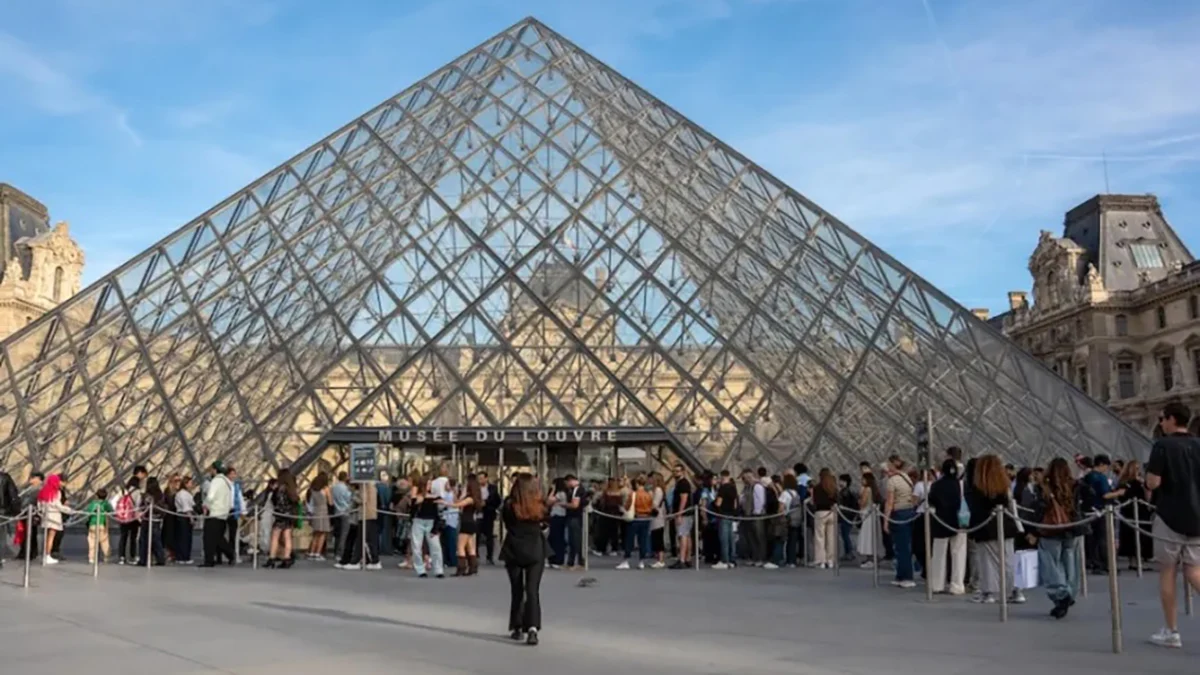
The Louvre, the world’s most visited museum and the crown jewel of French cultural heritage, stands at a precarious crossroads. Christophe Leribault, who assumed the presidency of the institution earlier this year, has issued a stark, unequivocal warning: the museum faces a potential, permanent closure if it fails to undertake a comprehensive, multi-billion-dollar overhaul of its aging infrastructure and security apparatus.
In a candid interview with Le Figaro published this Wednesday, Leribault addressed the political class and the public with a sense of urgency that transcends mere administrative concern. “Whoever forms the next government must keep in mind that if the Louvre is not repaired, updated, and transformed, it will very quickly fall behind and will eventually have to close its doors to the public,” Leribault stated. “That would be a disaster.”
The Burden of History: A Museum in Flux
For millions of visitors—nine million in 2025 alone—the Louvre is synonymous with the pinnacle of human artistic achievement. Its hallowed halls house the Mona Lisa, the works of Ingres and Delacroix, and ancient artifacts that define the scope of human history. Yet, beneath the veneer of its Renaissance grandeur lies a decaying skeleton. The sprawling palace, a labyrinthine complex that has evolved over centuries, is struggling to reconcile its 12th-century foundations with the logistical and security demands of the 21st century.
Leribault’s warning is not merely an appeal for state funding; it is an admission that the museum’s current operational model is unsustainable. The complexity of managing a historic monument that serves as both a tourist pilgrimage site and a high-security vault for priceless treasures has reached a breaking point.
Chronology of a Crisis: From Heist to Uncertainty
The path to this moment has been paved with significant turbulence. The following timeline outlines the key events that have forced the Louvre to the center of a national debate:
- October 2025: A daring daytime heist results in the theft of French crown jewels valued at $102 million. The security breach shocks the world, exposing critical vulnerabilities in the museum’s monitoring and physical protection systems.
- Late 2025: The fallout from the heist leads to the resignation of then-director Laurence des Cars, whose leadership was scrutinized following the breach.
- Early 2026: Christophe Leribault is appointed as the new president, tasked with stabilizing the institution.
- February 2026: The museum abruptly postpones a competition to select an architect for a major expansion project, citing internal dissent and logistical concerns.
- May 2026: Under Leribault’s guidance, the expansion project is revived, with Selldorf Architects and Studios Architecture Paris selected as the winning firms.
- October 2026: Leribault issues his public ultimatum, signaling that the project must be treated as a matter of national survival rather than a routine renovation.
The Security Paradox: Balancing Accessibility and Protection
The $102 million heist of October 2025 remains the defining trauma of the modern Louvre. It shattered the illusion of impenetrable security and forced a total reassessment of how the museum operates. The incident was not merely a loss of property; it was a loss of prestige that triggered a change in the museum’s executive leadership.
Leribault has made it clear that security will no longer be an "add-on" or a secondary concern. In conversations with the Financial Times, he emphasized a fundamental shift in philosophy: “Security must be integrated from the outset into all our choices.”
This represents a departure from previous renovation strategies that focused heavily on visitor flow and the "star power" of individual exhibits. The previous iteration of the expansion plan, which carried an initial price tag of $788 million, faced stiff opposition from museum staff and labor unions. They argued that the plan’s obsession with moving the Mona Lisa to a new, dedicated gallery was a superficial fix that neglected the systemic rot in the museum’s plumbing, electrical grids, and perimeter defense systems.
Supporting Data: The Financial Weight of Modernization
The scale of the required transformation is staggering. Leribault has pegged the necessary investment at $1.24 billion. To some, this figure may seem astronomical, but in the context of global museum infrastructure, it is a reflection of the unique challenges posed by the Louvre.
Cost Breakdown and Priorities:
- Structural Integrity: Much of the palace’s infrastructure dates back to periods before modern climate control and digital surveillance were even conceptualized.
- Visitor Management: Managing the crushing weight of 9 million annual visitors requires sophisticated crowd-flow architecture that does not compromise the security of the exhibits.
- Technological Integration: The "smart museum" transition requires massive upgrades to sensors, digital tracking, and cyber-security systems.
Leribault is adamant that a piecemeal approach will not suffice. “There is no easy, miracle ‘surface’ solution,” he noted in his Le Figaro interview. “Everything is interconnected, everything is linked.” This assessment serves as a warning against the temptation to prioritize cosmetic updates over the structural work that the public rarely sees but which remains essential for the museum’s viability.
Official Responses and Political Implications
The Louvre is not merely a private entity; it is an arm of the French state. As such, the museum’s future is inextricably linked to the fiscal policies of the government in Paris. The timing of Leribault’s warning is deliberate, coming as the nation navigates political transitions. By framing the museum’s needs as a "disaster" in the making, he is forcing the incoming government to acknowledge that the Louvre is an asset that requires constant, heavy reinvestment to prevent total depreciation.
The selection of Selldorf Architects and Studios Architecture Paris marks a pivot toward a more holistic vision of the museum. These firms are now tasked with the unenviable job of retrofitting one of the world’s most historic sites without destroying its cultural essence. The project, initiated under des Cars but inherited by Leribault, is now viewed as the museum’s last line of defense against obsolescence.
Implications: A Global Warning
The crisis at the Louvre is not an isolated incident; it is a bellwether for the world’s major cultural institutions. As museums face increasing visitor numbers, higher risks of theft, and the natural degradation of historic architecture, the cost of preservation is escalating exponentially.
If the Louvre—with its massive resources and national backing—cannot sustain its own physical integrity, it raises profound questions for smaller institutions globally. The "Louvre Model" of the future must be one of resilience. It must be a museum that can withstand the pressures of modern tourism while safeguarding the artifacts that define human civilization.
As the museum moves forward with its $1.24 billion master plan, the stakes could not be higher. Leribault’s words serve as a final, urgent appeal: to lose the Louvre would be to lose a piece of the world’s collective memory. The investment is not just in stone and mortar; it is an investment in the continuation of the museum as a public space.
For now, the world watches to see if the French government will rise to the challenge. The doors remain open, but as Leribault has made clear, the clock is ticking on a structure that has stood for centuries, but may not last for another without a monumental commitment to change.
 Raul Delapena Setiawan
 Dwi Wanna
 Pevita Pearce
