

In the rapidly maturing landscape of digital audio, the rules of engagement are shifting. For years, the podcast industry operated as an "audio-first" ecosystem, relying on RSS feeds and episodic downloads to reach listeners. However, as 2026 progresses, the definition of a "podcast" is being radically rewritten by the emergence of video-native discovery. Today, the most significant growth for creators is no longer found in audio-only directories, but on the world’s largest video platform: YouTube.
The Paradigm Shift: Why Video is the New Audio Discovery Engine
For the better part of a decade, the "discoverability problem" has plagued the podcasting industry. Creators have long grappled with the limitations of text-based search and the opaque algorithms of traditional podcast apps. While Apple Podcasts and Spotify remain the primary hubs for consumption, they are increasingly being viewed as destination points rather than discovery engines.
The current consensus among digital media strategists is that YouTube has become the front door for new audience acquisition. Unlike traditional podcast players, which require a listener to intentionally search for a title or stumble upon a recommendation, YouTube’s recommendation engine—powered by sophisticated visual cues and dynamic content—actively introduces creators to viewers who might never have clicked on an audio file.
The challenge for many independent podcasters, however, has been the barrier to entry: the time, cost, and technical expertise required to produce high-quality video content.
The Technological Bridge: AI-Driven Visual Production
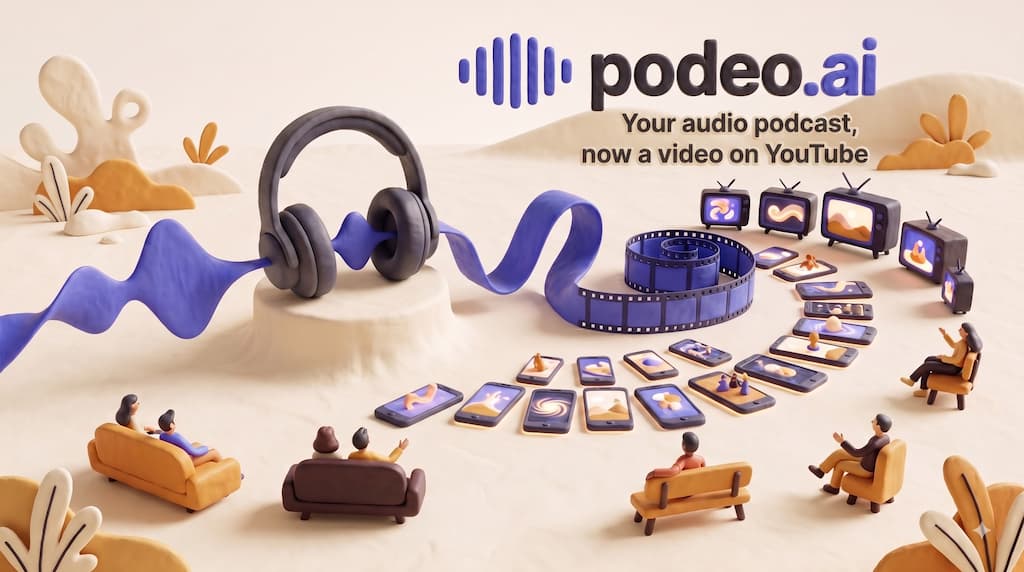
A new wave of tools is democratizing this transition. Platforms like Podeo.ai are effectively acting as the "missing link" for creators who lack the budget for full-scale video production. By utilizing advanced AI, these platforms allow podcasters to transform existing audio archives into full-length, synchronized video content without the need for traditional filming.
The workflow is deceptively simple: creators upload an MP3 or provide an RSS feed, and the AI—acting as a virtual director—analyzes the audio to plan visuals, motion graphics, and archival footage that mirror the narrative arc of the episode. This automated production cycle can turn a 60-minute podcast into a polished visual product in approximately 20 minutes.

This development is more than just a convenience; it represents a fundamental change in how content is monetized and distributed. By "punching up" intros and ensuring that visual thumbnails are optimized for clicks, creators are seeing significantly higher conversion rates from video viewers to long-term subscribers.
Industry Snapshot: A Chronology of Current Trends
To understand the current state of the industry, one must look at the data points defining the landscape in late 2026:

- Q1-Q2 2026: The industry saw a marked increase in the integration of video-first RSS feeds, with major platforms finally aligning their infrastructure to handle high-definition video playback as standard practice.
- July 2026: A series of algorithm updates across major distribution channels placed a higher weight on "engagement depth," favoring creators who provided multi-modal content (audio + video).
- October 2026: Current market data reveals a consolidation of the top charts. The Daily remains a juggernaut in the US, while specialized interest shows like American History Hit and the BBC’s Eras podcast are carving out massive audiences by leaning into high-production storytelling that bridges historical depth with modern consumption habits.
Supporting Data: Chart Leaders and Market Movers
The current rankings reflect a diverse and healthy ecosystem, though the dominance of established brands remains consistent. As of October 2026, the data indicates the following market leaders:
- US Market: The Daily continues to hold the #1 spot on Apple Podcasts, signaling that news-heavy, high-frequency programming remains the anchor of the medium. Simultaneously, The Joe Rogan Experience retains its crown on Spotify, highlighting the continued power of personality-driven, long-form content.
- UK Market: Science communication is experiencing a renaissance, with The Rest Is Science topping the charts in the United Kingdom. This suggests that niche, educational, and intellectual content is finding a sustainable audience through improved discoverability.
- Growth Metrics: Ireland has provided an interesting case study this month, with Shooting Star Unwrapped securing the "Highest New Entry" in the non-profit category, and Scars and Guitars showing the "Biggest Gain" in music interviews. These outliers prove that, even in a crowded market, high-quality, targeted content can rapidly ascend the ranks when properly distributed.
Official Perspectives: The Role of the Creator
The industry is currently in a state of self-reflection. Organizations like Podnews have been vocal about the importance of community interaction. While it is a common misconception that ratings and reviews directly influence the "charts" (which are often calculated via complex, proprietary algorithms based on velocity and retention), they remain essential for traffic estimation.

"Could we have a decent rating or review for our daily and/or weekly shows?" is a plea echoed by many creators today. This is not merely an ego-driven request; in an environment where search engines and recommendation algorithms prioritize social proof, listener feedback acts as a critical signal to potential new subscribers. The industry’s shift toward transparency in these metrics is a positive sign for the democratization of the medium.
Implications for the Future of Podcasting
What does this mean for the independent podcaster or the media executive?

1. The Death of "Audio-Only"
The "audio-only" model is becoming increasingly fragile. For creators looking to scale, video is no longer a luxury—it is a requirement. Whether through simple audiograms or full-blown AI-assisted video production, the audience expects a visual component.
2. The Rise of the "Professional Independent"
The tools currently entering the market, such as Podeo’s Copilot features, allow solo creators to produce content that rivals the production values of large media conglomerates. This will likely lead to a further fragmentation of the market, where "niche" shows are able to survive and thrive on lower listener counts because they have higher-value, more engaged audiences.

3. The Legal and Ethical Frontier
As highlighted by the fourth season of the podcast High Notes, the rise of AI voice replication brings new ethical dilemmas. The legal frameworks regarding voice licensing, AI-generated content, and performer rights are currently lagging behind the technology. Creators must now be as well-versed in digital rights management as they are in audio editing.
4. Community and Retention
Finally, the "small village" mentality—exemplified by shows like Matters Arising—remains the heart of the medium. While algorithms drive discovery, retention is driven by community. The most successful shows of 2026 are those that have successfully built a "digital town square" around their content, encouraging listeners to engage, debate, and support the show through non-traditional channels.

Conclusion
As we look toward the end of 2026, the podcasting industry is stronger than it has ever been, but it is also more demanding. The barrier between "content creator" and "media brand" has evaporated. By embracing video discovery, utilizing the latest AI production tools, and maintaining a focus on the core values of high-quality storytelling, creators can navigate this new, visually-driven landscape.
The number "16" in the graffiti seen on the walls of our digital streets may represent the age of a show or a simple piece of street art, but for the modern podcaster, it serves as a reminder: there are always 16,000 ways to grow, and the most successful will be those who adapt their visual presence to meet the listener exactly where they are—on the screen.
 Asep Darmawan
 Neng Nana
 Asro
