

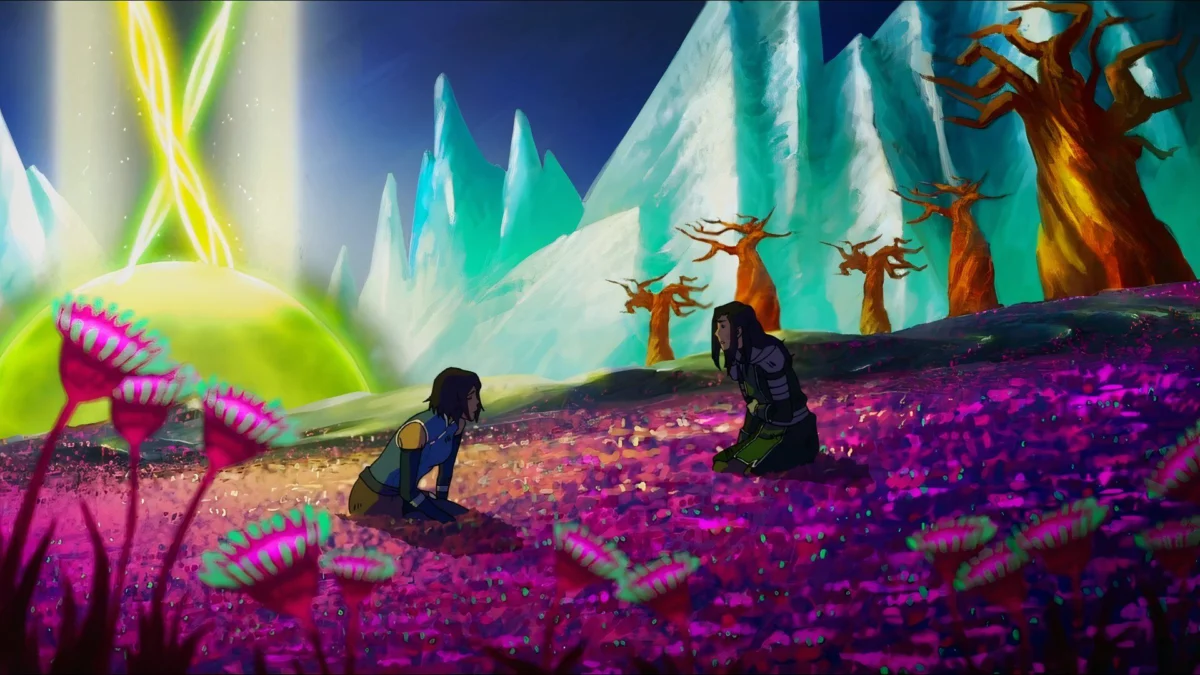
Every incarnation of the Avatar inherits a world shaped by the triumphs, miscalculations, and unresolved burdens of their predecessor. It is the defining cycle of the universe established by Avatar Wan 10,000 years ago: an endless relay race of elemental mastery, spiritual obligation, and human failing. Wan fused with Raava, the spirit of light, imprisoned Vaatu, and severed the connection between the physical and spiritual realms by sealing the North and South Pole portals. Yet he died leaving a fractured humanity, initiating an unbroken chain of generational fallout.
In Avatar: The Last Airbender, this thematic weight manifested in the tragic dynamic between Avatar Roku and Aang. Roku’s fatal hesitation to execute swift justice upon Fire Lord Sozin allowed the Hundred Year War to consume a century, forcing Aang to clean up the ashes. Aang, in turn, birthed Republic City as a beacon of multiculturalism and industrial progression, inadvertently handing Korra a volatile cocktail of political instability, modernization, and deep-seated systemic inequality.
Now, Paramount’s expanding universe is poised to tackle the ultimate consequence of this generational burden. Set more than two centuries after the conclusion of The Legend of Korra, the new series Avatar: Seven Havens introduces a devastated world where surviving civilizations whisper Korra’s name not with reverence, but with terror—remembering her as "The Great Destroyer."
The central mystery gripping the fandom is profound: Did Korra shatter the world through a catastrophic action, or did civilization collapse due to a catastrophic failure of omission? As executive producers hint at the weight of Korra’s choices, a closer look at lore, comics, and world-building suggests that the roots of the upcoming Cataclysm trace back to a single, fateful decree made during the height of Harmonic Convergence.
Main Facts: The Shadow of Avatar: Seven Havens
At New York Comic Con 2026, Seven Havens executive producers Sehaj Sethi and Ethan Spaulding pulled back the curtain on how the new series bridges the generational gap from Korra’s era. When pressed by media outlets regarding whether the apocalyptic new setting was designed as a direct reaction to fan discourse surrounding Korra’s polarizing character arc, Sethi offered a calculated and revealing response.
"The thing that was more important was to really show that every Avatar affects the next Avatar," Sethi explained. "Like Roku, what he did affected Aang. What Aang did affected Korra. And now, what Korra’s done—or not done—Korra’s choices have an impact, as well. We aren’t telling everyone exactly how yet, but that has had an impact. While this is a whole new world, the previous world has affected us in a way. We’re unpacking that in our mystery."
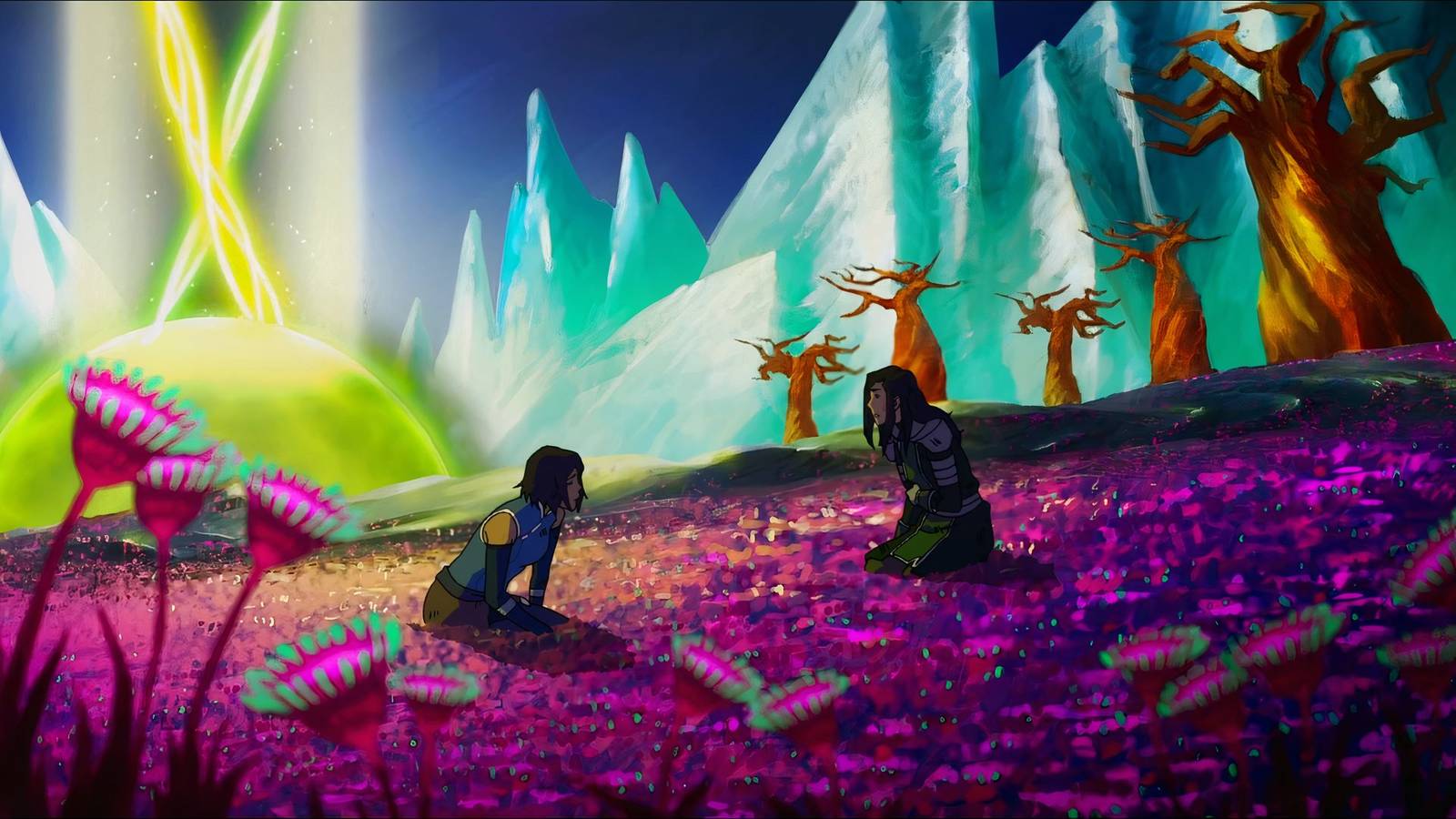
This deliberate phrasing—focusing heavily on what Korra did not do—shifts the analytical lens away from her battles against Amon, Unalaq, Zaheer, and Kuvira. Instead, it points directly toward her most monumental philosophical stance: her refusal to close the spirit portals.
For generations, the conventional wisdom of the Avatar required maintaining the division between mortal and immortal planes to ensure global stability. Korra tore down that wall, setting into motion an industrial and spiritual gold rush that may have ultimately birthed the Cataclysm.
Chronology of a Mistake: From Harmonic Convergence to Republic City
To understand how Korra’s idealism could inadvertently spark a global apocalypse over two centuries later, one must trace the chronological escalation of her decisions regarding the spirit portals.
Book 2: Spirit of Rebellion and the Open Door
During the events of The Legend of Korra Book 2, Korra was manipulated by her uncle, Unalaq, into opening the Southern Spirit Portal. Unalaq’s ultimate goal was to unleash Vaatu, achieve fusion during Harmonic Convergence, and become the Dark Avatar.
Following an apocalyptic, kaiju-scale battle in Republic City, Korra emerged victorious by destroying Unavaatu. Standing at a crossroads, she prepared to close the portals and restore the ancient status quo established by Avatar Wan. However, Unalaq’s dying words—arguing that Wan had made a fundamental mistake by separating humans and spirits—lingered in her mind.
Weighing the cosmic shifts brought on by Harmonic Convergence, Korra made a historic announcement to the world:
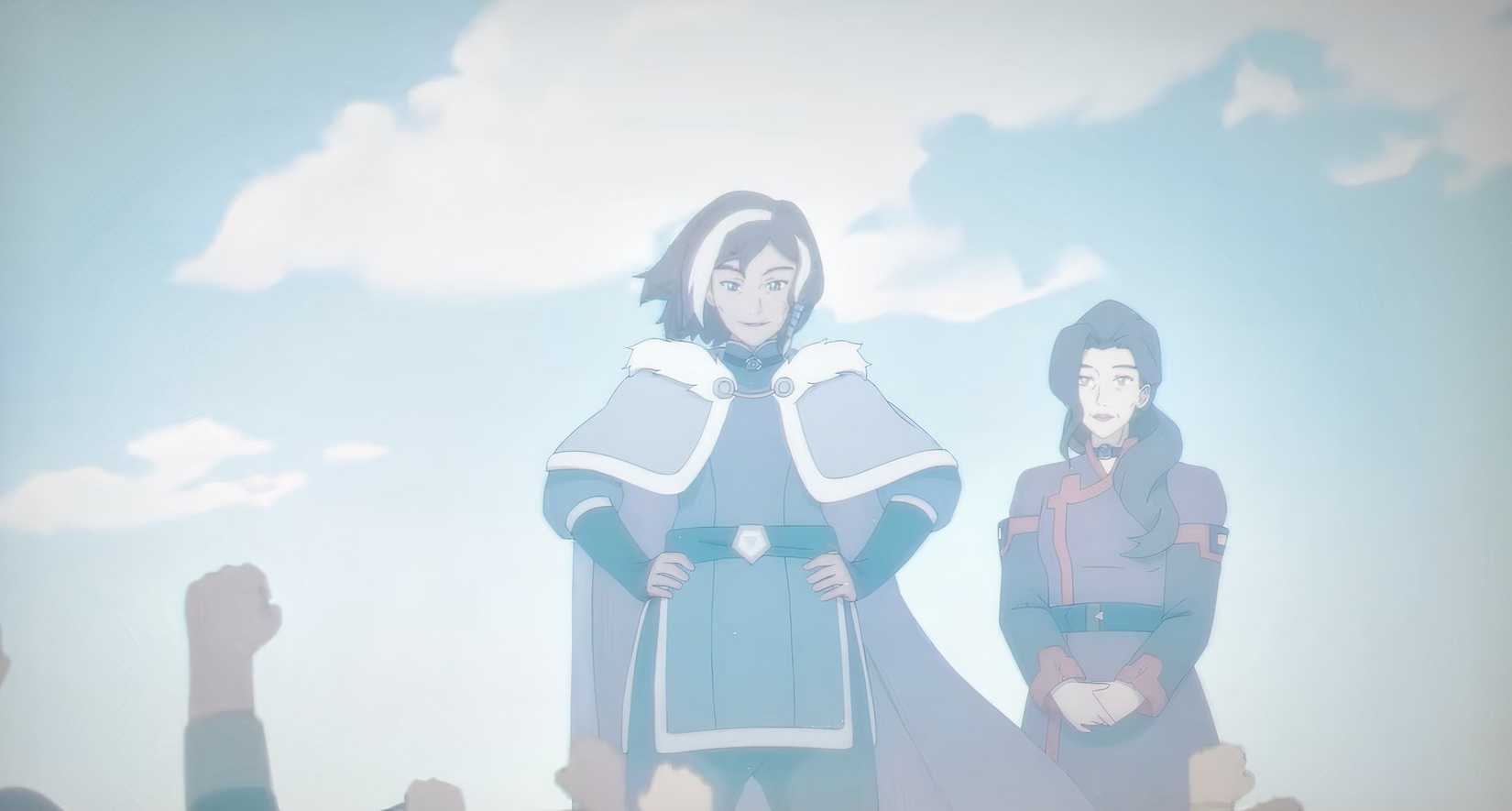
"I’ve realized that even though we should learn from those who came before us, we must also forge our own path… So that is why I’ve decided to keep the portals open. Humans can now physically enter the Spirit World, and spirits will be free to roam our world. I will no longer be the bridge."
The Immediate Aftermath and Weaponization
The immediate consequences of Korra’s decree were monumental. The planetary energy shifted, spontaneous airbending manifested in non-airnomads across the Earth Kingdom, and invasive spirit vines began aggressively consuming infrastructure in Republic City, birthing the Spirit Wilds.
While Korra envisioned an era of harmonious coexistence, human ingenuity quickly found ways to exploit the sacred. By Book 4, industrialist Varrick discovered that spirit vines could be harvested as a virtually limitless, highly volatile energy source. This discovery was swiftly weaponized by Earth Empire dictator Kuvira, who integrated refined spirit-vine energy into a colossal super-weapon capable of leveling entire cities in a single blast.
During the climax of her battle with Kuvira, an overloaded spirit-vine cannon discharged within the Spirit Wilds. Korra entered the Avatar State and performed energybending to absorb and redirect the blast. The sheer magnitude of the released spiritual energy tore a third, permanent spirit portal open in the exact center of Republic City.
Supporting Data: The Warning Signs in Turf Wars and Avatar Legends
The warning signs were neither subtle nor ignored. Dark Horse Comics’ sequel series, Turf Wars, picks up immediately after the series finale, documenting the immediate socioeconomic conflicts arising from the new Republic City portal.
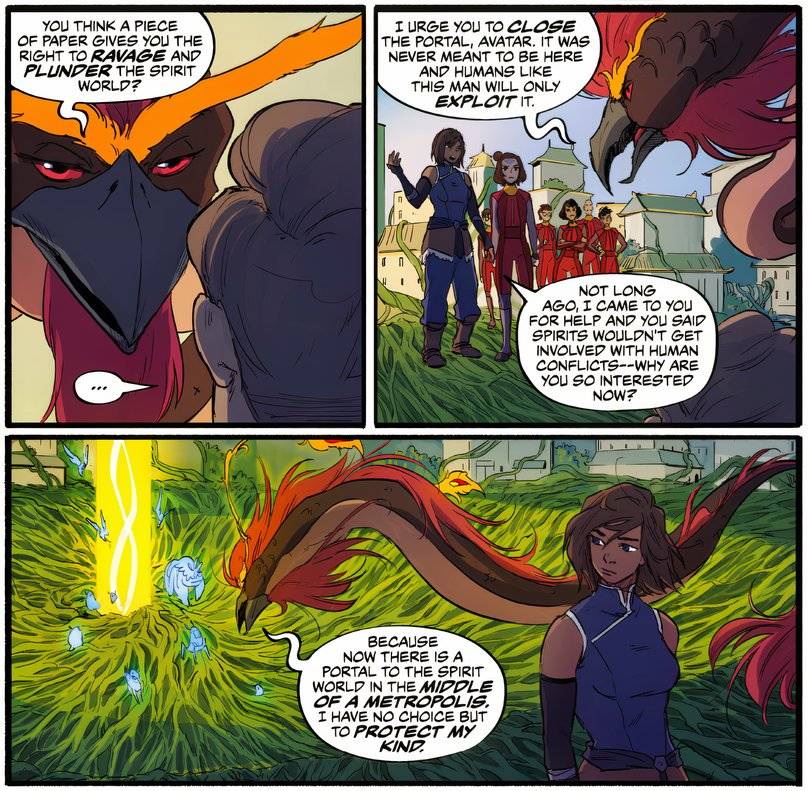
Real estate developers like Wonyong Keum sought to commercialize the area into a high-end tourist trap, while the Air Nomads attempted to establish a protectorate, and local spirits violently retaliated against human encroachment. During these clashes, a dragon-eel spirit directly confronted Korra, explicitly begging her to close the portal before the sanctity of the Spirit World was utterly compromised by capitalism and industry.
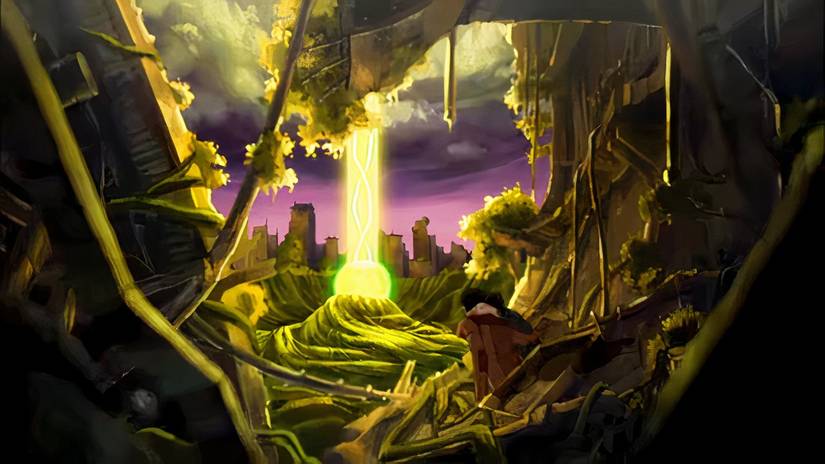
Korra refused. Believing that spiritual energy would ultimately balance the metropolis, she doubled down on her stance. Although she and Asami successfully negotiated a temporary sanctuary, the precedent had been set: humanity viewed the boundless energy of the spirit realms as a resource to be harvested.
The licensed tabletop roleplaying game Avatar Legends expands upon this trajectory. Even after President Zhu Li enacted sweeping legislative bans on spirit-vine research, underground corporate cartels and rogue nation-states continued extraction operations in secret. Because the very energetic fabric of the planet had been permanently altered by Harmonic Convergence and repeated portal ruptures, continuous tampering with raw spiritual forces created an underlying environmental and metaphysical time bomb.
Official Responses and Creative Direction
The creative team behind Avatar: Seven Havens is acutely aware of the thematic risks they are taking with Korra’s legacy. Recontextualizing a beloved protagonist as the indirect catalyst for global devastation is a bold narrative gamble.
Speaking at NYCC 2026, executive producer Sehaj Sethi emphasized that the storytelling framework of Seven Havens relies heavily on historical accountability. Just as Aang had to reckon with Roku’s mercy toward Sozin—which allowed the Fire Nation to launch a century of genocide—Korra must now bear the dramatic weight of her mercy toward the spiritual ecosystem.
"What Korra’s done—or not done—Korra’s choices have an impact, as well," Sethi reiterated. "While this is a whole new world, the previous world has affected us in a way. We’re unpacking that in our mystery."
This framing deliberately reframes Korra not as a malicious actor, but as a tragic idealist. Her vision of a unified world was pure in intent, but executed with a blind spot regarding human greed and the dangers of industrializing the divine.
Implications: A Darker Era for the Avatar Universe
The implications of Avatar: Seven Havens stretch far beyond narrative world-building; they redefine the core philosophy of what it means to be the Avatar.
For decades, fans debated whether Korra’s decision to keep the portals open was a progressive leap forward or a reckless abandonment of responsibility. With Seven Havens positioning this exact choice as the potential catalyst for the Cataclysm, the franchise is making a poignant commentary on utopian idealism. In the world of Avatar, trying to force a radical paradigm shift too quickly—without accounting for humanity’s capacity to weaponize progress—can result in absolute ruin.
As civilizations struggle to survive inside the isolated "havens" two centuries later, they do so under the shadow of a broken world. Whether the upcoming series ultimately reveals that Korra tried in vain to stop the apocalypse or that her foundational policies triggered it from the ground up, one thing is certain: the era of romanticizing the Avatar’s absolute wisdom is over.
Ultimately, history may record that Korra’s greatest failure was not a lack of strength or courage, but her stubborn refusal to close the door when the universe begged her to.
 Basiran
 Layla Zulfa
